Differential Equations and Maclaurin Series · Paper 1 — Free Maths AA HL Practice Questions
Free questions
Open in full, with answers, mark scheme and examiner insights.
First-order differential equations: separable, homogeneous, integrating factor
The number of bacteria in a culture, thousand, at time hours satisfies where is a positive constant. The diagram shows the culture with when and when .

By separating the variables, show that .
Find the exact value of .
Find the time at which the population reaches 18 thousand.
revisionprep.com
Summary Answer
Not available for this question.
Model Answer
Not available for this question.
Marking Scheme
Not available for this question.
Examiner Insights
Not available for this question.
Euler's method
The diagram shows the slope field for the differential equation . A solution curve passes through the point .
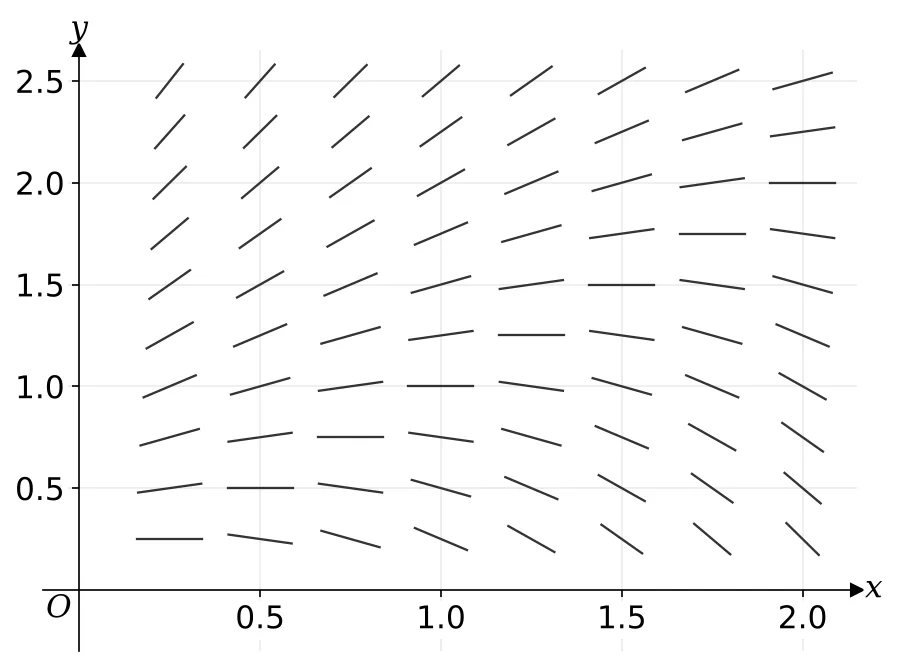
Write down the gradient of the solution curve at .
Use Euler's method with step length to find an approximation for on this curve when .
Verify that is a solution of the differential equation.
Use the slope field to describe how the solution curve through behaves for .
revisionprep.com
Summary Answer
Not available for this question.
Model Answer
Not available for this question.
Marking Scheme
Not available for this question.
Examiner Insights
Not available for this question.
First-order differential equations: separable, homogeneous, integrating factor
A population of bacteria, , at time days satisfies where is a positive constant. The graph shows how varies with when .
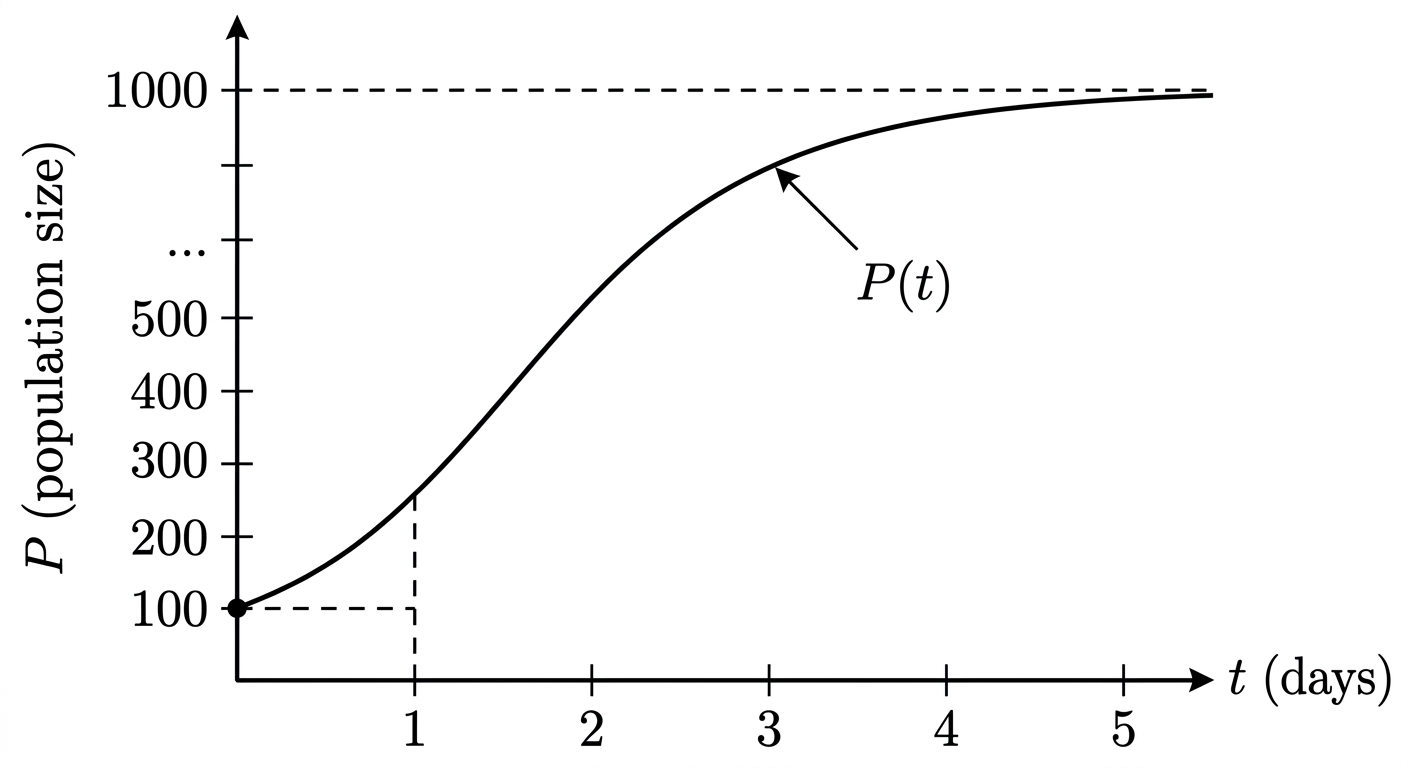
Show that .
Hence show that .
Explain, with reference to the differential equation, why approaches 1000 but never reaches it.
revisionprep.com
Summary Answer
Not available for this question.
Model Answer
Not available for this question.
Marking Scheme
Not available for this question.
Examiner Insights
Not available for this question.
Euler's method
The diagram shows the slope field for the differential equation , for and . The solution curve of interest passes through .
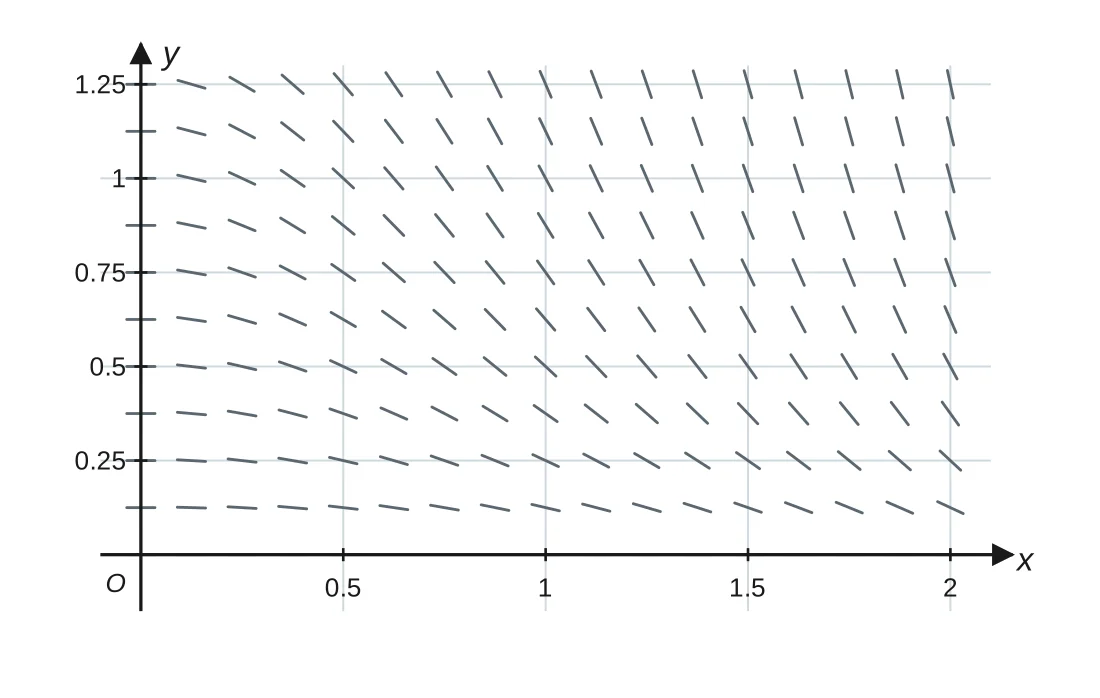
Use Euler's method with step length to find an approximation for when .
Solve the differential equation to find in terms of .
Given that to four significant figures, find the absolute error in your approximation from part (a).
Show that . Hence explain why Euler's method overestimates for .
revisionprep.com
Summary Answer
Not available for this question.
Model Answer
Not available for this question.
Marking Scheme
Not available for this question.
Examiner Insights
Not available for this question.
First-order differential equations: separable, homogeneous, integrating factor
A curve lies in the first quadrant. The tangent to the curve at any point meets the -axis at , and , where is the origin, as shown in the diagram.
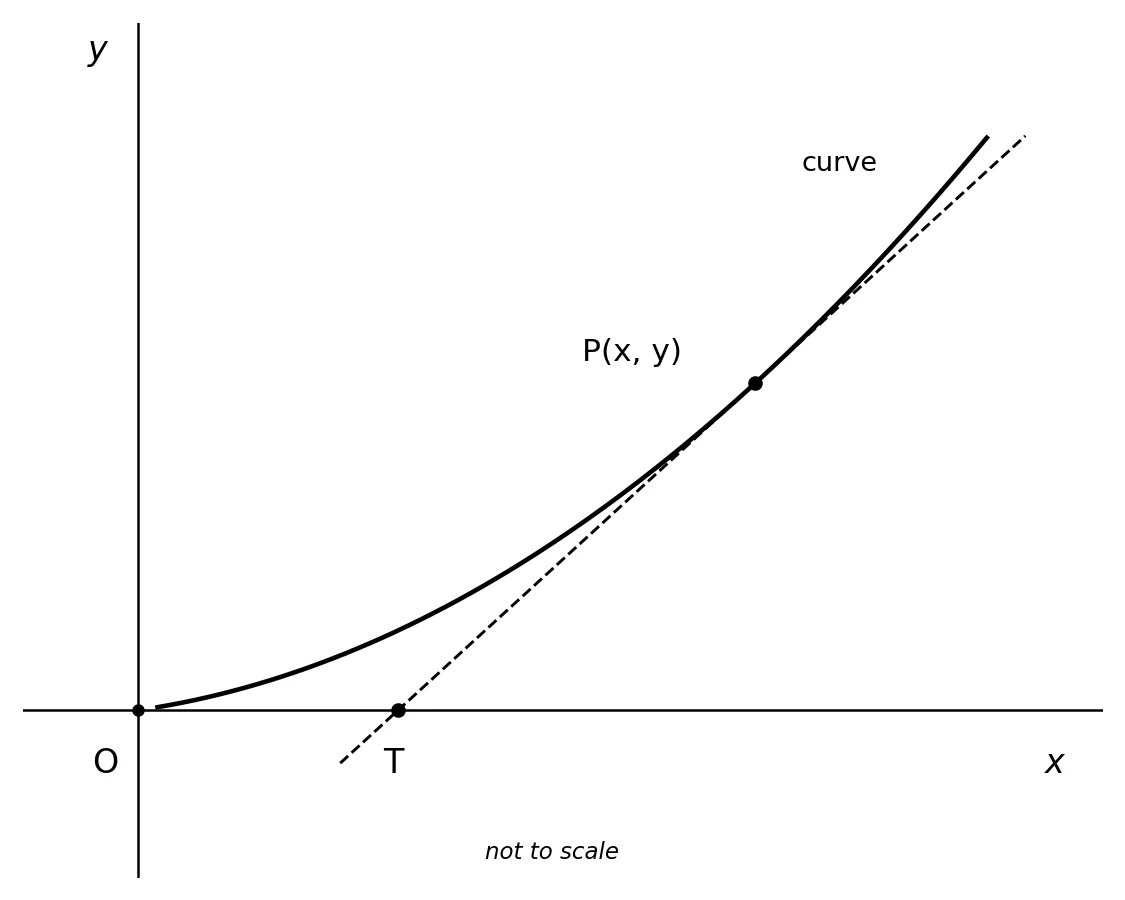
Show that has coordinates .
Hence show that .
Use the substitution to show that the curve satisfies for some constant .
The curve passes through . Describe the curve geometrically.
revisionprep.com
Summary Answer
Not available for this question.
Model Answer
Not available for this question.
Marking Scheme
Not available for this question.
Examiner Insights
Not available for this question.
Maclaurin series
The function satisfies the differential equation , with when . The diagram shows the slope field of the differential equation and the point .
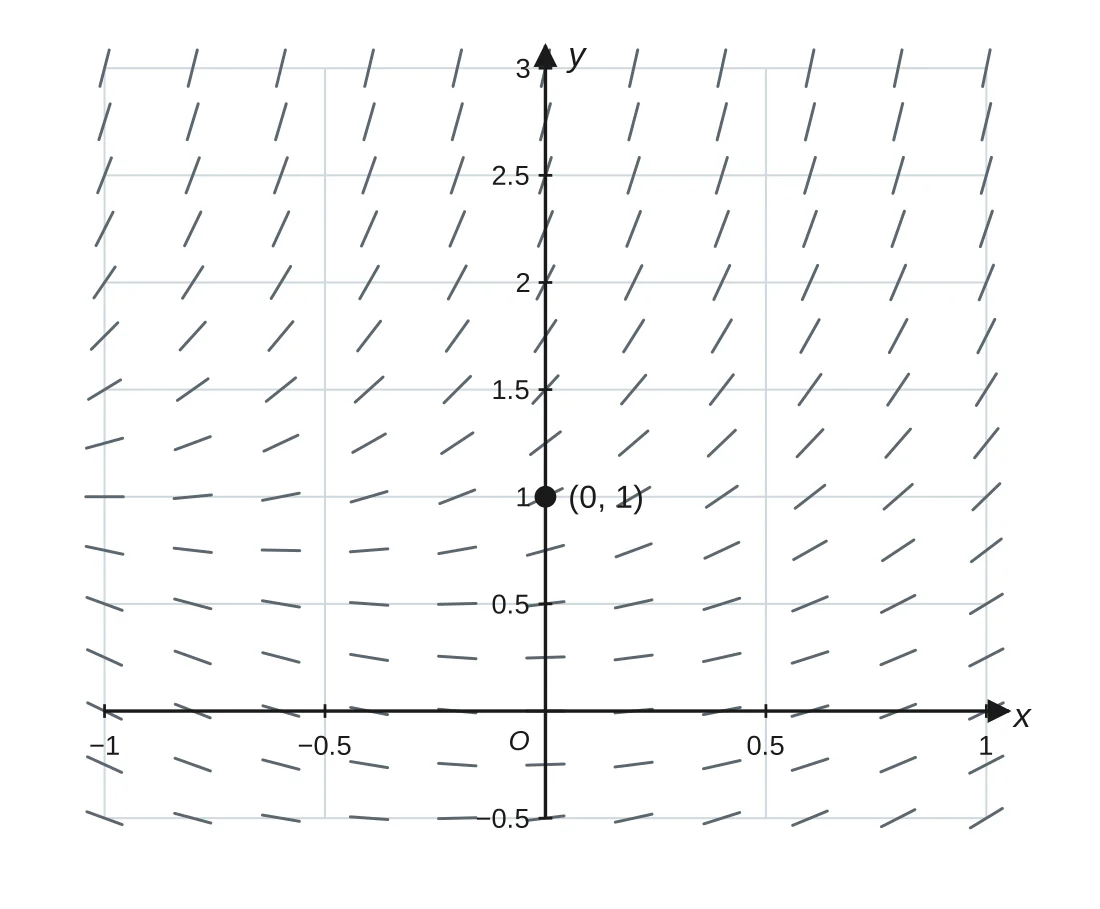
Write down the value of when .
Show that .
Find the values of and when .
Hence find the Maclaurin series for , up to and including the term in .
Use your series to find an approximation for . Give your answer as a fraction in its simplest form.
Given that , find the term in and determine whether including it changes your approximation in (e) when both are rounded to three decimal places.
revisionprep.com
Summary Answer
Not available for this question.
Model Answer
Not available for this question.
Marking Scheme
Not available for this question.
Examiner Insights
Not available for this question.
That's every free question here — 6 of 242.
+236 more questions, plus Mock Papers & Worksheets, are waiting in Premium.