Introduction to Differentiation and Limits · Paper 1 — Free Maths AA HL Practice Questions
Free questions
Open in full, with answers, mark scheme and examiner insights.
Introduction to the derivative; limits and rates of change
The graph shows , where for . There is an open circle at .
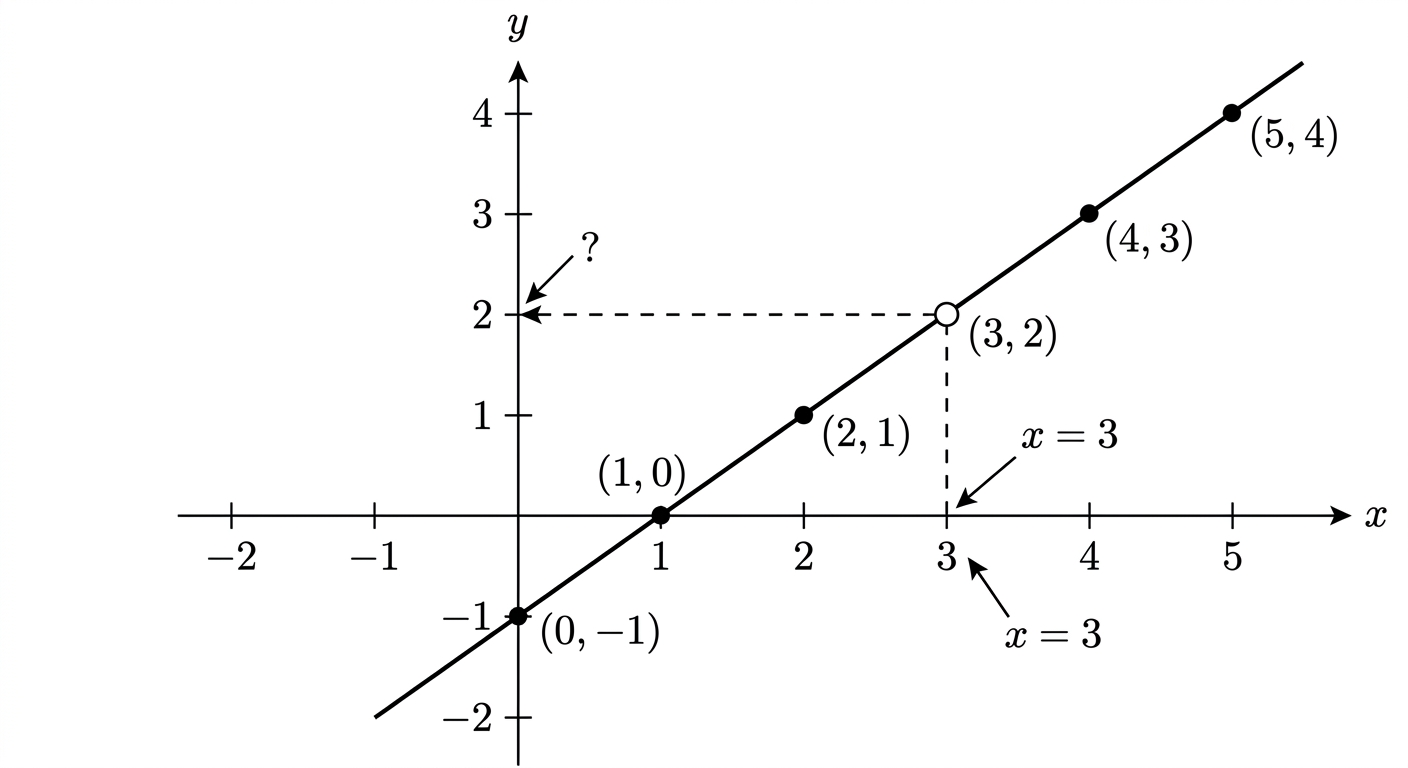
Write down .
Find .
Find and .
revisionprep.com
Summary Answer
Not available for this question.
Model Answer
Not available for this question.
Marking Scheme
Not available for this question.
Examiner Insights
Not available for this question.
Limits and L'Hôpital's rule
Consider .
Show that the limit is of the indeterminate form .
Use l'Hôpital's rule to find the value of the limit.
revisionprep.com
Summary Answer
Not available for this question.
Model Answer
Not available for this question.
Marking Scheme
Not available for this question.
Examiner Insights
Not available for this question.
Introduction to the derivative; limits and rates of change
The function is defined by
A student draws the graph of as shown, marking the point with an open circle.
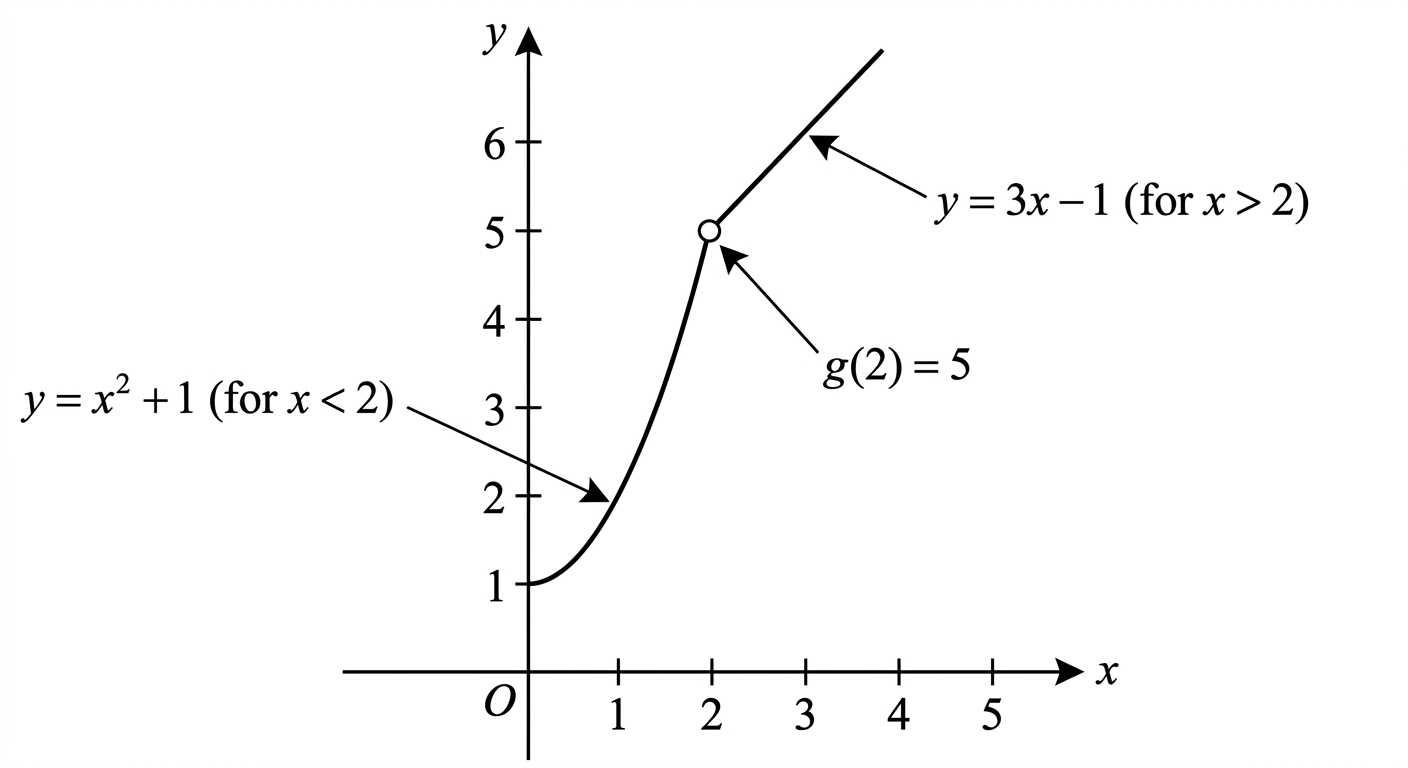
Find and .
Hence show that is continuous at .
Explain the error in the student's drawing at .
Determine whether is differentiable at .
revisionprep.com
Summary Answer
Not available for this question.
Model Answer
Not available for this question.
Marking Scheme
Not available for this question.
Examiner Insights
Not available for this question.
Derivative of axⁿ
The diagram shows the curve and the point on the curve.
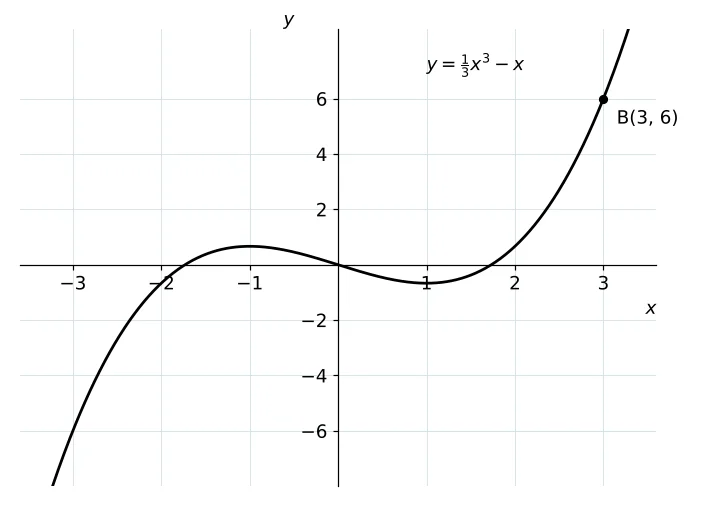
Find .
Find the gradient of the curve at .
Find the coordinates of the other point on the curve at which the tangent is parallel to the tangent at .
revisionprep.com
Summary Answer
Not available for this question.
Model Answer
Not available for this question.
Marking Scheme
Not available for this question.
Examiner Insights
Not available for this question.
Derivative of axⁿ
The diagram shows part of the curve , . The tangent at meets the -axis at and the -axis at .
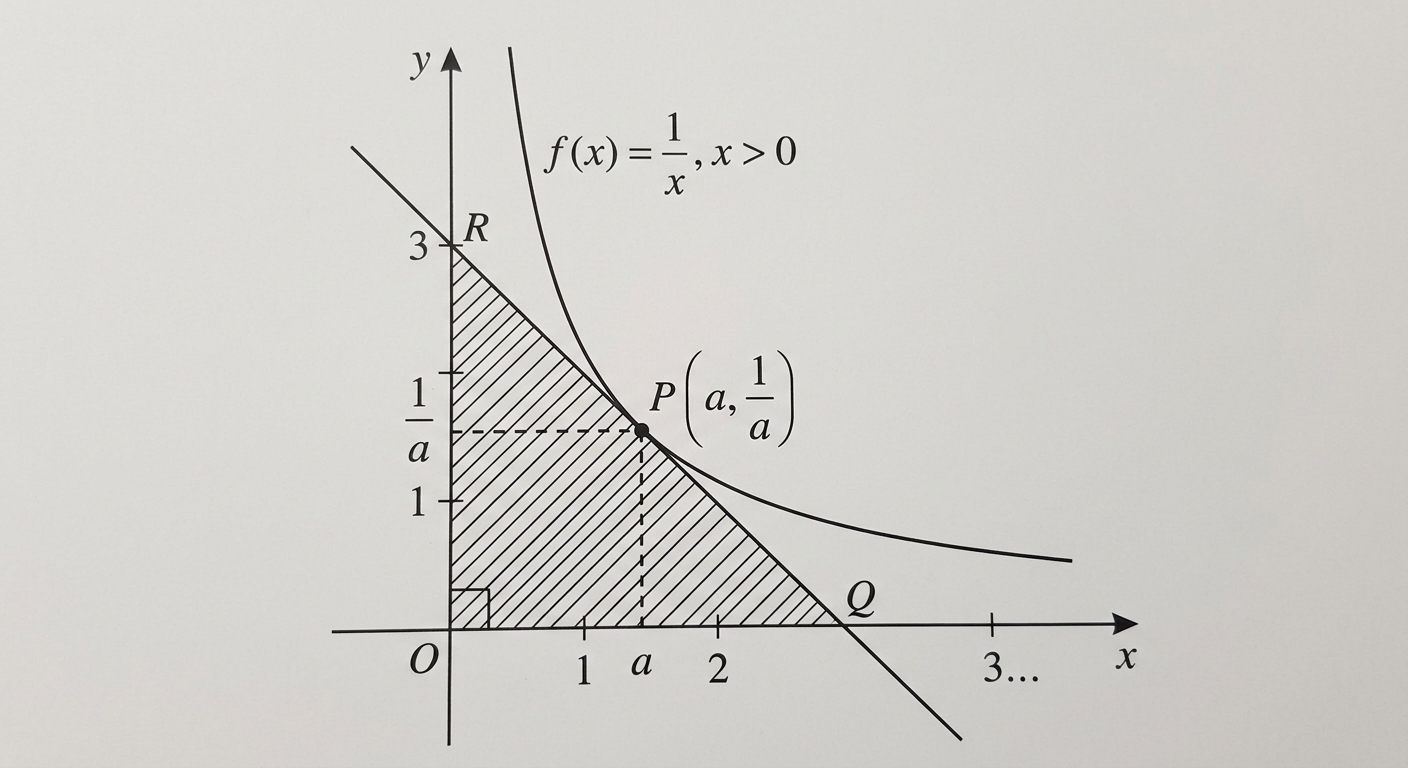
Find .
Show that the equation of the tangent at is .
Find the coordinates of and .
Show that the area of triangle does not depend on .
revisionprep.com
Summary Answer
Not available for this question.
Model Answer
Not available for this question.
Marking Scheme
Not available for this question.
Examiner Insights
Not available for this question.
Continuity, differentiability and differentiation from first principles
A function is defined by The diagram shows four sketches, Case A to Case D, of functions with different kinds of discontinuity.
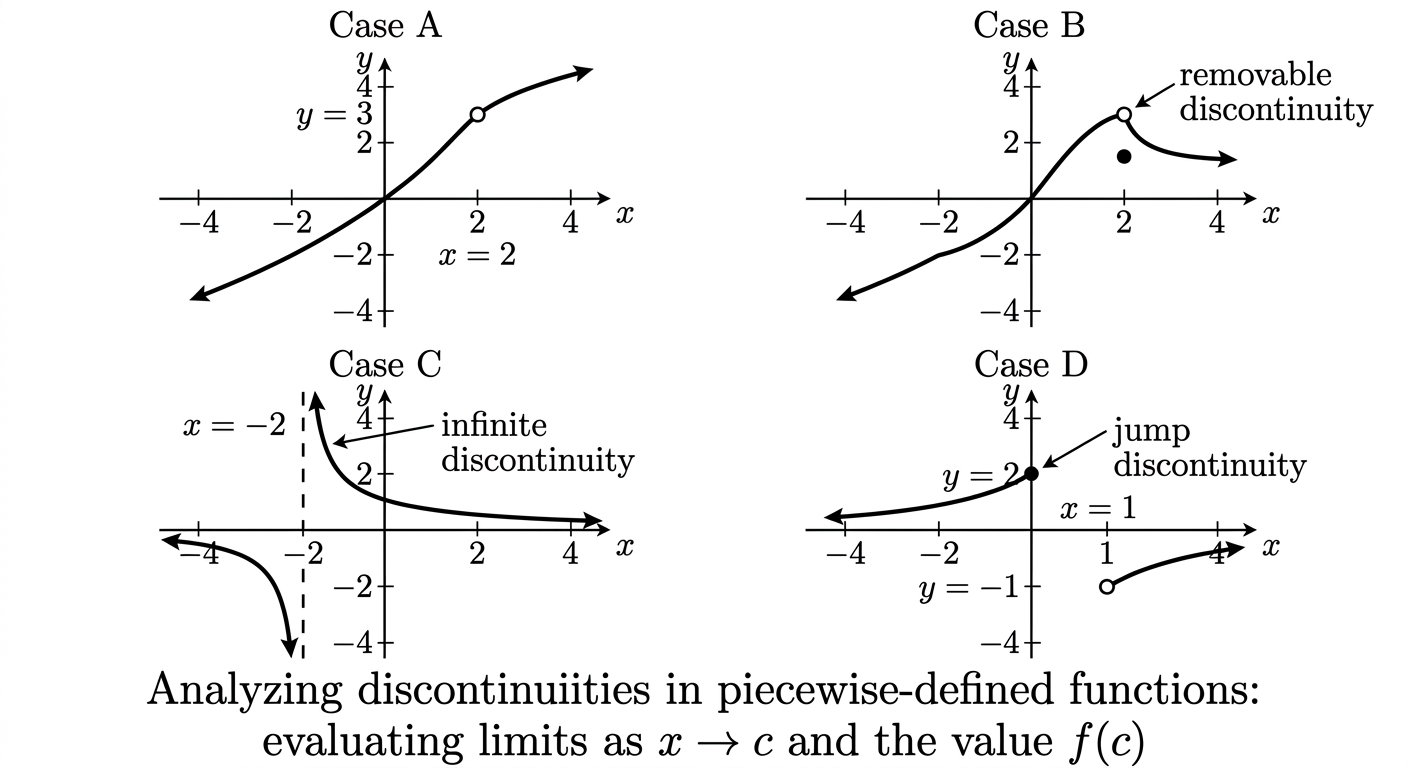
Show that for , and hence find .
Write down the value of for which is continuous at .
Find and .
State which case shows the same kind of discontinuity as has at , and which case shows the behaviour of near if were left undefined.
revisionprep.com
Summary Answer
Not available for this question.
Model Answer
Not available for this question.
Marking Scheme
Not available for this question.
Examiner Insights
Not available for this question.
That's every free question here — 6 of 533.
+527 more questions, plus Mock Papers & Worksheets, are waiting in Premium.