Applications of Differentiation · Paper 2 — Free Maths AA HL Practice Questions
Free questions
Open in full, with answers, mark scheme and examiner insights.
Increasing and decreasing functions
Let . The diagram shows part of the graph of .
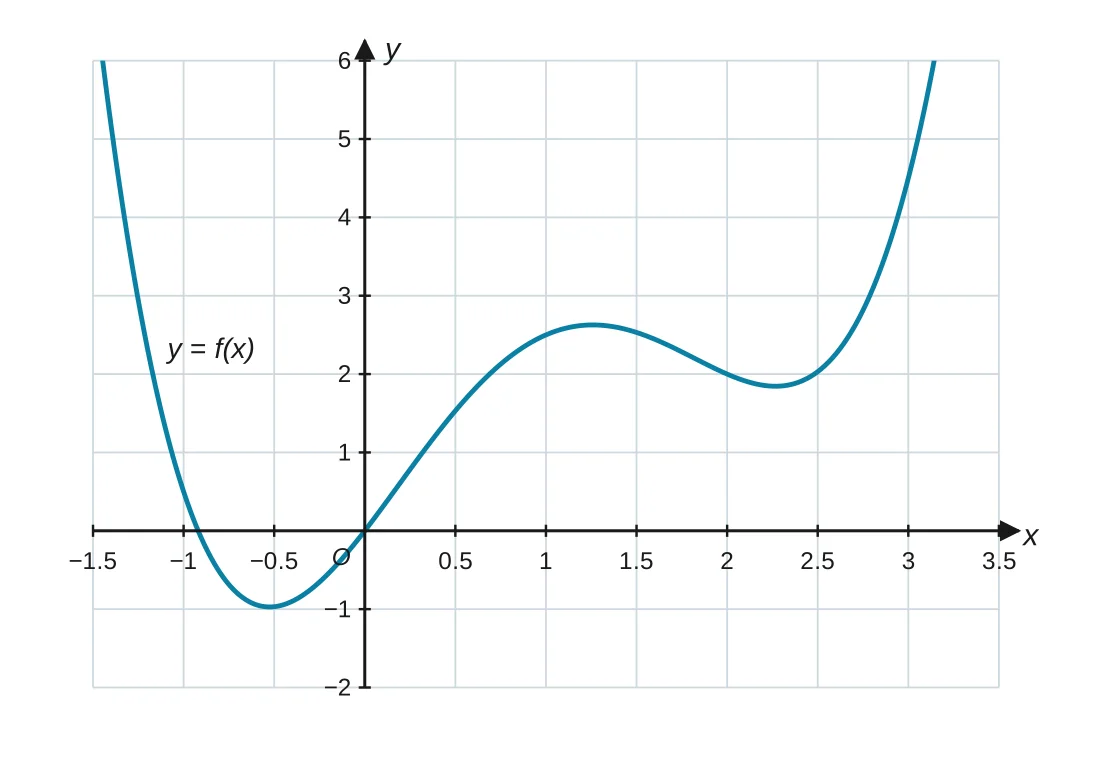
Find .
Find the -coordinates of the three stationary points of .
Hence write down the intervals on which is decreasing.
revisionprep.com
Summary Answer
Not available for this question.
Model Answer
Not available for this question.
Marking Scheme
Not available for this question.
Examiner Insights
Not available for this question.
Kinematics: displacement, velocity, acceleration
A car starts from rest and moves along a straight road. Its velocity, , seconds after it starts is modelled by
The diagram shows the graph of .
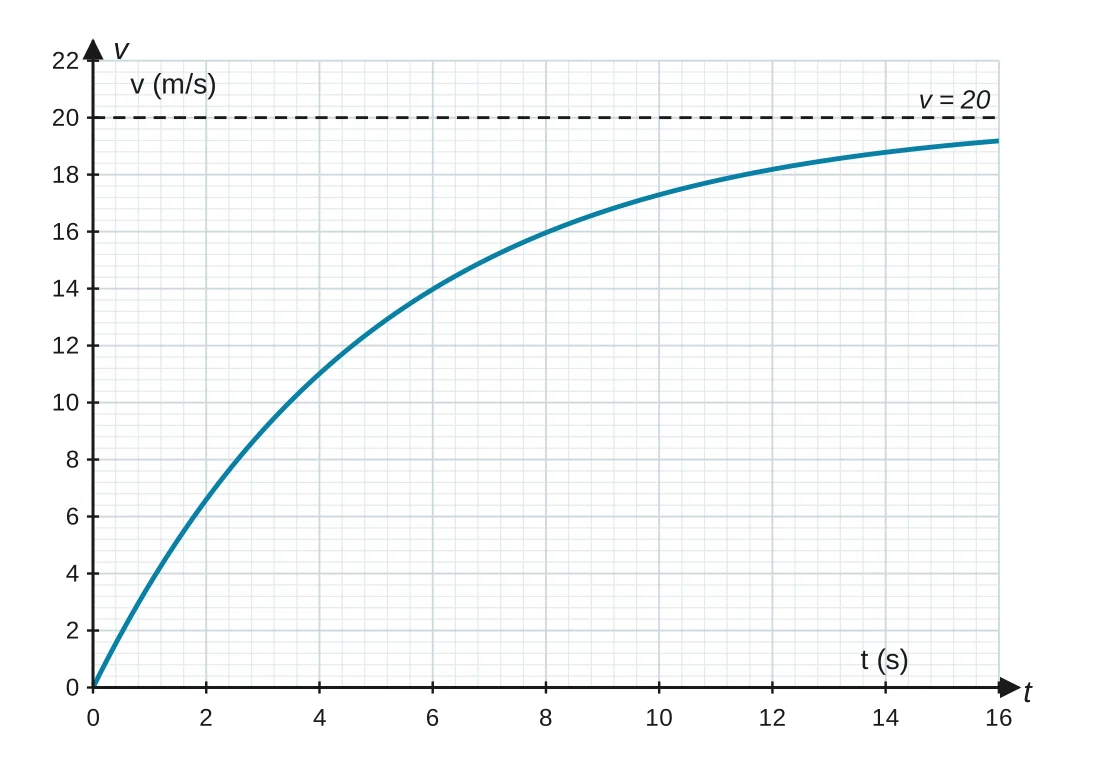
Find the velocity of the car when .
Find the acceleration of the car when .
Find the distance travelled by the car in the first seconds.
revisionprep.com
Summary Answer
Not available for this question.
Model Answer
Not available for this question.
Marking Scheme
Not available for this question.
Examiner Insights
Not available for this question.
Increasing and decreasing functions
The derivative of a function is given by , for . The diagram shows the graph of .
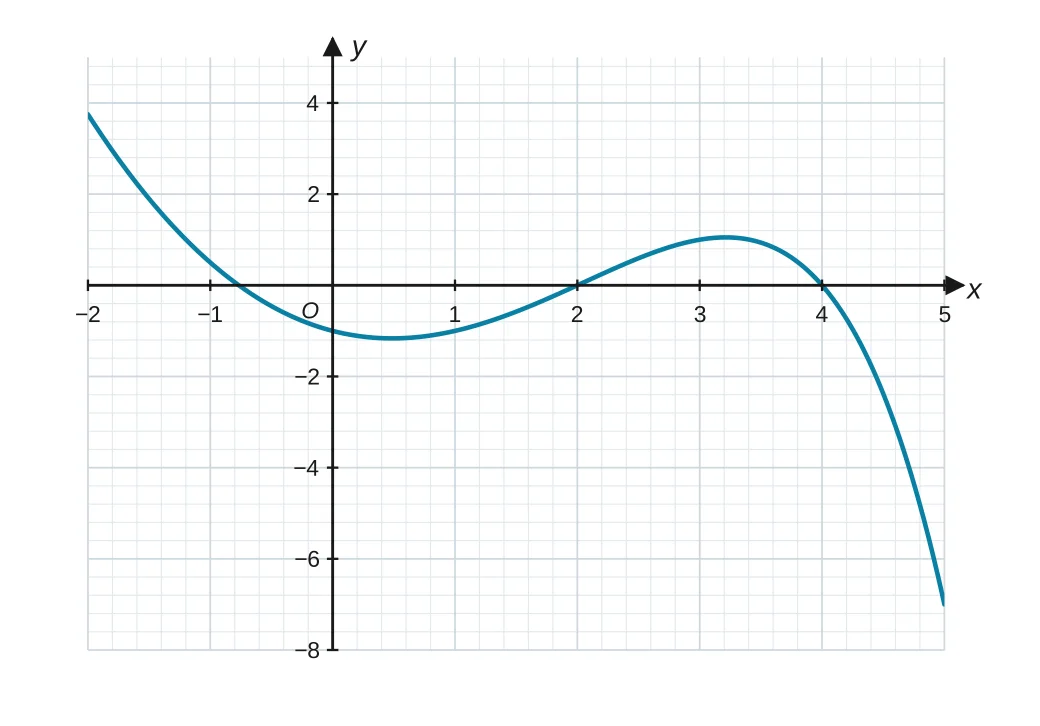
Find the -coordinates of the points where the graph of meets the -axis.
Write down the intervals on which is decreasing.
For each value found in part (a), state whether has a local maximum or a local minimum there. Give a reason for each answer.
revisionprep.com
Summary Answer
Not available for this question.
Model Answer
Not available for this question.
Marking Scheme
Not available for this question.
Examiner Insights
Not available for this question.
Tangents and normals
Let . The diagram shows part of the graph of .
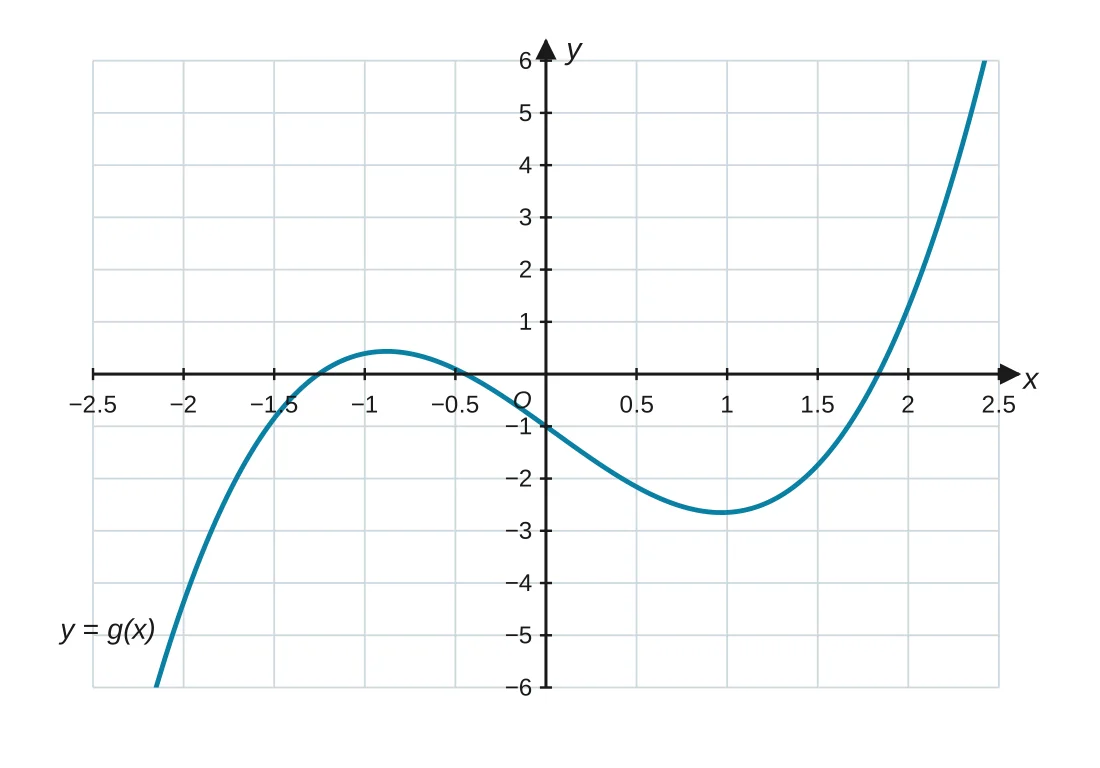
Find the -coordinates of the two points on the graph where the tangent has gradient .
Find the equation of the tangent with gradient at the point with positive -coordinate.
revisionprep.com
Summary Answer
Not available for this question.
Model Answer
Not available for this question.
Marking Scheme
Not available for this question.
Examiner Insights
Not available for this question.
Tangents and normals
The point , where , lies on the curve . The tangent to the curve at meets the curve again at the point , as shown in the diagram (not to scale).
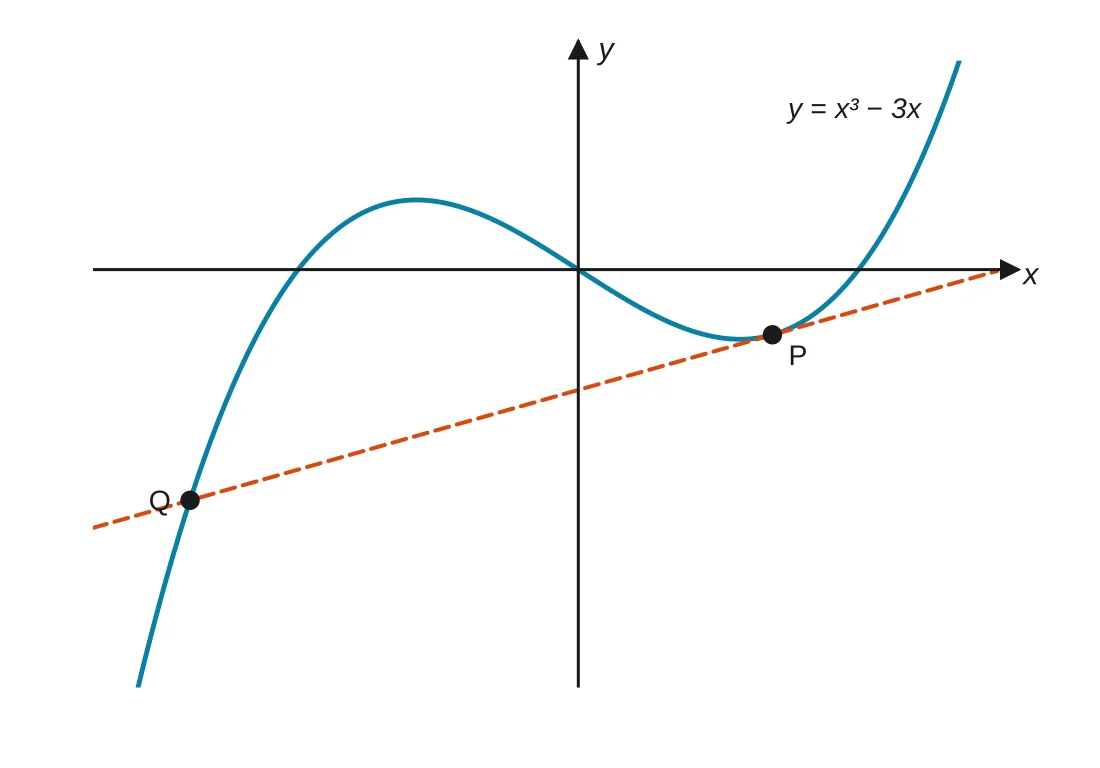
Show that the equation of the tangent at is .
Show that the -coordinate of is .
Find the values of for which the tangent to the curve at is perpendicular to the tangent at .
revisionprep.com
Summary Answer
Not available for this question.
Model Answer
Not available for this question.
Marking Scheme
Not available for this question.
Examiner Insights
Not available for this question.
Local maxima and minima; optimization; points of inflexion
A lifeguard at on a beach is m from a straight shoreline. A swimmer at is m from the shoreline. The points on the shoreline closest to and to are m apart. The lifeguard runs at to a point on the shoreline, m along from the point nearest , and then swims at to , as shown in the diagram.
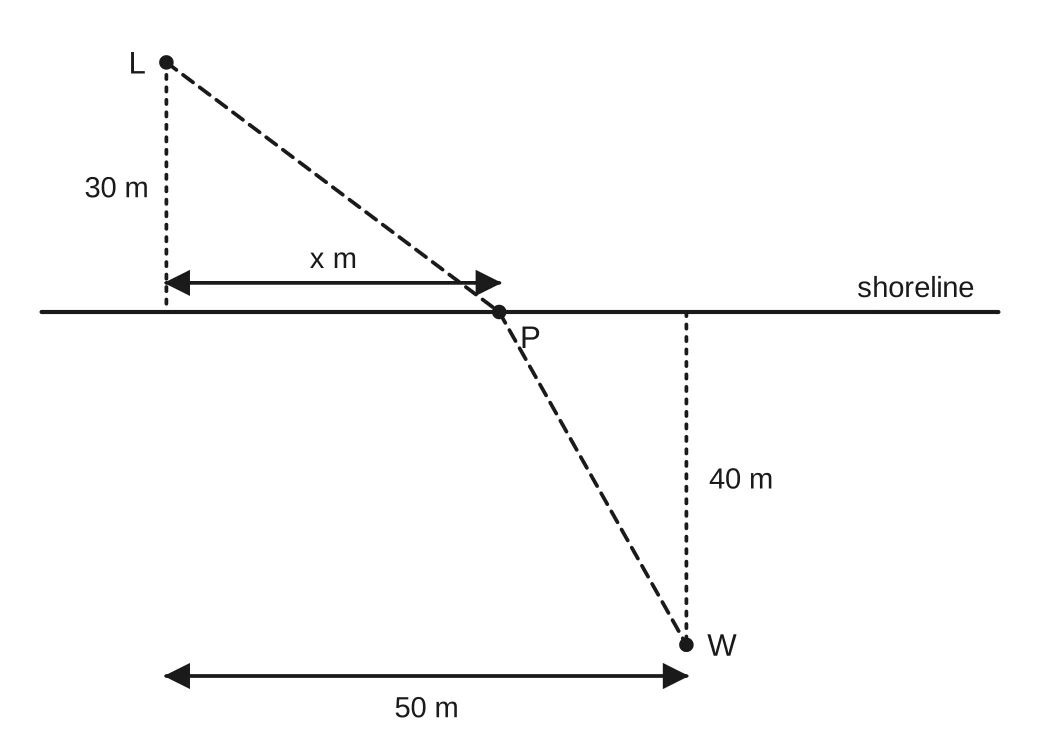
Show that the time taken is seconds.
Find .
Find the value of that minimises , and the least time.
Let be the angle between and the normal to the shoreline at , and the angle between and this normal. Show that, for the least time, .
Find how much time is saved compared with running and swimming along the straight line from to .
revisionprep.com
Summary Answer
Not available for this question.
Model Answer
Not available for this question.
Marking Scheme
Not available for this question.
Examiner Insights
Not available for this question.
That's every free question here — 6 of 123.
+117 more questions, plus Mock Papers & Worksheets, are waiting in Premium.