Introduction to Differentiation and Limits · Paper 2 — Free Maths AA HL Practice Questions
Free questions
Open in full, with answers, mark scheme and examiner insights.
Introduction to the derivative; limits and rates of change
The diagram shows , and a function with for all .
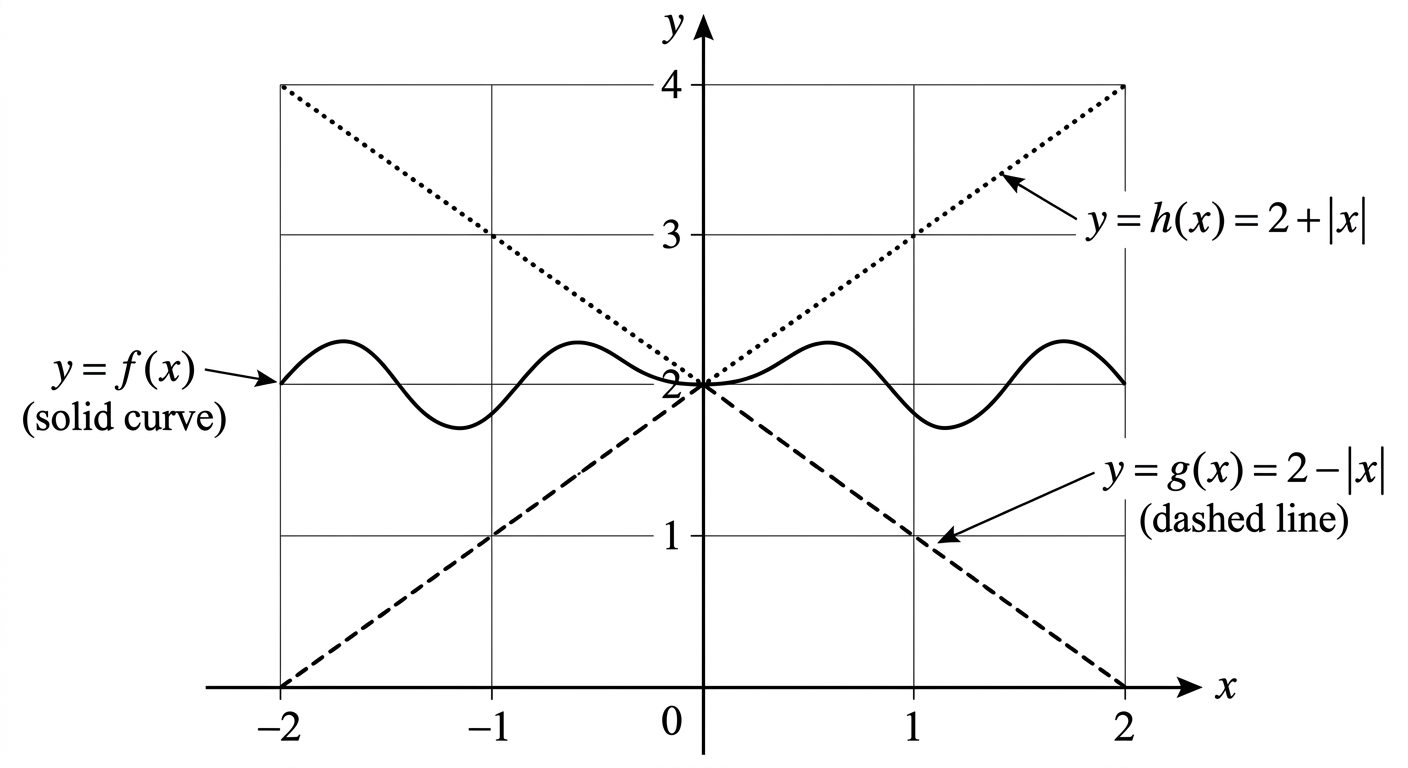
Write down and .
Using the squeeze theorem, find .
A different function is for . Show that for , and hence write down .
revisionprep.com
Summary Answer
Not available for this question.
Model Answer
Not available for this question.
Marking Scheme
Not available for this question.
Examiner Insights
Not available for this question.
Derivative of axⁿ
The diagram shows the graphs of and for .
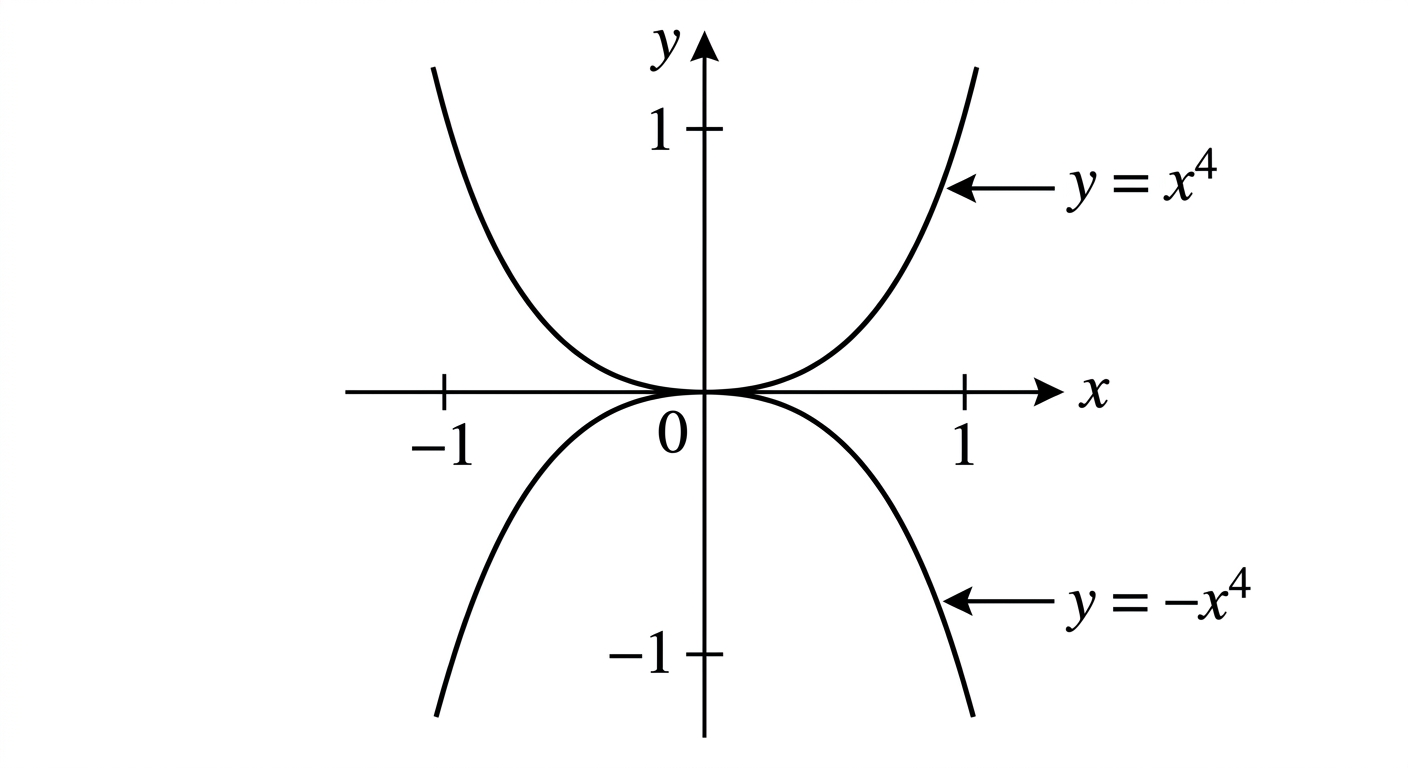
Find for each curve.
Find the gradient of each curve at and at .
Write down the gradient of each curve at the origin, and describe the tangent there.
revisionprep.com
Summary Answer
Not available for this question.
Model Answer
Not available for this question.
Marking Scheme
Not available for this question.
Examiner Insights
Not available for this question.
Derivative of axⁿ
The volume of water in a cylindrical tank, measured in litres, is given by , where is the time in minutes after a valve is opened.
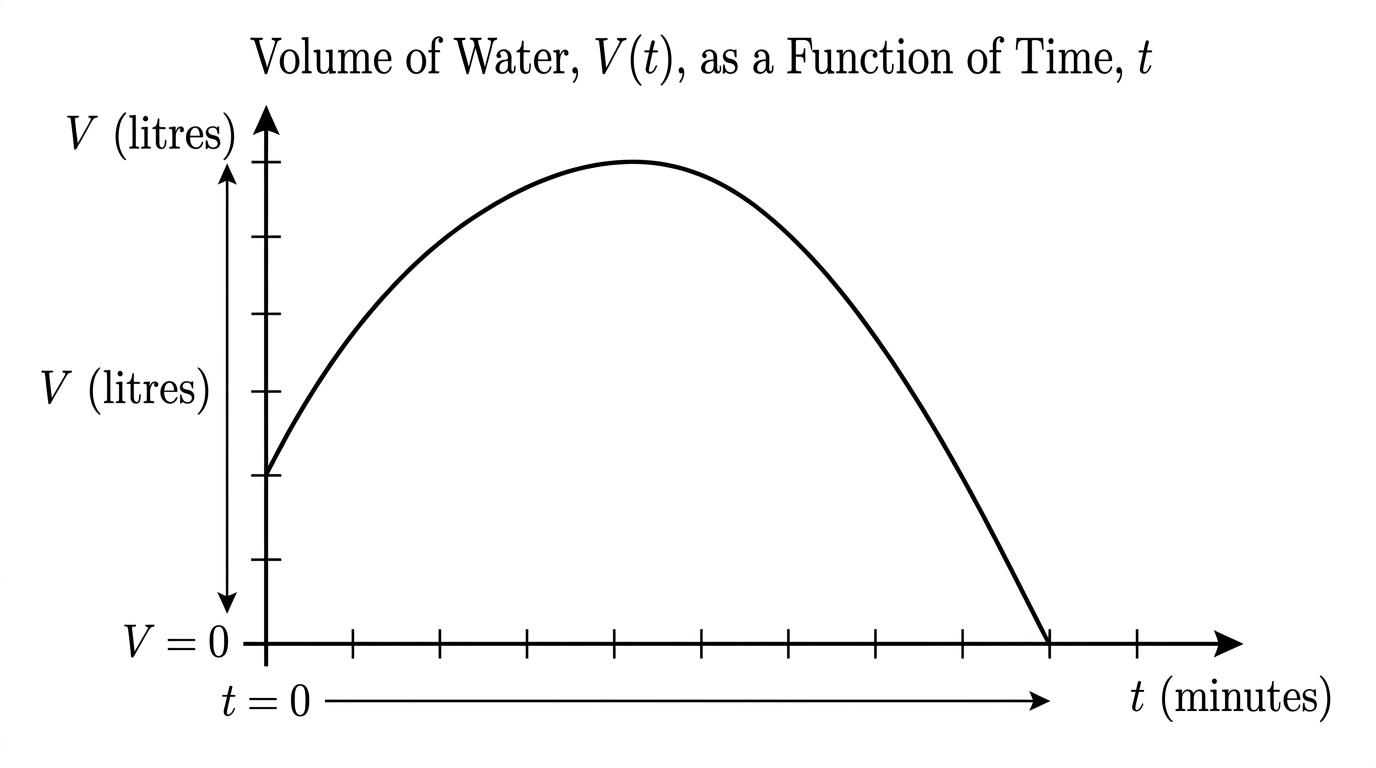
Calculate the rate at which the volume of water is changing at minutes.
Determine the time at which the volume of water is at its maximum.
Calculate the maximum volume of water in the tank and explain what happens to the volume for .
revisionprep.com
Summary Answer
Not available for this question.
Model Answer
Not available for this question.
Marking Scheme
Not available for this question.
Examiner Insights
Not available for this question.
Continuity, differentiability and differentiation from first principles
The graph shows , where
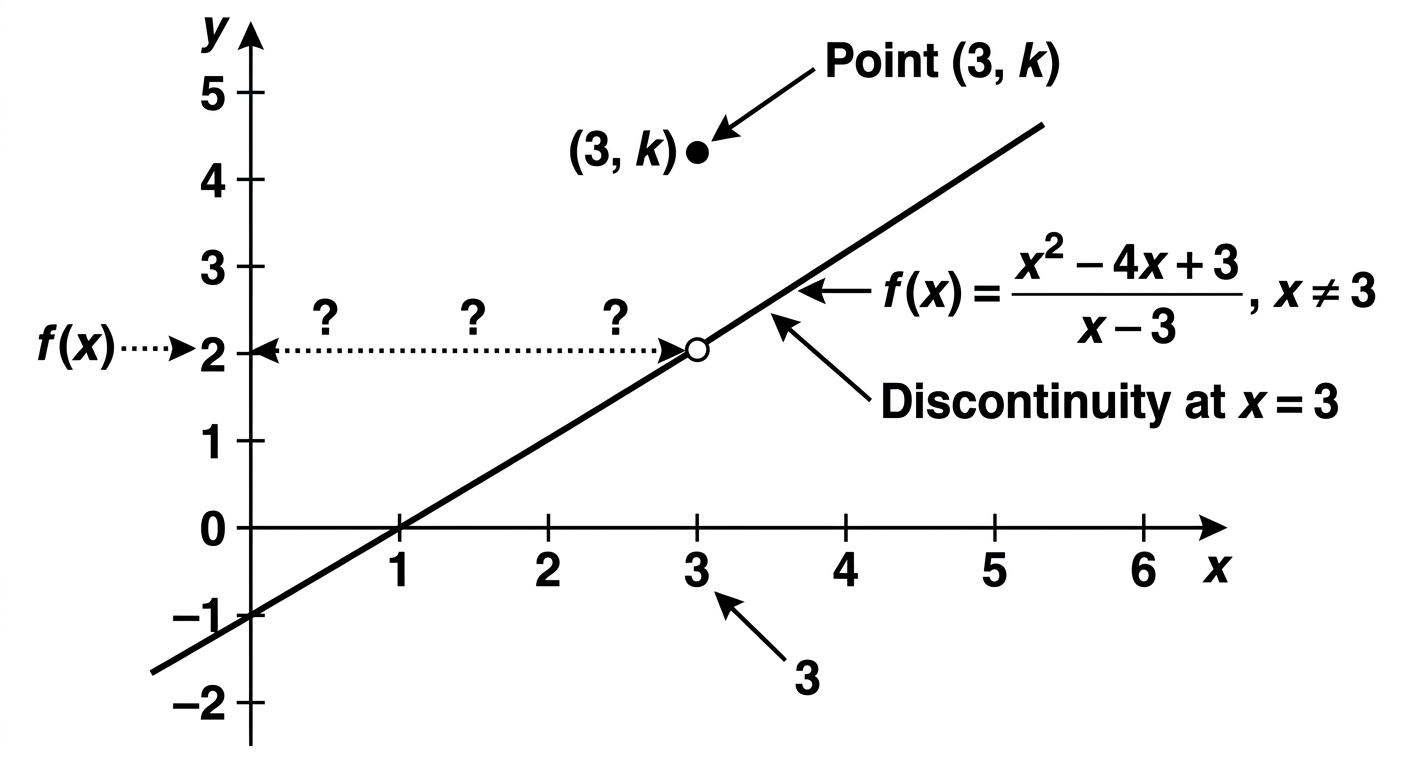
Find .
Write down the value of for which is continuous at , and find for this value of .
For , name the type of discontinuity at , and explain why is not differentiable at .
revisionprep.com
Summary Answer
Not available for this question.
Model Answer
Not available for this question.
Marking Scheme
Not available for this question.
Examiner Insights
Not available for this question.
Introduction to the derivative; limits and rates of change
The concentration mg L of a drug in a patient's blood hours after an injection is modelled by , for .
Show that .
Find the maximum concentration and the time at which it occurs, justifying that it is a maximum.
Show that .
Find the time at which the concentration is decreasing most rapidly, and the rate of decrease at that time.
The drug is effective while . Find the length of time for which the drug is effective.
After , a second dose is given at the moment the concentration is falling at mg L h. Find the time of the second dose.
revisionprep.com
Summary Answer
Not available for this question.
Model Answer
Not available for this question.
Marking Scheme
Not available for this question.
Examiner Insights
Not available for this question.
Limits and L'Hôpital's rule
After a tablet is taken, the concentration of a drug in the blood, in mg/L, is modelled by
where is in hours and , , is an absorption constant. The diagram shows the graph of when .
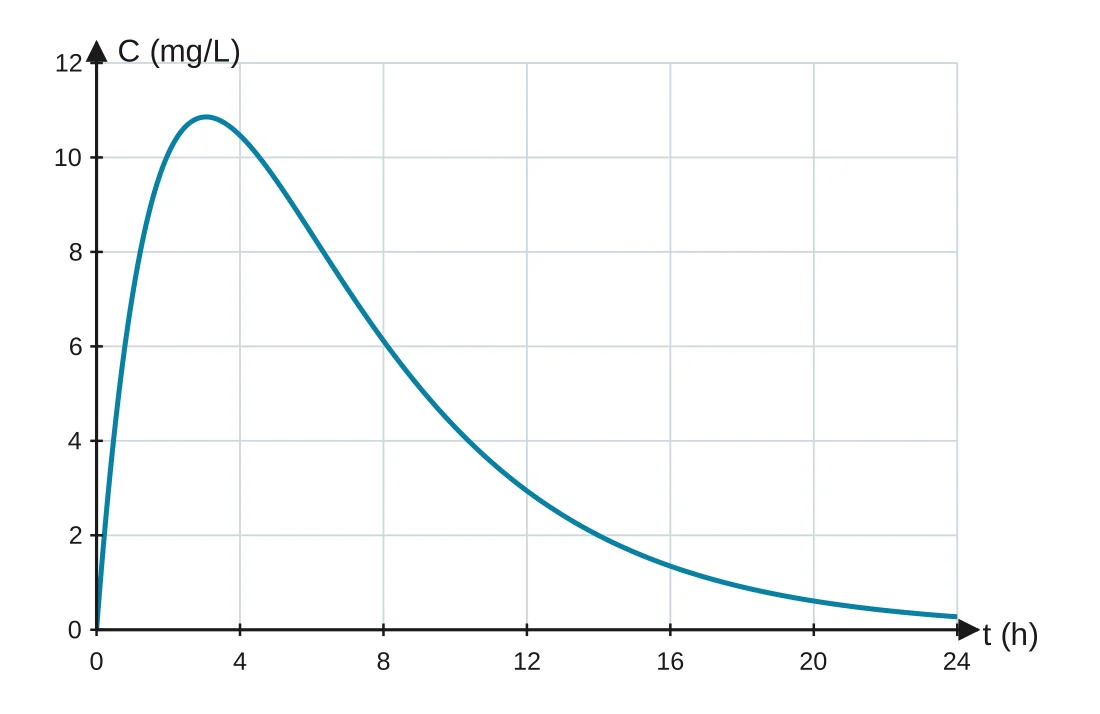
For , find the maximum concentration and the time at which it occurs.
By treating as a function of and using l'Hôpital's rule, find an expression for in terms of .
revisionprep.com
Summary Answer
Not available for this question.
Model Answer
Not available for this question.
Marking Scheme
Not available for this question.
Examiner Insights
Not available for this question.
That's every free question here — 6 of 182.
+176 more questions, plus Mock Papers & Worksheets, are waiting in Premium.