Functions, Composite and Inverse Functions · Paper 1 — Free Maths AA HL Practice Questions
Free questions
Open in full, with answers, mark scheme and examiner insights.
Concept of a function; domain and range
The diagram shows the graph of , where . The diagram is not to scale.
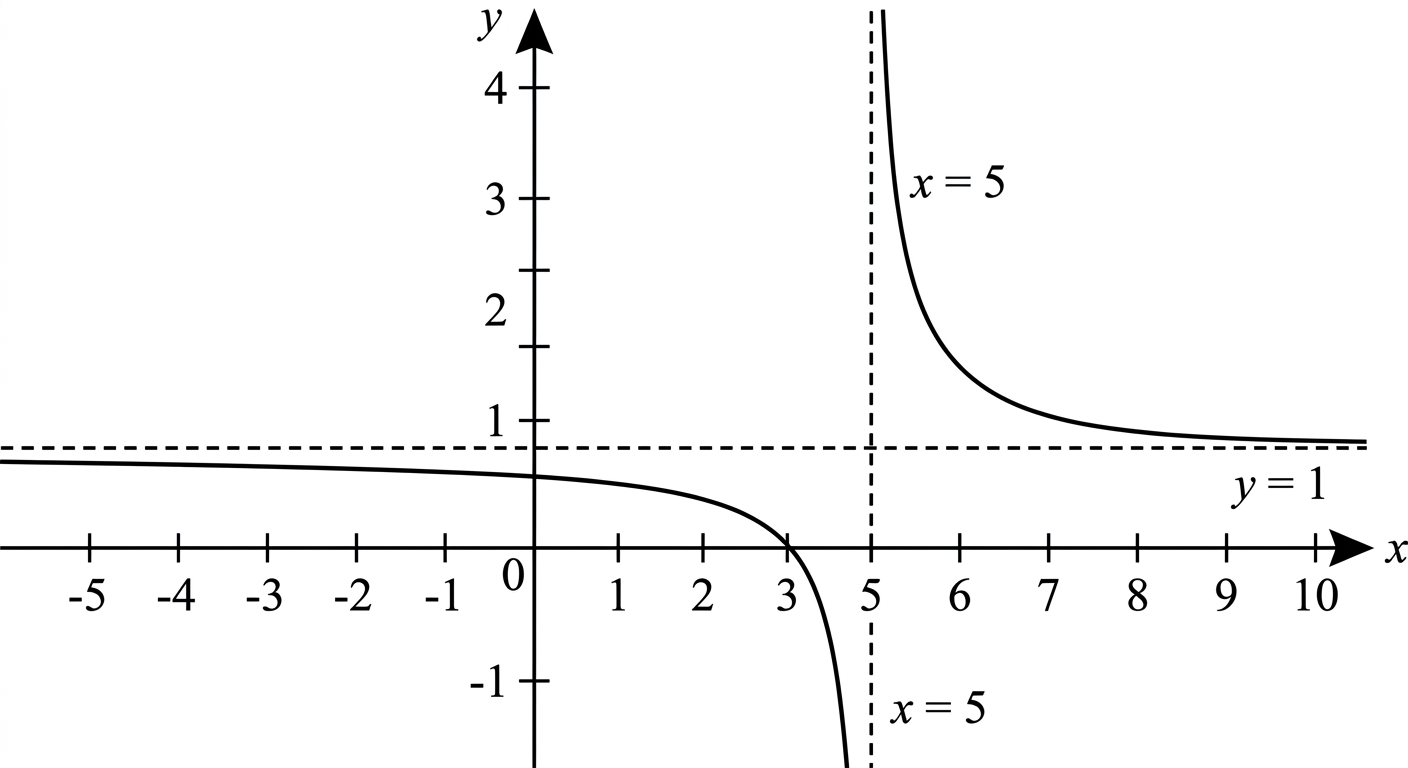
Write down the largest possible domain of .
Write down the range of .
Find , stating its domain.
revisionprep.com
Summary Answer
Not available for this question.
Model Answer
Not available for this question.
Marking Scheme
Not available for this question.
Examiner Insights
Not available for this question.
Composite and inverse functions
The diagram shows the graph of for . It consists of straight-line segments joining , , and .
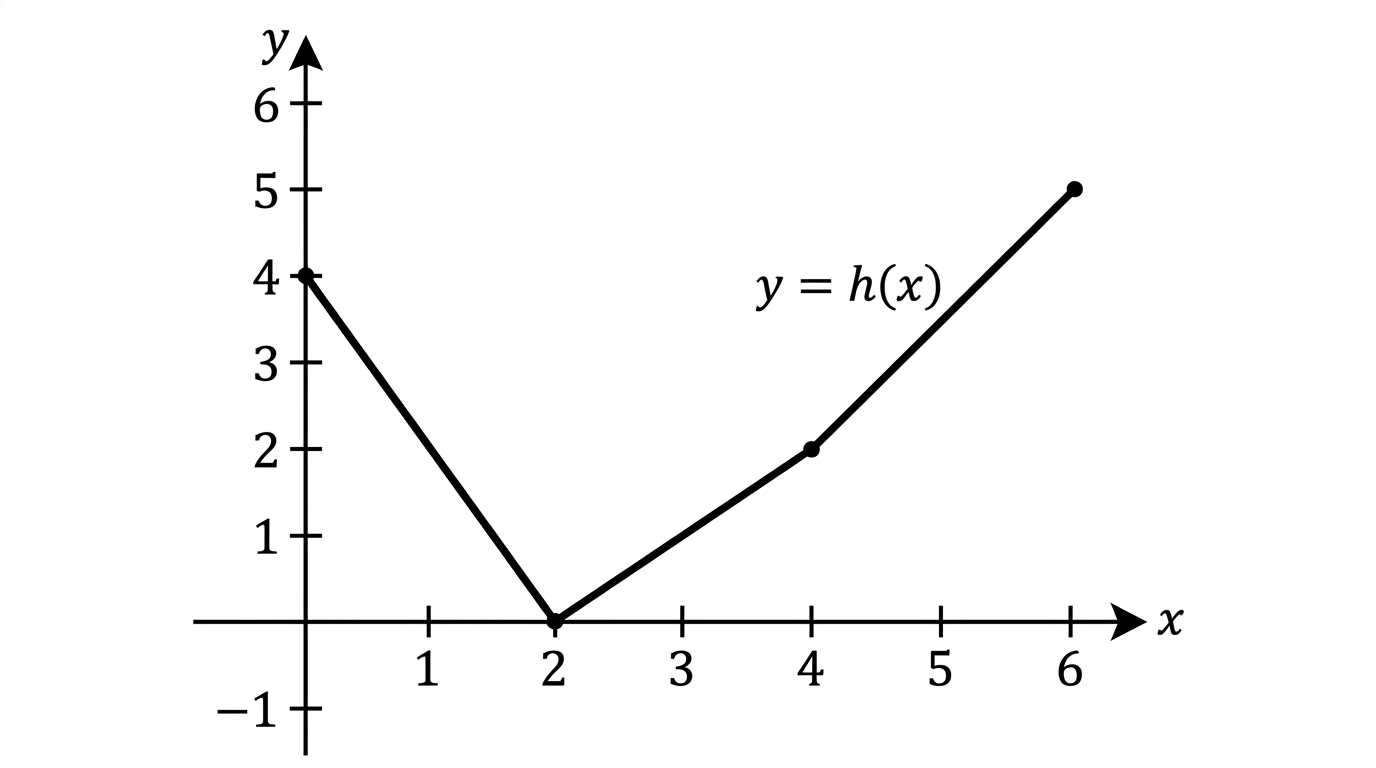
Explain why does not have an inverse function.
The function is restricted to . Write down .
Find .
Write down the domain and the range of .
revisionprep.com
Summary Answer
Not available for this question.
Model Answer
Not available for this question.
Marking Scheme
Not available for this question.
Examiner Insights
Not available for this question.
Concept of a function; domain and range
The diagram shows the graph of , where The open circle shows that the point is not on the graph.
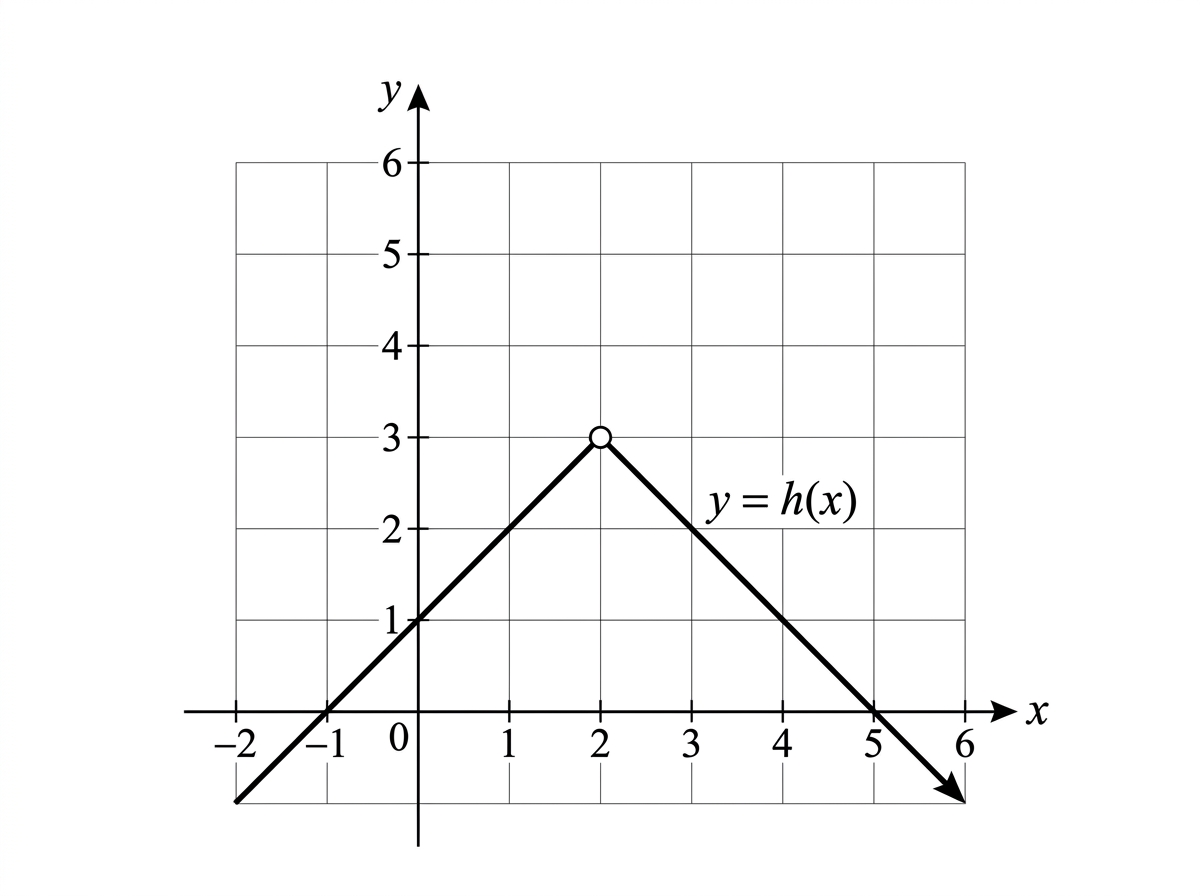
Write down the domain and the range of .
Show that is not a one-to-one function.
The function is restricted to . Find , stating its domain.
revisionprep.com
Summary Answer
Not available for this question.
Model Answer
Not available for this question.
Marking Scheme
Not available for this question.
Examiner Insights
Not available for this question.
Composite and inverse functions
The diagram shows the graph of for . It consists of straight-line segments joining the points , , , and . All these points lie on the graph.
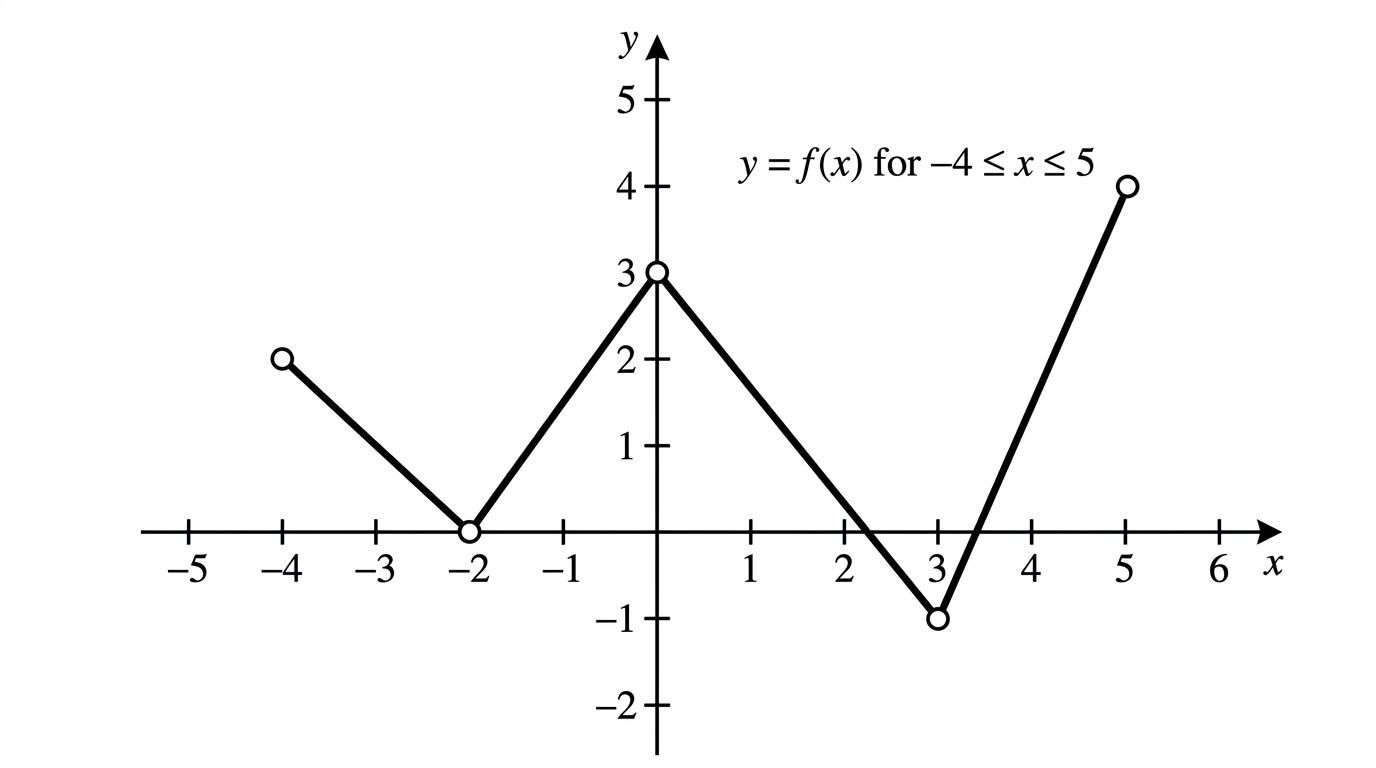
Explain why does not have an inverse.
The function is restricted to . Find .
Write down the domain and the range of .
Find an expression for .
revisionprep.com
Summary Answer
Not available for this question.
Model Answer
Not available for this question.
Marking Scheme
Not available for this question.
Examiner Insights
Not available for this question.
Concept of a function; domain and range
The graph shows for .
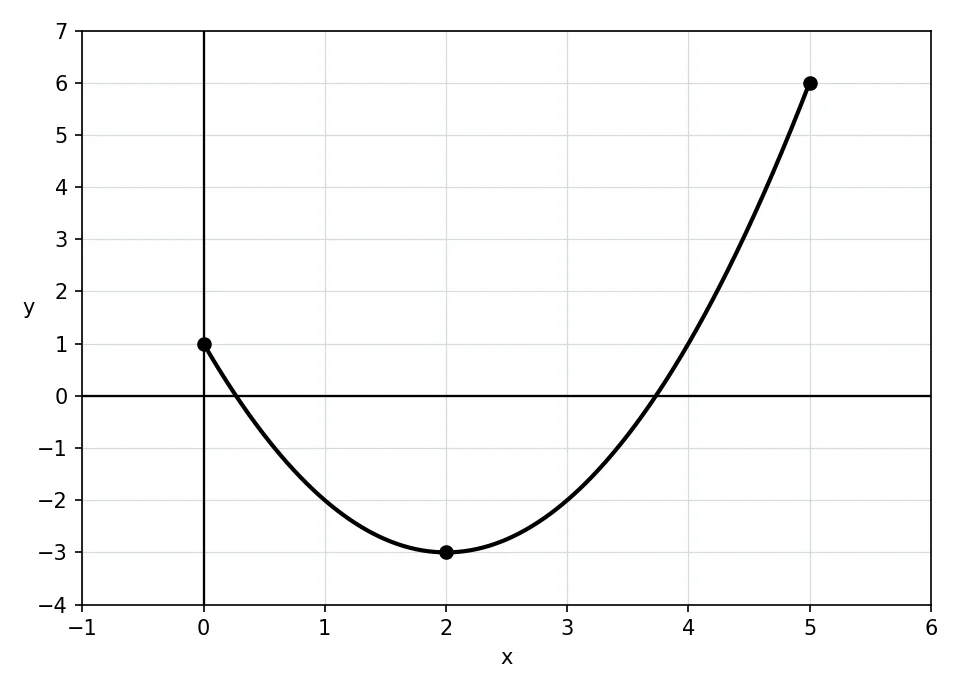
Write down the coordinates of the vertex and find the range of .
Find the set of values of for which has exactly two solutions.
Find the set of values of for which has exactly one solution.
Solve .
revisionprep.com
Summary Answer
Not available for this question.
Model Answer
Not available for this question.
Marking Scheme
Not available for this question.
Examiner Insights
Not available for this question.
Odd and even functions; self-inverse functions; restricted domains
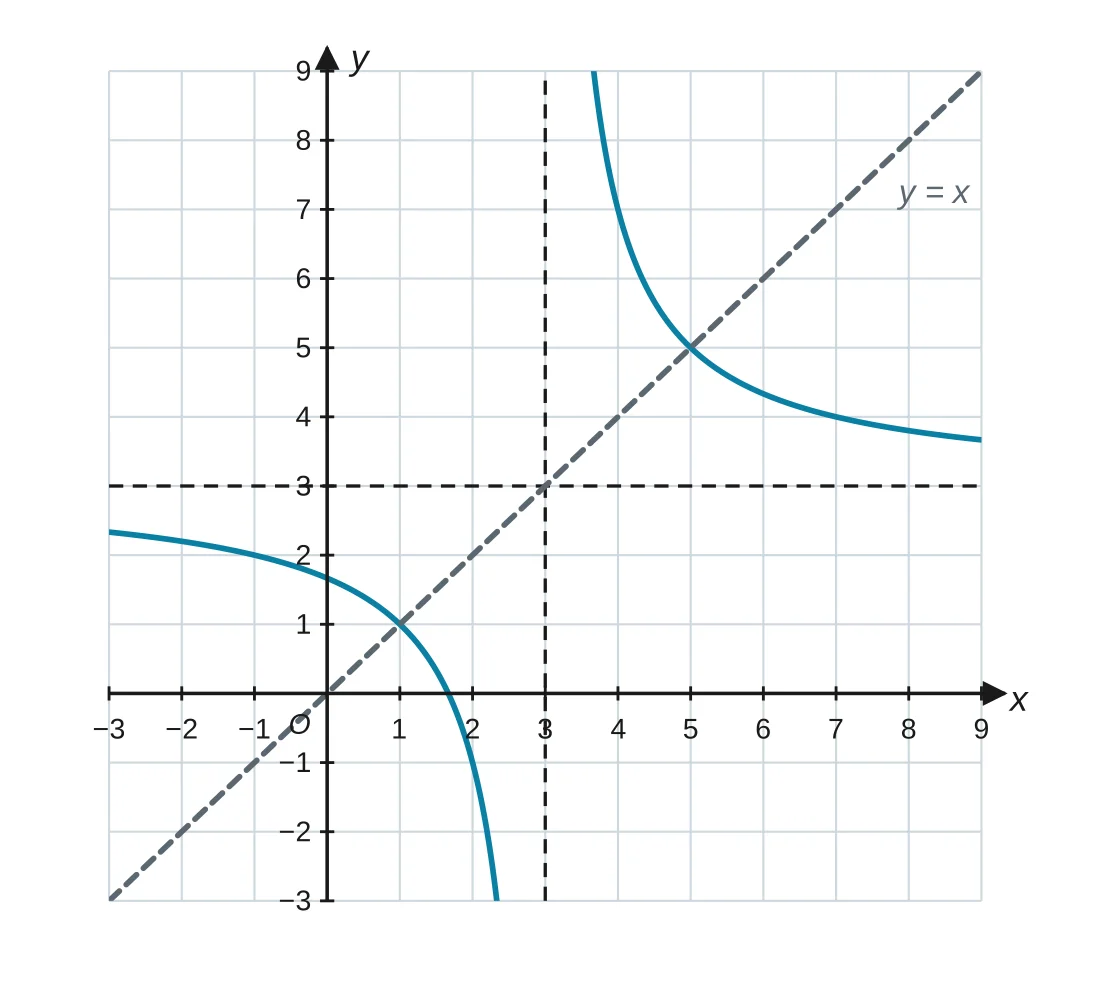
Let , , where , and .
Find .
Show that if , then is self-inverse.
Show that if is self-inverse, then .
The diagram shows the graph of , its asymptotes, and the line .
Show that, when , the asymptotes of the graph of meet on the line , and verify this for the graph in the diagram.
revisionprep.com
Summary Answer
Not available for this question.
Model Answer
Not available for this question.
Marking Scheme
Not available for this question.
Examiner Insights
Not available for this question.
That's every free question here — 6 of 312.
+306 more questions, plus Mock Papers & Worksheets, are waiting in Premium.