You're viewing 3 free preview questions for Maths AA HL — subscribe to unlock 124 more, plus the Full Question Bank, Mock Papers & Worksheets.Upgrade
Modeling with Functions · Paper 1 — Free Maths AA HL Practice Questions
1FoundationSAQ-SReal-world applications of functions (e.g. growth models)s8 marksPaper 1~12 min

Criterion: Find
Marks: 8
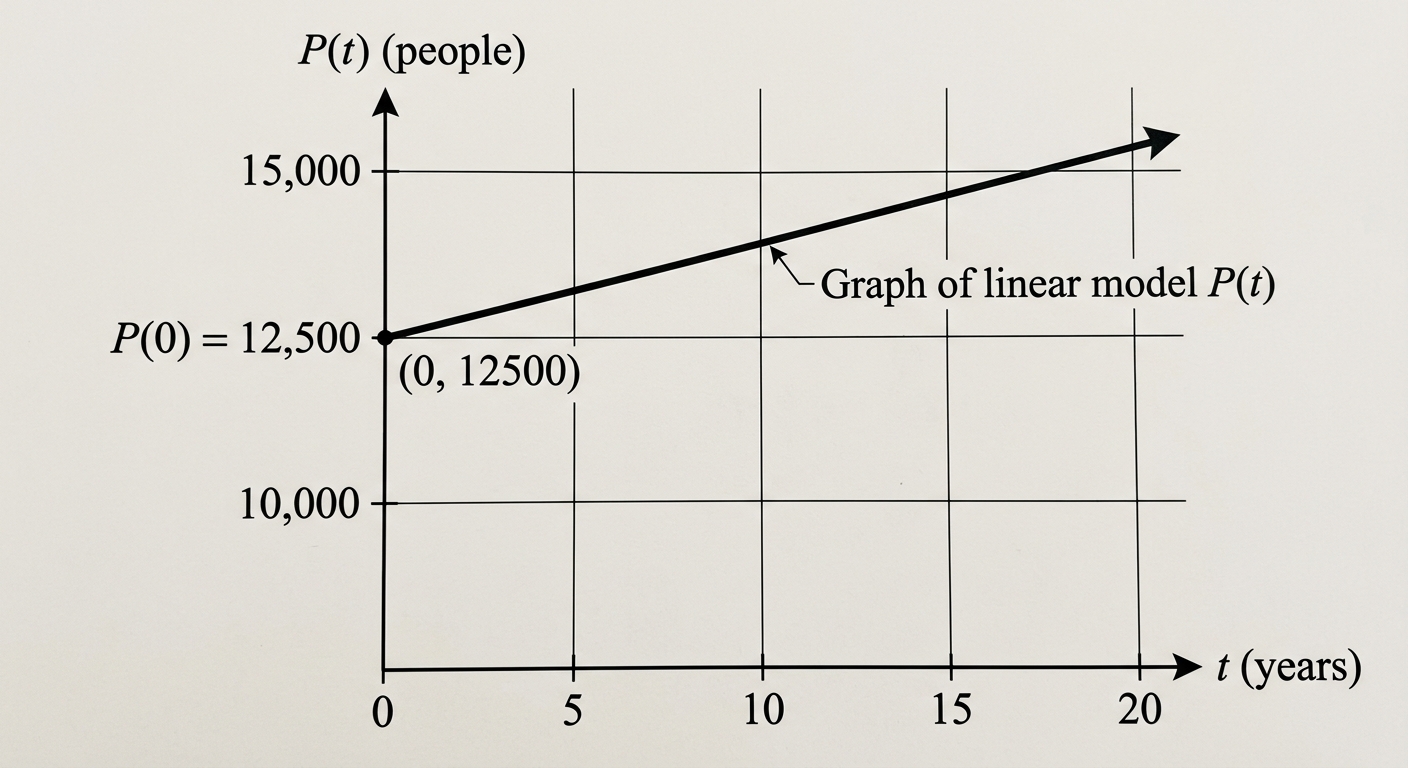
A small town has a population of people. A demographer models the population years from now using the linear function
(a)
Write down the values of the initial population and the annual rate of change, and state what each represents in context. [2 marks]
(b)
Determine the number of complete years it will take for the population to first exceed people. [2 marks]
(c)
The demographer notes that a neighbouring town has population . Determine the year in which the two towns have equal populations, and evaluate whether a linear model is likely to remain valid for both towns beyond this point. [4 marks]

Solutions
2MasterySAQ-SReal-world applications of functions (e.g. growth models)s5 marksPaper 1~8 min
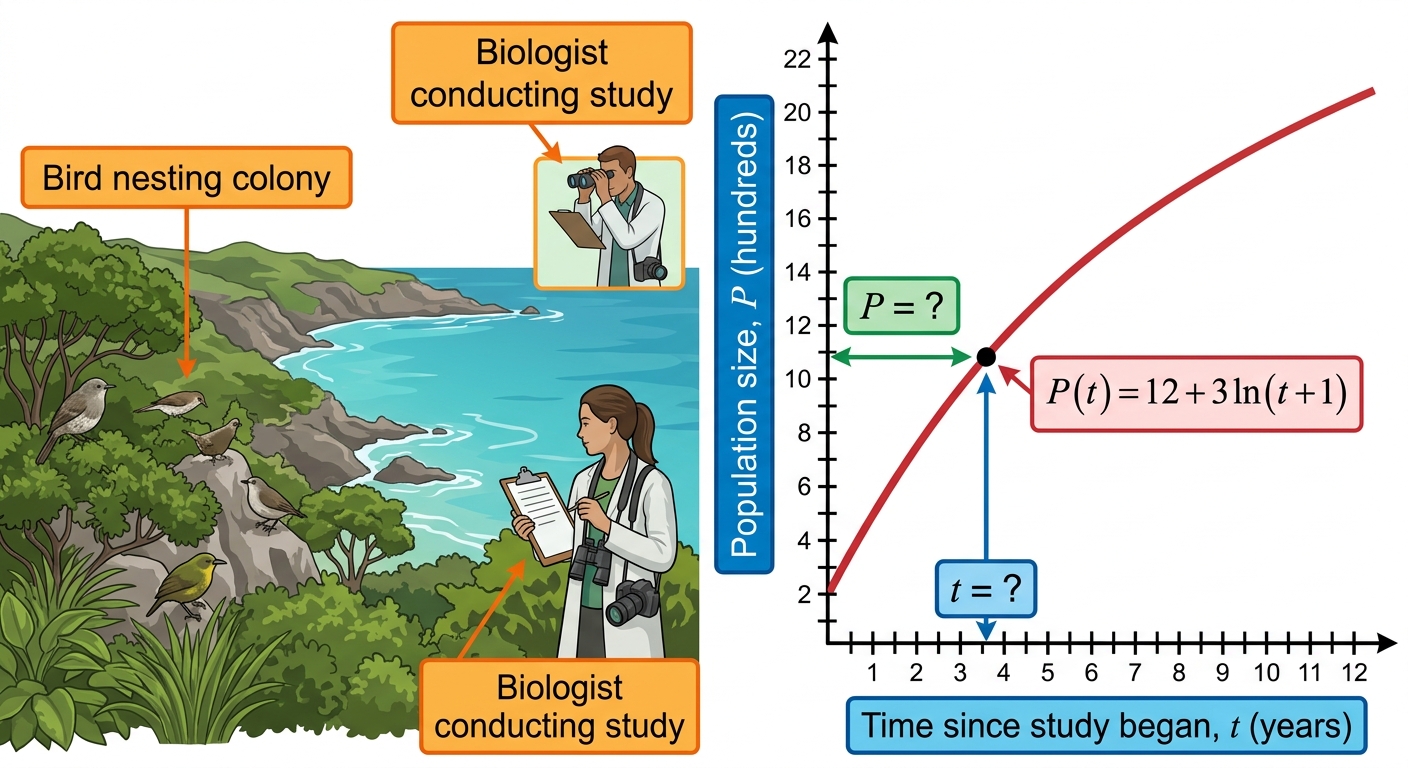
A biologist is studying the population of a species of bird on a remote island. The population size (in hundreds) is modelled by , where is the time in years since the study began.
(a)
Show that the population first reaches 2700 birds after years. [2 marks]
(b)
Find the average rate of change of , in hundreds of birds per year, over the interval , giving your answer in exact form. [2 marks]
(c)
The biologist claims that the rate of growth of the population is always decreasing. Determine whether this claim is correct, justifying your answer with a mathematical argument. [1 mark]
Solutions
3ChallengeSAQ-LReal-world applications of functions (e.g. growth models)s8 marksPaper 1~12 min
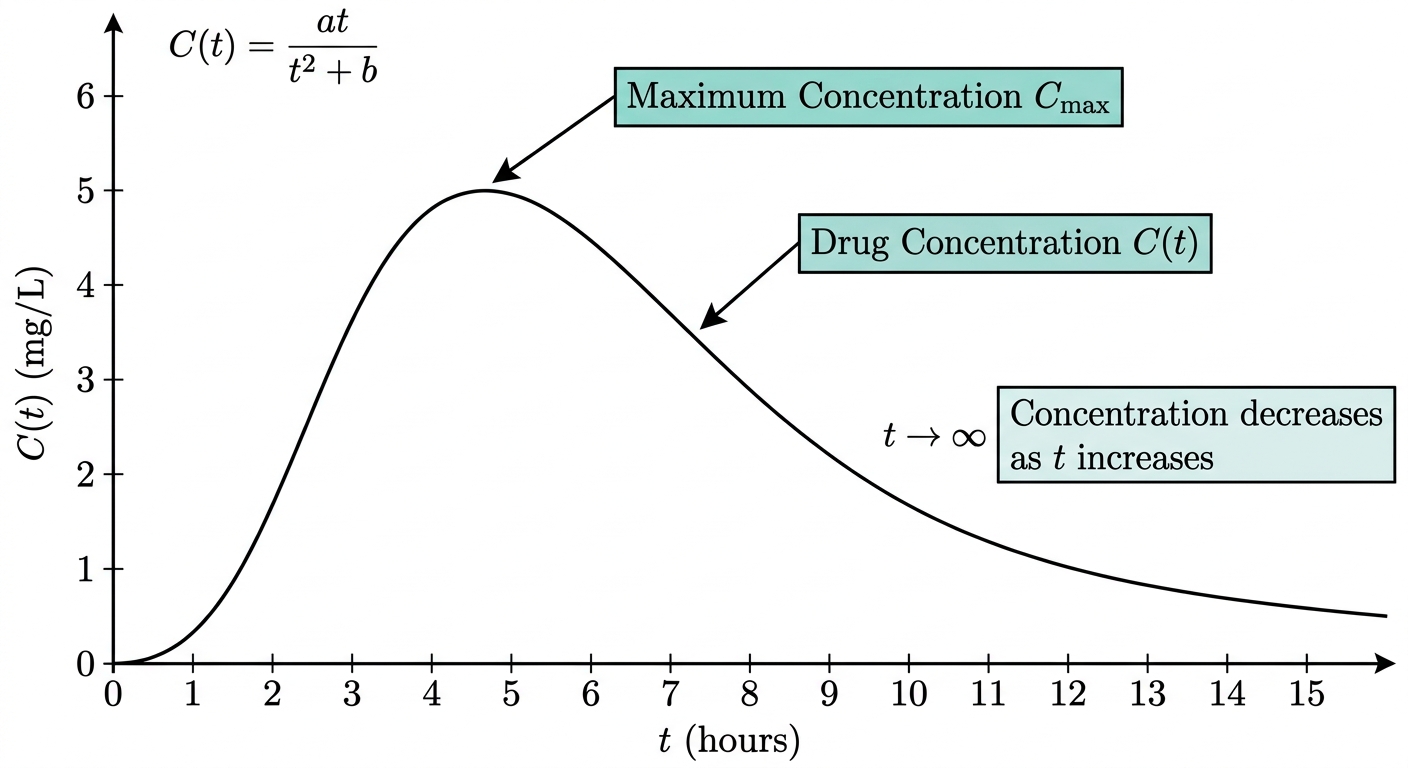
A pharmaceutical company is testing a new drug. The concentration (in mg/L) of the drug in a patient's bloodstream at time (in hours) after administration is modelled by
where and are positive constants.
(a)
Calculate the value of at which the maximum concentration occurs, expressing your answer in terms of . [3 marks]
(b)
The maximum concentration is , occurring at hours. Determine the values of and . [3 marks]
(c)
A drug is considered therapeutically effective while . Using your values from (b), determine the total duration for which the drug remains therapeutically effective. [2 marks]
Solutions
That's every free question here — 3 of 127.
+124 more questions, plus Mock Papers & Worksheets, are waiting in Premium.