Quadratic Functions · Paper 1 — Free Maths AA HL Practice Questions
Free questions
Open in full, with answers, mark scheme and examiner insights.
The quadratic function: vertex, intercepts and forms
The diagram shows part of the graph of , where . The graph has vertex and crosses the -axis at and .
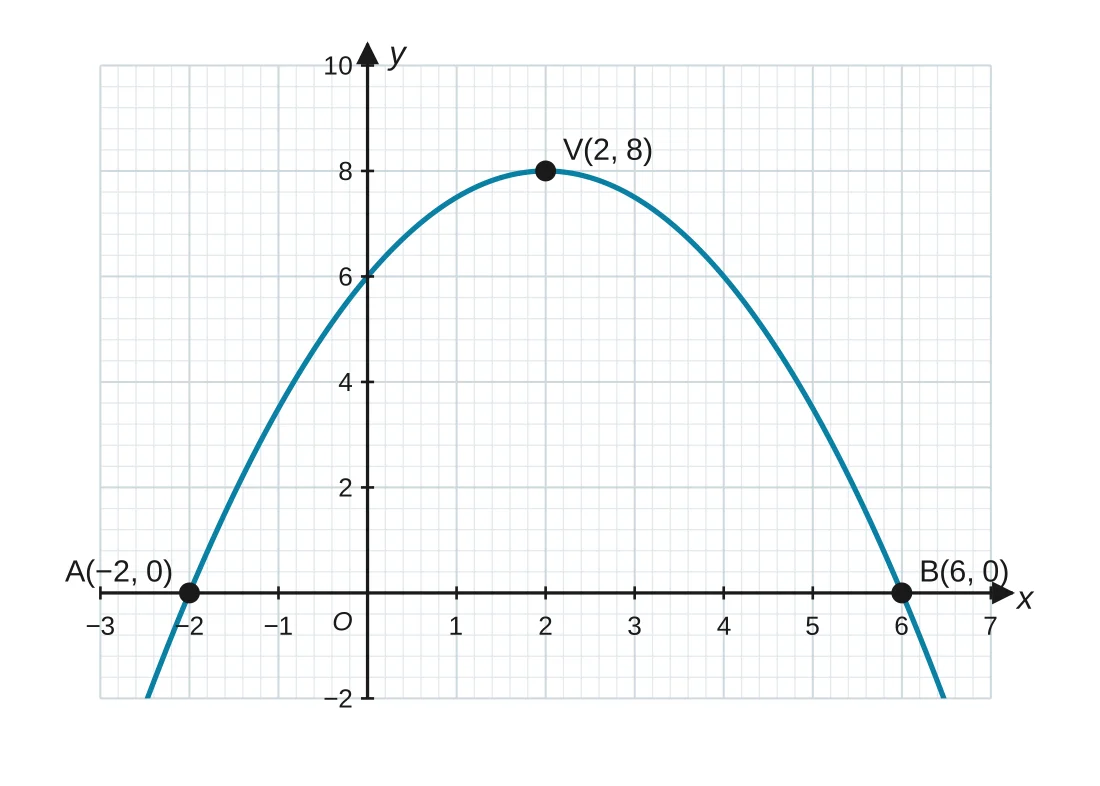
Write down the equation of the axis of symmetry.
Find the value of .
Solve the equation . Give your answers in exact form.
revisionprep.com
Summary Answer
Not available for this question.
Model Answer
Not available for this question.
Marking Scheme
Not available for this question.
Examiner Insights
Not available for this question.
Solving quadratic equations and inequalities
The diagram shows the graph of .
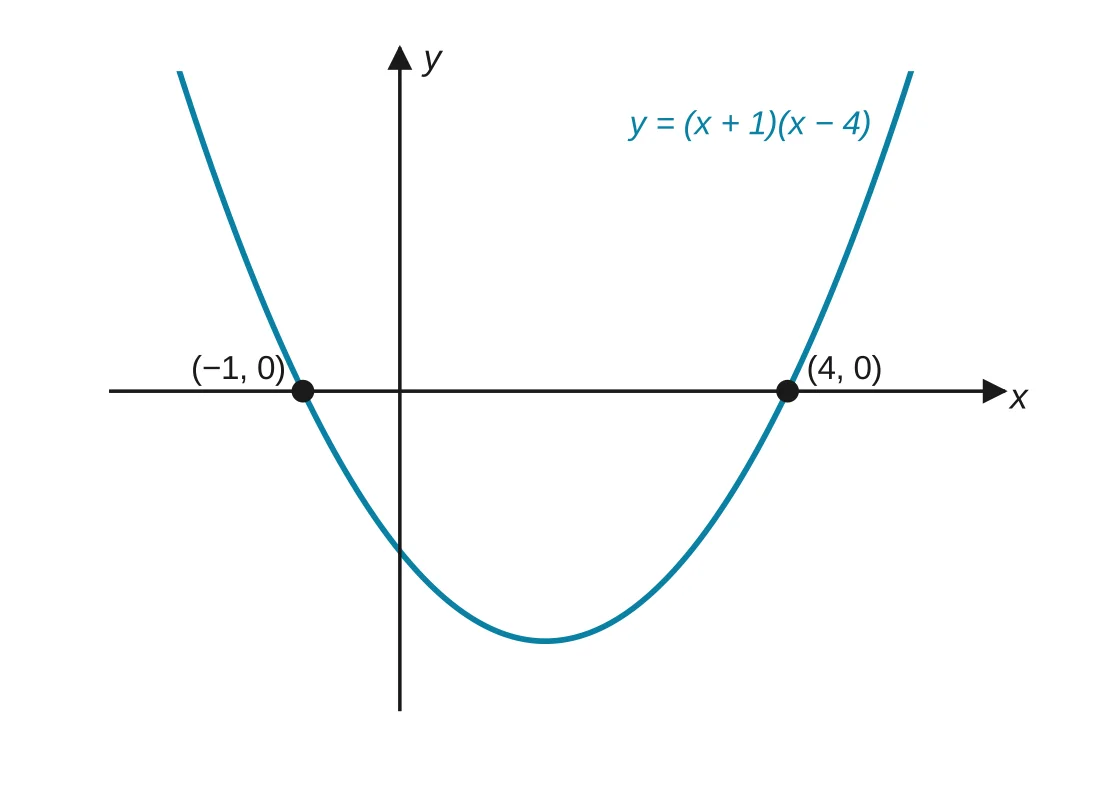
Write down the set of values of for which .
Write down the set of values of for which .
Solve the inequality .
revisionprep.com
Summary Answer
Not available for this question.
Model Answer
Not available for this question.
Marking Scheme
Not available for this question.
Examiner Insights
Not available for this question.
The quadratic function: vertex, intercepts and forms
The diagram shows the graph of (dashed) and the graph of , which is obtained from by a single transformation. The vertex of is .
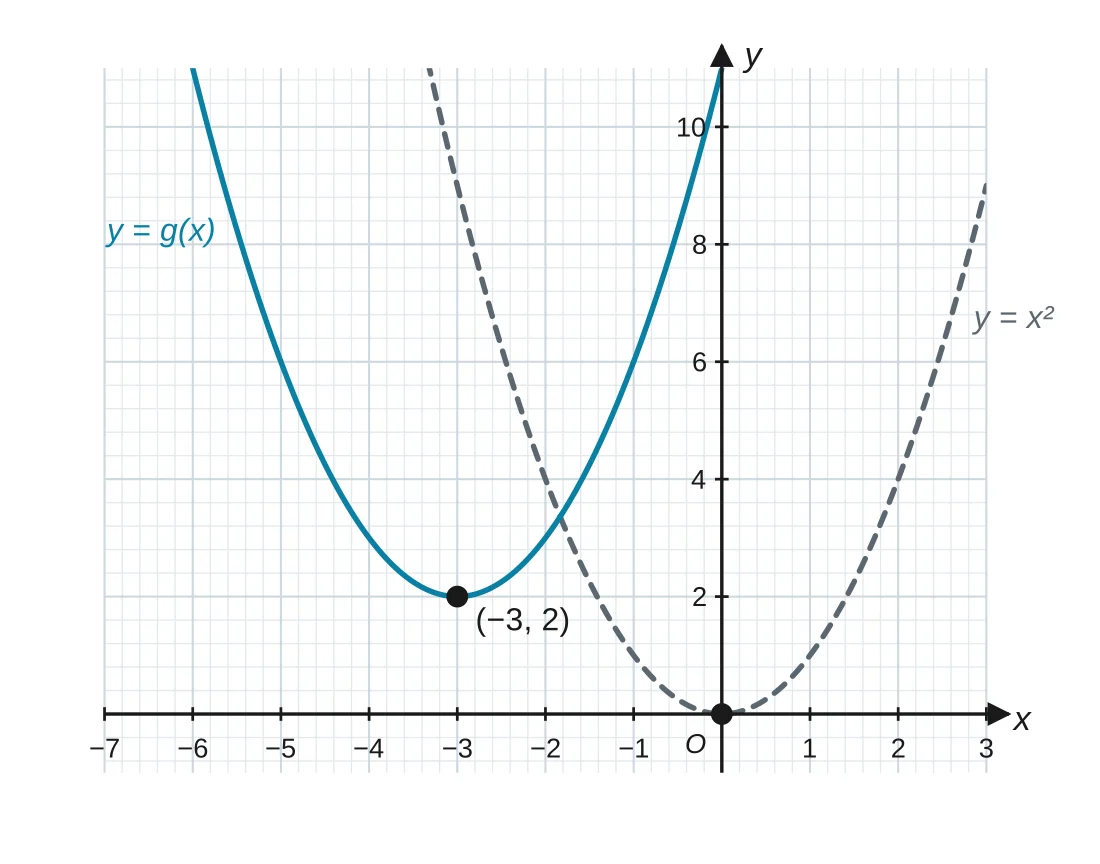
Describe the transformation fully.
Express in the form .
Let . Find and determine whether is even, odd or neither. Justify your answer.
revisionprep.com
Summary Answer
Not available for this question.
Model Answer
Not available for this question.
Marking Scheme
Not available for this question.
Examiner Insights
Not available for this question.
Solving quadratic equations and inequalities
The diagram shows the curve and the line .
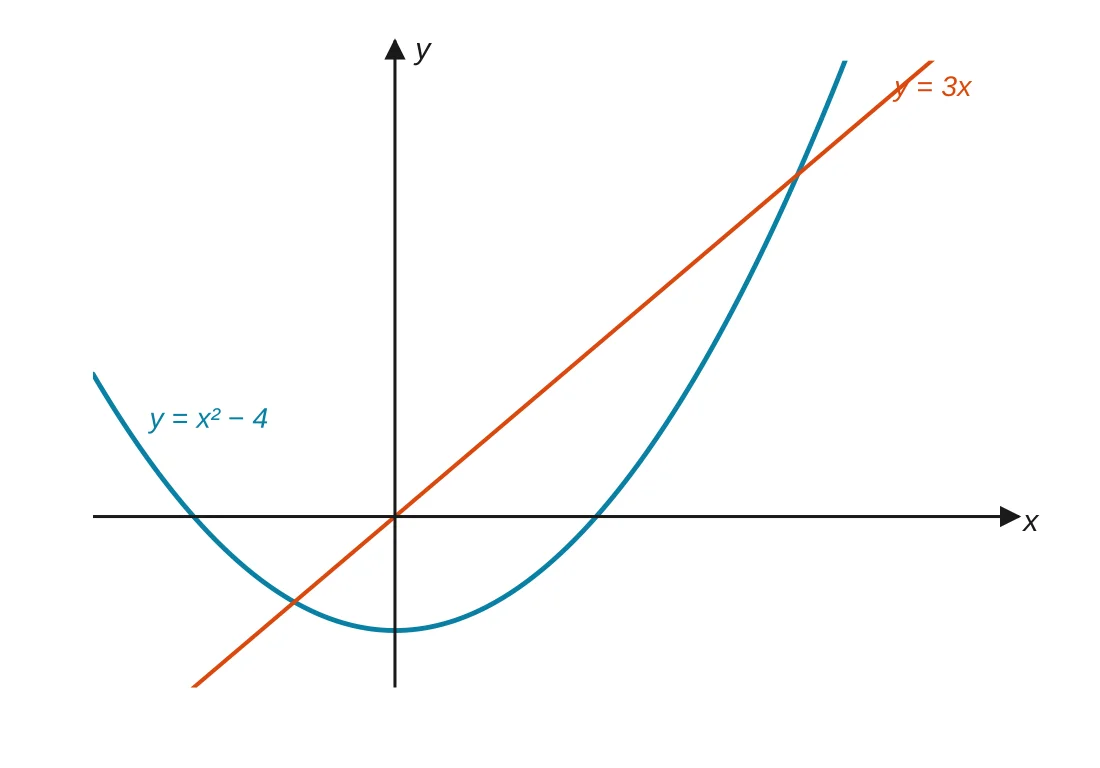
Find the -coordinates of the points where the line meets the curve.
Hence solve the inequality .
Solve the inequality .
revisionprep.com
Summary Answer
Not available for this question.
Model Answer
Not available for this question.
Marking Scheme
Not available for this question.
Examiner Insights
Not available for this question.
The quadratic function: vertex, intercepts and forms
The diagram shows part of the graph of , where . The graph passes through and , and the maximum value of is .
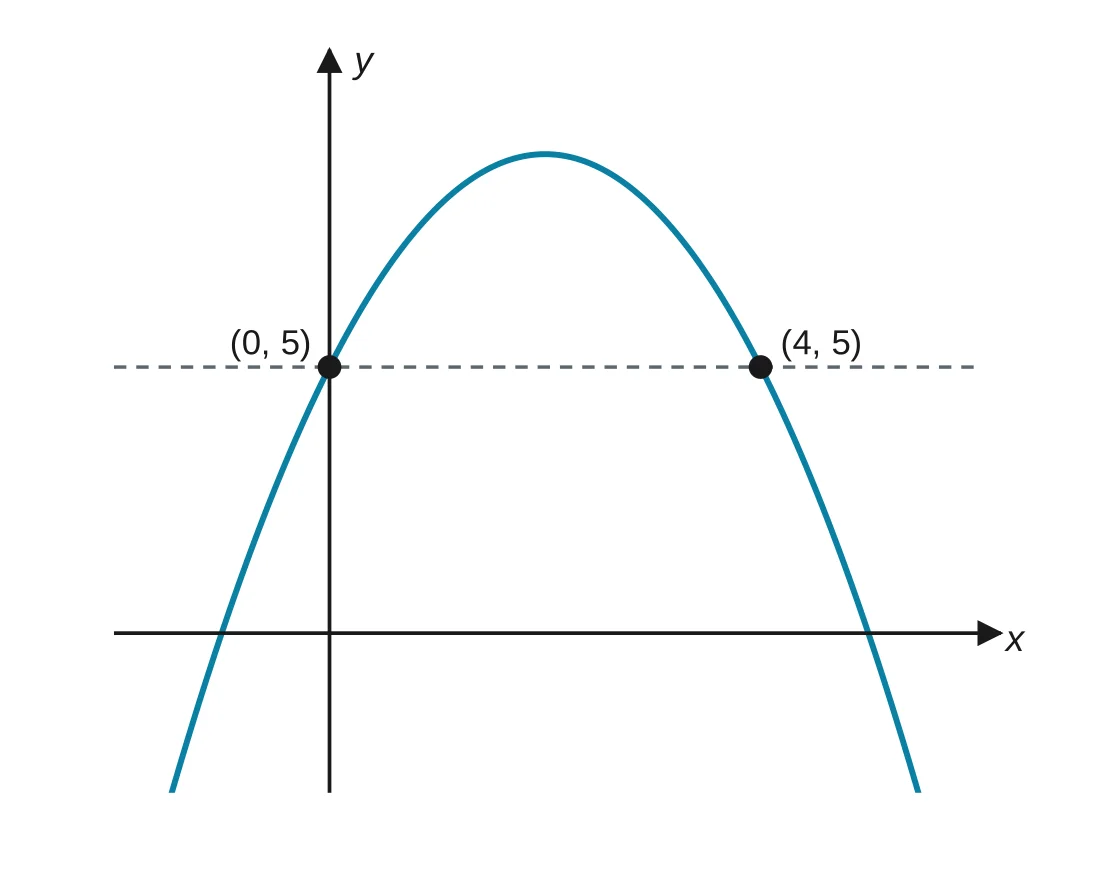
Find the value of .
Find the value of and the value of .
The graph of is reflected in the -axis and then translated units vertically upwards. Find the equation of the new graph, giving your answer in the form .
Let . Write down the equations of the vertical asymptotes of the graph of , and find the range of .
revisionprep.com
Summary Answer
Not available for this question.
Model Answer
Not available for this question.
Marking Scheme
Not available for this question.
Examiner Insights
Not available for this question.
The discriminant and the nature of roots
The diagram shows the curve and the point . Lines of the form pass through .
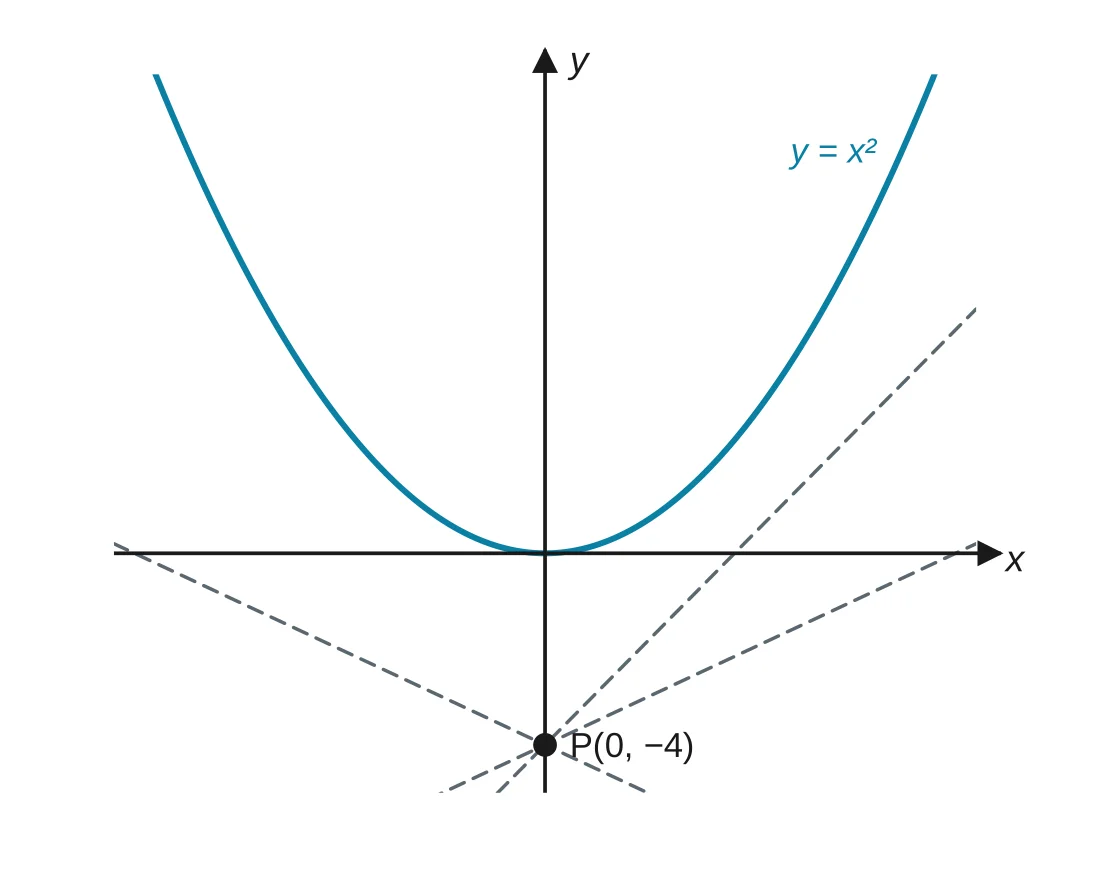
Show that the -coordinates of any points where the line meets the curve satisfy .
Find the values of for which the line is a tangent to the curve.
Find the coordinates of the two points of contact.
Find the area of the triangle formed by and the two points of contact.
Find the set of values of for which the line through does not meet the curve.
The point is replaced by , where . Show that the tangents from this point have gradients , and that the points of contact always lie on the line .
Find the value of for which the triangle formed by and the two points of contact has area .
revisionprep.com
Summary Answer
Not available for this question.
Model Answer
Not available for this question.
Marking Scheme
Not available for this question.
Examiner Insights
Not available for this question.
That's every free question here — 6 of 131.
+125 more questions, plus Mock Papers & Worksheets, are waiting in Premium.