Rational, Exponential, Logarithmic and Polynomial Functions · Paper 1 — Free Maths AA HL Practice Questions
Free questions
Open in full, with answers, mark scheme and examiner insights.
The reciprocal function and simple rational functions
The diagram shows a rectangular garden of length metres and width metres, where . A path of width 1 metre surrounds the garden on all sides.
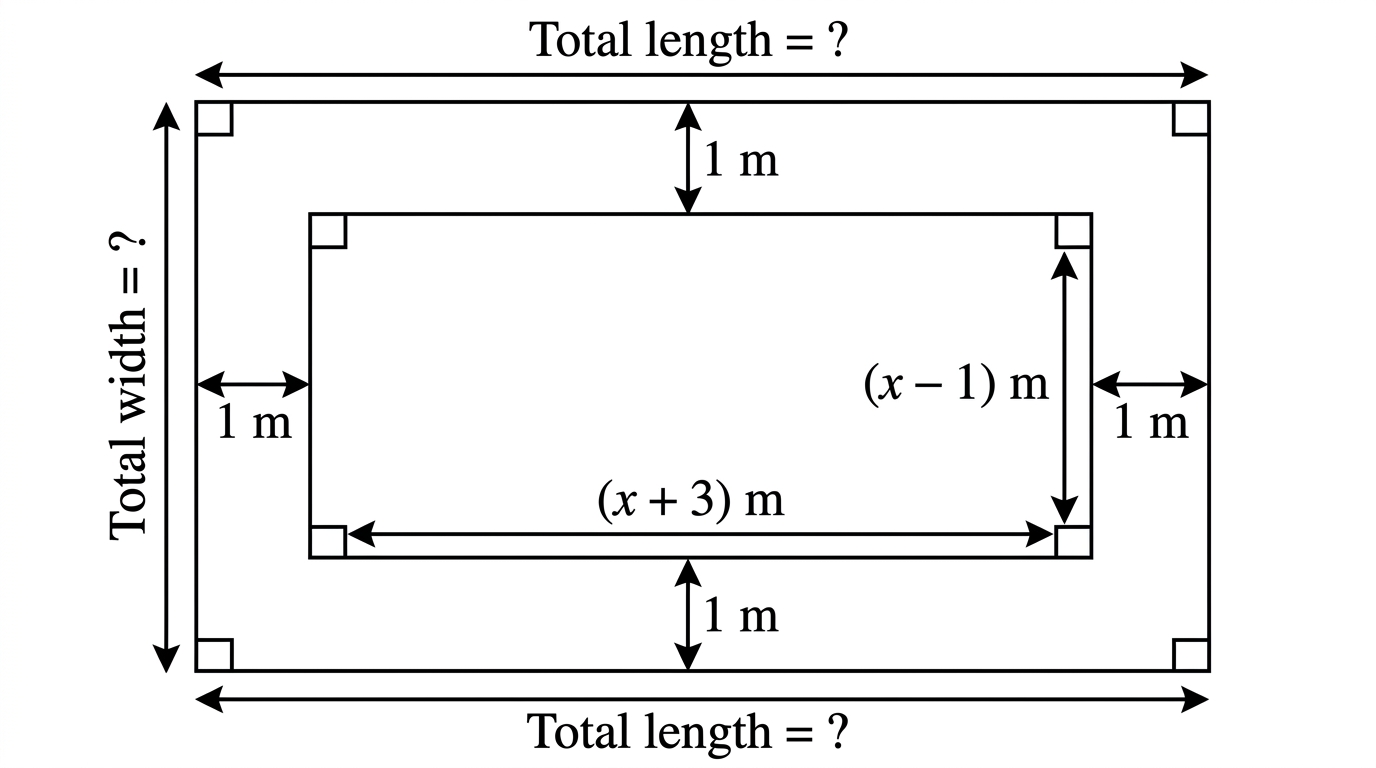
Write down an expression, in factorised form, for the total area of the garden and the path.
Show that the area of the path is .
The garden takes up exactly half of the total area. Find the exact value of .
Write down the limit of as .
revisionprep.com
Summary Answer
Not available for this question.
Model Answer
Not available for this question.
Marking Scheme
Not available for this question.
Examiner Insights
Not available for this question.
Sum and product of roots of polynomials
Let and be the roots of . A quadratic equation with integer coefficients has roots and .
Find this equation by using the sum and the product of and .
Confirm your answer by substituting into .
revisionprep.com
Summary Answer
Not available for this question.
Model Answer
Not available for this question.
Marking Scheme
Not available for this question.
Examiner Insights
Not available for this question.
Exponential and logarithmic functions and models
The graph shows a linear model for the population of town A, years from now. The population is now and after years.
The population of a nearby town B is modelled by .
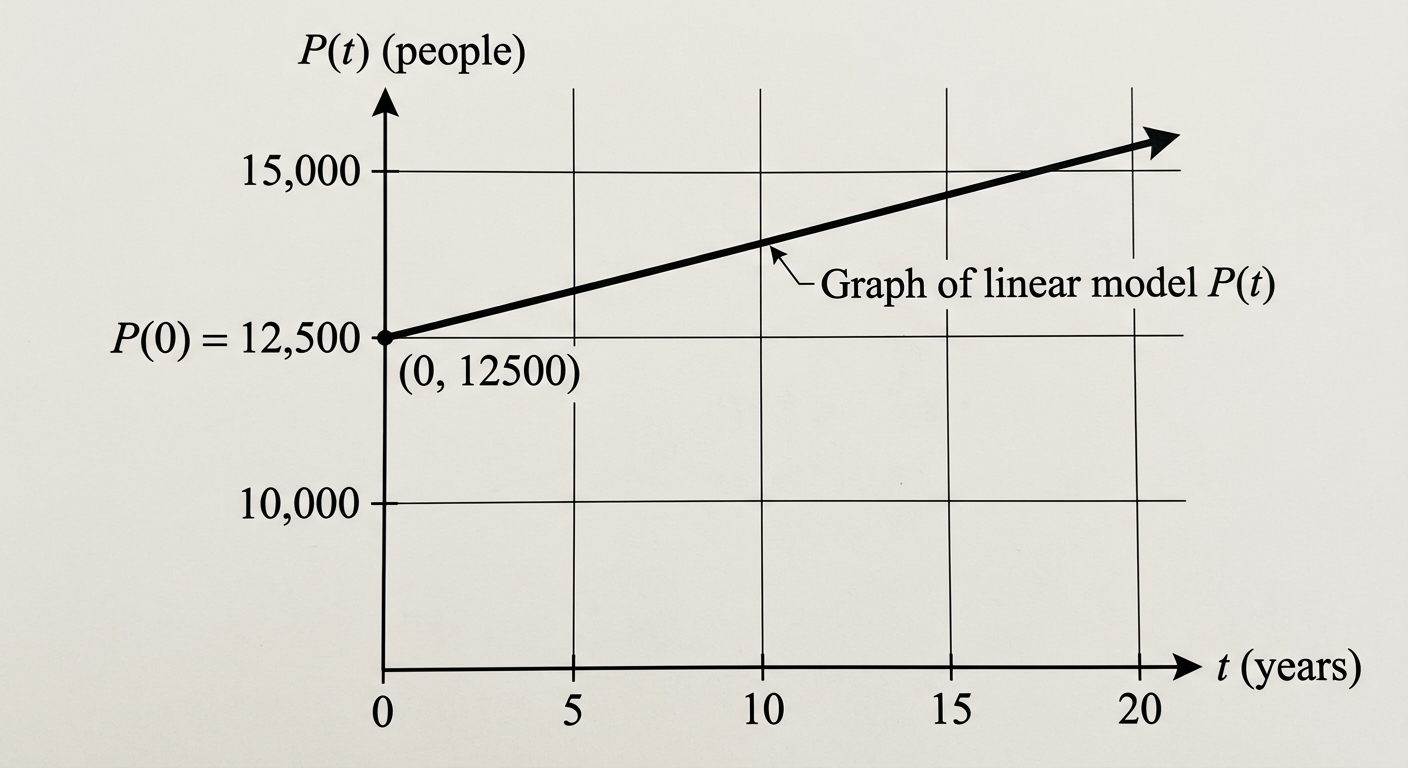
Find an expression for .
Find the value of for which the two towns have the same population.
The towns share a bus service only while their populations differ by less than . By solving , find the set of values of for which the towns share the service.
revisionprep.com
Summary Answer
Not available for this question.
Model Answer
Not available for this question.
Marking Scheme
Not available for this question.
Examiner Insights
Not available for this question.
Rational functions with quadratic numerator or denominator
Let , for . The diagram shows the graph of .
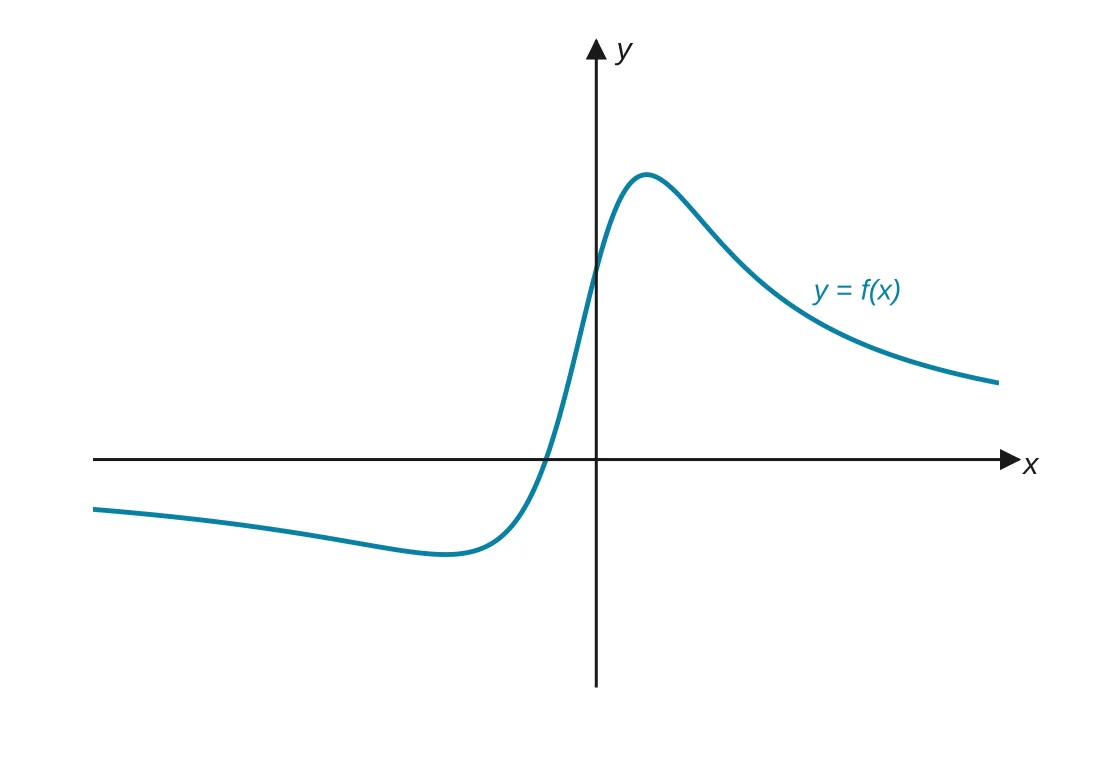
Show that can be written as .
By considering the discriminant of this quadratic equation in , find the range of .
revisionprep.com
Summary Answer
Not available for this question.
Model Answer
Not available for this question.
Marking Scheme
Not available for this question.
Examiner Insights
Not available for this question.
The reciprocal function and simple rational functions
The diagram shows part of the graph of , where , , . The graph has asymptotes and , and passes through .
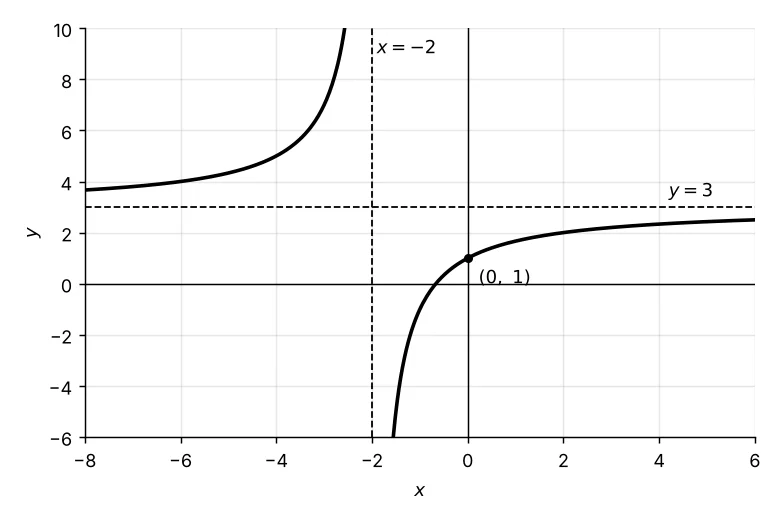
Find the values of , and .
Find the -intercept of the graph.
Write in the form .
Solve .
Find .
Write down the equations of the asymptotes of the graph of .
revisionprep.com
Summary Answer
Not available for this question.
Model Answer
Not available for this question.
Marking Scheme
Not available for this question.
Examiner Insights
Not available for this question.
Polynomial functions; factor and remainder theorems
Consider the line , where , and the curve .
Show that the -coordinates of any points of intersection satisfy .
Write down an expression for the discriminant of this equation in terms of .
Find the values of for which the line is a tangent to the curve, and the coordinates of each point of contact.
Find the set of values of for which the line does not meet the curve.
For , find the points of intersection and the exact distance between them.
revisionprep.com
Summary Answer
Not available for this question.
Model Answer
Not available for this question.
Marking Scheme
Not available for this question.
Examiner Insights
Not available for this question.
That's every free question here — 6 of 338.
+332 more questions, plus Mock Papers & Worksheets, are waiting in Premium.