Straight Lines · Paper 1 — Free Maths AA HL Practice Questions
Free questions
Open in full, with answers, mark scheme and examiner insights.
Equation of a straight line; gradient, parallel and perpendicular lines
The diagram shows the straight line passing through the points and .
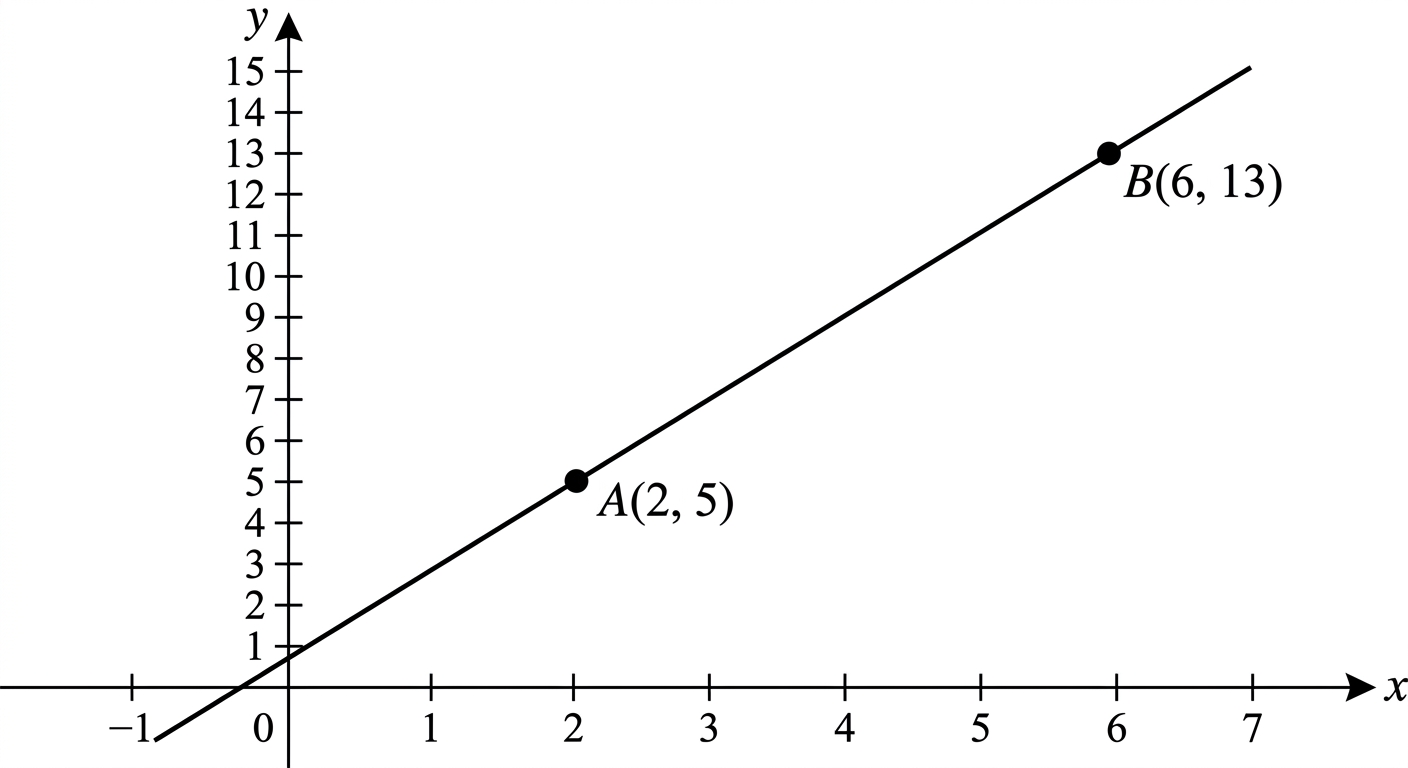
Find the gradient of and write down a vector equation for .
The line is the perpendicular bisector of . Find the equation of in the form .
Find the acute angle between and the line .
revisionprep.com
Summary Answer
Not available for this question.
Model Answer
Not available for this question.
Marking Scheme
Not available for this question.
Examiner Insights
Not available for this question.
Equation of a straight line; gradient, parallel and perpendicular lines
The diagram shows the straight line passing through the points and . The diagram is not to scale.
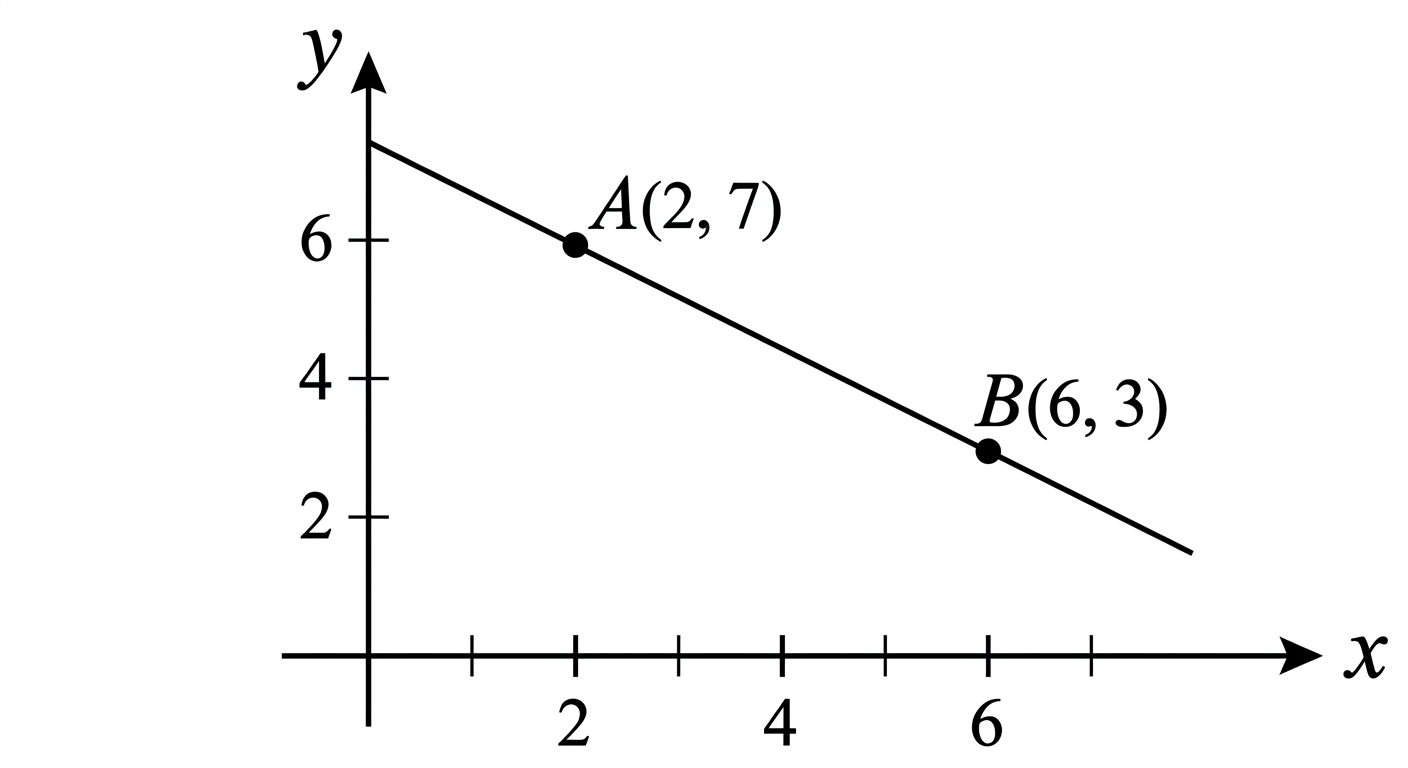
Find the equation of in the form .
Find the equation of the perpendicular bisector of .
The point lies on the perpendicular bisector of and the area of triangle is 12. Find the two possible positions of .
revisionprep.com
Summary Answer
Not available for this question.
Model Answer
Not available for this question.
Marking Scheme
Not available for this question.
Examiner Insights
Not available for this question.
Equation of a straight line; gradient, parallel and perpendicular lines
The diagram shows the line passing through and . The point has coordinates .
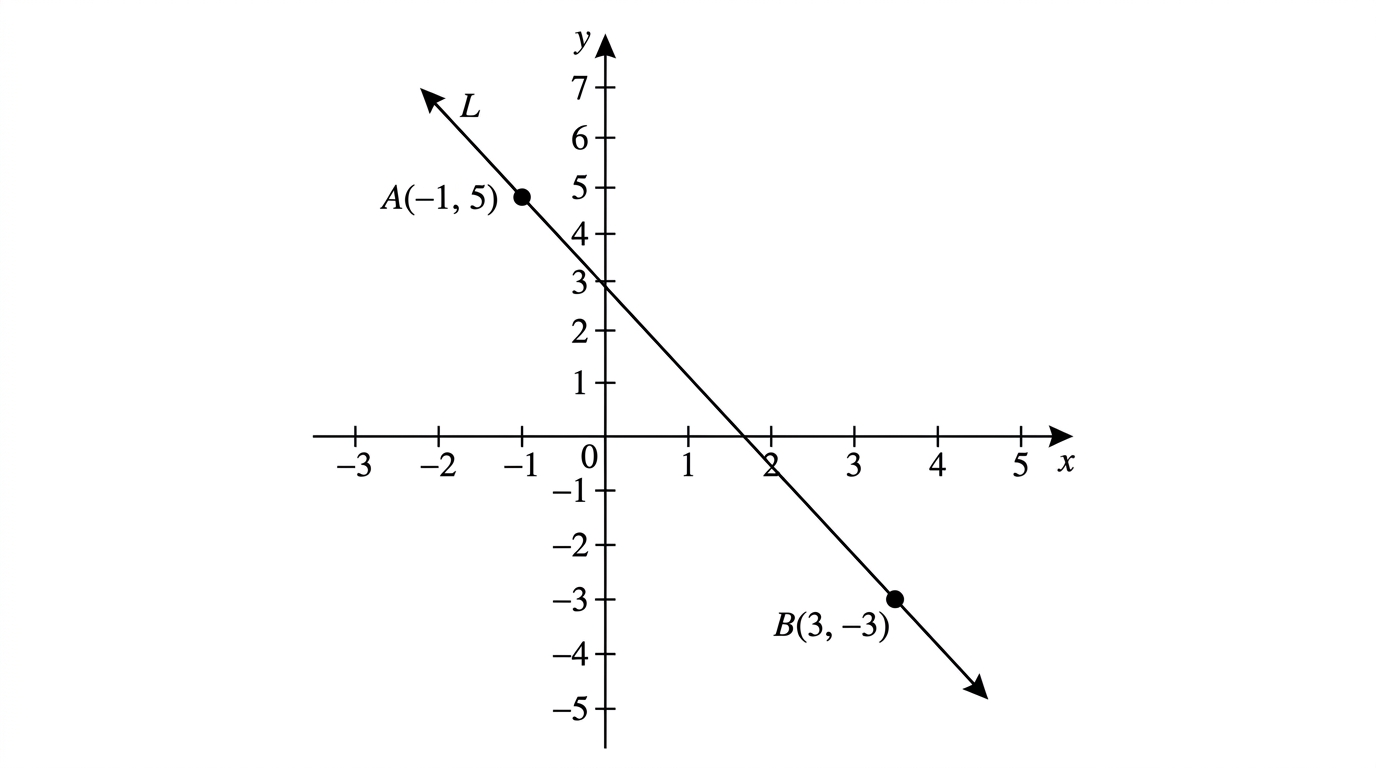
Show that has equation .
Find the coordinates of , the foot of the perpendicular from to .
Hence find the area of triangle .
revisionprep.com
Summary Answer
Not available for this question.
Model Answer
Not available for this question.
Marking Scheme
Not available for this question.
Examiner Insights
Not available for this question.
Equation of a straight line; gradient, parallel and perpendicular lines
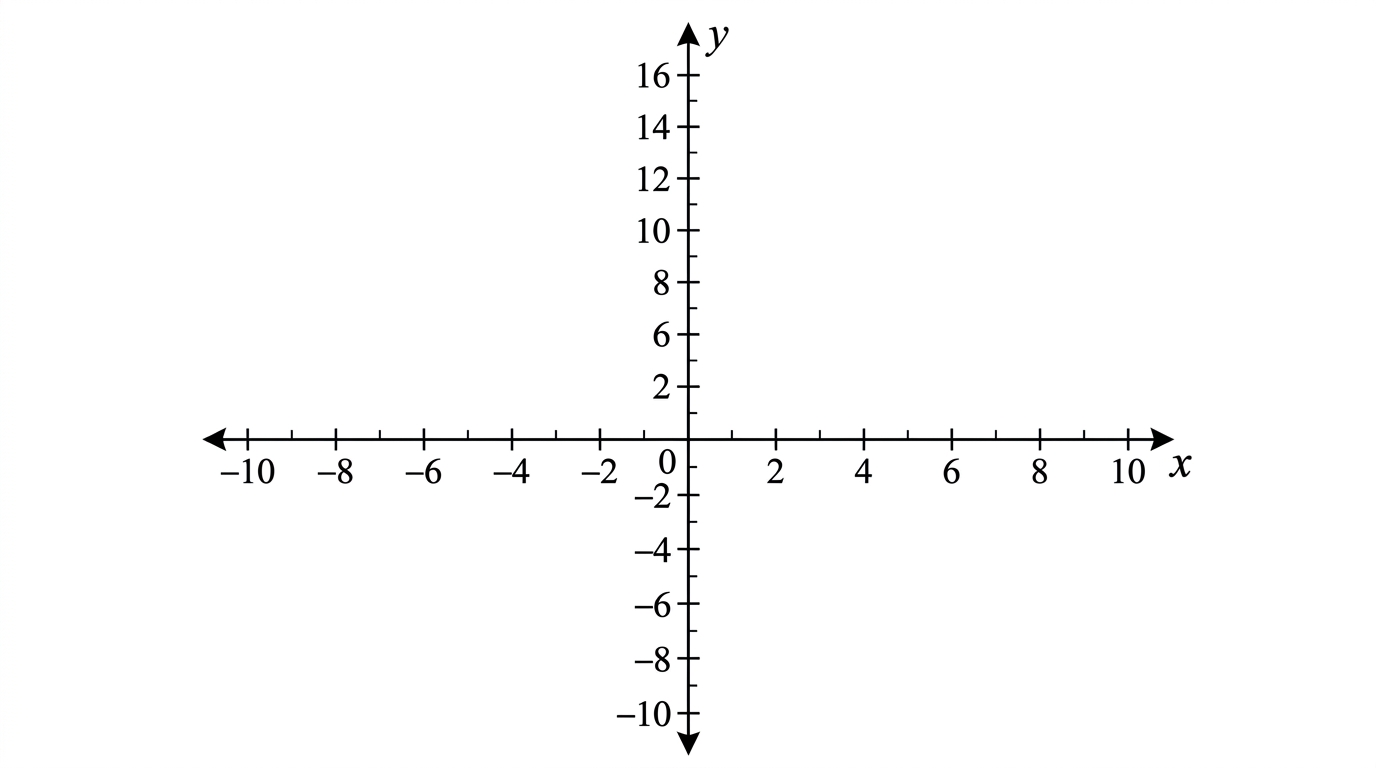
The line has equation and passes through . The line has equation . The diagram shows a set of axes for .
Find the value of .
Find the coordinates of the point of intersection of and .
On a copy of the axes, sketch and , labelling their axis intercepts and their point of intersection.
The lines , where , each meet at one point. Show that this point has integer coordinates if and only if is odd.
revisionprep.com
Summary Answer
Not available for this question.
Model Answer
Not available for this question.
Marking Scheme
Not available for this question.
Examiner Insights
Not available for this question.
Equation of a straight line; gradient, parallel and perpendicular lines
The diagram shows triangle with vertices , and . The diagram is not to scale.
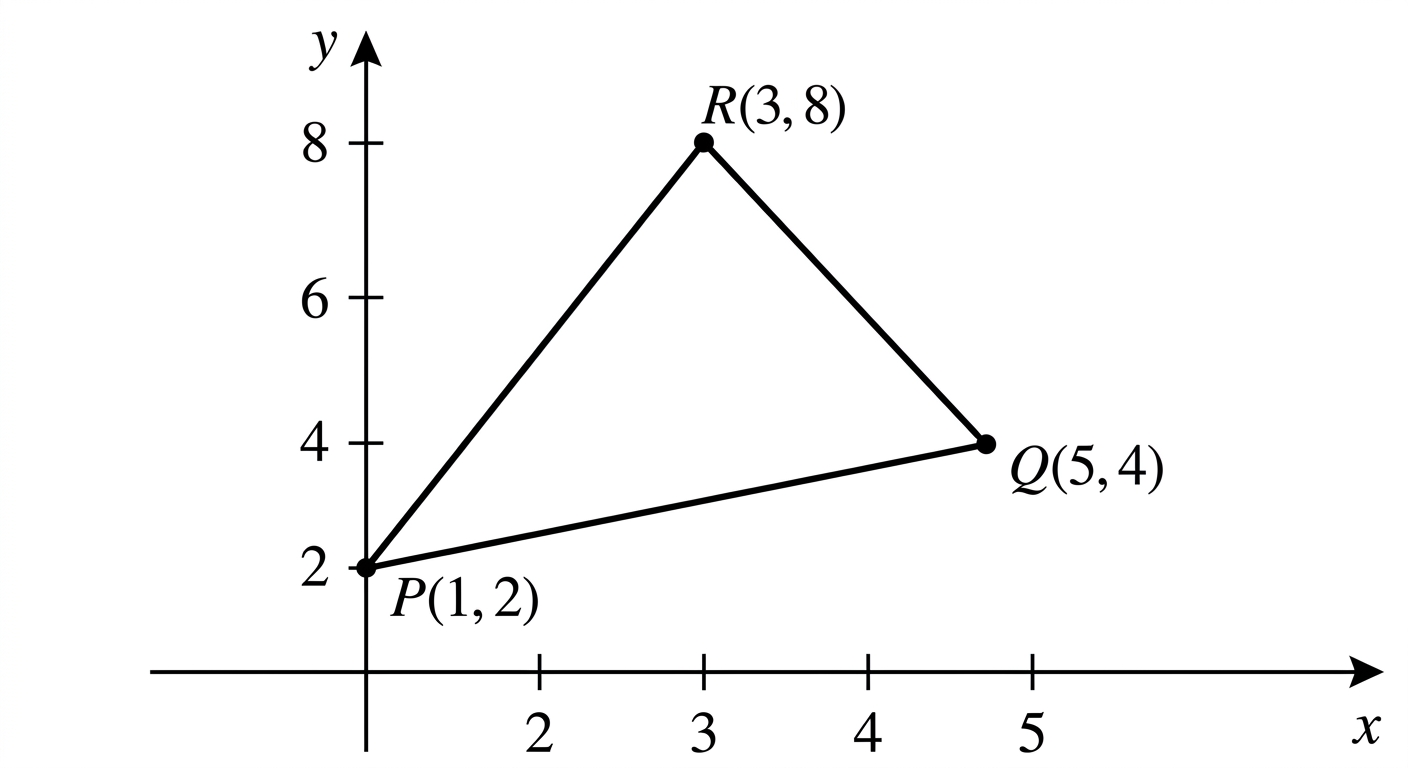
Find the equation of the perpendicular bisector of .
Find the equation of the perpendicular bisector of .
Hence find the centre of the circle through , and .
Show that and explain how this confirms your answer to (c).
Find the area of triangle .
revisionprep.com
Summary Answer
Not available for this question.
Model Answer
Not available for this question.
Marking Scheme
Not available for this question.
Examiner Insights
Not available for this question.
Equation of a straight line; gradient, parallel and perpendicular lines
The diagram shows the points and on the line , and the point , so that triangle has a right angle at .
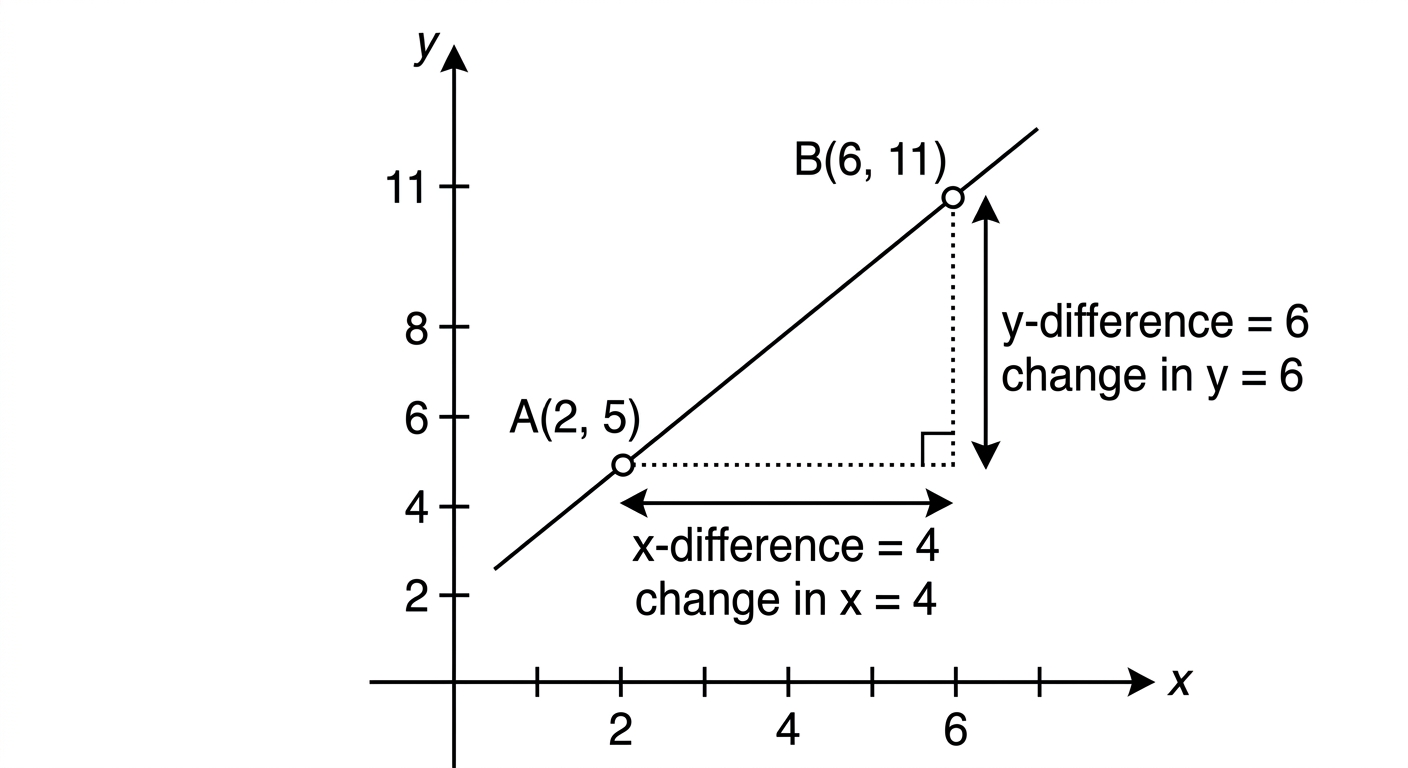
Write down the gradient of .
Write down the area of triangle .
Find the equation of the line through perpendicular to .
This line meets at . Find the coordinates of .
Hence verify that is equal to twice the area of triangle .
revisionprep.com
Summary Answer
Not available for this question.
Model Answer
Not available for this question.
Marking Scheme
Not available for this question.
Examiner Insights
Not available for this question.
That's every free question here — 6 of 73.
+67 more questions, plus Mock Papers & Worksheets, are waiting in Premium.