Functions, Composite and Inverse Functions · Paper 2 — Free Maths AA HL Practice Questions
Free questions
Open in full, with answers, mark scheme and examiner insights.
Concept of a function; domain and range
The graph shows for .
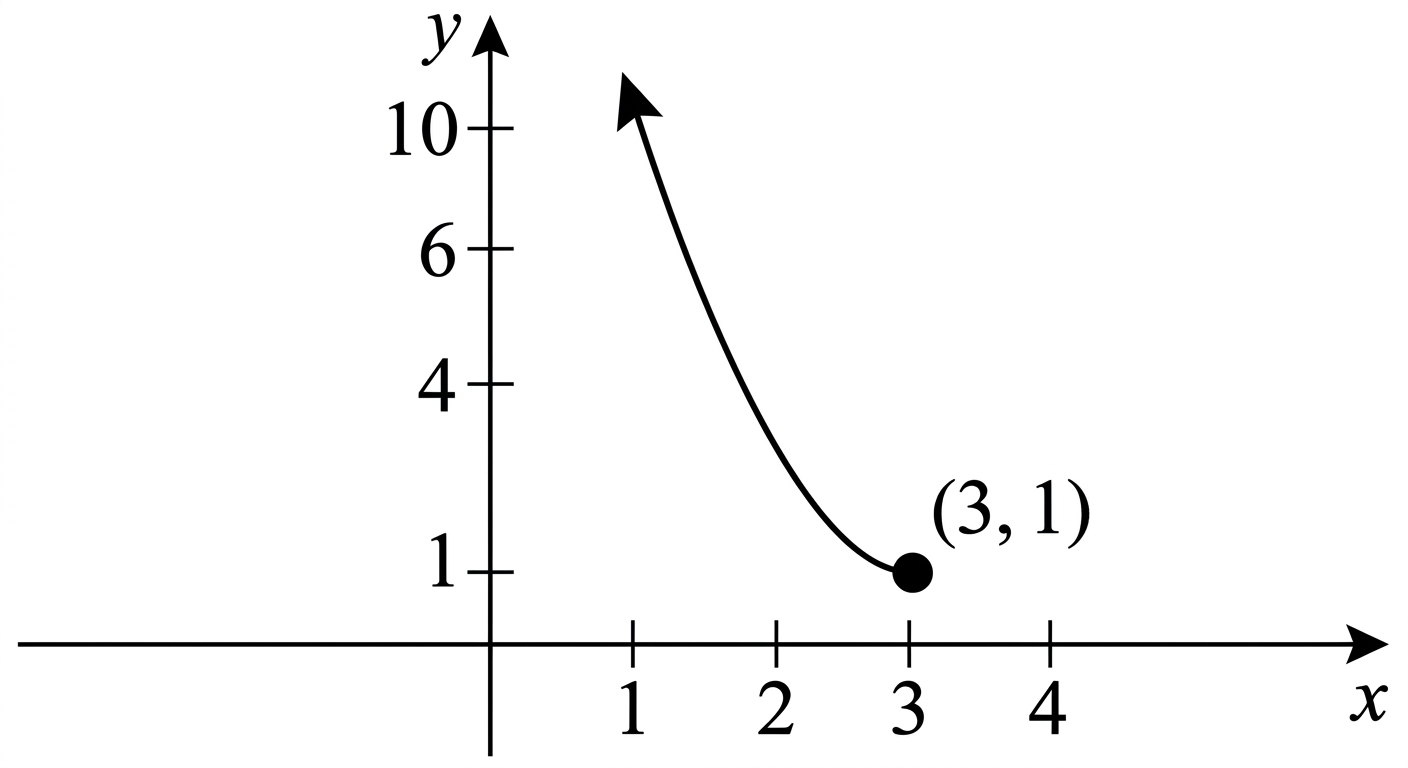
Find the range of .
Explain why has an inverse function.
Find , stating its domain.
revisionprep.com
Summary Answer
Not available for this question.
Model Answer
Not available for this question.
Marking Scheme
Not available for this question.
Examiner Insights
Not available for this question.
Concept of a function; domain and range
The graph of is shown, with its axis of symmetry .
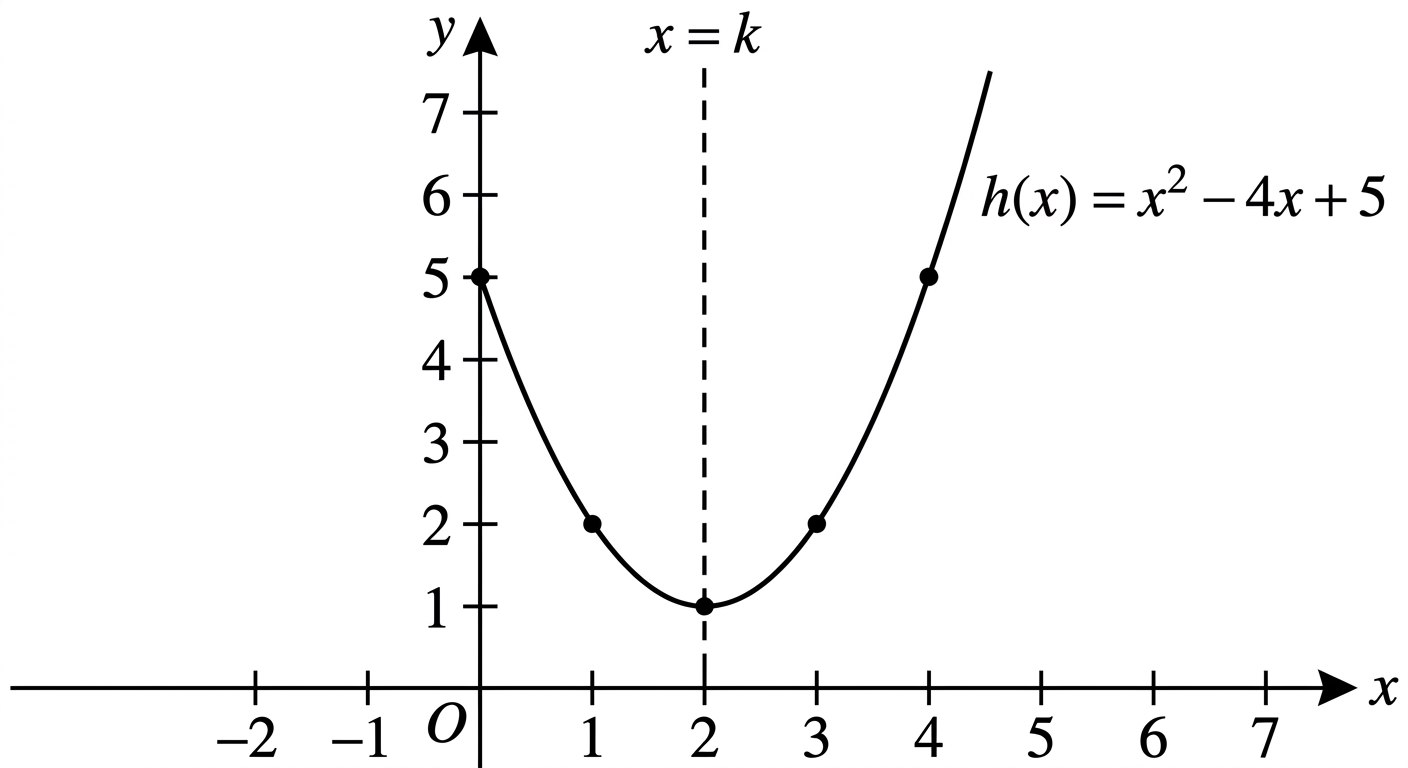
Write down the value of .
Explain why is not one-to-one.
The function is defined by for . Find , stating its domain.
Write down the range of .
revisionprep.com
Summary Answer
Not available for this question.
Model Answer
Not available for this question.
Marking Scheme
Not available for this question.
Examiner Insights
Not available for this question.
Concept of a function; domain and range
Graph 1 shows , where with its largest possible domain. Graph 2 shows , where for .
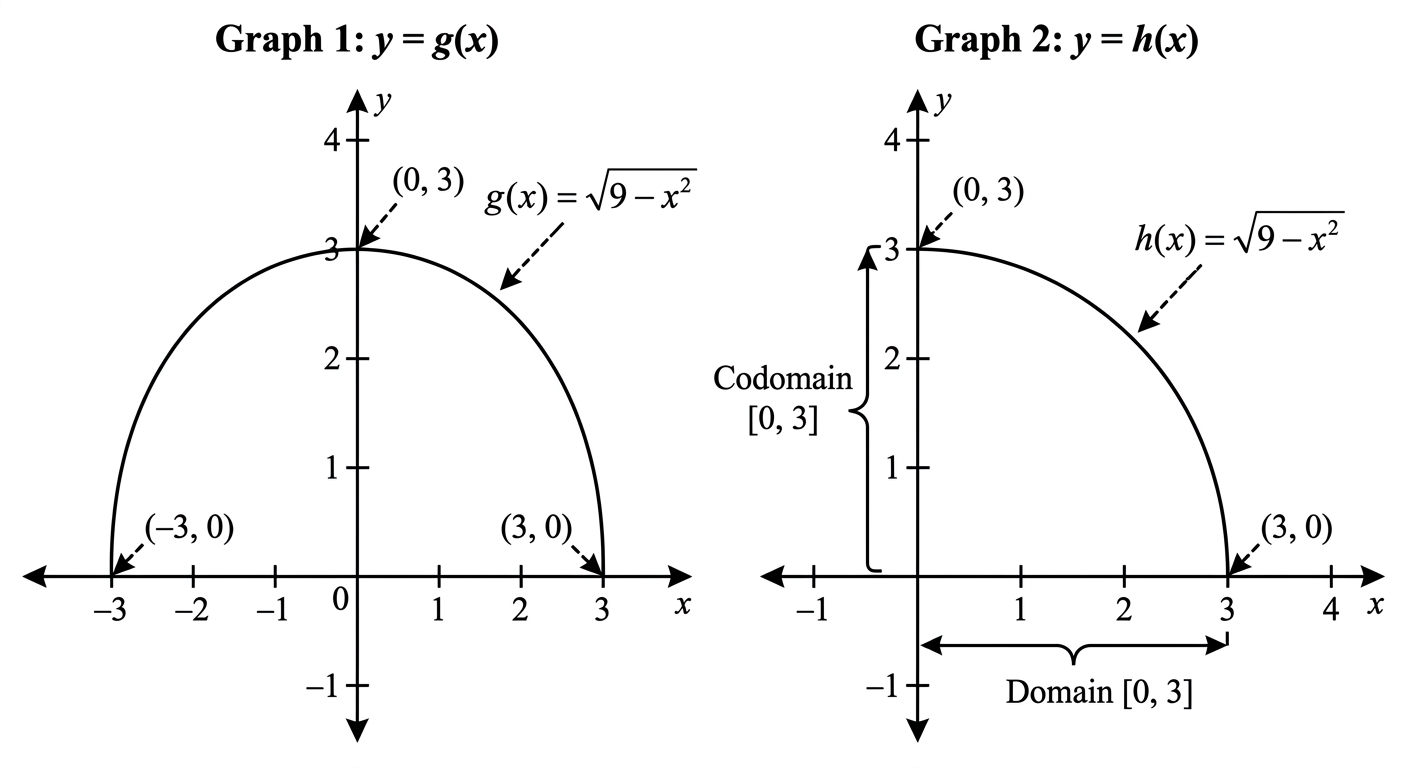
Write down the domain and the range of .
Explain why does not have an inverse function, while does.
The function is defined by , for . Find the range of .
revisionprep.com
Summary Answer
Not available for this question.
Model Answer
Not available for this question.
Marking Scheme
Not available for this question.
Examiner Insights
Not available for this question.
Composite and inverse functions
A cup of tea cools in a room. Its temperature, °C, minutes after it is poured is modelled by , for . The graph shows for .
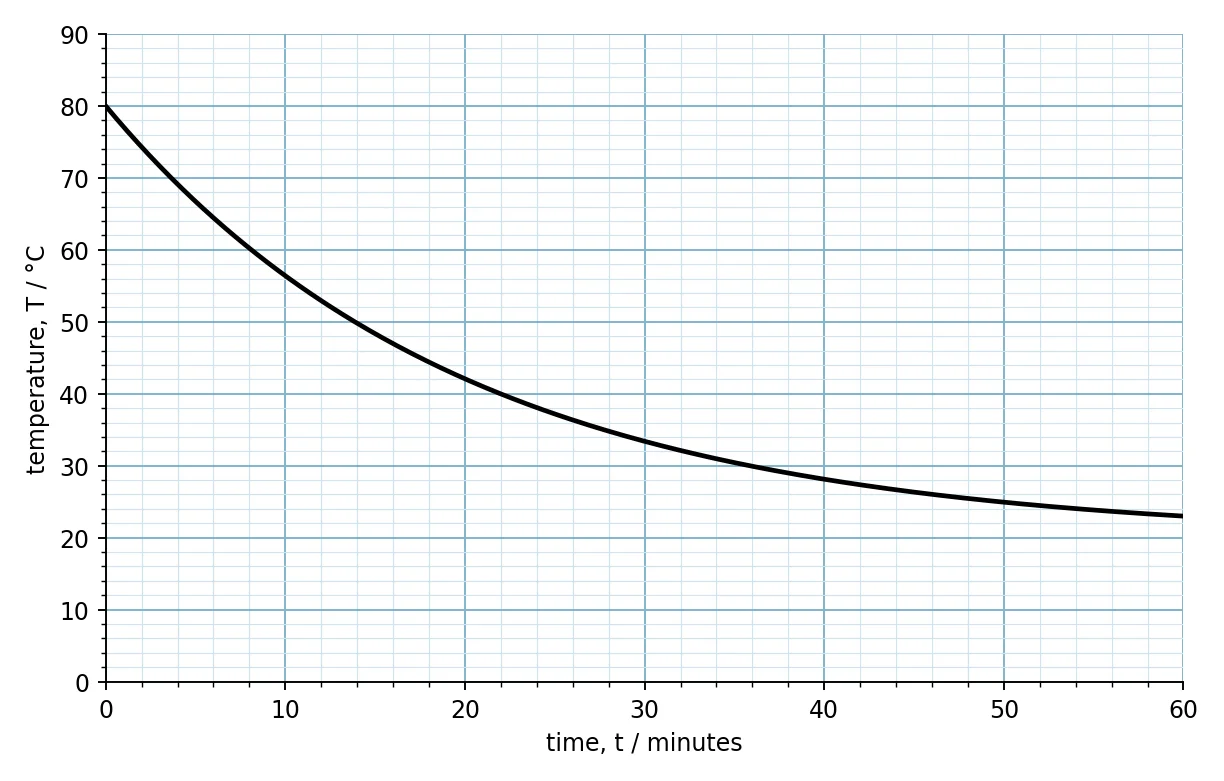
Write down the range of for .
Find , stating its domain.
Find and interpret its meaning in this context.
revisionprep.com
Summary Answer
Not available for this question.
Model Answer
Not available for this question.
Marking Scheme
Not available for this question.
Examiner Insights
Not available for this question.
Concept of a function; domain and range
The function is defined by , for .
Find the coordinates of the minimum point of the curve .
Write down the range of .
Solve .
The function is defined by , for . Write down the smallest value of for which has an inverse, and the value of .
Show that .
revisionprep.com
Summary Answer
Not available for this question.
Model Answer
Not available for this question.
Marking Scheme
Not available for this question.
Examiner Insights
Not available for this question.
Odd and even functions; self-inverse functions; restricted domains
The function is defined by , . The diagram shows the graphs of , (labelled "inverse of f") and .
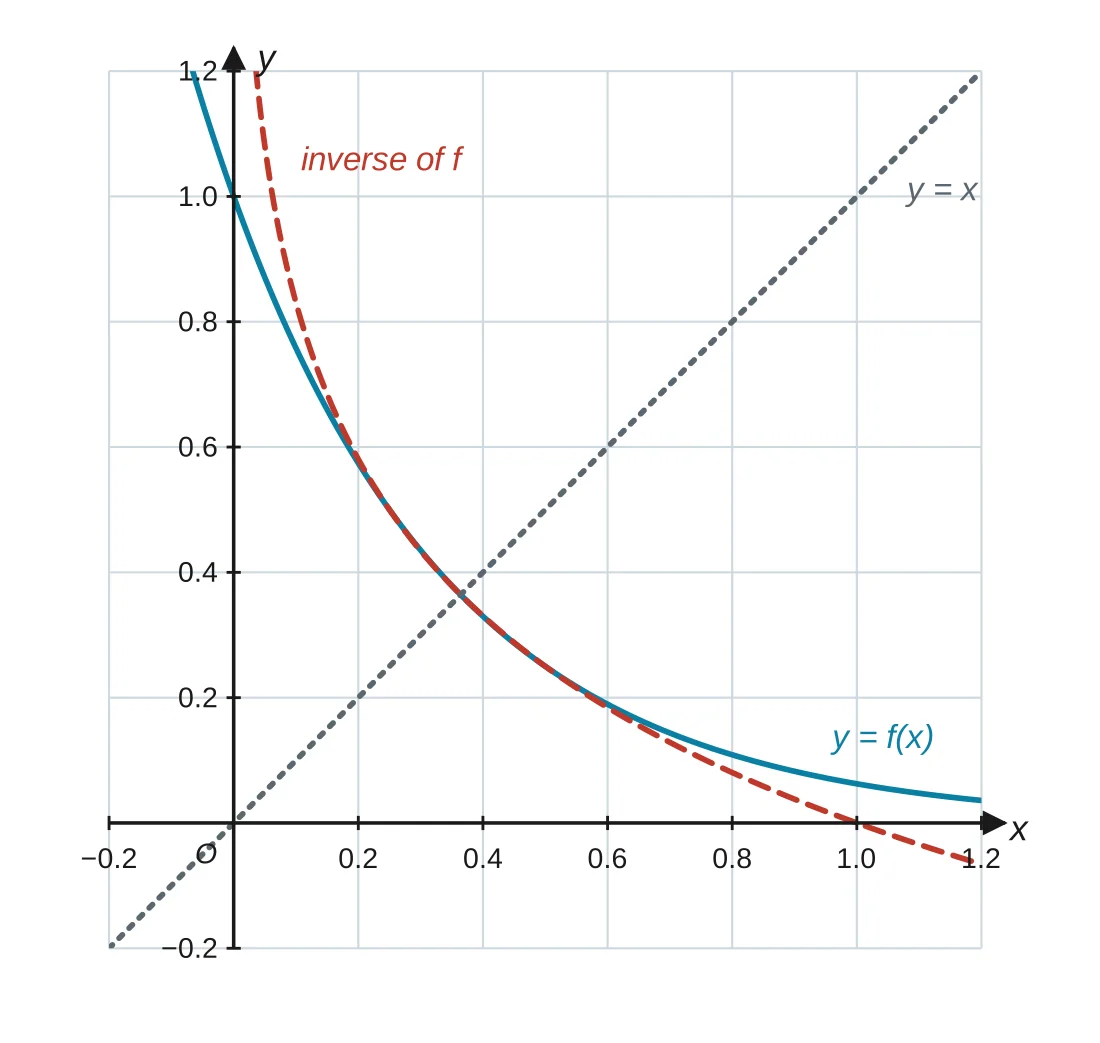
Find an expression for , and state its domain.
Verify that the points and lie on both graphs.
Find the coordinates of the third point where the two graphs meet.
Comment on the result in part (b) with reference to the claim that "the graphs of and can only meet on the line ".
revisionprep.com
Summary Answer
Not available for this question.
Model Answer
Not available for this question.
Marking Scheme
Not available for this question.
Examiner Insights
Not available for this question.
That's every free question here — 6 of 150.
+144 more questions, plus Mock Papers & Worksheets, are waiting in Premium.