Circular Functions and Trigonometric Equations · Paper 1 — Free Maths AA HL Practice Questions
Free questions
Open in full, with answers, mark scheme and examiner insights.
Circular functions and their transformations
The graph shows , where and , , are positive constants. The graph passes through , has a maximum point at and a minimum point at .
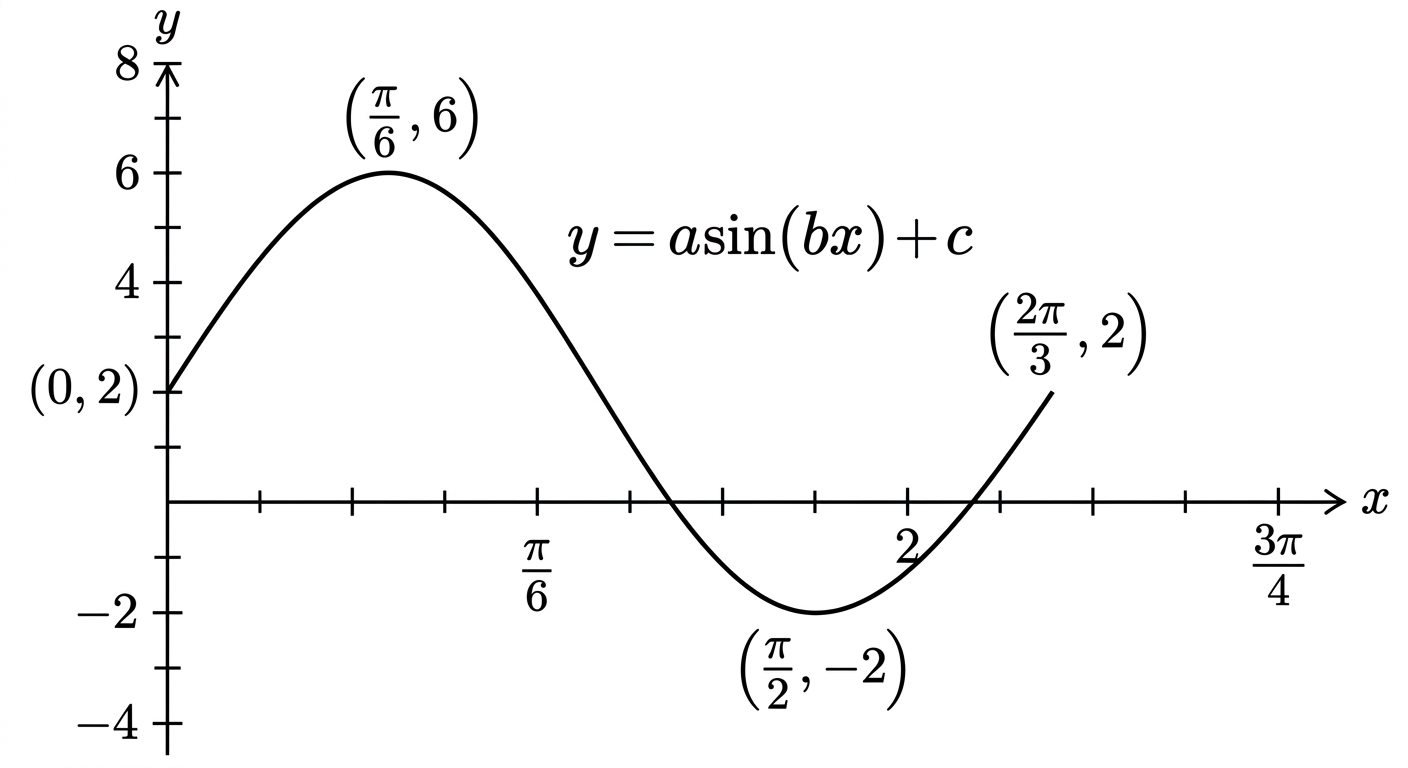
Show that , and .
Find the smallest positive value of for which .
Find the values of , for , for which .
revisionprep.com
Summary Answer
Not available for this question.
Model Answer
Not available for this question.
Marking Scheme
Not available for this question.
Examiner Insights
Not available for this question.
Solving trigonometric equations in a finite interval
The diagram shows the graphs of and for . The graphs meet at the points A, B and C.
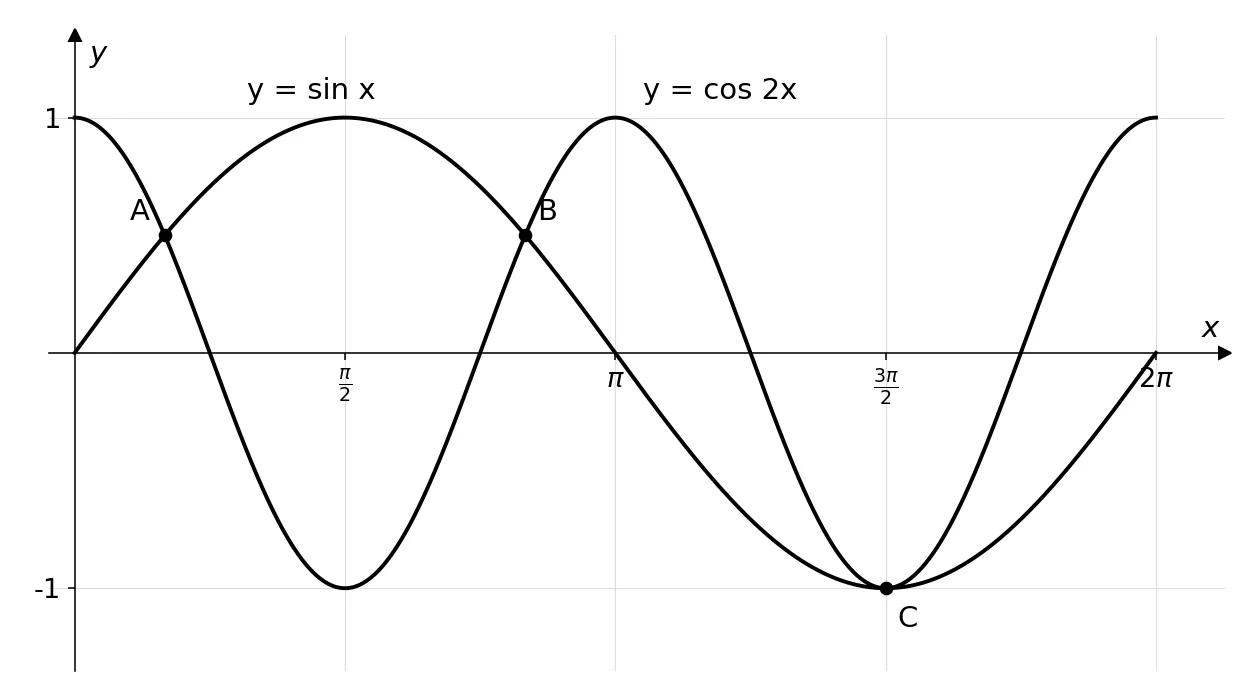
Write in the form , stating the values of and .
Hence find the exact coordinates of A, B and C.
revisionprep.com
Summary Answer
Not available for this question.
Model Answer
Not available for this question.
Marking Scheme
Not available for this question.
Examiner Insights
Not available for this question.
Circular functions and their transformations
The graph shows , where , for .
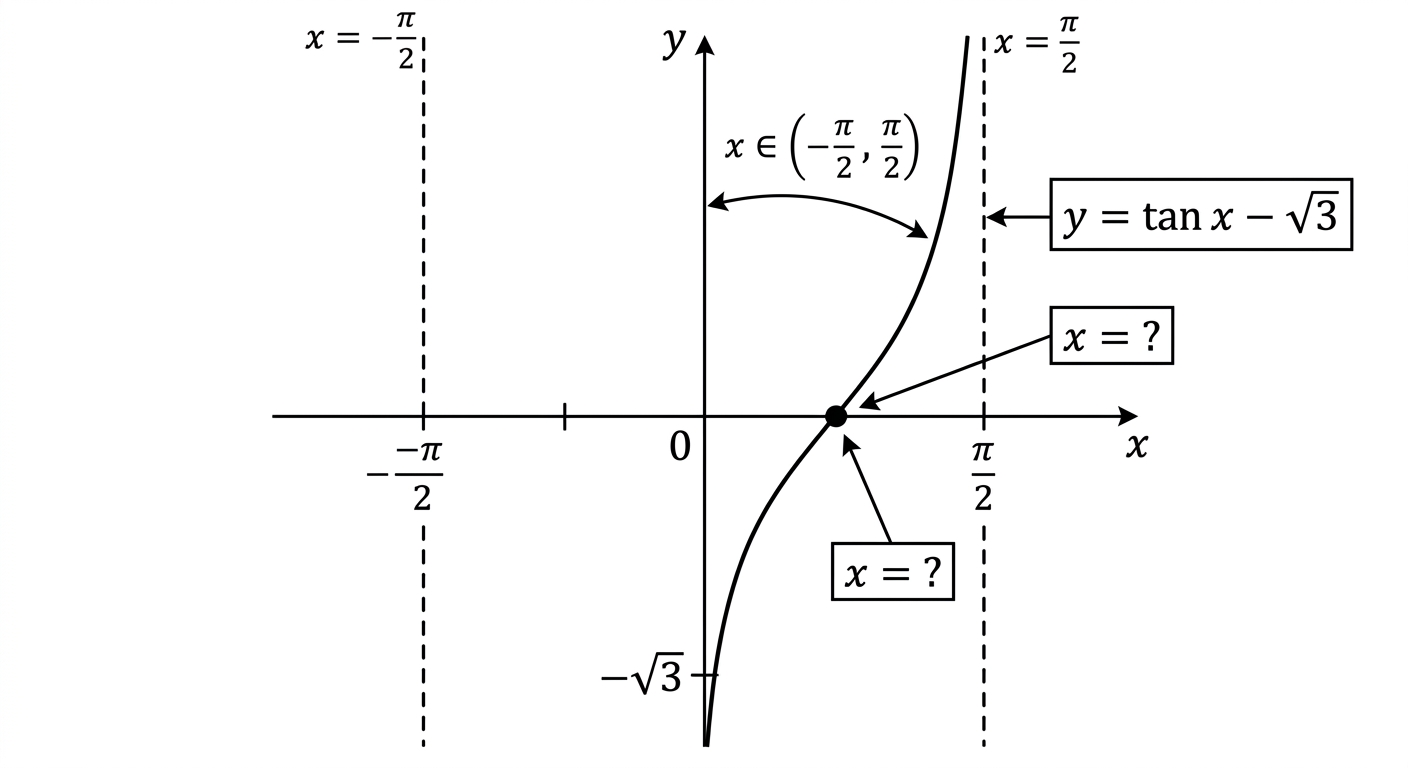
Write down the exact value of for which .
Show that .
Hence solve for .
revisionprep.com
Summary Answer
Not available for this question.
Model Answer
Not available for this question.
Marking Scheme
Not available for this question.
Examiner Insights
Not available for this question.
Solving trigonometric equations in a finite interval
The diagram shows the unit circle with centre O. P is a point on the circle such that angle AOP , where , and A is the foot of the perpendicular from P to the -axis. The tangent to the circle at P meets the -axis at Q (not shown).
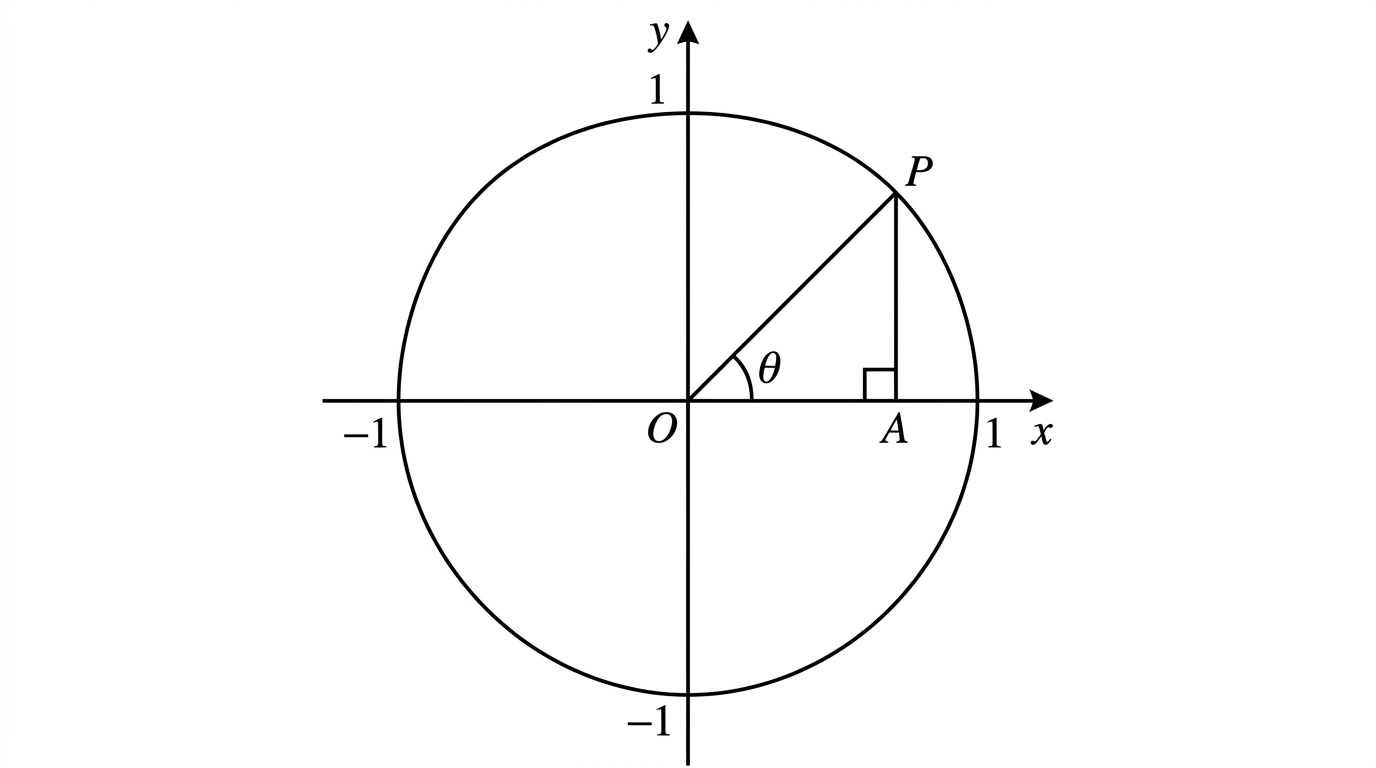
Write down the lengths OA and AP in terms of .
Show that .
Show that , and hence deduce that .
Find the value of for which the area of triangle OPQ is .
revisionprep.com
Summary Answer
Not available for this question.
Model Answer
Not available for this question.
Marking Scheme
Not available for this question.
Examiner Insights
Not available for this question.
Circular functions and their transformations
The graph shows , where , for .
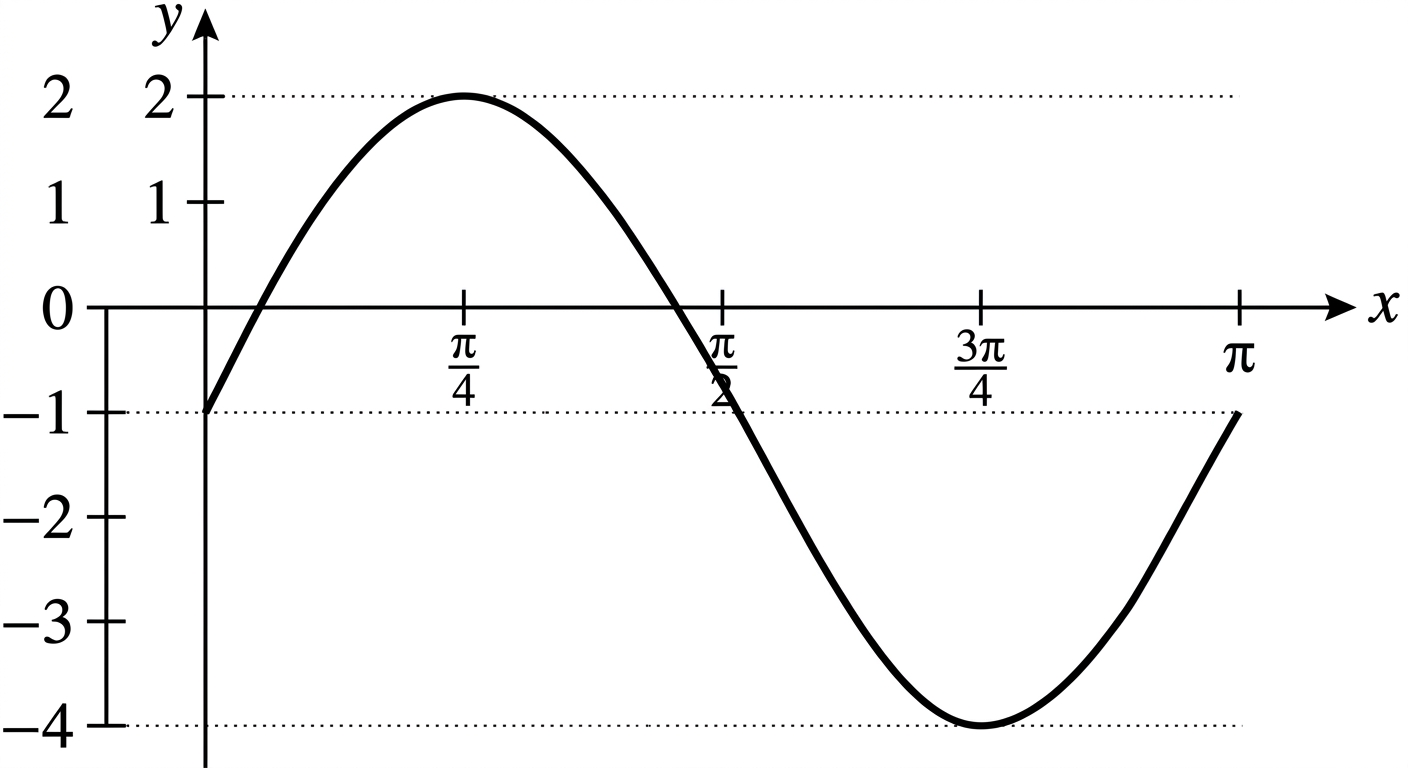
Write down the amplitude of and the range of .
Find the exact -intercepts of the graph of .
Hence write down the equations of the vertical asymptotes of the graph of for .
Write down the coordinates of the local minimum point and the local maximum point of the graph of .
revisionprep.com
Summary Answer
Not available for this question.
Model Answer
Not available for this question.
Marking Scheme
Not available for this question.
Examiner Insights
Not available for this question.
Solving trigonometric equations in a finite interval
This question is about .
By writing , show that .
Show that the equation can be written as .
Hence solve for .
revisionprep.com
Summary Answer
Not available for this question.
Model Answer
Not available for this question.
Marking Scheme
Not available for this question.
Examiner Insights
Not available for this question.
That's every free question here — 6 of 218.
+212 more questions, plus Mock Papers & Worksheets, are waiting in Premium.