You're viewing free preview questions. Upgrade to access more Maths AA HL questions.Upgrade
Arithmetic and Geometric Sequences · Paper 1 — Free Maths AA HL Practice Questions
1FoundationSAQ-SDefinition and general term of arithmetic sequencess5 marksPaper 1~8 min

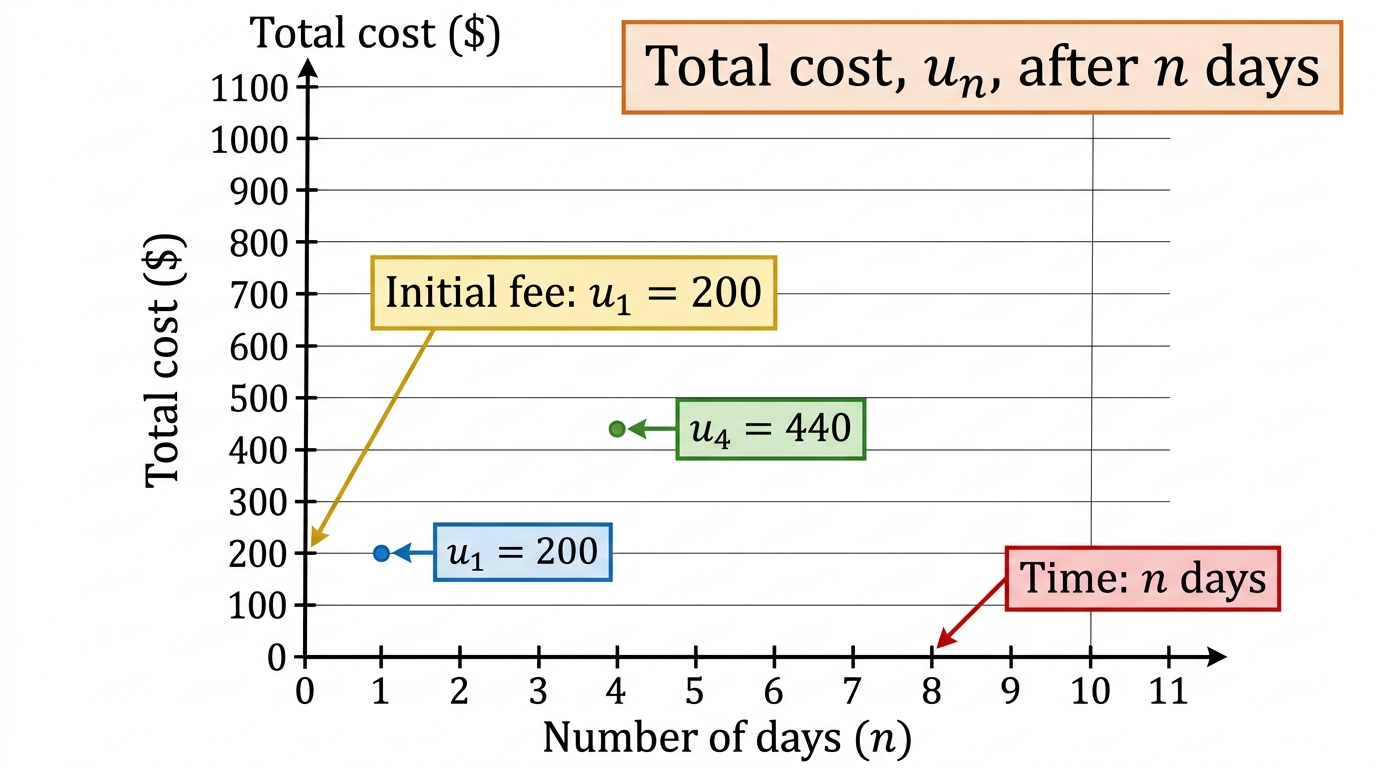
A car rental company charges a fixed initial fee of USD 200, and then a constant daily rate. The total cost, in dollars, after days is modelled by an arithmetic sequence , where and .
(a)
State the common difference . [1 mark]
(b)
Calculate the total cost after 10 days. [2 marks]
(c)
A competitor charges no fixed fee and a daily rate of USD 95 per day, giving total cost . Determine the number of complete days after which the competitor's scheme first becomes more expensive than the original company's scheme, and justify your answer. [2 marks]

Solutions
2FoundationSAQ-SDefinition and general term of arithmetic sequencess5 marksPaper 1~8 min
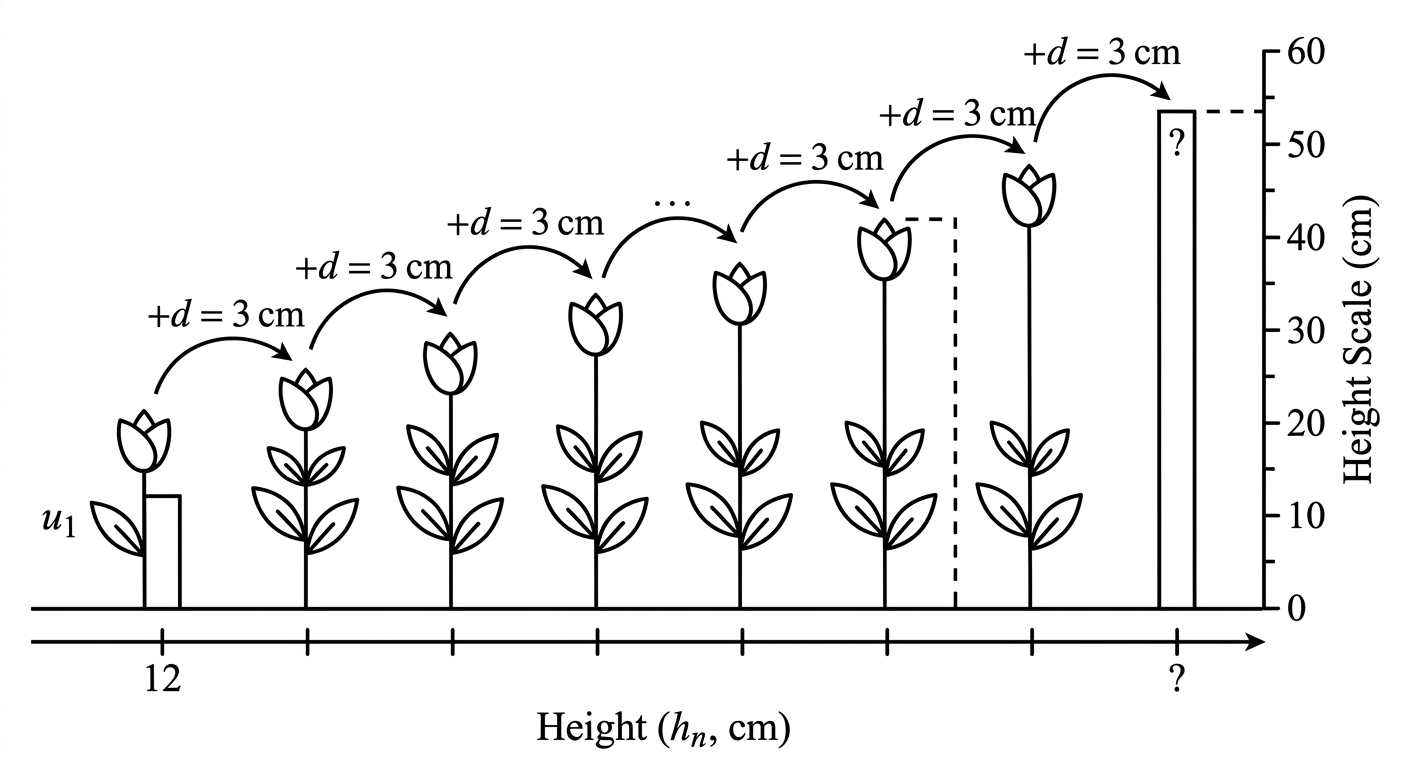
A gardener plants a row of flowers in a straight line. The height of the first flower is . Each subsequent flower is taller than the previous one.
(a)
Write down an expression for , the height of the th flower, in terms of . [1 mark]
(b)
Calculate the height of the 8th flower. [2 marks]
(c)
The gardener wants the total height of all flowers in the row to exceed . Determine the minimum number of flowers required. [2 marks]
Solutions
3FoundationSAQ-SDefinition and general term of arithmetic sequencess5 marksPaper 1~8 min
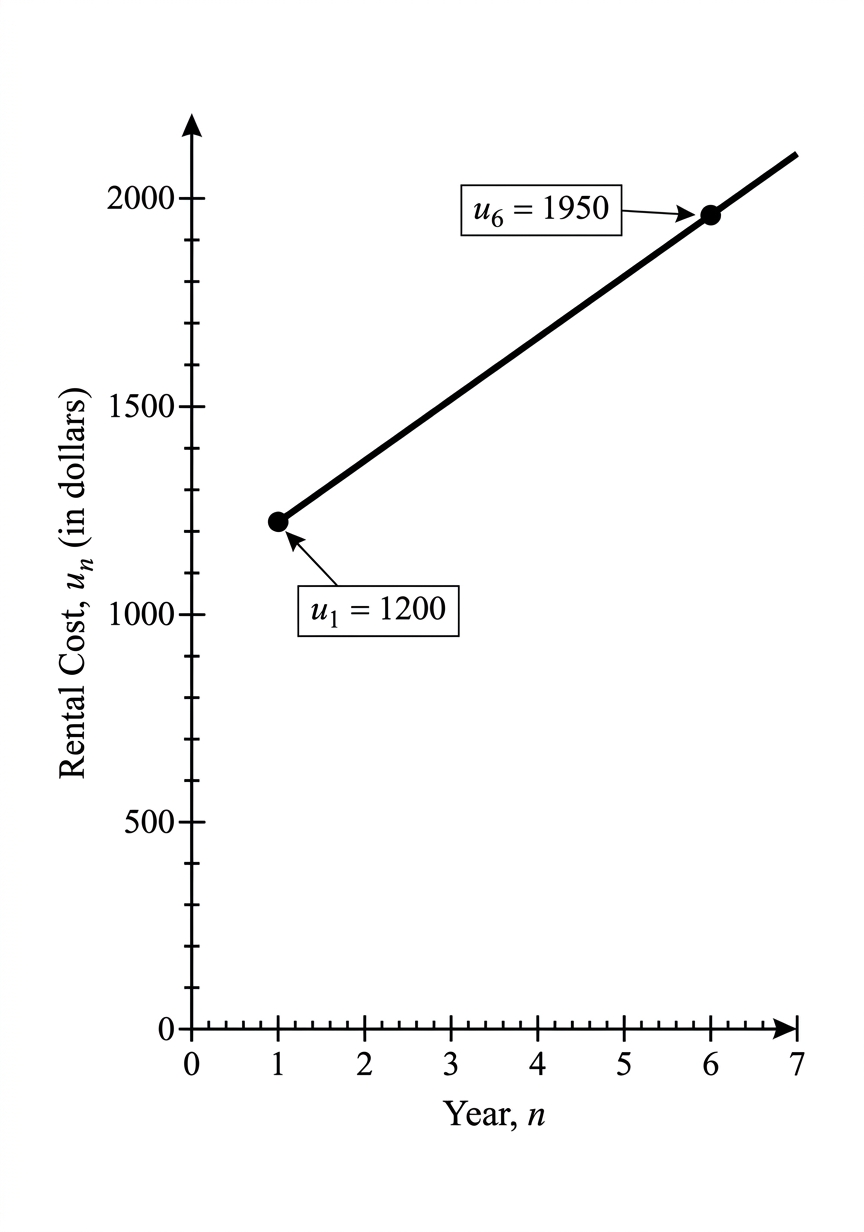
A company rents office furniture. The rental cost in the first year is dollars. For each subsequent year, the rental cost increases by a fixed amount dollars.
(a)
State the general term for the rental cost in the th year, in terms of and . [1 mark]
(b)
The rental cost in the 6th year is dollars. Find the value of . [2 marks]
(c)
Find the minimum number of complete years after which the total rental cost paid exceeds dollars. [2 marks]
Solutions
4FoundationSAQ-SSum of an arithmetic sequences5 marksPaper 1~8 min
A theatre has rows of seats. The first row has seats. Each subsequent row has more seats than the row in front.
(a)
Find the number of seats in the th row. [2 marks]
(b)
Find the total number of seats in theatre. [3 marks]
Solutions
5FoundationSAQ-SSum of an arithmetic sequences5 marksPaper 1~8 min
A pile of logs is stacked so that the bottom row has logs, the next row up has logs, and so on, with each row having fewer logs than the row below. The top row has logs.
(a)
Show that the number of logs in each row forms an arithmetic sequence with first term and common difference . [1 mark]
(b)
Find the number of rows in the pile. [2 marks]
(c)
Find the total number of logs in the pile. [2 marks]
Solutions
6FoundationSAQ-SGeometric sequences and their general terms5 marksPaper 1~8 min
The first three terms of a geometric sequence are , , and , where .
(a)
Show that . [3 marks]
(b)
Find the exact value of the sum to infinity of the sequence , where denotes the -th term of the original geometric sequence. [2 marks]
Solutions
7FoundationSAQ-SGeometric sequences and their general terms5 marksPaper 1~8 min
The fourth term of a geometric sequence is and the seventh term is .
(a)
Calculate the common ratio . [3 marks]
(b)
Find the least value of such that the sum of the first terms exceeds . [2 marks]
Solutions
8FoundationSAQ-SSum of an arithmetic sequences7 marksPaper 1~11 min
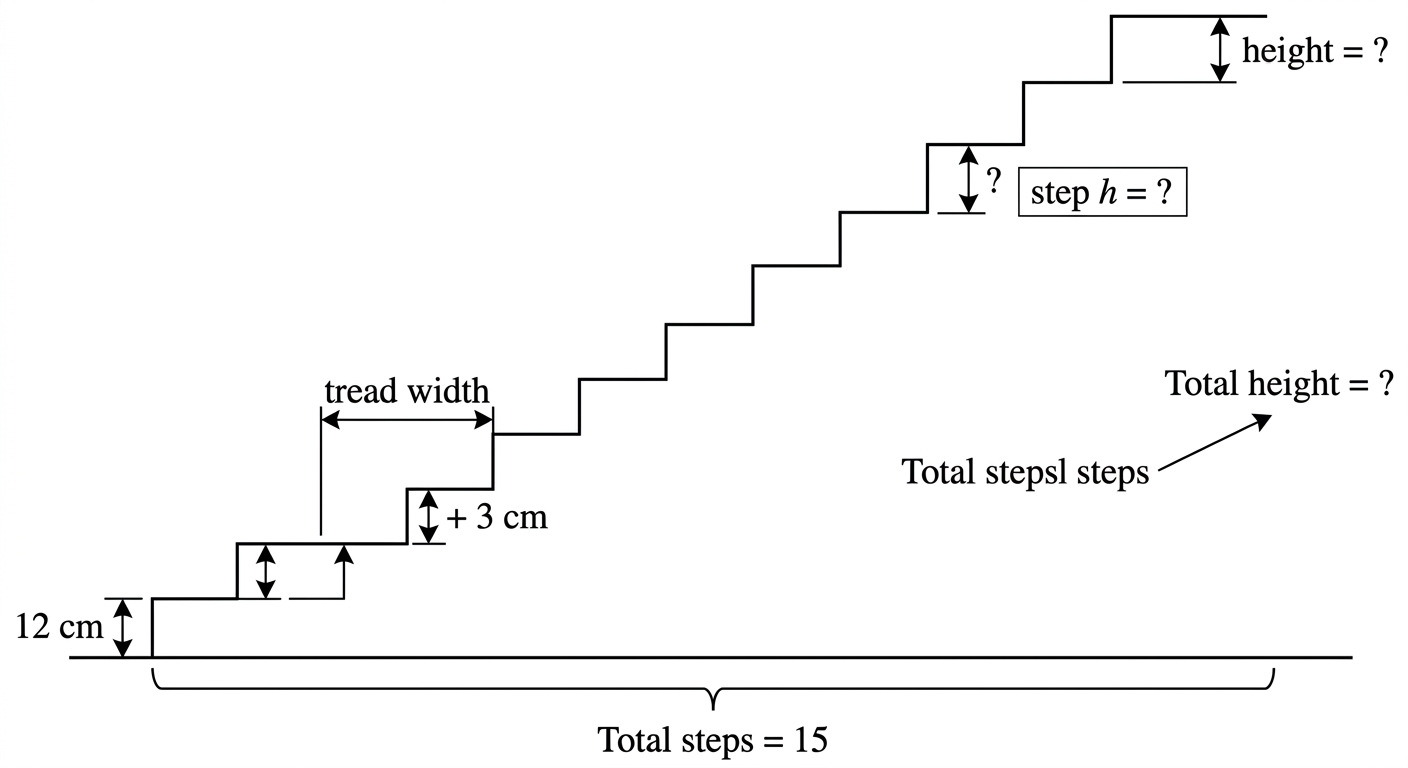
A construction company is building a staircase. The first step has a height of . Each subsequent step is taller than the previous step. The staircase has steps in total.
(a)
Find the height of the th step. [2 marks]
(b)
Find the total height of the staircase. [2 marks]
(c)
A second staircase is built where the first step also has height , but the steps increase in height by each time. Given that the total height of this second staircase (also steps) is exactly double that of the first, find the value of . [3 marks]
Solutions
9FoundationSAQ-SDefinition and general term of arithmetic sequencess5 marksPaper 1~8 min
A library arranges books on shelves. The first shelf holds books, and each subsequent shelf holds more books than the previous shelf.
(a)
Write down the number of books on the 3rd shelf. [1 mark]
(b)
Calculate the number of books on the 9th shelf. [2 marks]
(c)
The library has shelves. Given that the total number of books across all shelves is , determine the value of . [2 marks]
Solutions
10FoundationSAQ-SGeometric sequences and their general terms5 marksPaper 1~8 min
A geometric sequence has first term and common ratio .
(a)
Find , the sum to infinity of the sequence. [2 marks]
(b)
Find the smallest value of such that , showing your method clearly using logarithms. [3 marks]
Solutions
11FoundationSAQ-SGeometric sequences and their general terms5 marksPaper 1~8 min
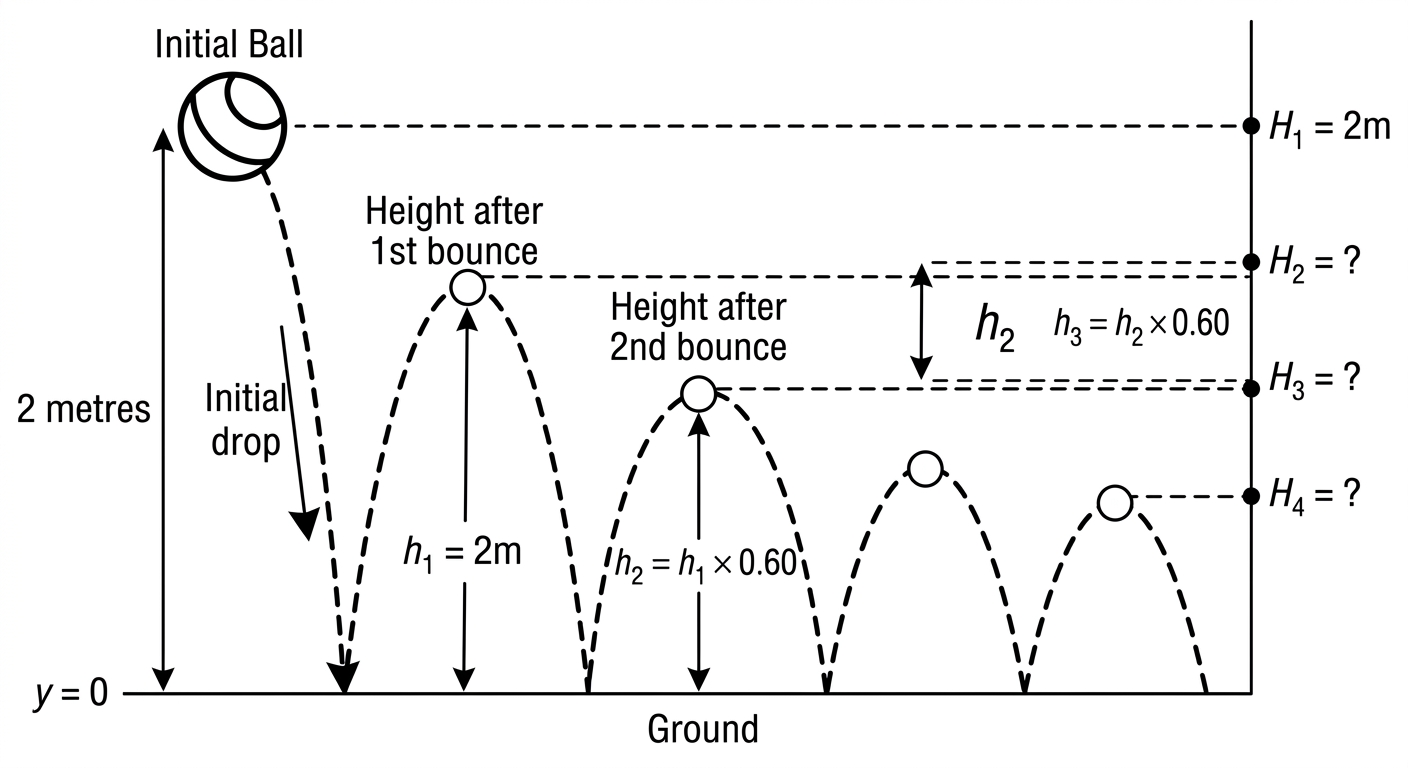
A ball is dropped from a height of . After each bounce, it reaches of the height of the previous bounce.
(a)
State the first term and common ratio of the geometric sequence of bounce heights. [1 mark]
(b)
Calculate the height reached after the 5th bounce, giving your answer in centimetres. [2 marks]
(c)
The ball is said to have "effectively stopped" when a bounce height falls below . Determine the number of the bounce on which this first occurs. [2 marks]
Solutions
12FoundationSAQ-SSum of an arithmetic sequences7 marksPaper 1~11 min
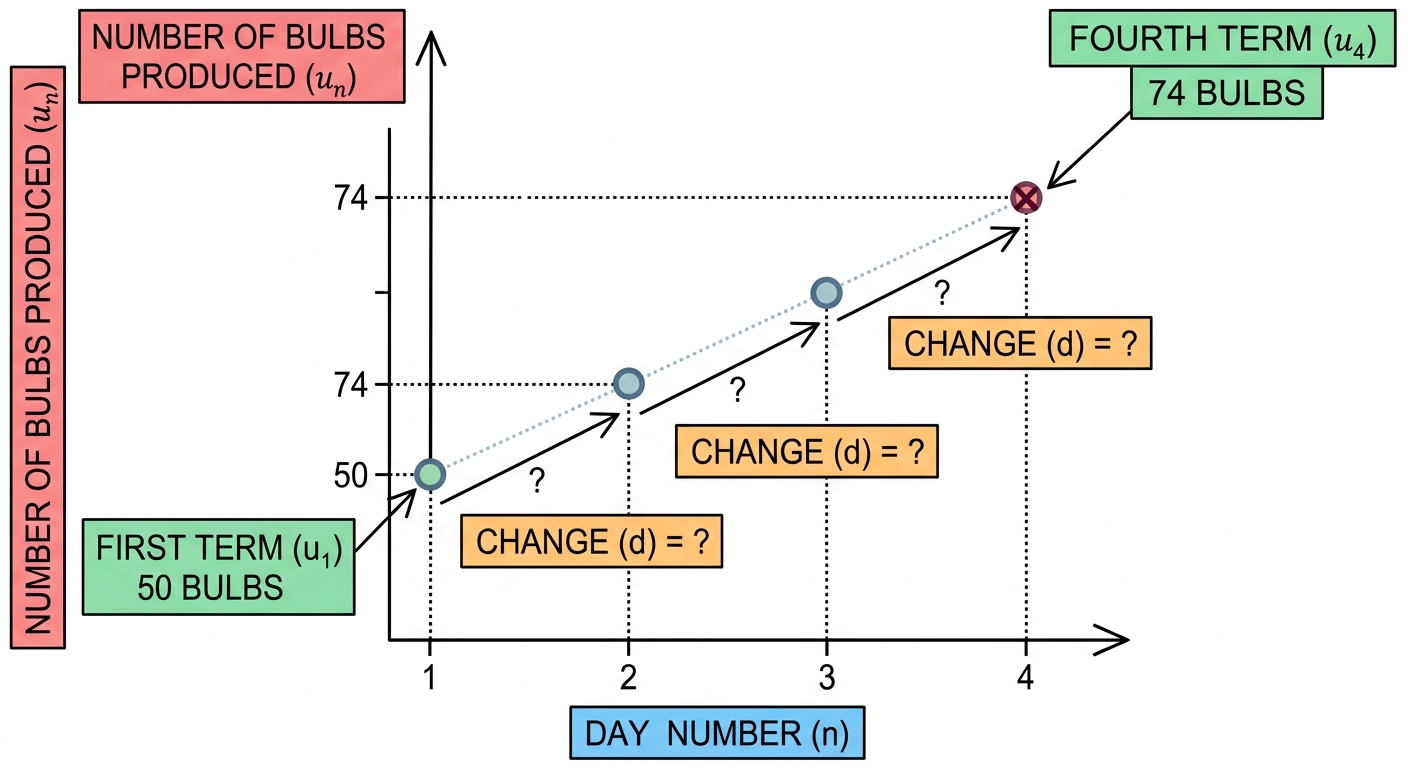
A factory produces light bulbs. The number of bulbs produced each day forms an arithmetic sequence. On the first day, bulbs are produced. On the fourth day, bulbs are produced.
(a)
Show that the common difference of the sequence is . [2 marks]
(b)
Calculate the total number of bulbs produced in the first days. [2 marks]
(c)
The factory requires a total production of at least bulbs to fulfil a contract. Determine the minimum number of days needed to meet this requirement. [3 marks]
Solutions
13FoundationSAQ-SGeometric sequences and their general terms7 marksPaper 1~11 min
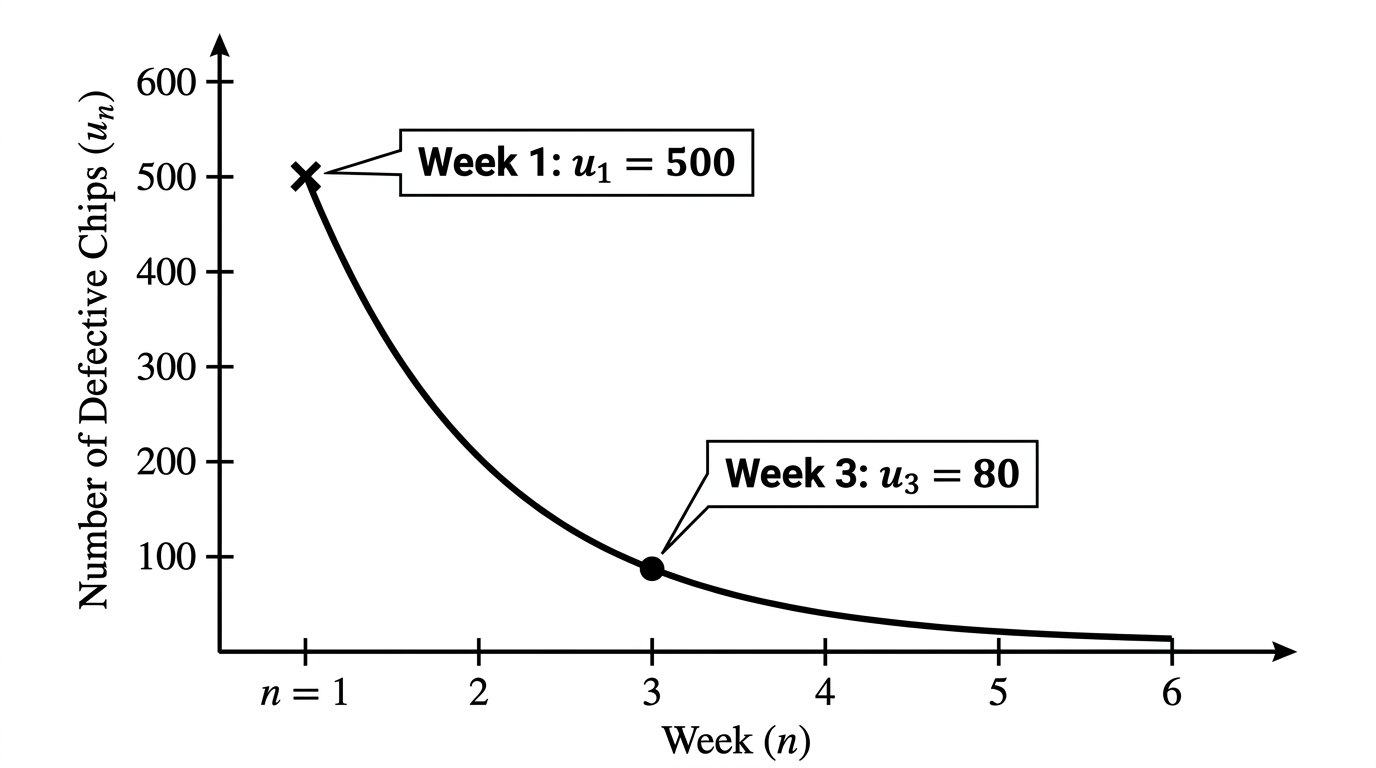
A company produces memory chips. The number of defective chips produced each week follows a geometric sequence. In week 1, there are defective chips. In week 3, there are defective chips.
(a)
Calculate the common ratio of the sequence. [2 marks]
(b)
Calculate the total number of defective chips produced over the first weeks. [2 marks]
(c)
The company's quality target is that the total number of defective chips produced from week 1 onwards never exceeds . Determine whether this target is met, justifying your answer. [3 marks]
Solutions
14FoundationSAQ-SSum of an arithmetic sequences7 marksPaper 1~11 min
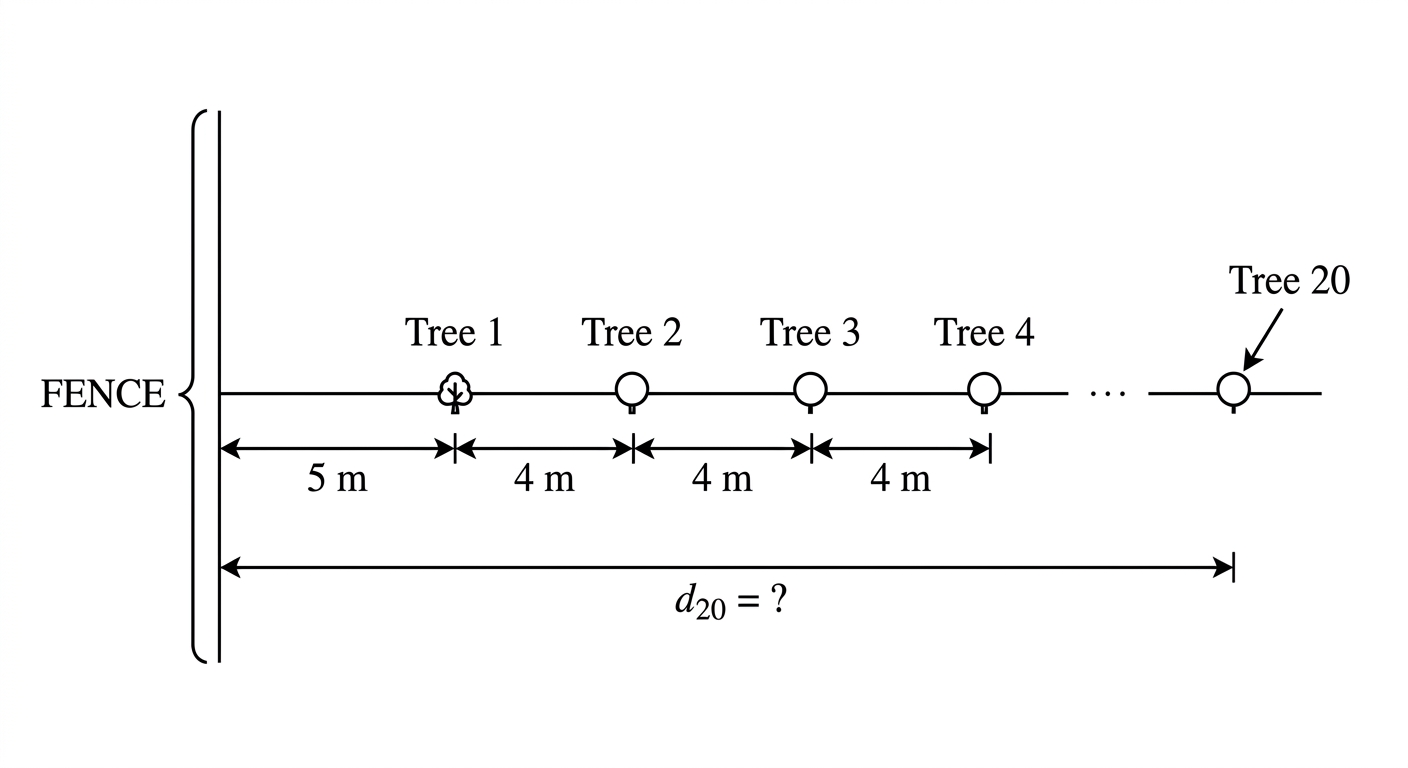
A gardener plants trees in a straight line. The first tree is planted from a fence. Each subsequent tree is planted further from the fence than the previous tree. There are trees in total.
(a)
Find the distance from the fence to the th tree. [2 marks]
(b)
Find the total sum of the distances from the fence to all trees. [2 marks]
(c)
The gardener claims that there exists a tree whose distance from the fence equals exactly half the total sum of all distances. Determine whether this claim is correct, justifying your answer. [3 marks]
Solutions
15FoundationSAQ-SSum of an arithmetic sequences7 marksPaper 1~11 min
A small business owner saves money each week. In the first week, she saves 30 dollars. Each subsequent week, she saves 5 dollars more than the previous week.
(a)
Write down the values of , , and for this arithmetic sequence. [2 marks]
(b)
Find the total amount saved after 12 weeks. [2 marks]
(c)
She wants to save a total of at least 2000 dollars. Determine the minimum number of weeks she must save to achieve this goal. [3 marks]
Solutions
16FoundationSAQ-SDefinition and general term of arithmetic sequencess5 marksPaper 1~8 min
A small business makes a profit of USD 5000 in its first year. The profit increases by a fixed amount each year. In the 4th year, the profit is USD 7400. The profits form an arithmetic sequence.
(a)
Calculate the common difference . [2 marks]
(b)
Determine the minimum number of complete years required for the total cumulative profit to exceed USD 100 000. [3 marks]
Solutions
17FoundationSAQ-SDefinition and general term of arithmetic sequencess7 marksPaper 1~11 min
A cyclist trains by increasing her cycling distance each day. The distances she cycles on consecutive days form an arithmetic sequence. On day 1, she cycles . On day 7, she cycles .
(a)
Find the common difference of the sequence. [2 marks]
(b)
Find the total distance she cycles over the first 7 days. [2 marks]
(c)
Find the minimum number of days of training required for her total cumulative distance to exceed . [3 marks]
Solutions
18FoundationSAQ-SDefinition and general term of arithmetic sequencess5 marksPaper 1~8 min
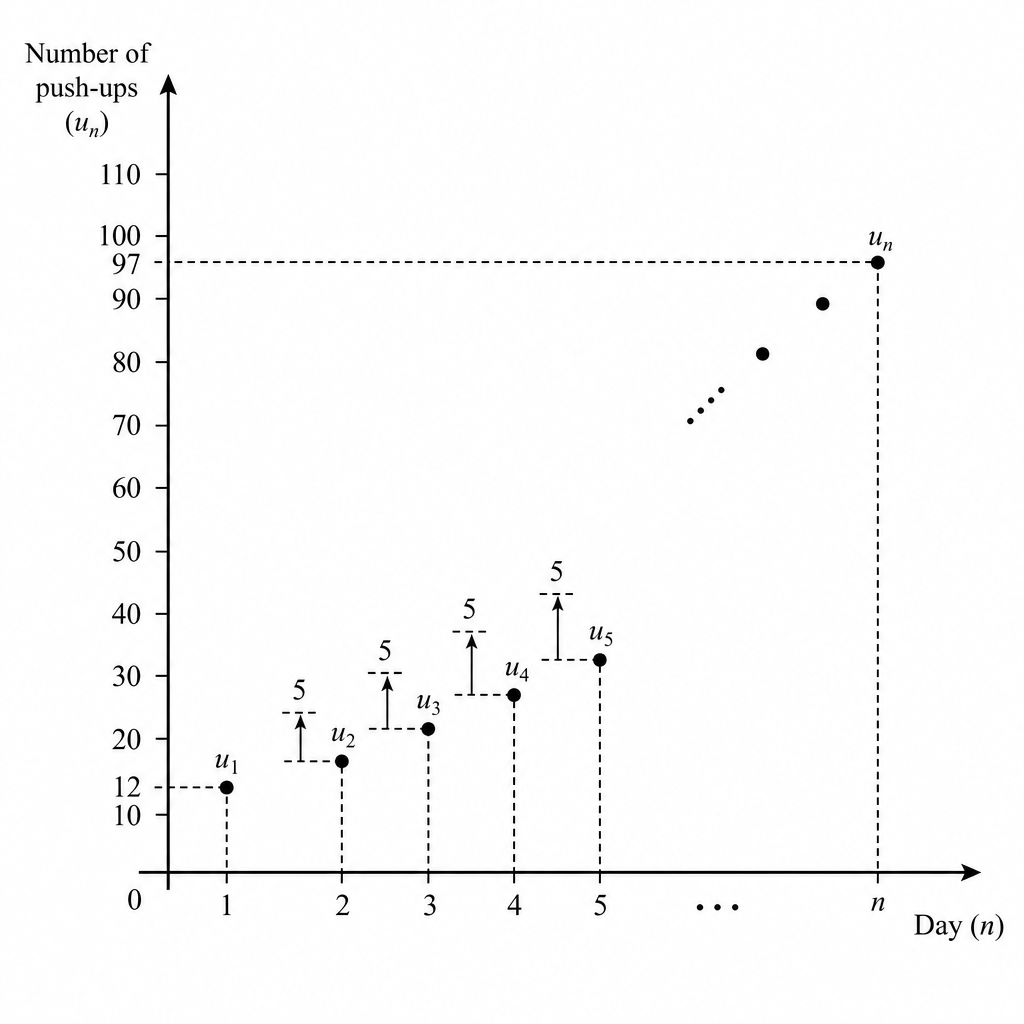
A fitness app tracks the number of push-ups a user completes each day. On the first day, the user completes push-ups. Each subsequent day, the user completes more push-ups than the previous day. The number of push-ups completed on day is denoted by .
(a)
Write down an expression for in terms of . [1 mark]
(b)
Calculate the number of push-ups completed on day . [2 marks]
(c)
On a certain day, the user completes push-ups. Find the value of for this day. [2 marks]
Solutions
19FoundationSAQ-SDefinition and general term of arithmetic sequencess5 marksPaper 1~8 min
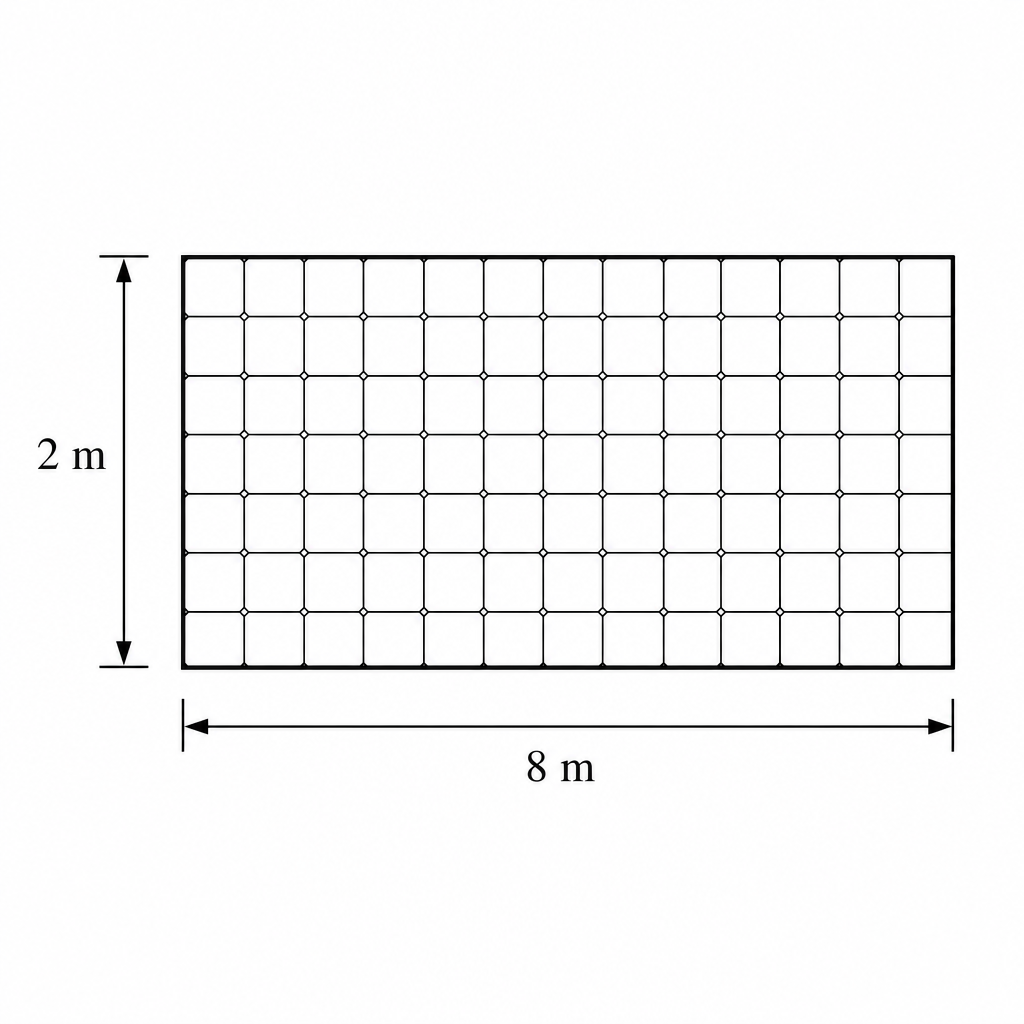
A company is designing a rectangular solar panel. The lengths of the sides of the panel, in metres, form an arithmetic sequence with first term and fourth term .
(a)
Find the common difference of the arithmetic sequence. [2 marks]
(b)
Find the area of the solar panel. [1 mark]
(c)
A second rectangular panel has the same perimeter as the first panel but has side lengths that are equal. Determine whether the second panel has a greater area than the first panel, justifying your answer. [2 marks]
Solutions
20FoundationSAQ-SDefinition and general term of arithmetic sequencess8 marksPaper 1~12 min
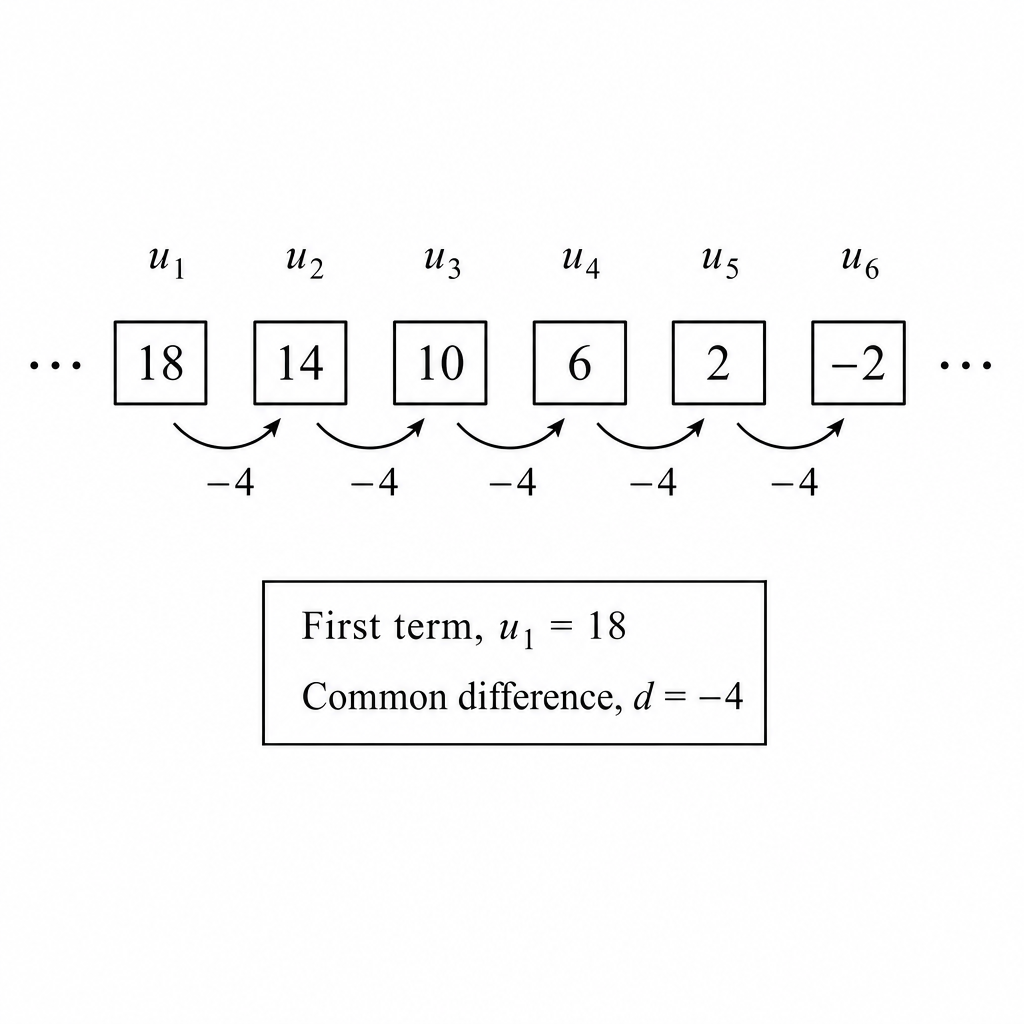
The first term of an arithmetic sequence is and the common difference is .
(a)
Calculate the sum of the first terms. [2 marks]
(b)
Determine the value of for which the th term equals . [2 marks]
(c)
Find the least value of for which the sum of the first terms is negative. [4 marks]
Solutions
Showing 20 of 485 free questions