You're viewing 3 free preview questions for Maths AA HL — subscribe to unlock 255 more, plus the Full Question Bank, Mock Papers & Worksheets.Upgrade
Exponential and Logarithmic Functions · Paper 1 — Free Maths AA HL Practice Questions
1FoundationSAQ-SExponent laws and propertiess5 marksPaper 1~8 min

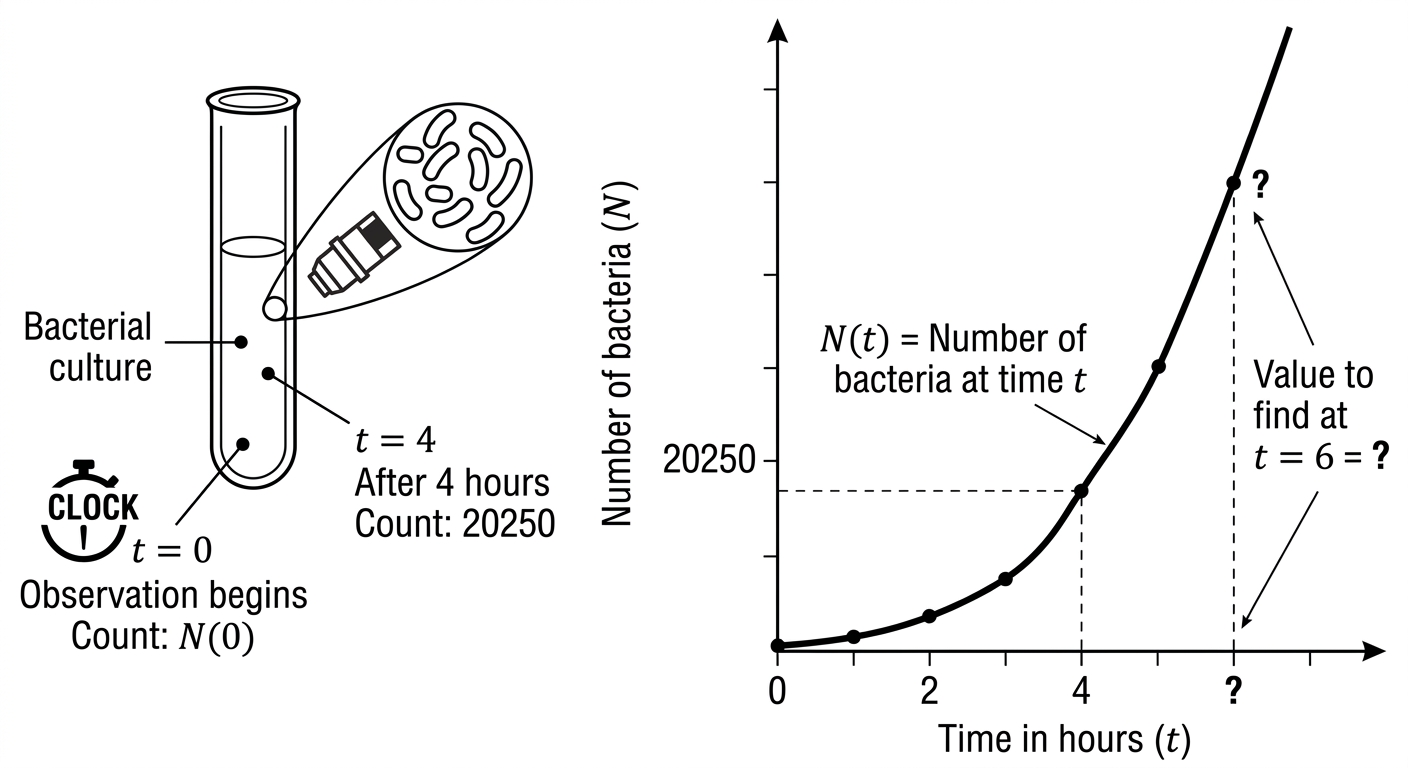
The number of bacteria in a culture is given by , where is the time in hours after the culture is first observed. After hours, the number of bacteria is .
(a)
Calculate the value of , giving your answer in the form where . [2 marks]
(b)
Calculate the number of bacteria present after hours, giving your answer to the nearest integer. [3 marks]

Solutions
2MasterySAQ-SExponent laws and propertiess5 marksPaper 1~8 min
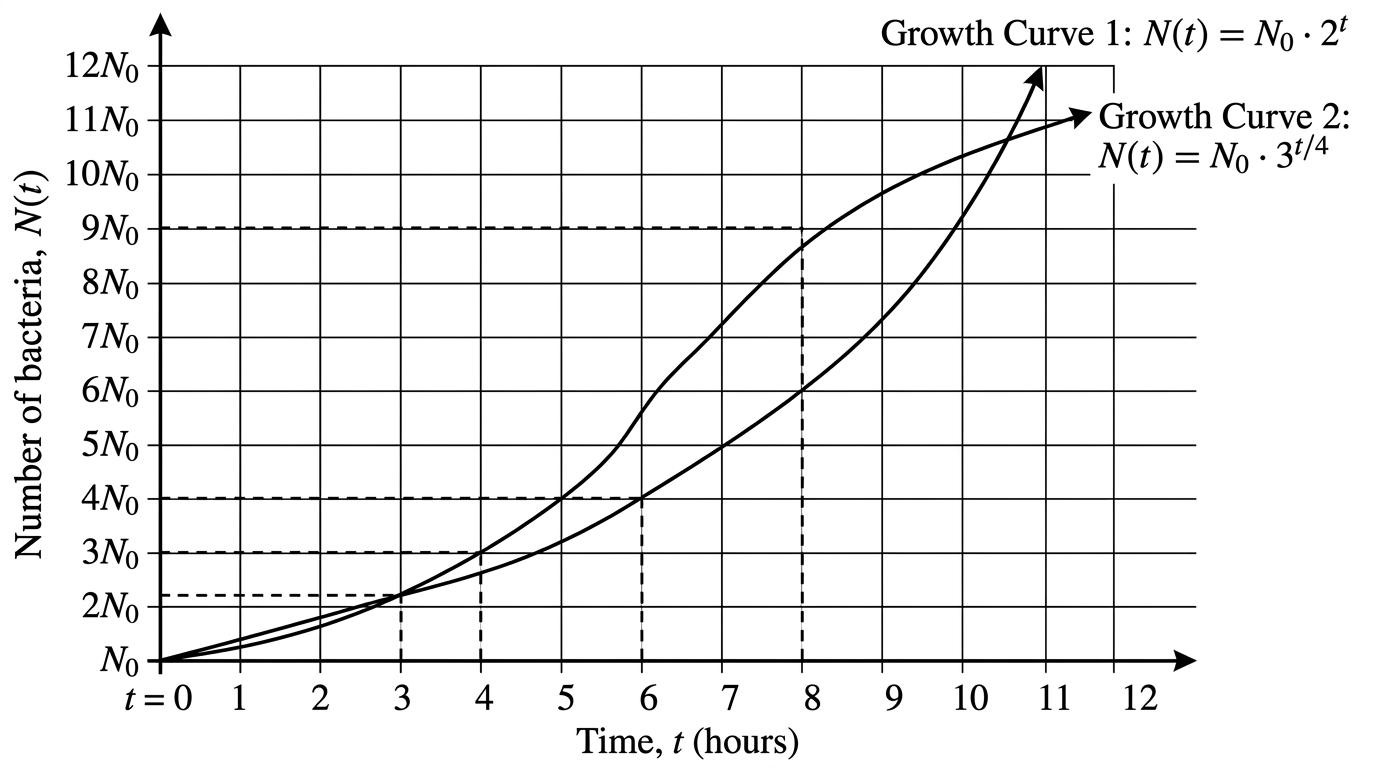
The number of bacteria in a culture, , after hours is modelled by , where is the initial number of bacteria and is a positive constant.
(a)
Show that when , the population doubles every hour. [2 marks]
(b)
Hence, find the value of such that the population triples every 4 hours. Give your answer in the form where . [3 marks]
Solutions
3ChallengeSAQ-LLogarithmic functions and their propertiess8 marksPaper 1~12 min
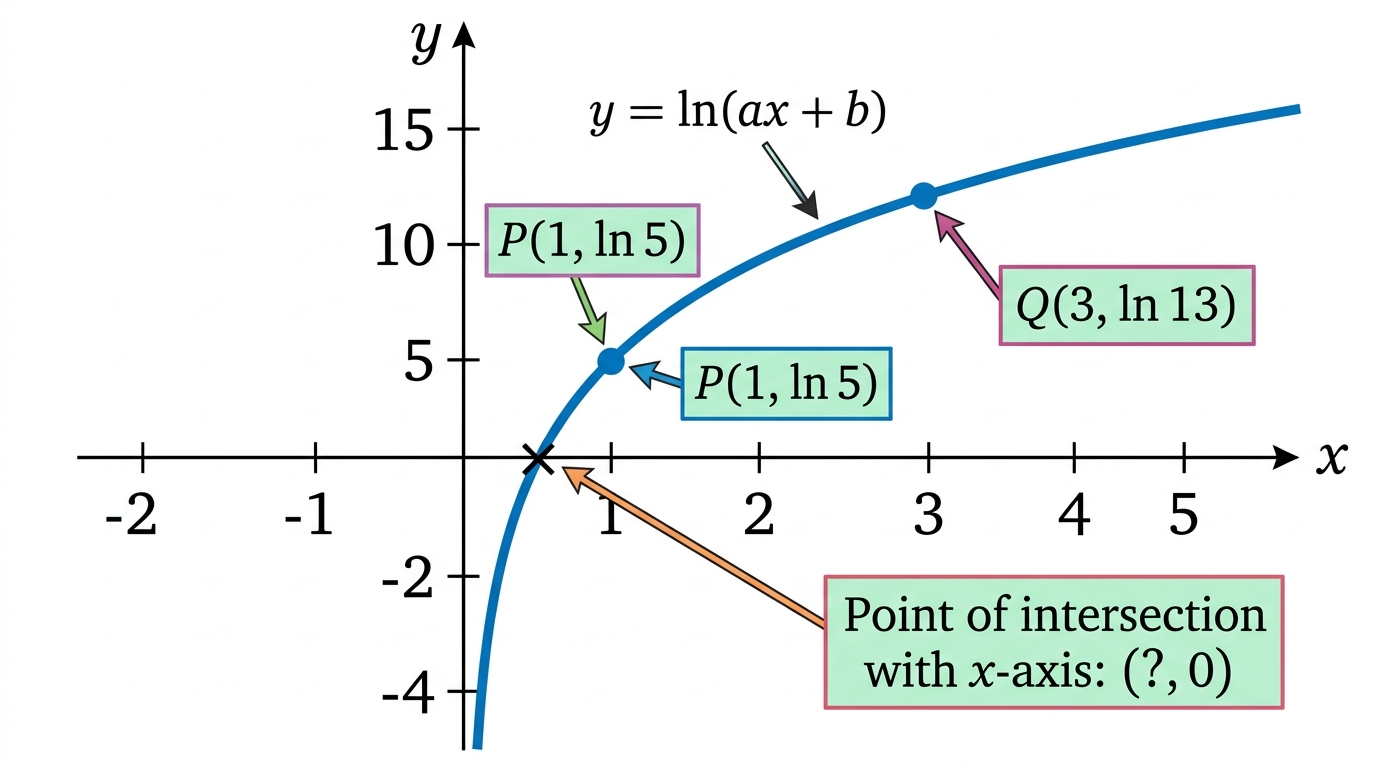
The graph of passes through the points and , where and are real constants with for all in the domain.
(a)
Determine the exact values of and . [4 marks]
(b)
Hence, find the exact coordinates of the point where the graph intersects the -axis. [2 marks]
(c)
Show that can be written in the form , and hence describe fully the two transformations that map the graph of onto the graph of , using your values of and . [2 marks]
Solutions
That's every free question here — 3 of 258.
+255 more questions, plus Mock Papers & Worksheets, are waiting in Premium.