Number, Exponents and Logarithms · Paper 1 — Free Maths AA HL Practice Questions
Free questions
Open in full, with answers, mark scheme and examiner insights.
Scientific notation
The table shows the approximate sizes, in metres, of some microscopic objects.
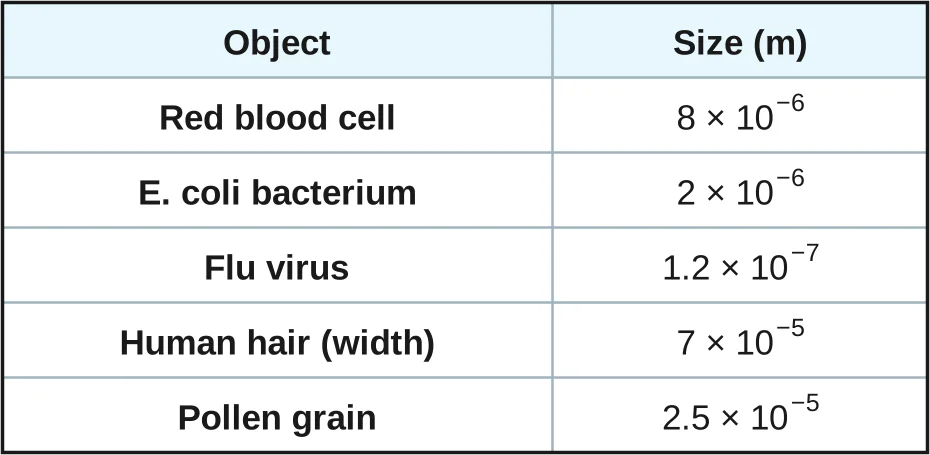
List the objects in order of size, starting with the smallest.
Find how many times longer a red blood cell is than an E. coli bacterium.
revisionprep.com
Summary Answer
Not available for this question.
Model Answer
Not available for this question.
Marking Scheme
Not available for this question.
Examiner Insights
Not available for this question.
Solving exponential and logarithmic equations
The population of a species of bird on an island is modelled by , where is the time in years after the start of a study. The graph, which is not drawn to scale, shows the model and the line .
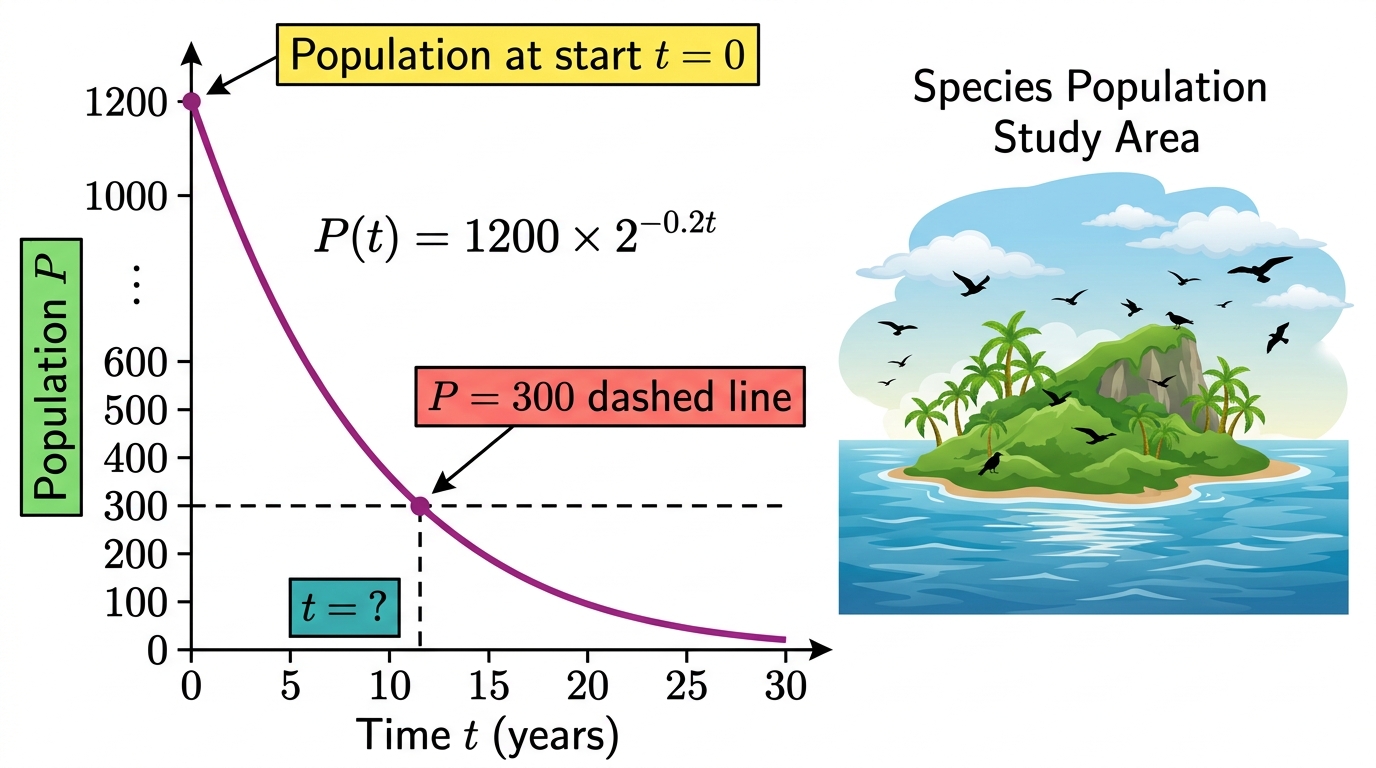
Write down the initial population.
Find the exact value of at which the population is .
Find the exact value of at which the population is . Give your answer in the form , where .
revisionprep.com
Summary Answer
Not available for this question.
Model Answer
Not available for this question.
Marking Scheme
Not available for this question.
Examiner Insights
Not available for this question.
Scientific notation
Use the values in the table to answer this question.
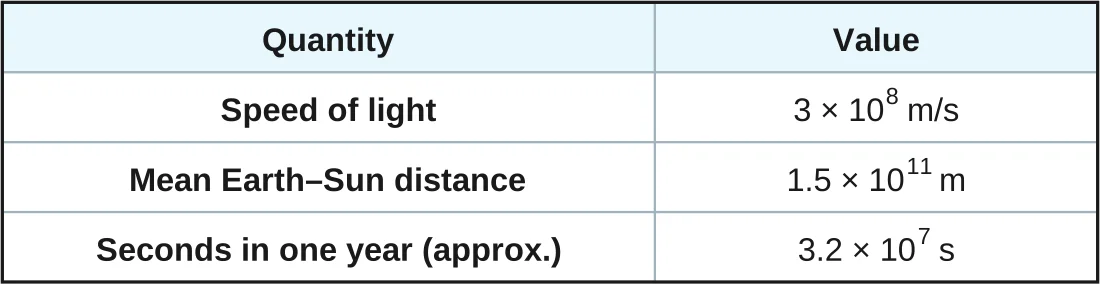
Find the time, in seconds, that light takes to travel from the Sun to the Earth.
A light-year is the distance light travels in one year. Find one light-year in metres, giving your answer in the form , where and .
A star is m from the Earth. Find its distance in light-years.
Assume the Earth moves around the Sun in a circle of radius m. Find the distance the Earth travels in one orbit, giving your answer in the form , where and .
revisionprep.com
Summary Answer
Not available for this question.
Model Answer
Not available for this question.
Marking Scheme
Not available for this question.
Examiner Insights
Not available for this question.
Laws of exponents with integer exponents; introduction to logarithms
A biologist models the population of a rare bird on an island by , where is the time in years and is a positive constant. The graph shows that the population doubles from to in the first years.
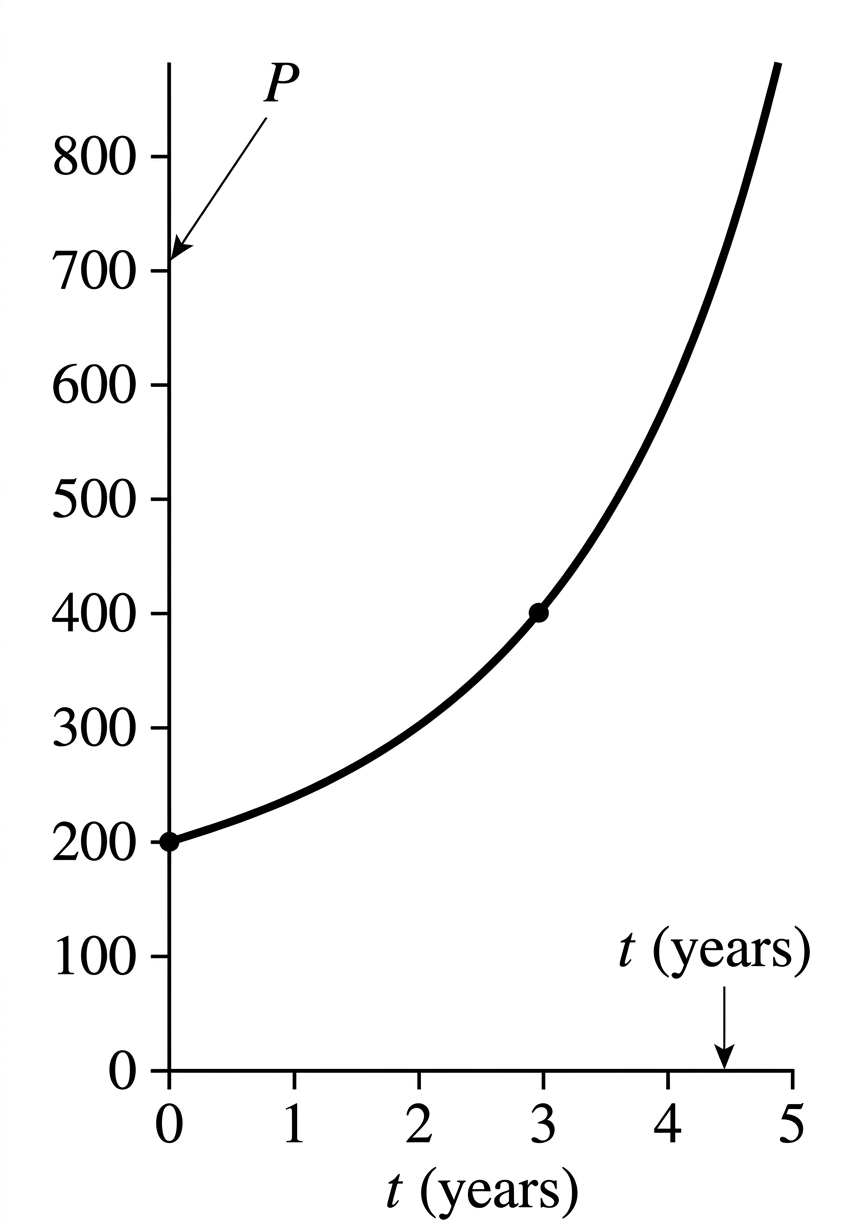
Write down the value of .
The model can also be written as . Find the exact value of .
Find the exact time at which . Give your answer in the form , where .
revisionprep.com
Summary Answer
Not available for this question.
Model Answer
Not available for this question.
Marking Scheme
Not available for this question.
Examiner Insights
Not available for this question.
Laws of exponents with integer exponents; introduction to logarithms
The number of bacteria in a laboratory culture, , after hours is modelled by
where and are positive constants. Initially there are bacteria. After hours there are bacteria.
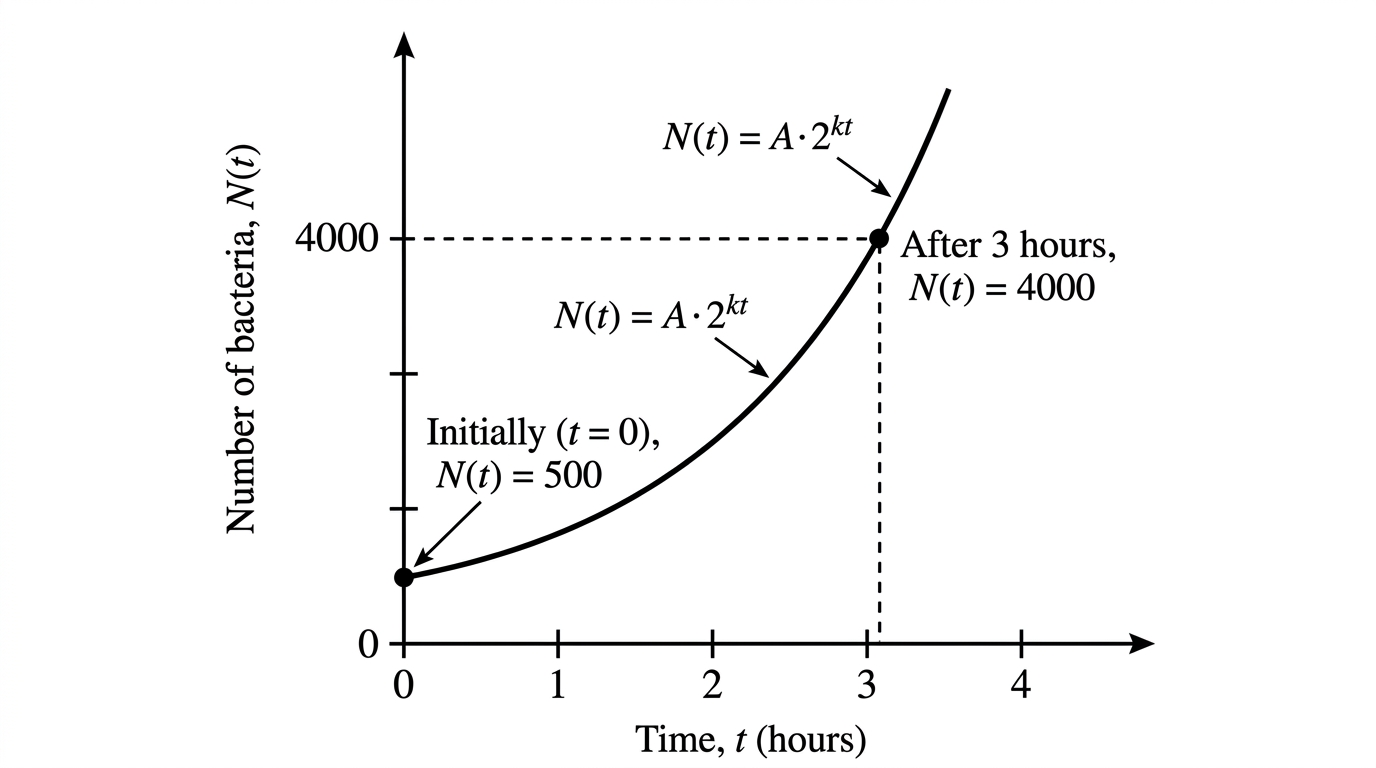
Write down the value of .
Determine the exact value of .
The culture reaches a critical threshold when . Show that the time to reach the critical threshold satisfies .
Hence determine the exact value of , and state what this reveals about the effect of doubling on the time to reach the critical threshold.
revisionprep.com
Summary Answer
Not available for this question.
Model Answer
Not available for this question.
Marking Scheme
Not available for this question.
Examiner Insights
Not available for this question.
Rational exponents, laws of logarithms and change of base
The population of a certain species of bird on an island is modelled by the function
where is the time in years since the start of the study.
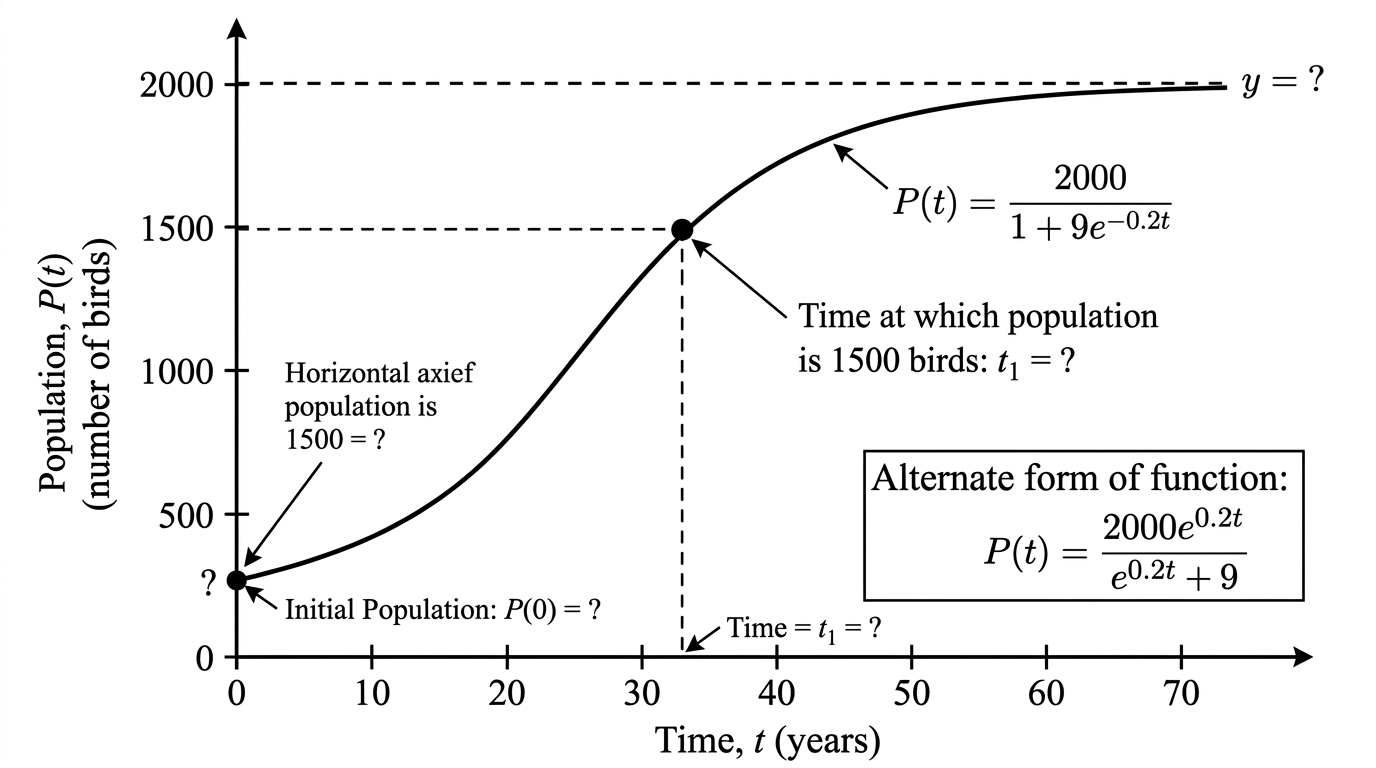
Determine the initial population of the birds.
State the value that approaches as , and interpret this value in context.
Determine the exact value of at which the population reaches birds.
revisionprep.com
Summary Answer
Not available for this question.
Model Answer
Not available for this question.
Marking Scheme
Not available for this question.
Examiner Insights
Not available for this question.
That's every free question here — 6 of 236.
+230 more questions, plus Mock Papers & Worksheets, are waiting in Premium.