Proof · Paper 1 — Free Maths AA HL Practice Questions
Free questions
Open in full, with answers, mark scheme and examiner insights.
Simple deductive proof and LHS to RHS
The diagram shows a square of side cm divided into four regions I, II, III and IV.
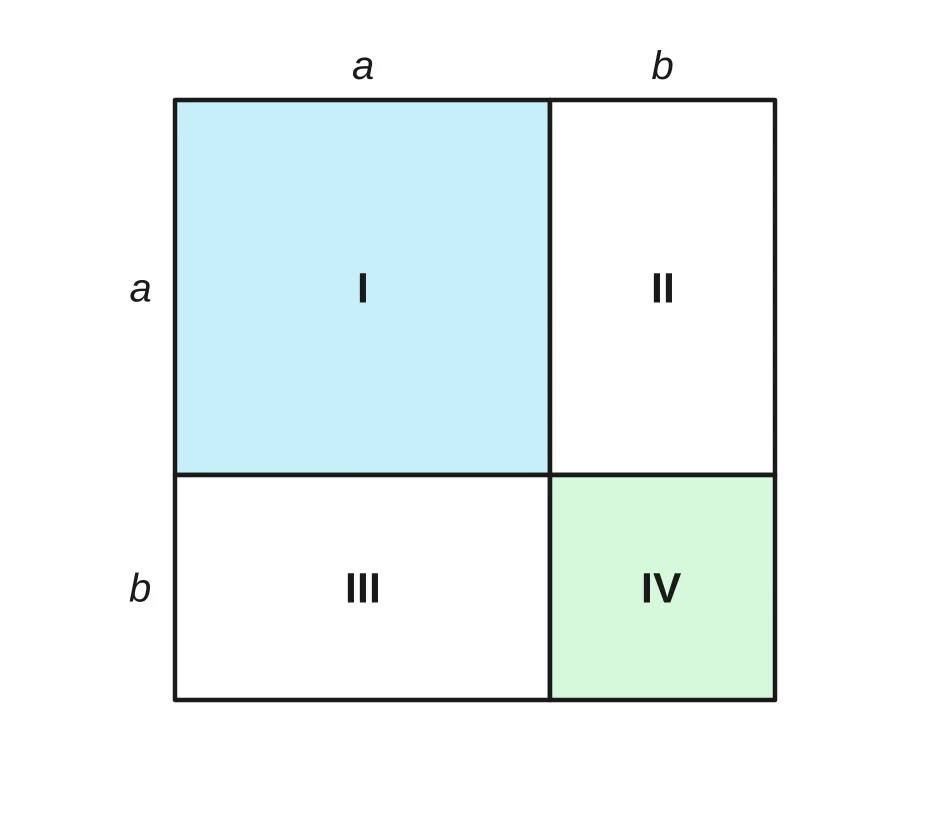
Write down an expression for the area of each region.
Hence show that .
revisionprep.com
Summary Answer
Not available for this question.
Model Answer
Not available for this question.
Marking Scheme
Not available for this question.
Examiner Insights
Not available for this question.
Proof by induction, contradiction and counterexample
A student tries to prove by induction that is even for all . The working is shown in the table.
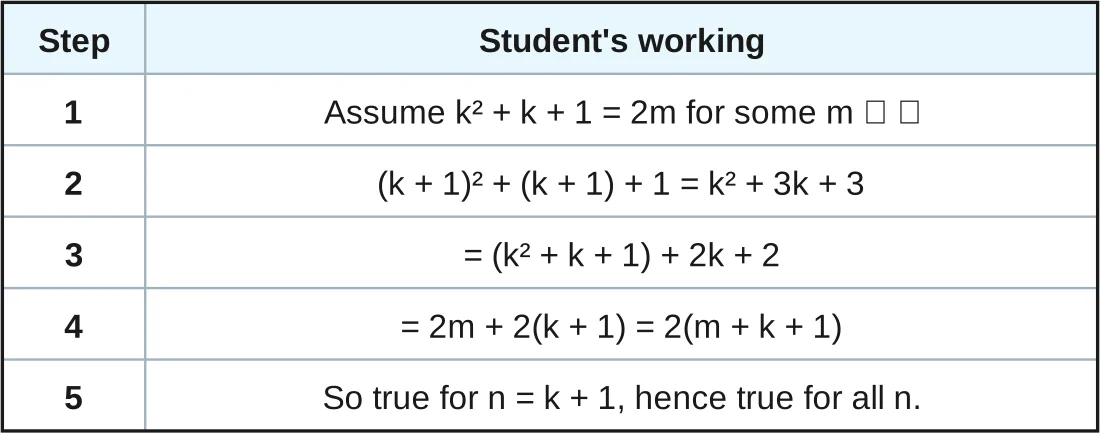
Explain why the student's proof is not valid.
Prove that is odd for all .
revisionprep.com
Summary Answer
Not available for this question.
Model Answer
Not available for this question.
Marking Scheme
Not available for this question.
Examiner Insights
Not available for this question.
Simple deductive proof and LHS to RHS
A student writes the 'proof' shown in the table, which appears to show that .
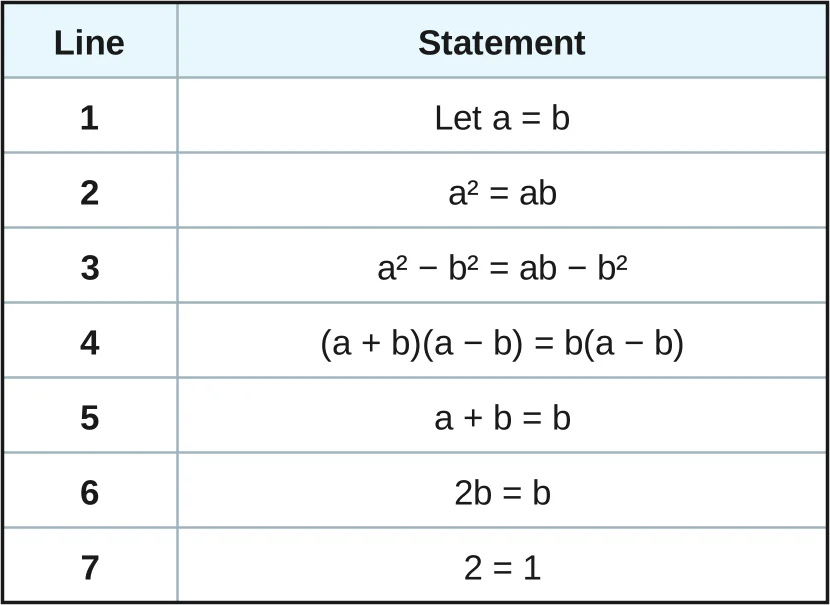
Identify the line in which the error is made.
Explain why the step in that line is not valid.
State a correct conclusion that can be drawn from line 4.
revisionprep.com
Summary Answer
Not available for this question.
Model Answer
Not available for this question.
Marking Scheme
Not available for this question.
Examiner Insights
Not available for this question.
Proof by induction, contradiction and counterexample
Prove by mathematical induction that is divisible by for all . [7]
revisionprep.com
Summary Answer
Not available for this question.
Model Answer
Not available for this question.
Marking Scheme
Not available for this question.
Examiner Insights
Not available for this question.
Simple deductive proof and LHS to RHS
The diagram shows part of a number grid with columns. A square and a square have been outlined.
A square has top-left number .
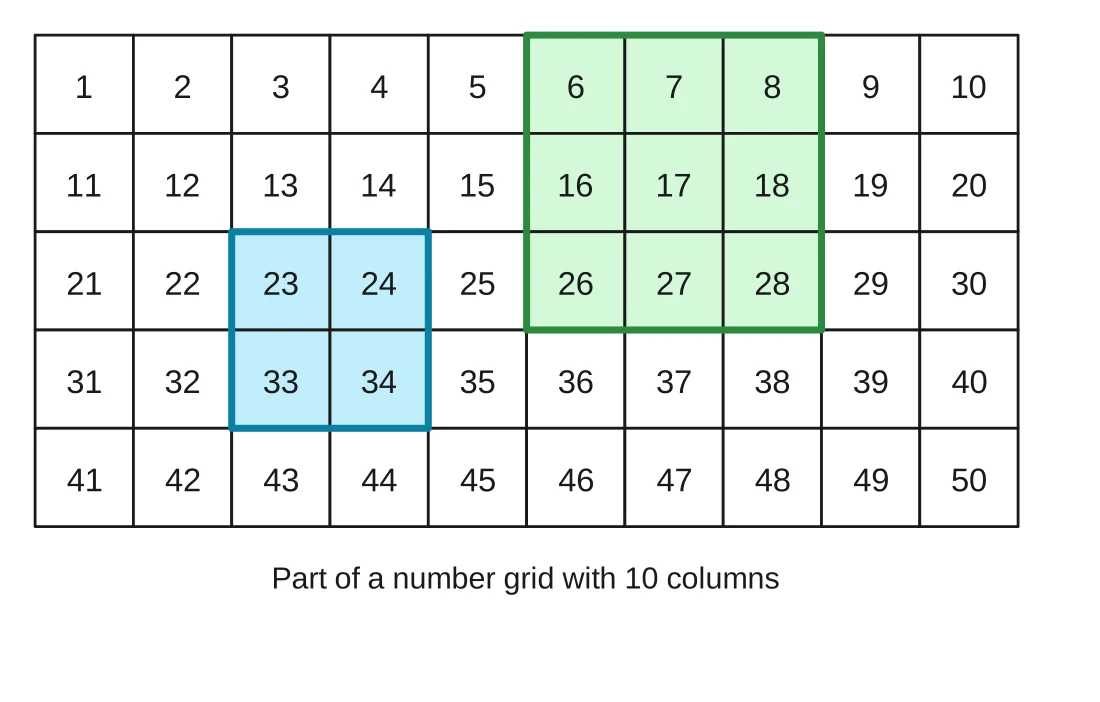
Write down, in terms of , the other three numbers in the square.
Prove that, for any square on the grid, the product of the top-right and bottom-left numbers minus the product of the top-left and bottom-right numbers is always .
Prove that the same calculation using the four corner numbers of any square always gives .
Suggest an expression for the result for a square, and prove that it is correct.
revisionprep.com
Summary Answer
Not available for this question.
Model Answer
Not available for this question.
Marking Scheme
Not available for this question.
Examiner Insights
Not available for this question.
Proof by induction, contradiction and counterexample
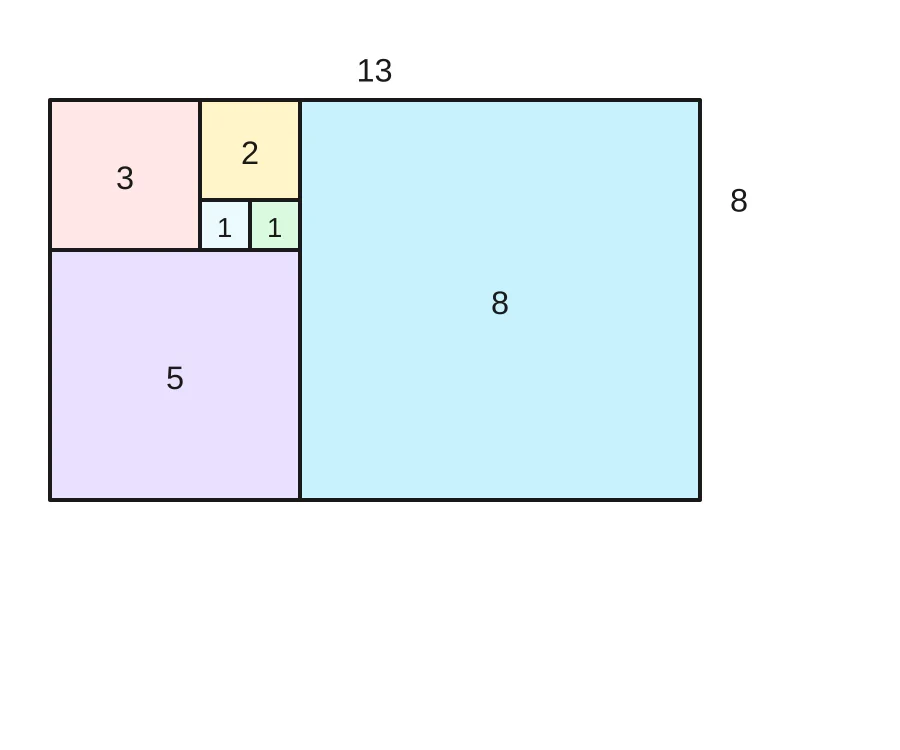
The Fibonacci numbers are defined by and for . The diagram shows squares with sides fitted together to form a rectangle.
Write down .
Prove by mathematical induction that for all .
Prove by mathematical induction that for all , and explain how the diagram illustrates this result for .
Prove by contradiction that, for every , the only positive common factor of and is .
revisionprep.com
Summary Answer
Not available for this question.
Model Answer
Not available for this question.
Marking Scheme
Not available for this question.
Examiner Insights
Not available for this question.
That's every free question here — 6 of 74.
+68 more questions, plus Mock Papers & Worksheets, are waiting in Premium.