Introduction to Differentiation and Limits · Paper 1 — Free Maths AA SL Practice Questions
Free questions
Open in full, with answers, mark scheme and examiner insights.
Introduction to the derivative; limits and rates of change
The graph of , where , , is shown.
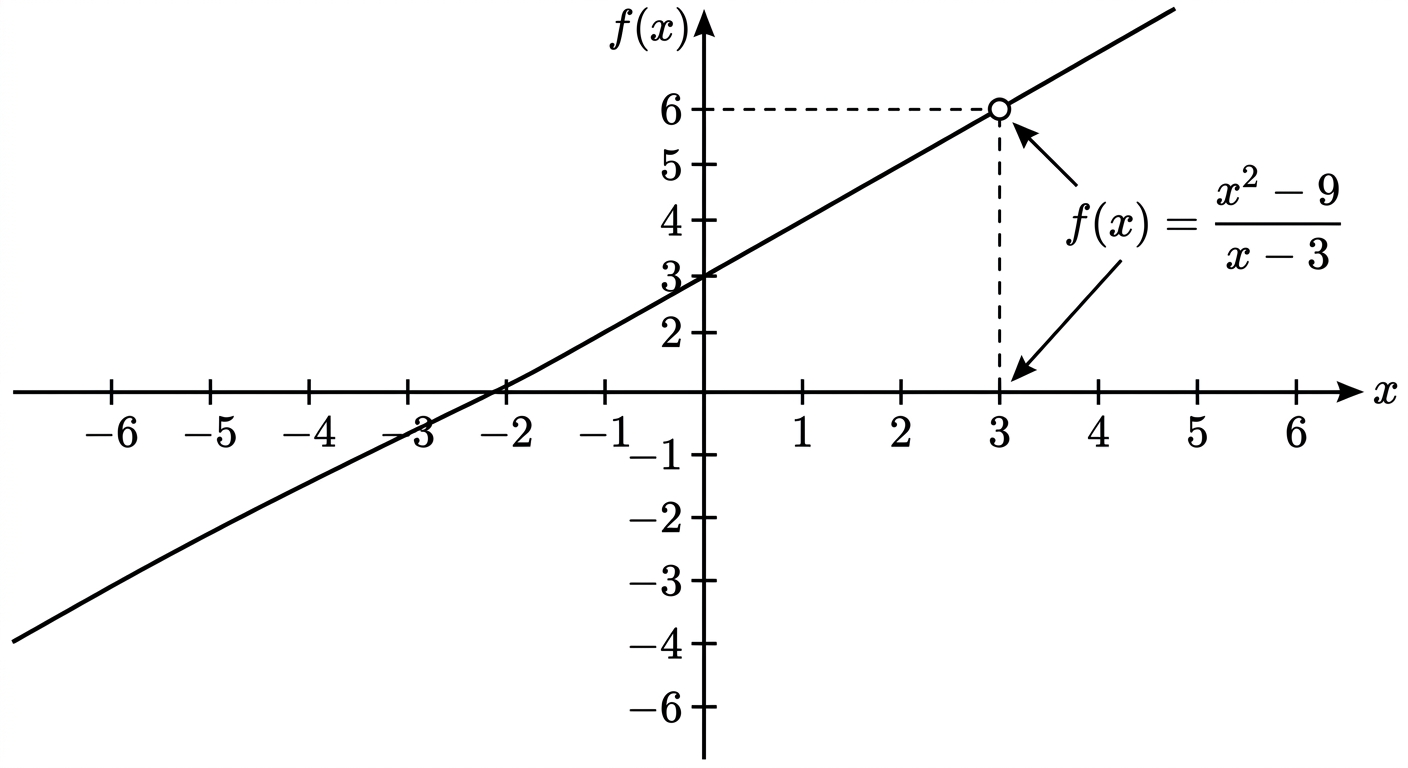
Use the graph to write down .
Verify your answer to (a) algebraically.
Ana says that because the graph reaches at . Explain why Ana is wrong.
Let , . Find .
revisionprep.com
Summary Answer
Not available for this question.
Model Answer
Not available for this question.
Marking Scheme
Not available for this question.
Examiner Insights
Not available for this question.
Derivative of axⁿ
The diagram shows part of the curve and the point on the curve.
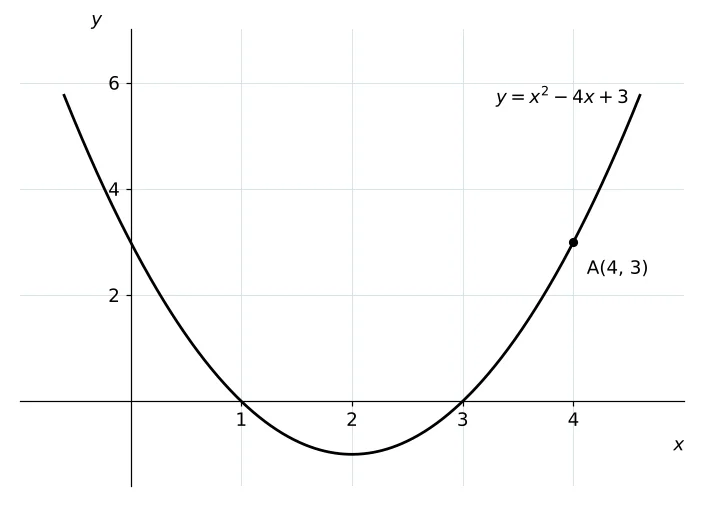
Find .
Find the gradient of the curve at .
Find the -coordinate of the point on the curve where the gradient is .
revisionprep.com
Summary Answer
Not available for this question.
Model Answer
Not available for this question.
Marking Scheme
Not available for this question.
Examiner Insights
Not available for this question.
Introduction to the derivative; limits and rates of change
The graph of is shown, where for , , and for .
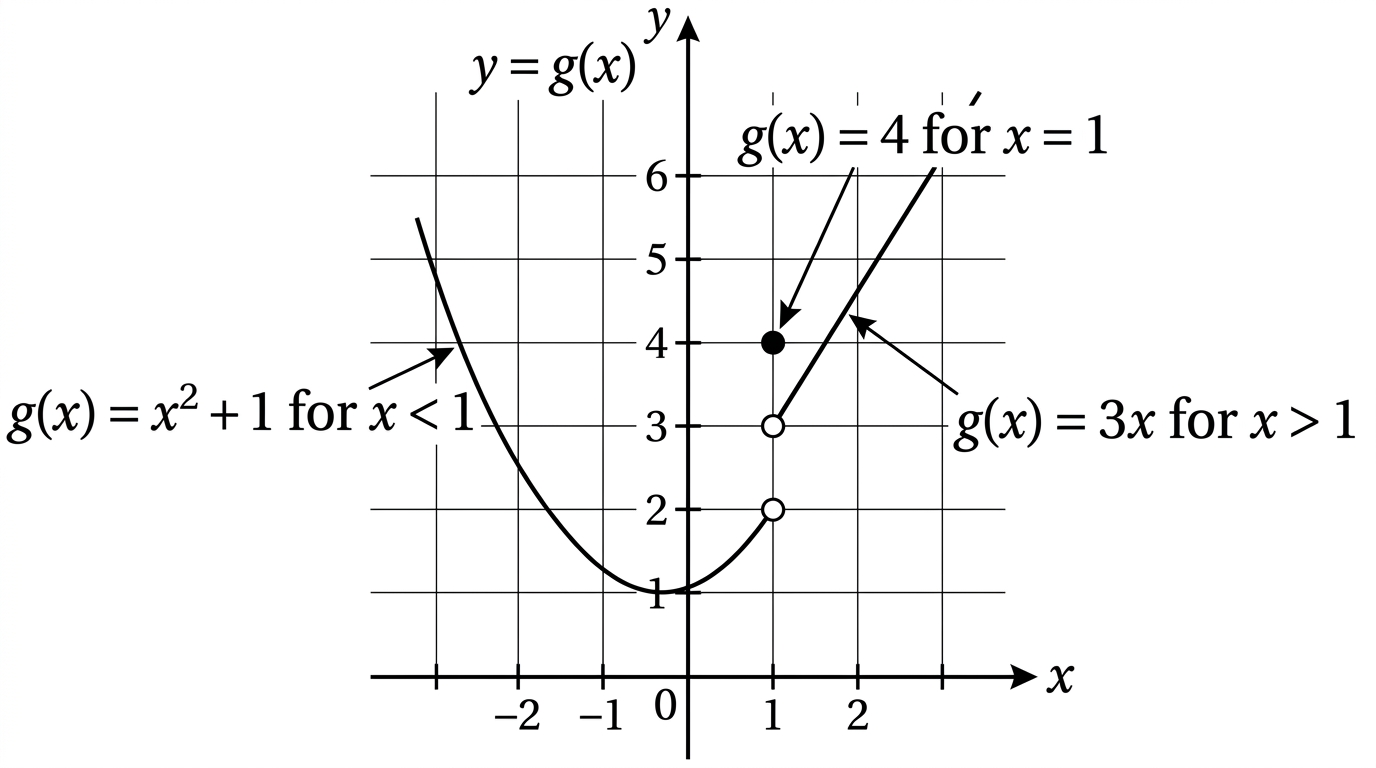
Use the graph to write down the value that approaches as and as .
State whether exists. Give a reason.
Find the gradient of the graph at .
Solve .
revisionprep.com
Summary Answer
Not available for this question.
Model Answer
Not available for this question.
Marking Scheme
Not available for this question.
Examiner Insights
Not available for this question.
Derivative of axⁿ
The diagram shows the curve and the point on the curve.
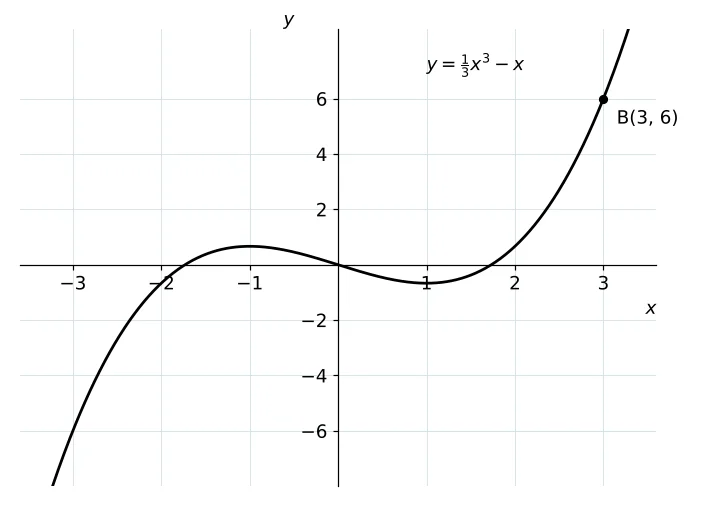
Find .
Find the gradient of the curve at .
Find the coordinates of the other point on the curve at which the tangent is parallel to the tangent at .
revisionprep.com
Summary Answer
Not available for this question.
Model Answer
Not available for this question.
Marking Scheme
Not available for this question.
Examiner Insights
Not available for this question.
Introduction to the derivative; limits and rates of change
The graph shows , where , . The graph is a straight line through with an open circle at .
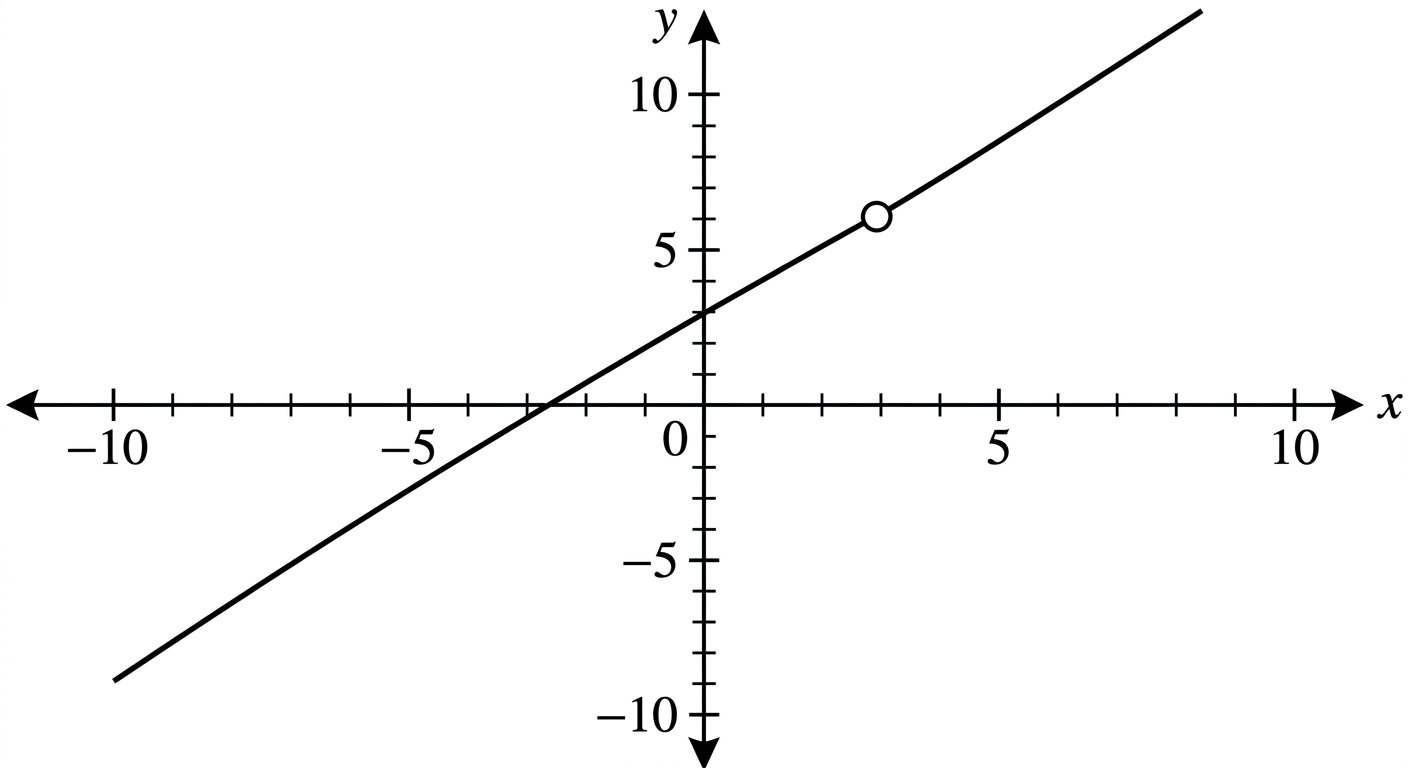
Find the equation of the line.
Hence find the values of and .
Write down .
Explain why the graph of has a vertical asymptote at rather than a hole.
revisionprep.com
Summary Answer
Not available for this question.
Model Answer
Not available for this question.
Marking Scheme
Not available for this question.
Examiner Insights
Not available for this question.
Introduction to the derivative; limits and rates of change
The diagram shows part of the curve , . The tangent at meets the -axis at and the -axis at .
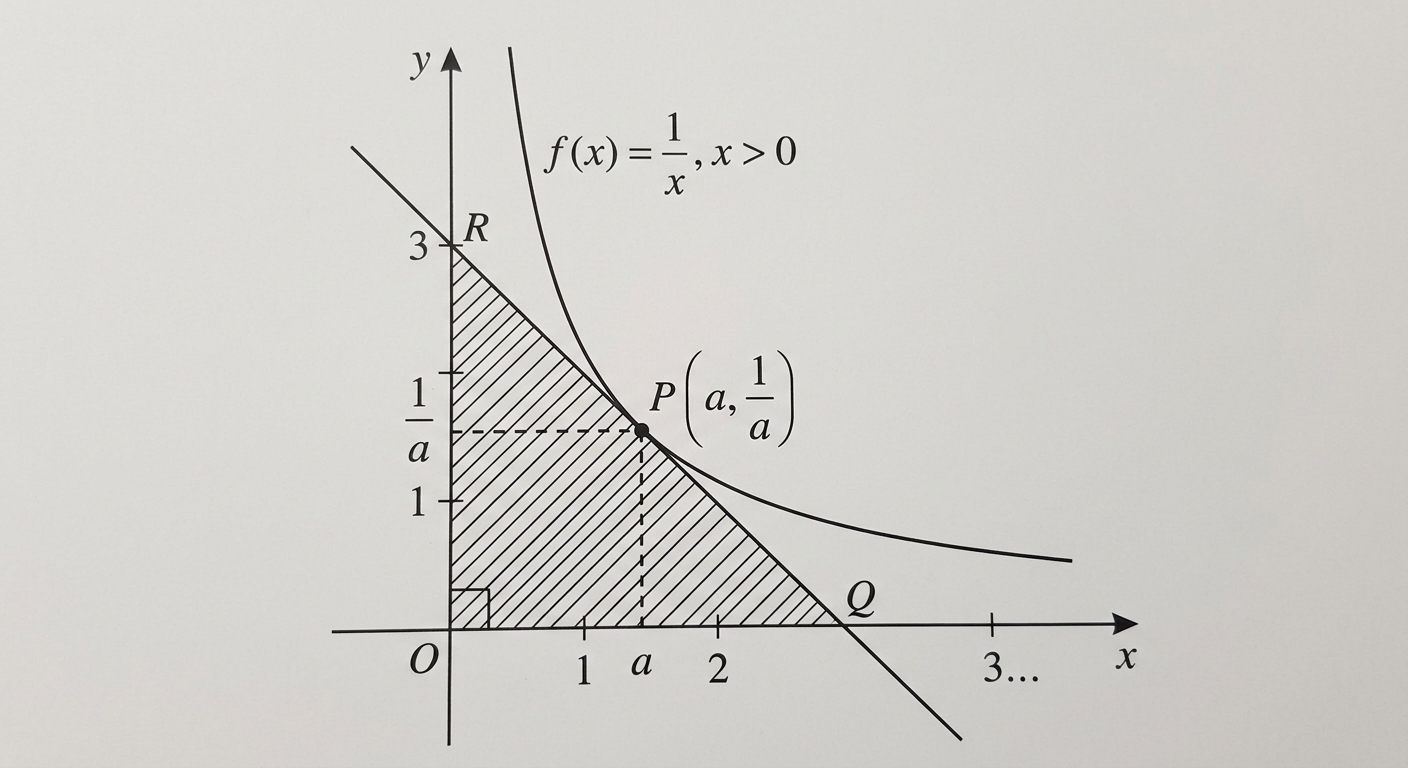
Find .
Show that the equation of the tangent at is .
Find the coordinates of and .
Show that the area of triangle does not depend on .
revisionprep.com
Summary Answer
Not available for this question.
Model Answer
Not available for this question.
Marking Scheme
Not available for this question.
Examiner Insights
Not available for this question.
That's every free question here — 6 of 401.
+395 more questions, plus Mock Papers & Worksheets, are waiting in Premium.