You're viewing free preview questions. Upgrade to access more Maths AA SL questions.Upgrade
Arithmetic and Geometric Sequences · Paper 1 — Free Maths AA SL Practice Questions
1FoundationSAQ-SDefinition and general term of arithmetic sequencess5 marksPaper 1~8 min

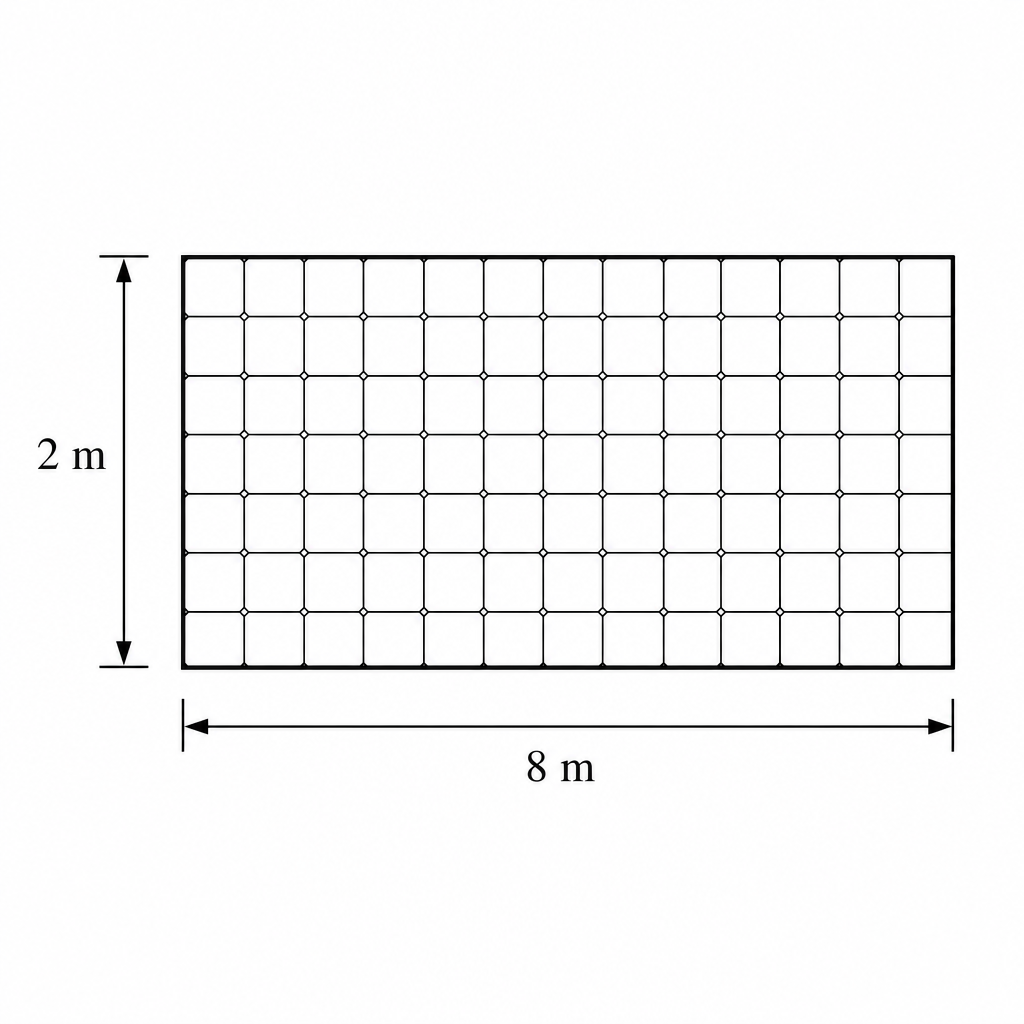
A company is designing a rectangular solar panel. The lengths of the sides of the panel, in metres, form an arithmetic sequence with first term and fourth term .
(a)
Find the common difference of the arithmetic sequence. [2 marks]
(b)
Find the area of the solar panel. [1 mark]
(c)
A second rectangular panel has the same perimeter as the first panel but has side lengths that are equal. Determine whether the second panel has a greater area than the first panel, justifying your answer. [2 marks]

Solutions
2FoundationSAQ-SDefinition and general term of arithmetic sequencess5 marksPaper 1~8 min
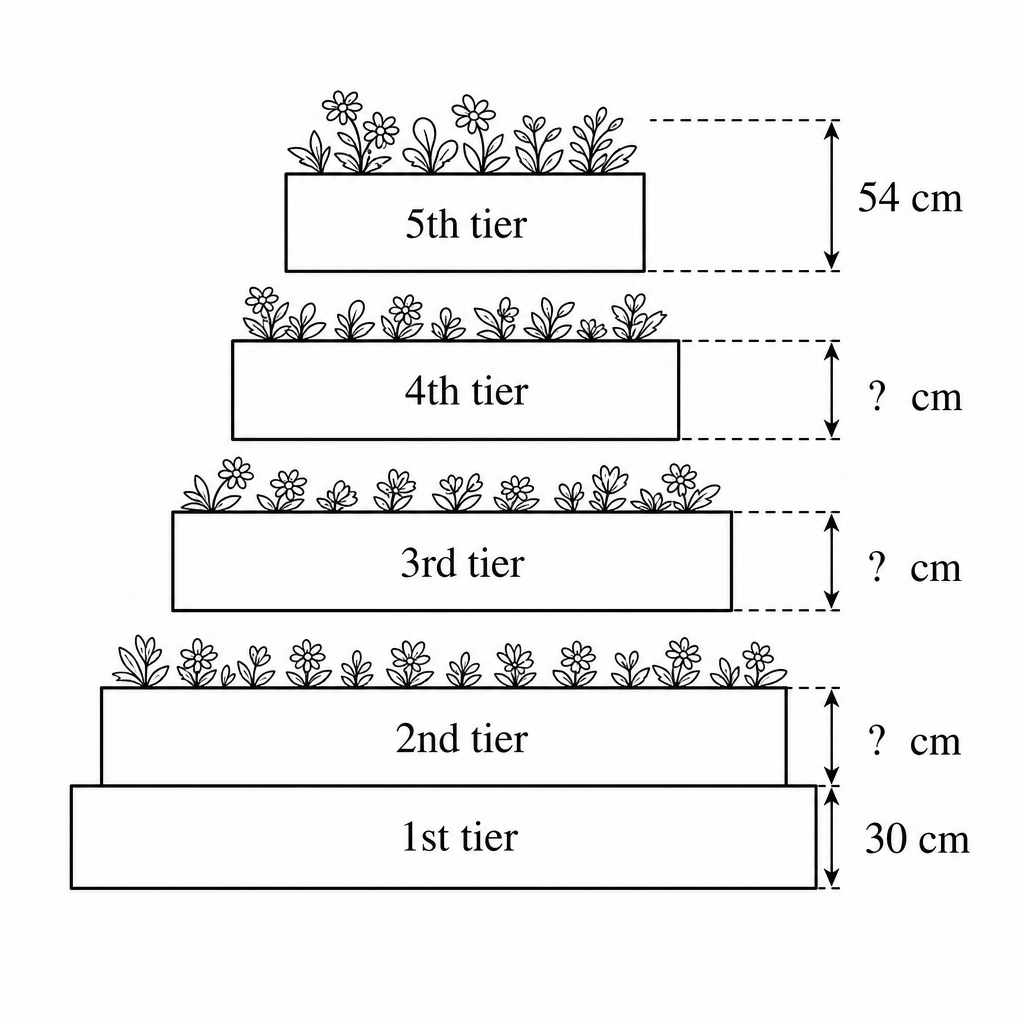
A gardener is building a tiered flower bed. The heights of the tiers, measured in centimetres, form an arithmetic sequence. The first tier has height and the fifth tier has height .
(a)
Find the common difference of the sequence. [2 marks]
(b)
Find the height of the third tier. [2 marks]
(c)
The gardener has enough soil to build tiers up to a total combined height of . Determine whether the gardener can complete a -tier flower bed. [1 mark]
Solutions
3FoundationSAQ-SDefinition and general term of arithmetic sequencess8 marksPaper 1~12 min
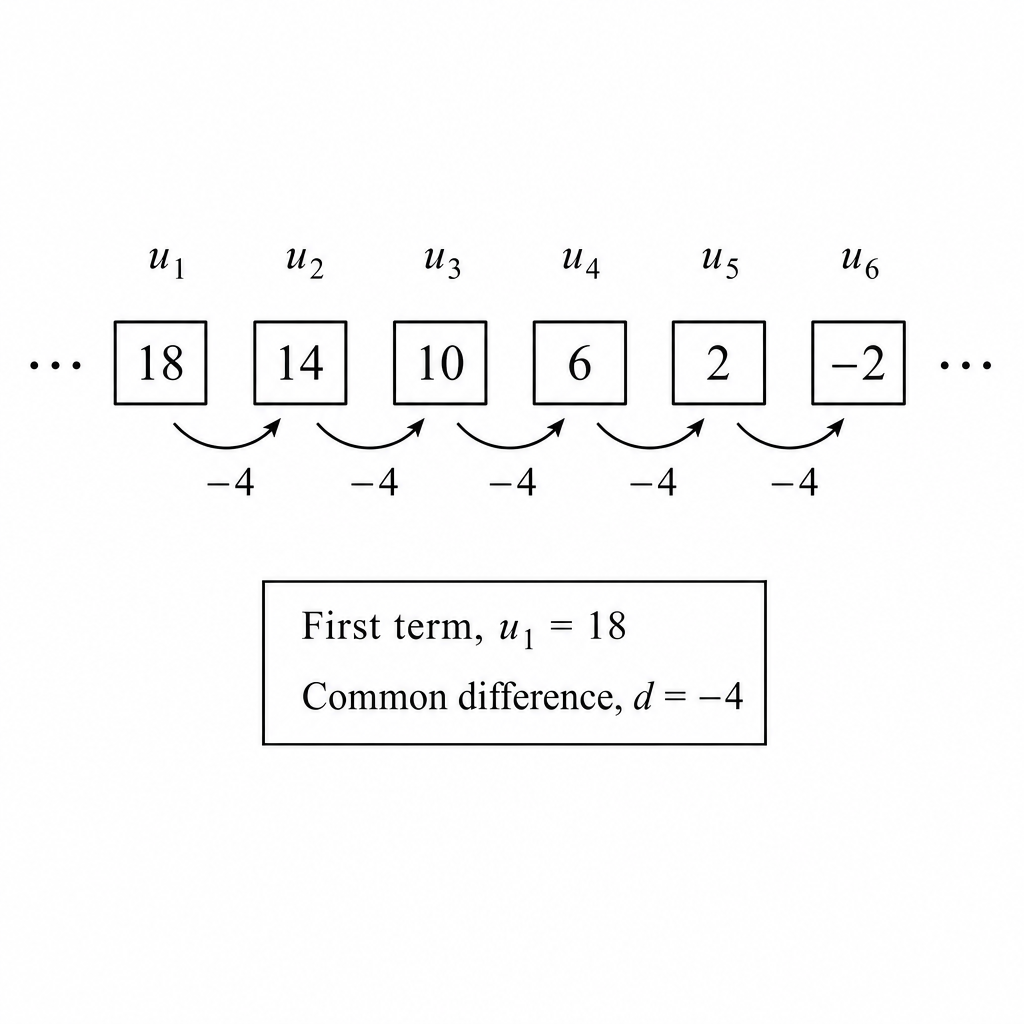
The first term of an arithmetic sequence is and the common difference is .
(a)
Calculate the sum of the first terms. [2 marks]
(b)
Determine the value of for which the th term equals . [2 marks]
(c)
Find the least value of for which the sum of the first terms is negative. [4 marks]
Solutions
4FoundationSAQ-SDefinition and general term of arithmetic sequencess5 marksPaper 1~8 min
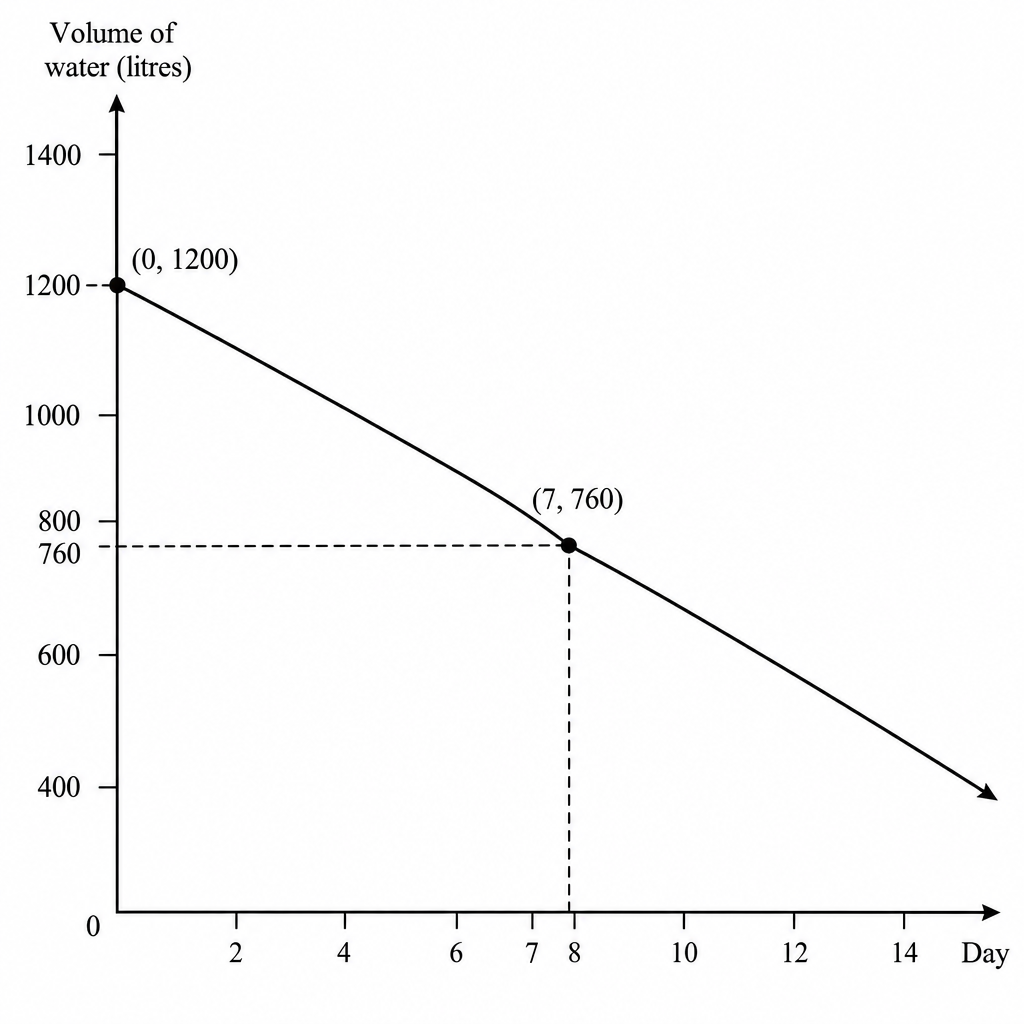
A water tank contains litres of water. Due to a leak, the volume of water decreases by a constant amount each day. After days, the tank contains litres.
(a)
State what feature of an arithmetic sequence models the daily water loss. [1 mark]
(b)
Calculate the amount of water, in litres, that leaks from the tank each day. [2 marks]
(c)
Determine the day on which the tank will first contain less than litres of water. [2 marks]
Solutions
5FoundationSAQ-SDefinition and general term of arithmetic sequencess7 marksPaper 1~11 min
A cinema has seats in the first row. Each subsequent row has more seats than the row in front. The number of seats in row is .
(a)
State the value of and the common difference . [1 mark]
(b)
Calculate the number of seats in the th row. [2 marks]
(c)
The last row has seats. Find the total number of rows in the cinema. [2 marks]
(d)
Hence find the total number of seats in the cinema. [2 marks]
Solutions
6FoundationSAQ-SSum of an arithmetic sequences8 marksPaper 1~12 min
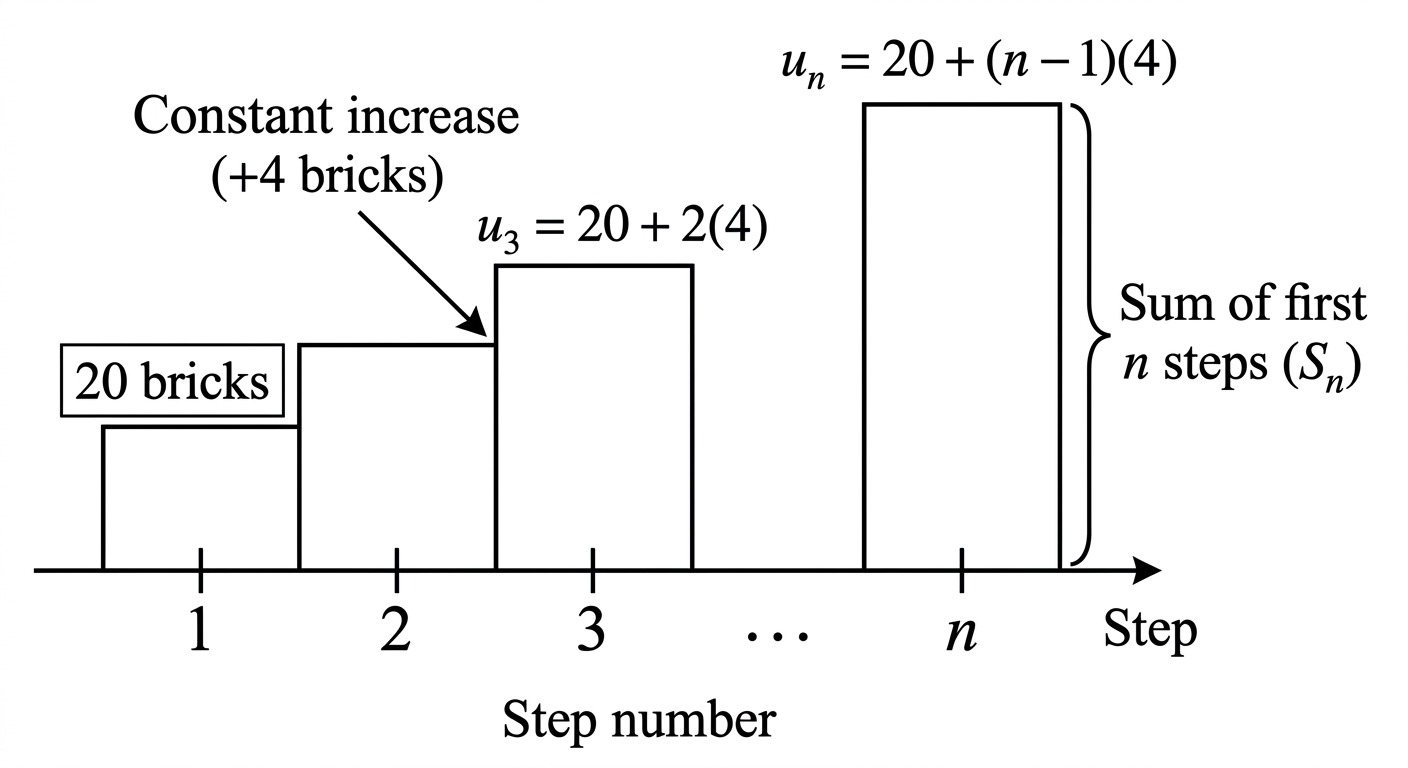
A construction company is building a staircase. The first step requires bricks. Each subsequent step requires more bricks than the previous step.
(a)
Find the number of bricks required to build the th step. [2 marks]
(b)
Find the total number of bricks required to build the first steps. [3 marks]
(c)
The company has a total of bricks available. Determine the maximum number of complete steps that can be built, justifying your answer. [3 marks]
Solutions
7FoundationSAQ-SSum of an arithmetic sequences8 marksPaper 1~12 min
A student is training for a race. On the first day she runs . Each subsequent day she increases her distance by compared to the previous day.
(a)
Find the distance she runs on day . [2 marks]
(b)
Find the total distance she runs over the first days. [2 marks]
(c)
Find the minimum number of days of training required for her total distance to exceed . [4 marks]
Solutions
8FoundationSAQ-SSum of an arithmetic sequences7 marksPaper 1~11 min
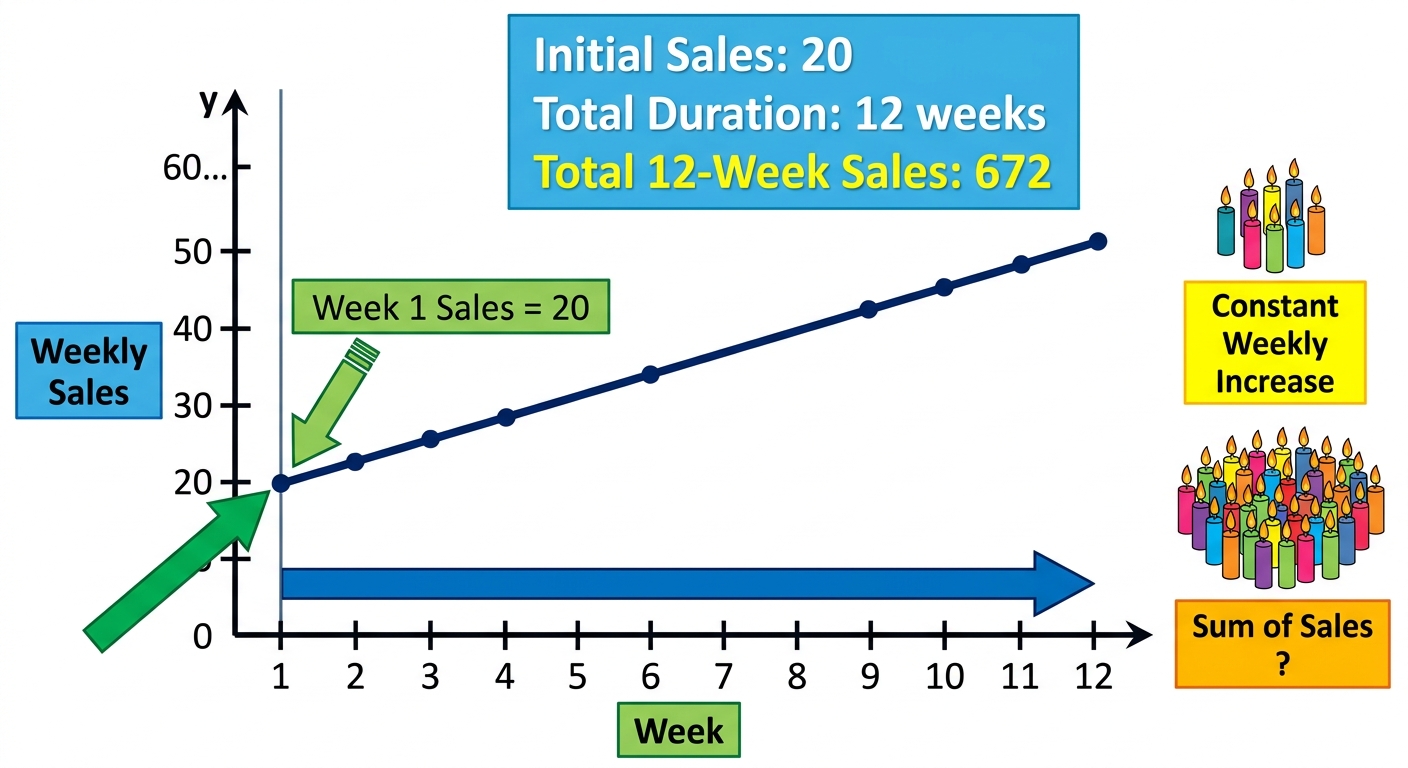
A small business sells handmade candles. In the first week, they sell candles. Each week, sales increase by a constant number of candles. After weeks, a total of candles have been sold.
(a)
State the formula for the sum of the first terms of an arithmetic sequence. [1 mark]
(b)
Find the weekly increase in sales. [3 marks]
(c)
The business aims to sell at least candles in a single week. Determine the minimum number of weeks required to reach this target. [3 marks]
Solutions
9FoundationSAQ-SDefinition and general term of arithmetic sequencess7 marksPaper 1~11 min
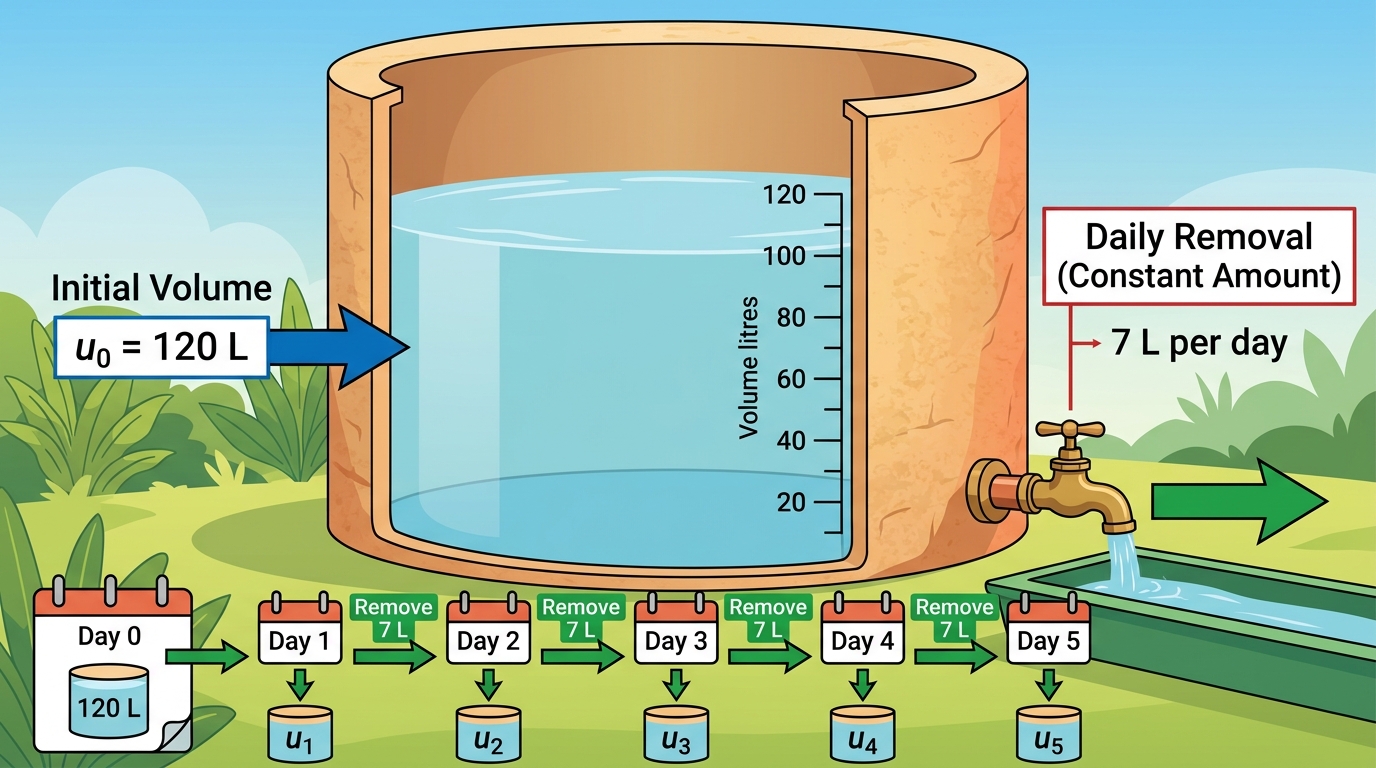
A water tank contains litres of water at the start of day 1. Each day, exactly litres of water are removed from the tank for irrigation. The volume of water in the tank at the end of day is denoted litres.
(a)
Write down an expression for in terms of . [2 marks]
(b)
Calculate the volume of water remaining in the tank at the end of day . [2 marks]
(c)
Determine the maximum number of complete days for which the tank can supply water before it is empty. [3 marks]
Solutions
10FoundationSAQ-SDefinition and general term of arithmetic sequencess9 marksPaper 1~14 min
A movie theatre has seats in the first row. Each subsequent row has more seats than the previous row. The number of seats per row forms an arithmetic sequence.
(a)
State the first term, , and the common difference, , of this arithmetic sequence. [1 mark]
(b)
Find the number of seats in the th row. [2 marks]
(c)
The last row has seats. The theatre has rows in total. Show that . [2 marks]
(d)
A second theatre has the same number of rows. Its first row has seats and its last row has seats, with seats increasing by a constant amount per row. Determine which theatre has more total seats, and by how many. [4 marks]
Solutions
11FoundationSAQ-SSum of an arithmetic sequences7 marksPaper 1~11 min
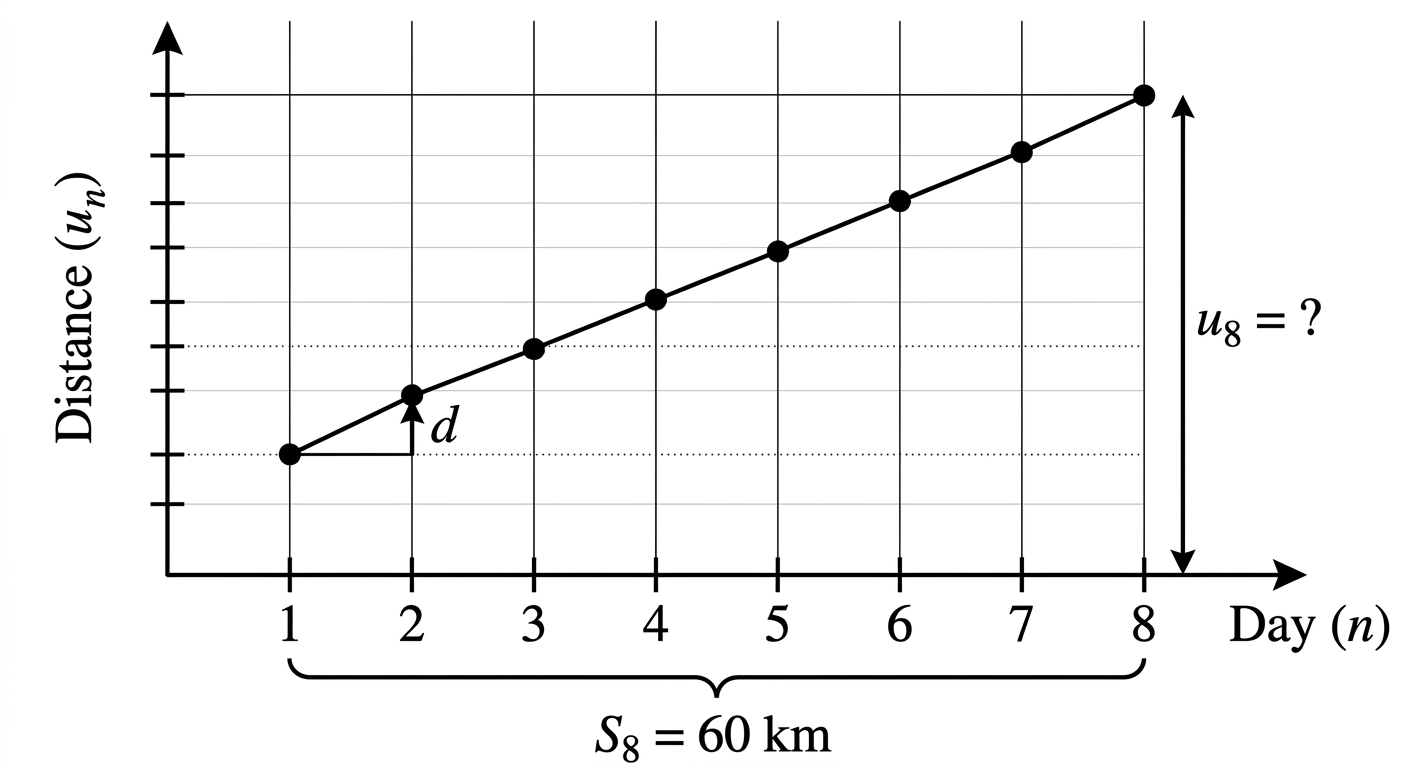
Tara is training for a charity run. She runs on the first day and increases the distance she runs each day by a constant amount . She runs a total of over the first days.
(a)
Find the common difference . [3 marks]
(b)
Find the distance Tara runs on day . [1 mark]
(c)
Tara claims she can maintain this training plan for days. Determine the total distance she would run over days and comment on whether this claim is realistic. [3 marks]
Solutions
12FoundationSAQ-SSum of an arithmetic sequences8 marksPaper 1~12 min
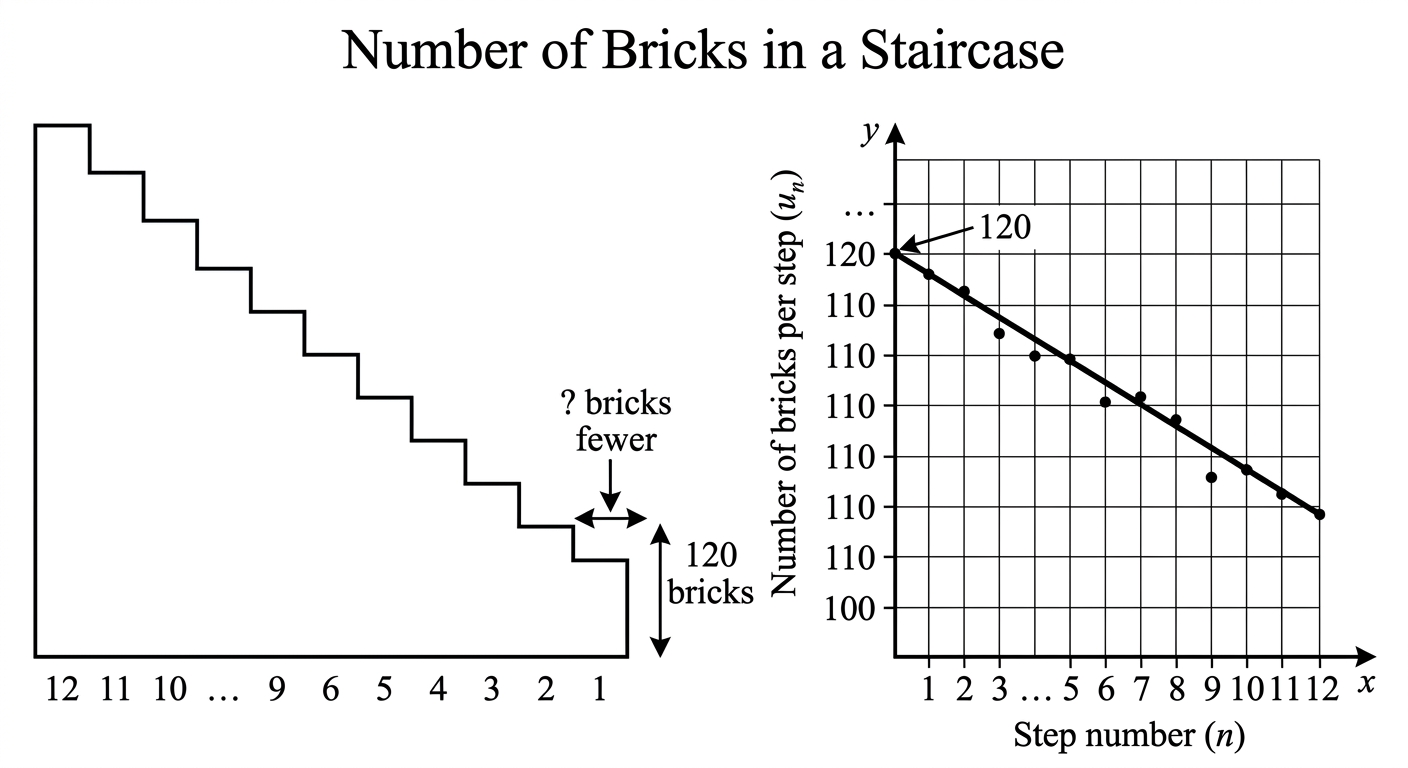
A construction company is building a staircase. The first step requires bricks. Each subsequent step requires fewer bricks than the previous step.
(a)
State the value of the common difference, , for the arithmetic sequence representing the number of bricks per step. [1 mark]
(b)
The staircase has steps. Find the total number of bricks required to build all steps. [3 marks]
(c)
The company has a total of bricks available. Determine the maximum number of complete steps that can be built. [4 marks]
Solutions
13FoundationSAQ-SDefinition and general term of arithmetic sequencess5 marksPaper 1~8 min
A car rental company charges a fixed fee of USD 50 for the first day. For each additional day, the charge increases by USD 15. The total charge for days is dollars.
(a)
Write down the values of and the common difference of the arithmetic sequence [1 mark]
(b)
Calculate the charge for a 7-day rental. [2 marks]
(c)
A customer has a budget of exactly USD 200. Determine the maximum number of complete days the car can be rented, and find the unused budget remaining. [2 marks]
Solutions
14FoundationSAQ-SDefinition and general term of arithmetic sequencess7 marksPaper 1~11 min
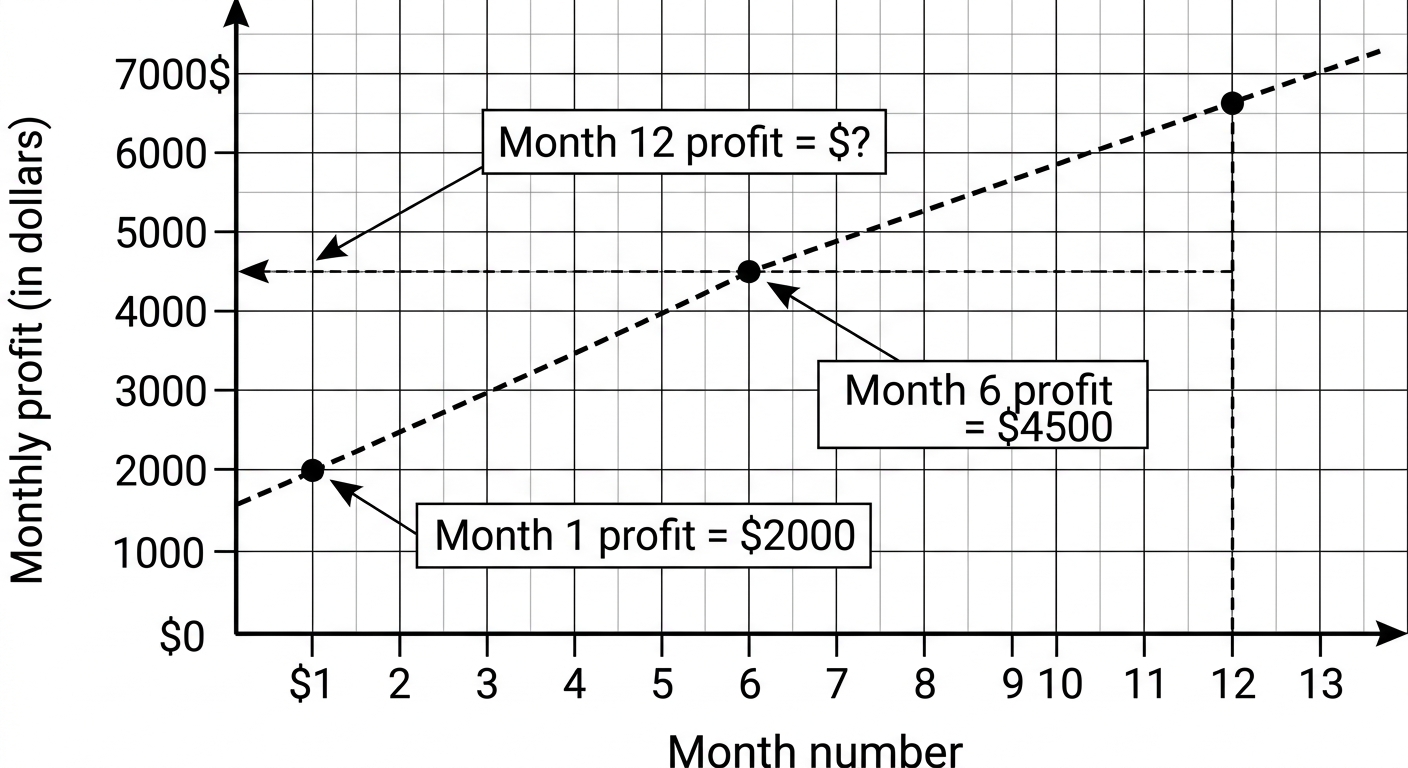
A small business owner tracks the monthly profit from a new product. In the first month, the profit is dollars. The profit increases by a fixed amount each month, forming an arithmetic sequence. In the sixth month, the profit is dollars.
(a)
Find the common difference, , of this arithmetic sequence. [2 marks]
(b)
Find the profit in the twelfth month. [2 marks]
(c)
The owner claims that the total profit over the first twelve months exceeds dollars. Determine whether this claim is correct, showing your reasoning. [3 marks]
Solutions
15FoundationSAQ-SSum of an arithmetic sequences7 marksPaper 1~11 min
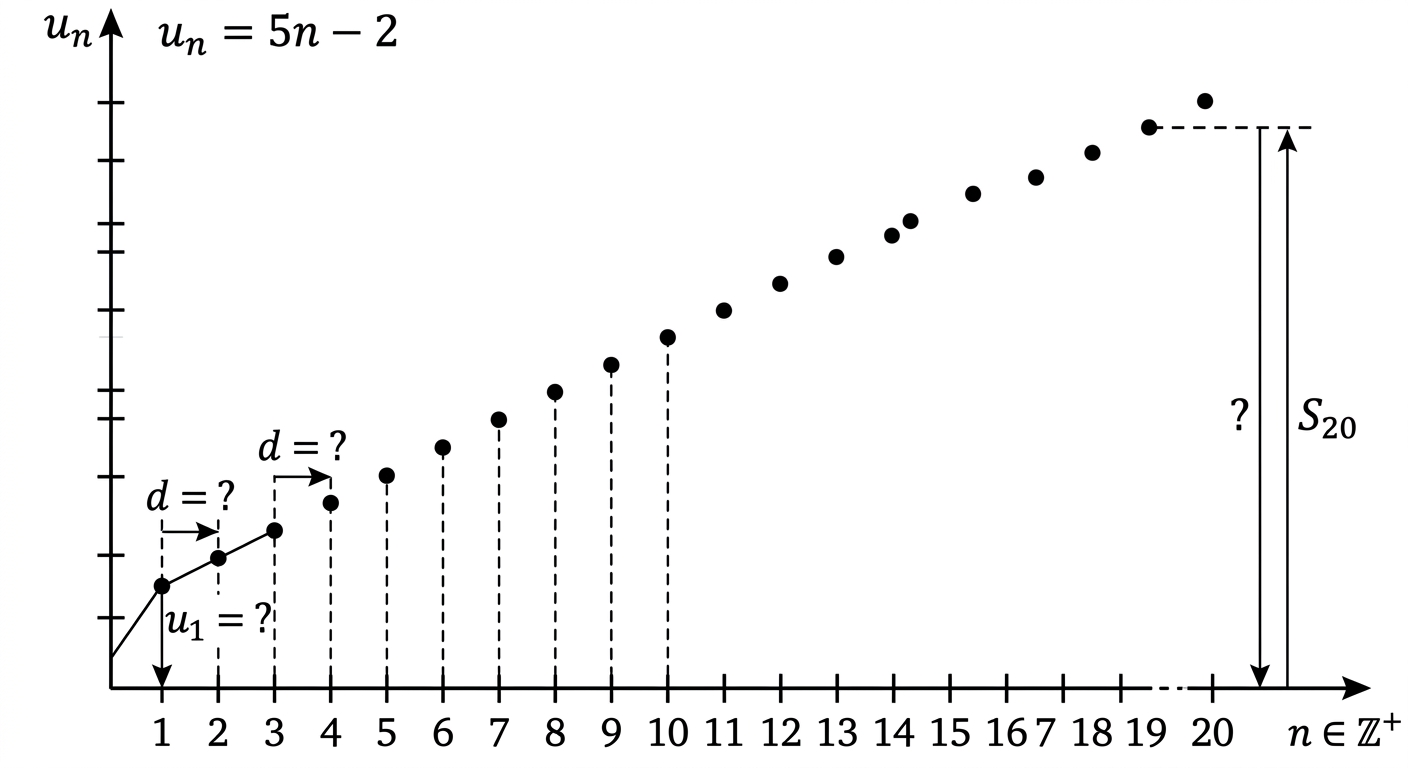
An arithmetic sequence has general term , where .
(a)
Write down the first term and the common difference . [2 marks]
(b)
Find , the sum of the first terms. [2 marks]
(c)
Find the least value of such that . [3 marks]
Solutions
16FoundationSAQ-SDefinition and general term of arithmetic sequencess5 marksPaper 1~8 min
A gardener is planting trees in a straight row. The first tree is planted metres from a fence. Each subsequent tree is planted metres further from the fence than the previous tree. The distance of the th tree from the fence is metres.
(a)
State the values of and for this arithmetic sequence. [1 mark]
(b)
Calculate the distance from the fence of the th tree. [2 marks]
(c)
The gardener has a row of length metres available beyond the fence. Determine the maximum number of trees that can be planted within this row. [2 marks]
Solutions
17FoundationSAQ-SDefinition and general term of arithmetic sequencess7 marksPaper 1~11 min
A cyclist trains by increasing her cycling distance each day. The distances she cycles on consecutive days form an arithmetic sequence. On day 1, she cycles . On day 7, she cycles .
(a)
Find the common difference of the sequence. [2 marks]
(b)
Find the total distance she cycles over the first 7 days. [2 marks]
(c)
Find the minimum number of days of training required for her total cumulative distance to exceed . [3 marks]
Solutions
18FoundationSAQ-SDefinition and general term of arithmetic sequencess7 marksPaper 1~11 min
A car travels from town A town B. The distances travelled in consecutive minutes form an arithmetic sequence. In the first minute, the car travels metres. In the fourth minute, the car travels metres.
(a)
Find the common difference of the sequence. [2 marks]
(b)
Find the distance travelled in the sixth minute. [2 marks]
(c)
The total distance from town A town B is . Determine the minute during which the car arrives at town B, justifying your answer. (Assume the sequence continues unchanged.) [3 marks]
Solutions
19FoundationSAQ-SDefinition and general term of arithmetic sequencess5 marksPaper 1~8 min
A farmer plants trees in a straight line. The distance from the first tree to the second tree is . The distances between consecutive trees form an arithmetic sequence with common difference . The total distance from the first tree to the fifth tree is .
(a)
Write an expression, in terms of , for the total distance from the first tree to the fifth tree. [1 mark]
(b)
Find the common difference . [2 marks]
(c)
Find the distance between the fourth and fifth trees. [2 marks]
Solutions
20FoundationSAQ-SDefinition and general term of arithmetic sequencess5 marksPaper 1~8 min
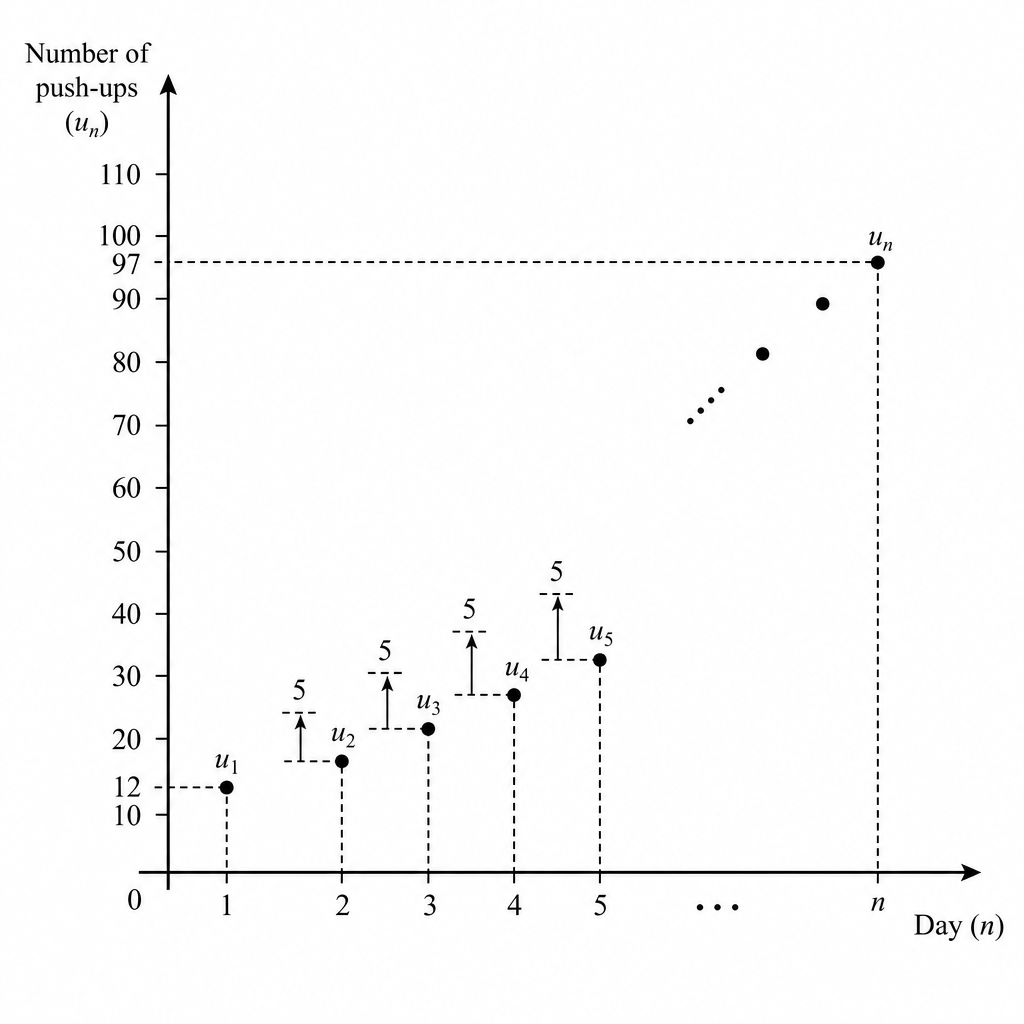
A fitness app tracks the number of push-ups a user completes each day. On the first day, the user completes push-ups. Each subsequent day, the user completes more push-ups than the previous day. The number of push-ups completed on day is denoted by .
(a)
Write down an expression for in terms of . [1 mark]
(b)
Calculate the number of push-ups completed on day . [2 marks]
(c)
On a certain day, the user completes push-ups. Find the value of for this day. [2 marks]
Solutions
Showing 20 of 425 free questions