Binomial Theorem and Counting Principles · Paper 1 — Free Maths AA SL Practice Questions
Free questions
Open in full, with answers, mark scheme and examiner insights.
The binomial theorem for natural n; nCr and Pascal's triangle
The diagram shows the first five rows of Pascal's triangle.
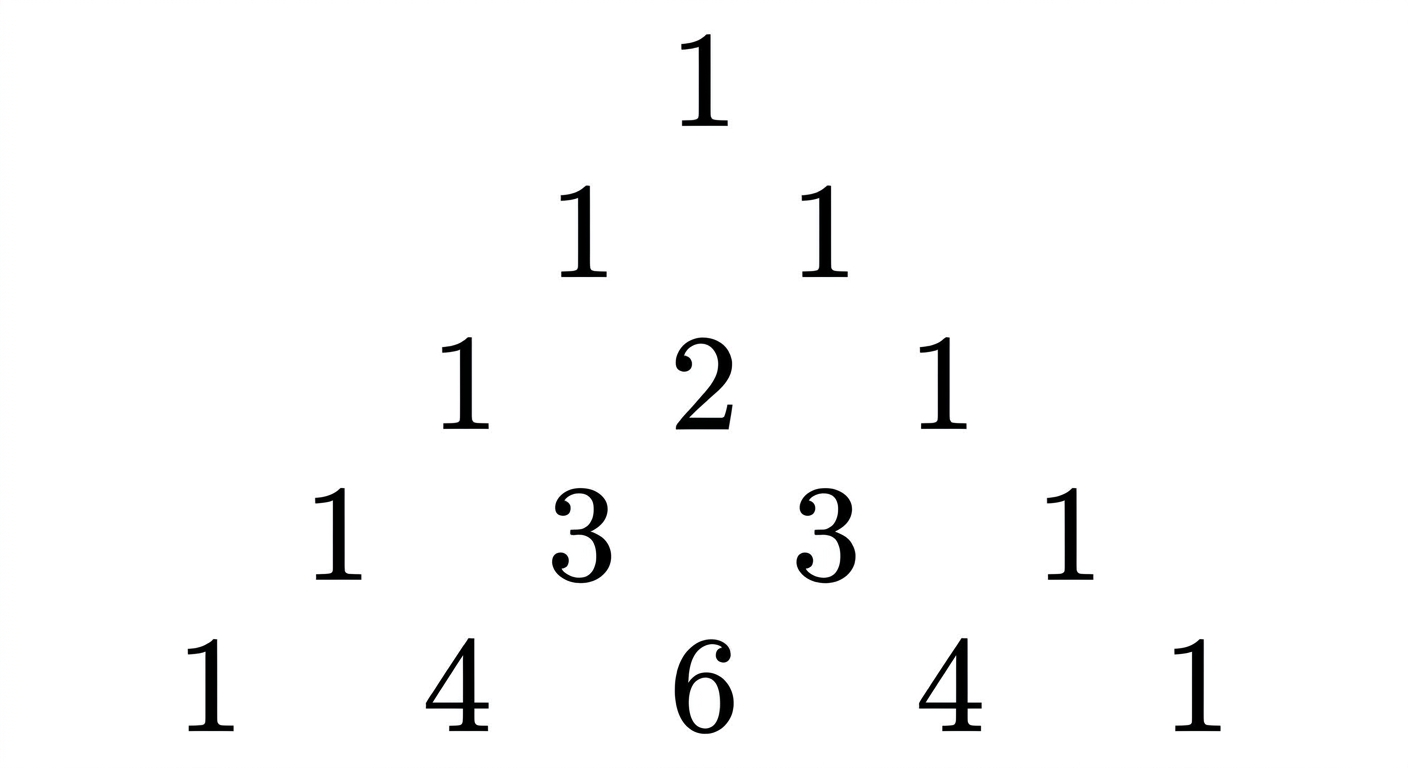
State the row used to expand and write down its values.
Find the coefficient of in the expansion of .
By substituting a suitable value of into your expansion of , find the exact value of .
revisionprep.com
Summary Answer
Not available for this question.
Model Answer
Not available for this question.
Marking Scheme
Not available for this question.
Examiner Insights
Not available for this question.
The binomial theorem for natural n; nCr and Pascal's triangle
Consider the binomial expansion of .
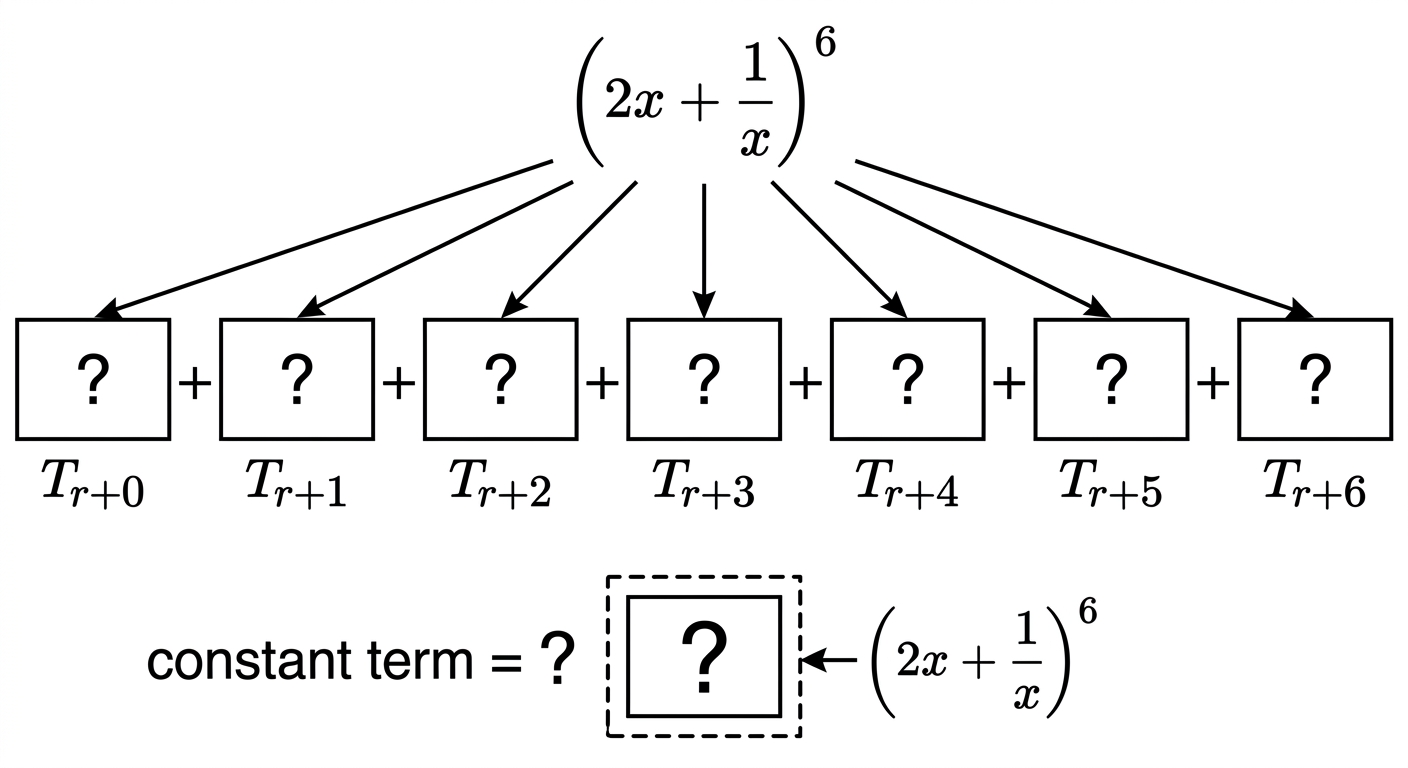
Write down the general term in the expansion of .
Show that can be written as .
Hence find the constant term in the expansion.
revisionprep.com
Summary Answer
Not available for this question.
Model Answer
Not available for this question.
Marking Scheme
Not available for this question.
Examiner Insights
Not available for this question.
The binomial theorem for natural n; nCr and Pascal's triangle
Consider the binomial expansion of .
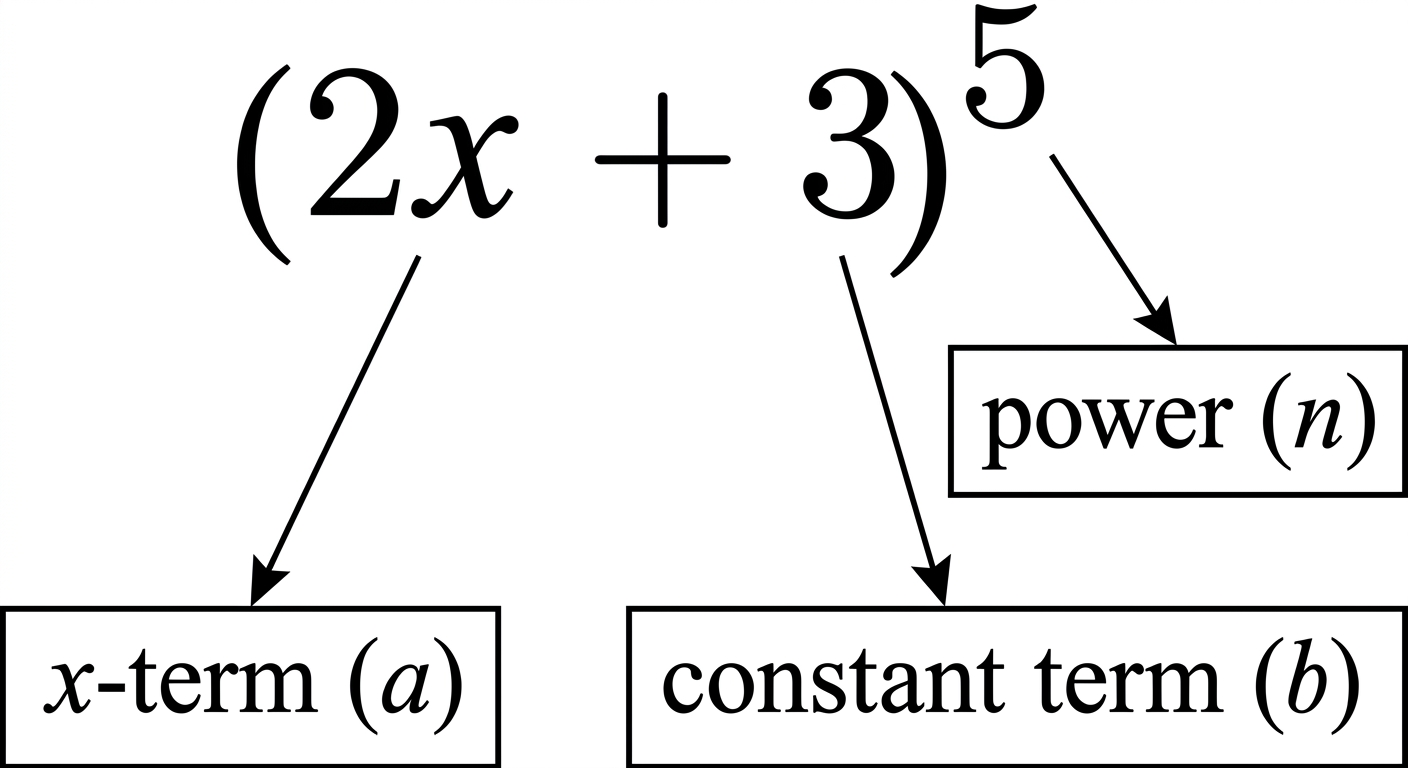
Write down the general term in the form , and state the value of that gives the term in .
Find the coefficient of .
The coefficient of in the expansion of is . Find the value of .
revisionprep.com
Summary Answer
Not available for this question.
Model Answer
Not available for this question.
Marking Scheme
Not available for this question.
Examiner Insights
Not available for this question.
The binomial theorem for natural n; nCr and Pascal's triangle
Consider the binomial expansion of .
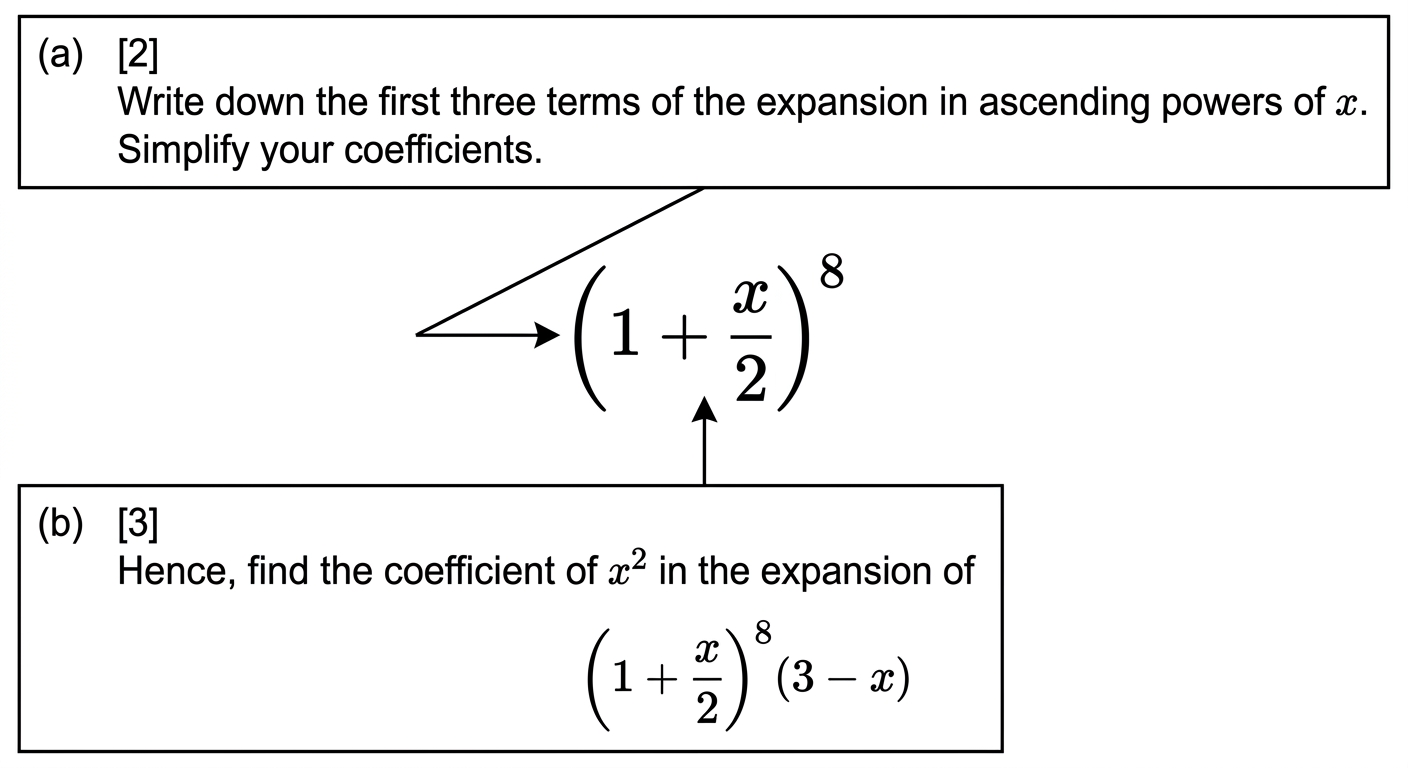
Write down the first three terms of the expansion in ascending powers of , simplifying each coefficient.
Hence, find the coefficient of in the expansion of .
revisionprep.com
Summary Answer
Not available for this question.
Model Answer
Not available for this question.
Marking Scheme
Not available for this question.
Examiner Insights
Not available for this question.
The binomial theorem for natural n; nCr and Pascal's triangle
The diagram shows Pascal's triangle up to row 5, with one entry circled for the expansion of .
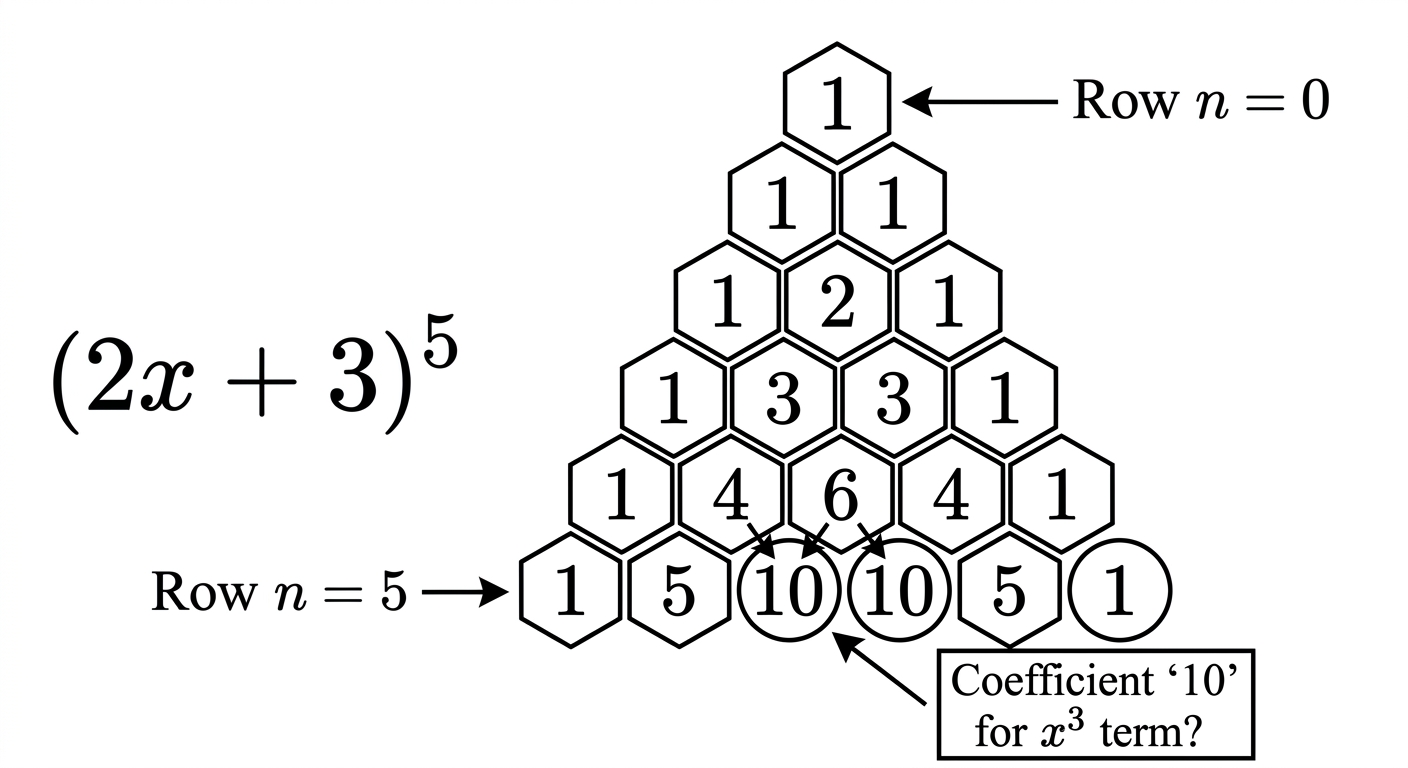
Use row 5 to expand fully, simplifying each coefficient.
By substituting a suitable value of , find the sum of the coefficients in your expansion.
Find the coefficient of in the expansion of .
revisionprep.com
Summary Answer
Not available for this question.
Model Answer
Not available for this question.
Marking Scheme
Not available for this question.
Examiner Insights
Not available for this question.
The binomial theorem for natural n; nCr and Pascal's triangle
The expansion of , where , has the first three terms .
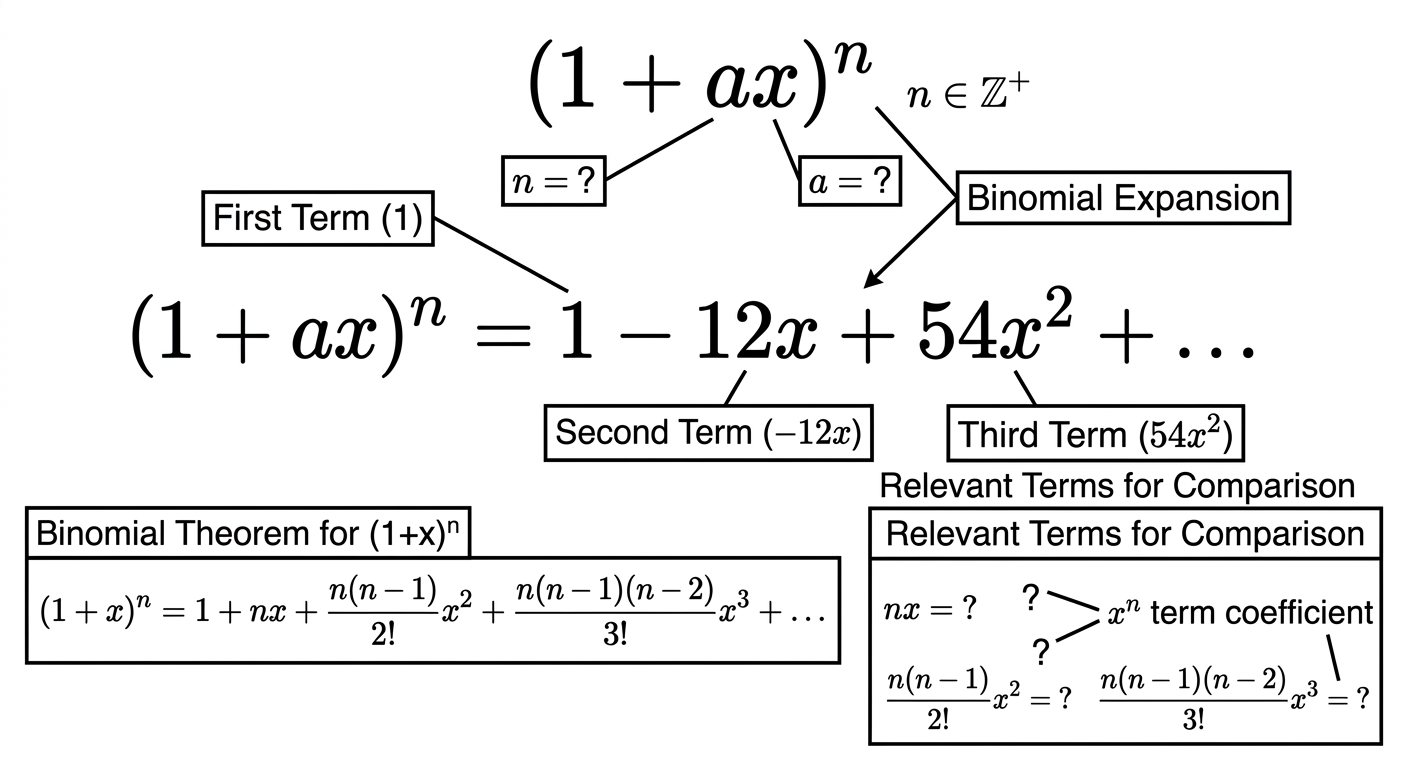
Show that and .
Hence, find the coefficient of in the expansion of .
Find the value of for which the term in equals the term in .
revisionprep.com
Summary Answer
Not available for this question.
Model Answer
Not available for this question.
Marking Scheme
Not available for this question.
Examiner Insights
Not available for this question.
That's every free question here — 6 of 134.
+128 more questions, plus Mock Papers & Worksheets, are waiting in Premium.