Sequences, Series and Financial Mathematics · Paper 1 — Free Maths AA SL Practice Questions
Free questions
Open in full, with answers, mark scheme and examiner insights.
Easy8 questions
Arithmetic sequences and series
A gardener is building a tiered flower bed. The heights of the tiers, measured in centimetres, form an arithmetic sequence. The first tier has height and the fifth tier has height .
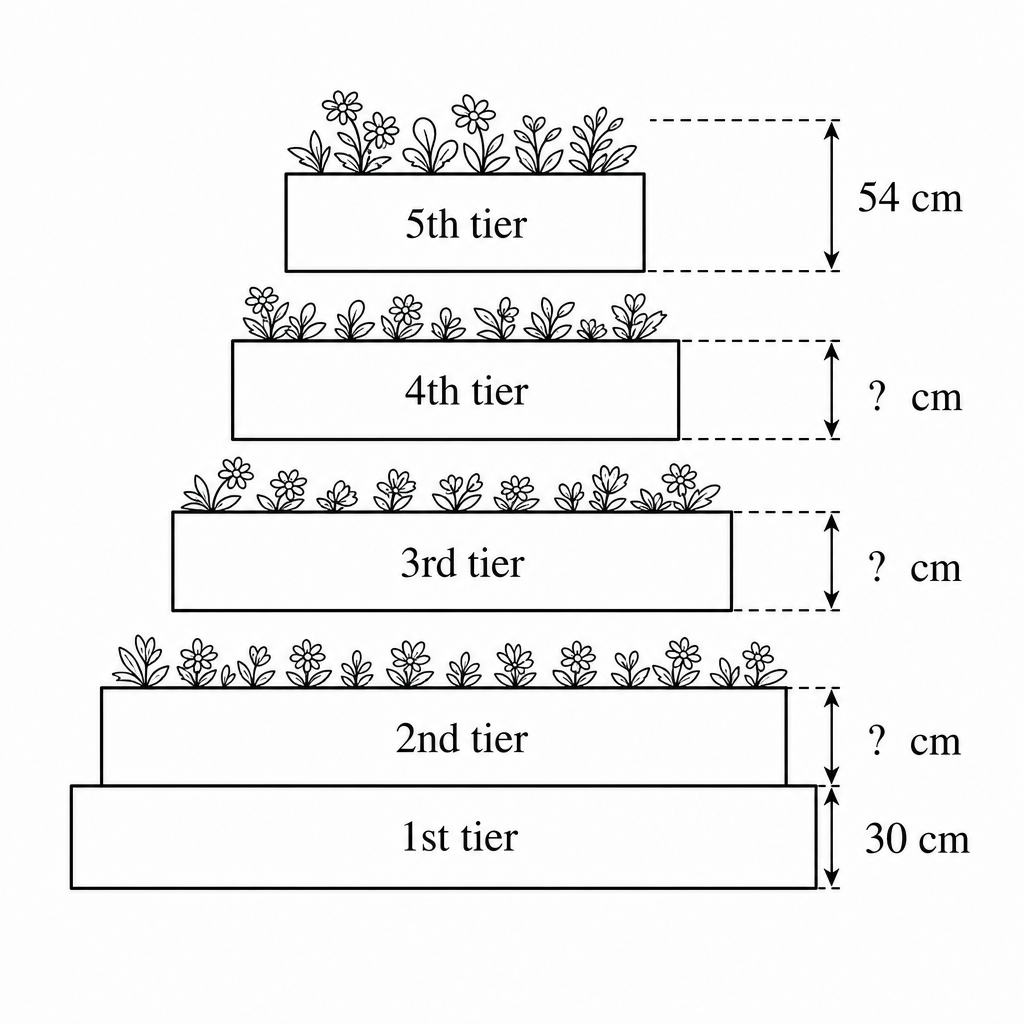
Find the common difference of the sequence.
Find the height of the third tier.
The gardener has enough soil to build tiers up to a total combined height of . Determine whether the gardener can complete a -tier flower bed.
revisionprep.com
Summary Answer
Not available for this question.
Model Answer
Not available for this question.
Marking Scheme
Not available for this question.
Examiner Insights
Not available for this question.
Arithmetic sequences and series
A mobile phone is bought for AUD 1600. Its value depreciates by each year.
Find the value of the phone at the end of the first year and at the end of the second year.
Explain why the values at the end of each year form a geometric sequence, and write down its common ratio.
Find the first year at the end of which the value of the phone is less than AUD 400.
revisionprep.com
Summary Answer
Not available for this question.
Model Answer
Not available for this question.
Marking Scheme
Not available for this question.
Examiner Insights
Not available for this question.
Arithmetic sequences and series
The first term of an arithmetic sequence is and the common difference is .
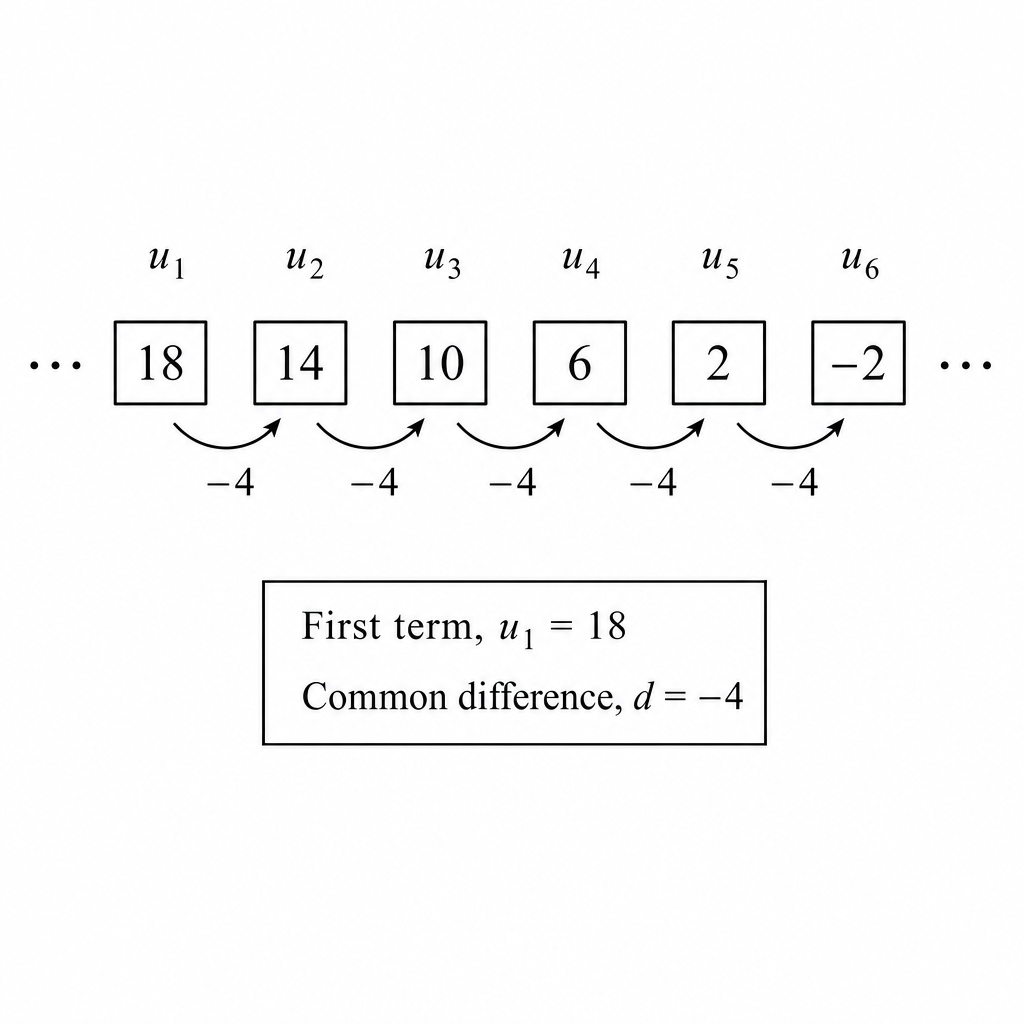
Calculate the sum of the first terms.
Determine the value of for which the th term equals .
Find the least value of for which the sum of the first terms is negative.
revisionprep.com
Summary Answer
Not available for this question.
Model Answer
Not available for this question.
Marking Scheme
Not available for this question.
Examiner Insights
Not available for this question.
Geometric sequences and series
The first three terms of a geometric sequence are , , and .
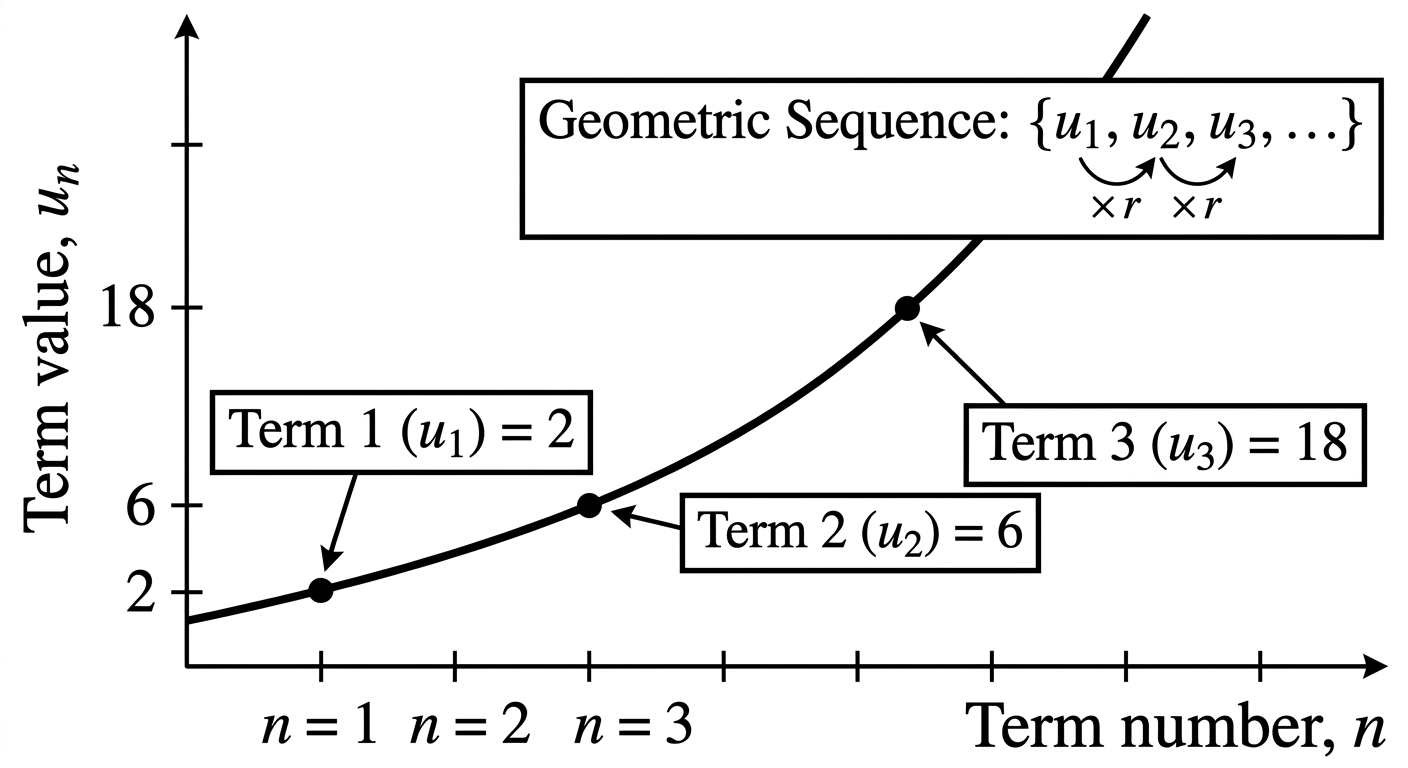
State the common ratio of the sequence.
Find the sum of the first terms, , of the sequence. Give your answer in a simplified form.
Find the least value of for which .
revisionprep.com
Summary Answer
Not available for this question.
Model Answer
Not available for this question.
Marking Scheme
Not available for this question.
Examiner Insights
Not available for this question.
Geometric sequences and series
The diagram shows a square of side m divided into four equal squares. The top-left square, , is shaded. The bottom-right square is then divided into four equal squares and its top-left square, , is shaded. The process continues without end.
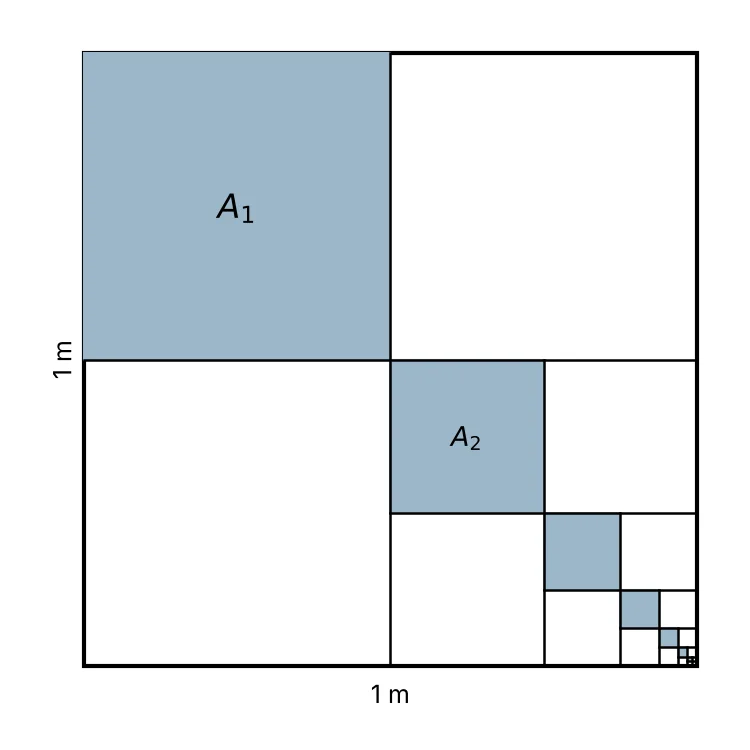
Write down the areas of and .
Find the total shaded area.
Find the total perimeter of all the shaded squares.
revisionprep.com
Summary Answer
Not available for this question.
Model Answer
Not available for this question.
Marking Scheme
Not available for this question.
Examiner Insights
Not available for this question.
Geometric sequences and series
A geometric sequence has first term and common ratio .
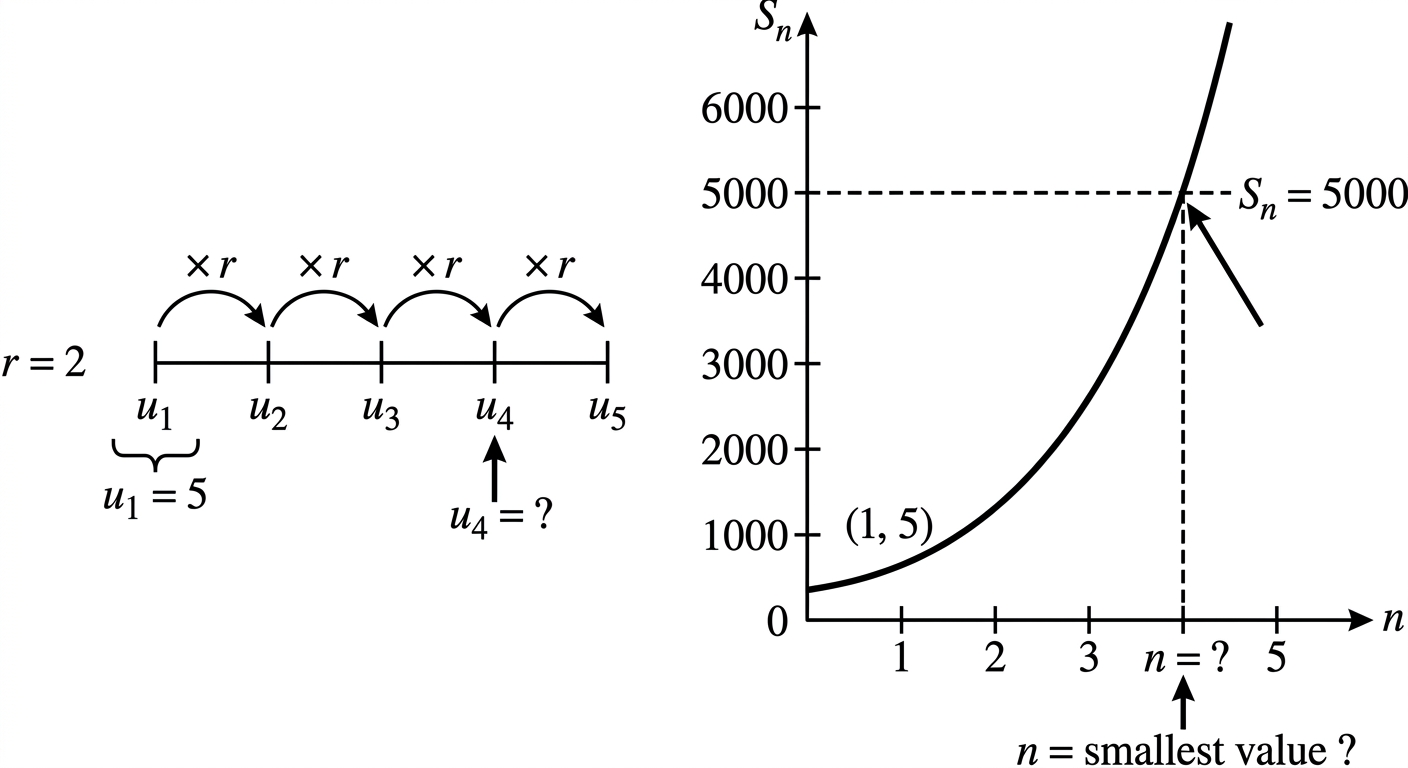
Show that the -th term is given by , and hence write down .
The sum of the first terms is . Find the smallest value of such that .
A second geometric sequence has first term and common ratio . The sum of the first terms of this second sequence is . Determine whether can ever exceed found in part (b), justifying your answer.
revisionprep.com
Summary Answer
Not available for this question.
Model Answer
Not available for this question.
Marking Scheme
Not available for this question.
Examiner Insights
Not available for this question.
Financial applications: compound interest and depreciation
A laptop is bought for £1250. Its value depreciates by the same percentage each year. The table shows its value at the end of the first year.

Show that the annual rate of depreciation is .
Find the value of the laptop at the end of year .
Find the percentage of the original price that the laptop has lost by the end of year .
revisionprep.com
Summary Answer
Not available for this question.
Model Answer
Not available for this question.
Marking Scheme
Not available for this question.
Examiner Insights
Not available for this question.
Sum of infinite convergent geometric sequences
The diagram shows a square of side cm. A circle is drawn inside the square, touching all four sides. A second square is drawn with its vertices on , and a circle is drawn inside it, touching all four of its sides. The pattern continues without end.
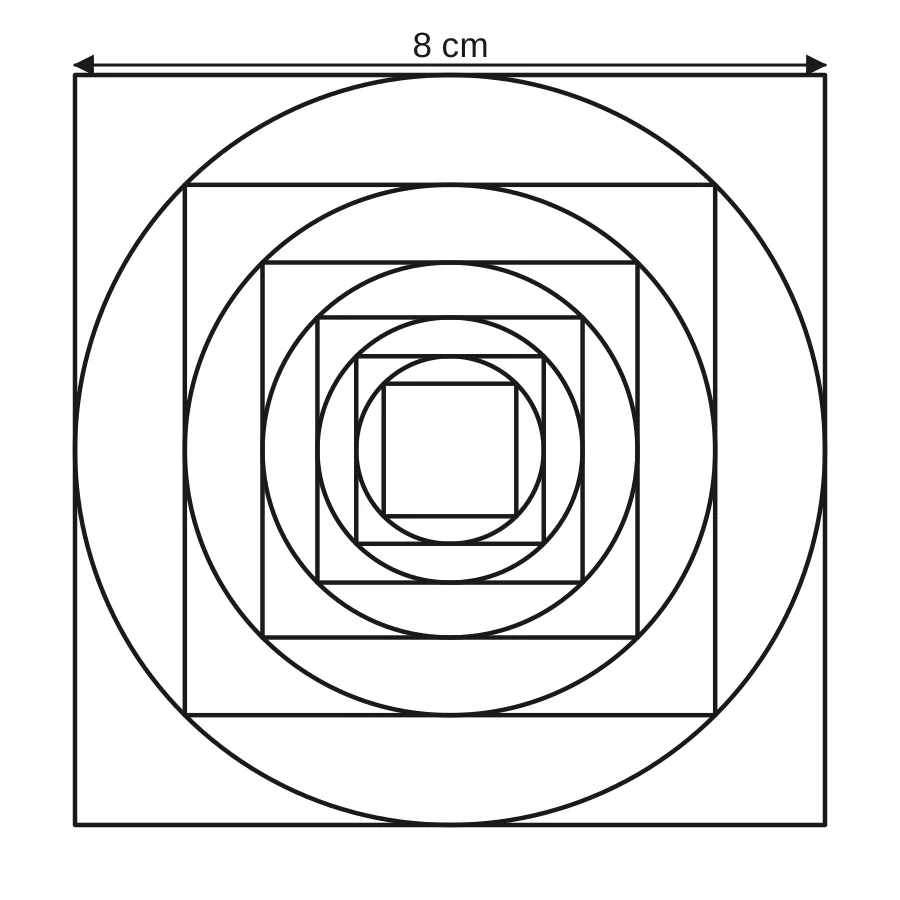
Find the radius of .
Show that the areas of the circles form a geometric sequence with common ratio .
Find the total area of all the circles. Give your answer in terms of .
revisionprep.com
Summary Answer
Not available for this question.
Model Answer
Not available for this question.
Marking Scheme
Not available for this question.
Examiner Insights
Not available for this question.
Medium9 questions
Arithmetic sequences and series
The diagram shows a rectangular solar panel of width and length . The width is the first term and the length is the fourth term of an arithmetic sequence.
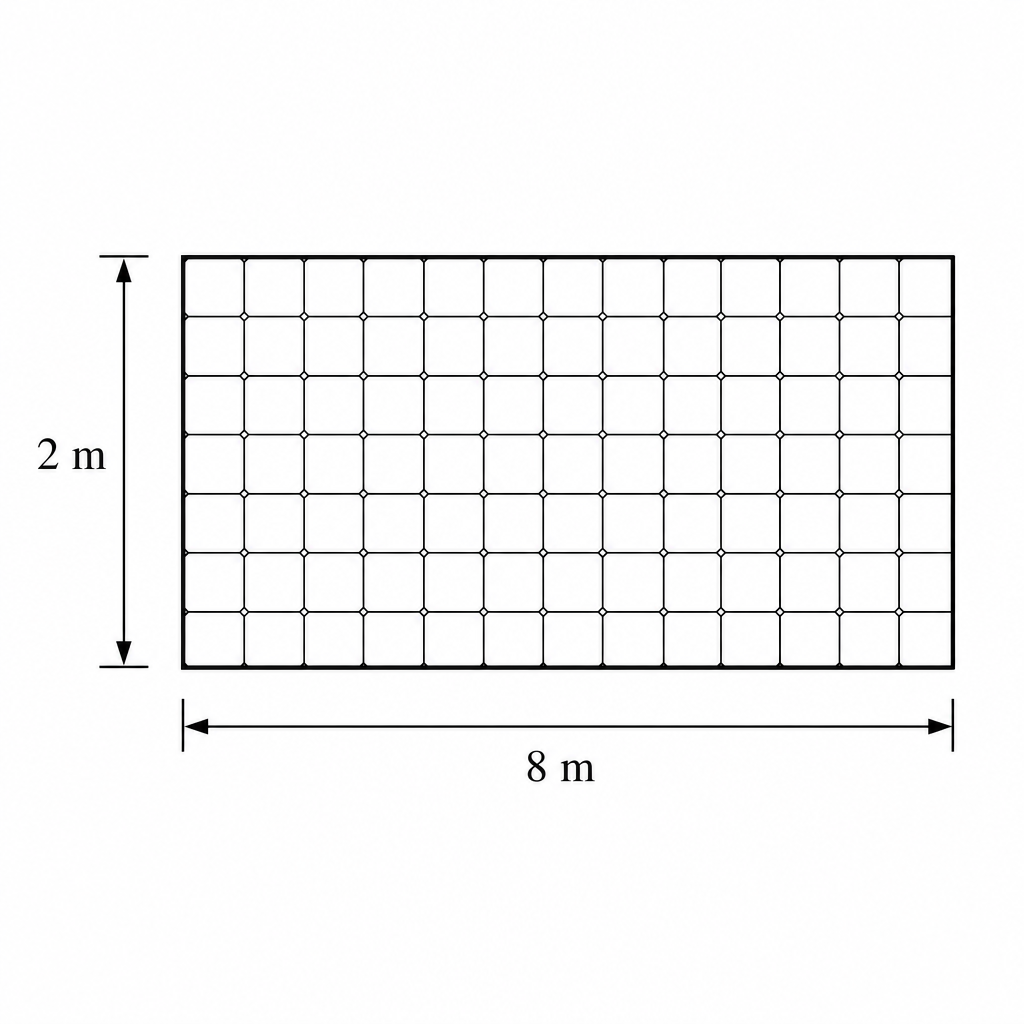
Find the common difference.
Find the area of the panel.
A square panel has the same perimeter as this panel. Determine whether the square panel has a greater area, justifying your answer.
revisionprep.com
Summary Answer
Not available for this question.
Model Answer
Not available for this question.
Marking Scheme
Not available for this question.
Examiner Insights
Not available for this question.
Arithmetic sequences and series
The diagram shows an arithmetic sequence with and common difference .
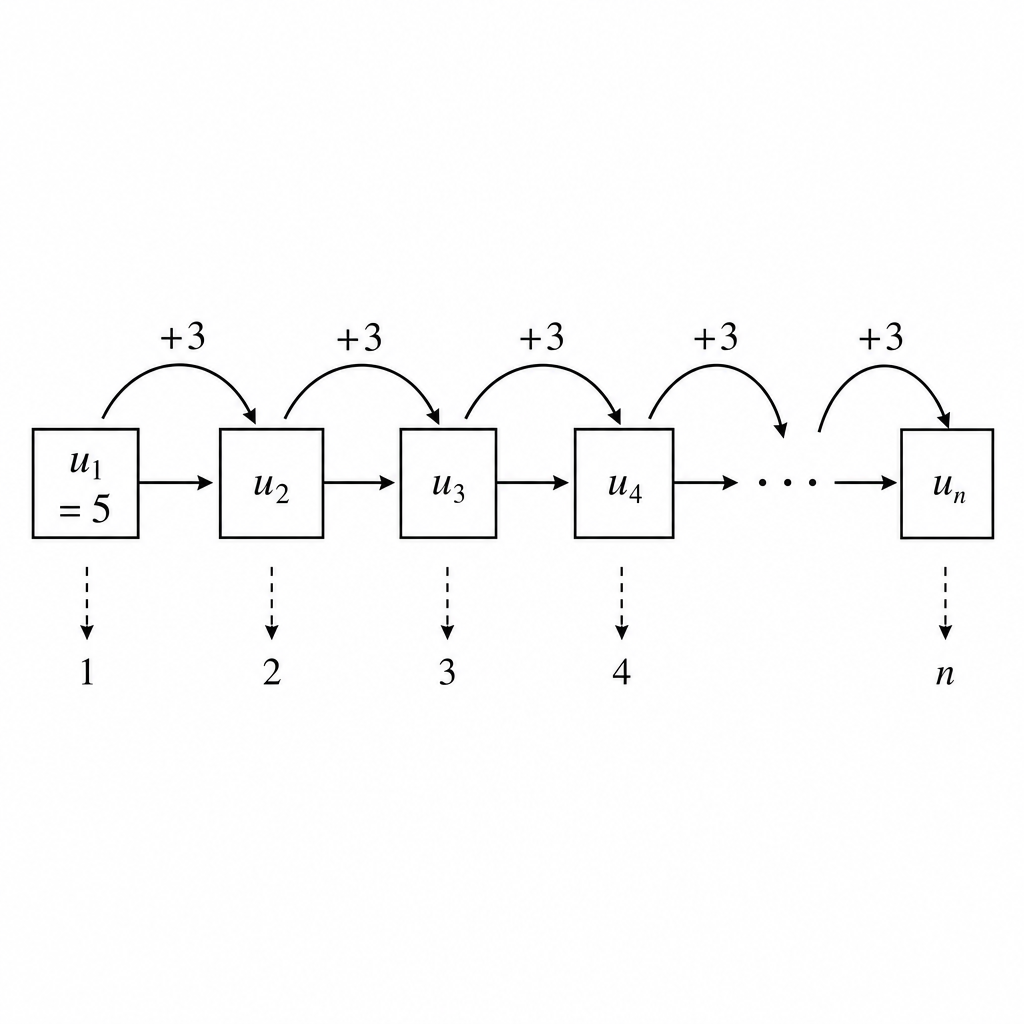
Write down and .
Show that .
Given that , find .
revisionprep.com
Summary Answer
Not available for this question.
Model Answer
Not available for this question.
Marking Scheme
Not available for this question.
Examiner Insights
Not available for this question.
Arithmetic sequences and series
A water tank contains litres of water. Due to a leak, the tank loses water each day. The volume of water lost on each successive day forms an arithmetic sequence. On the first day, litres are lost, and on the fourth day, litres are lost.
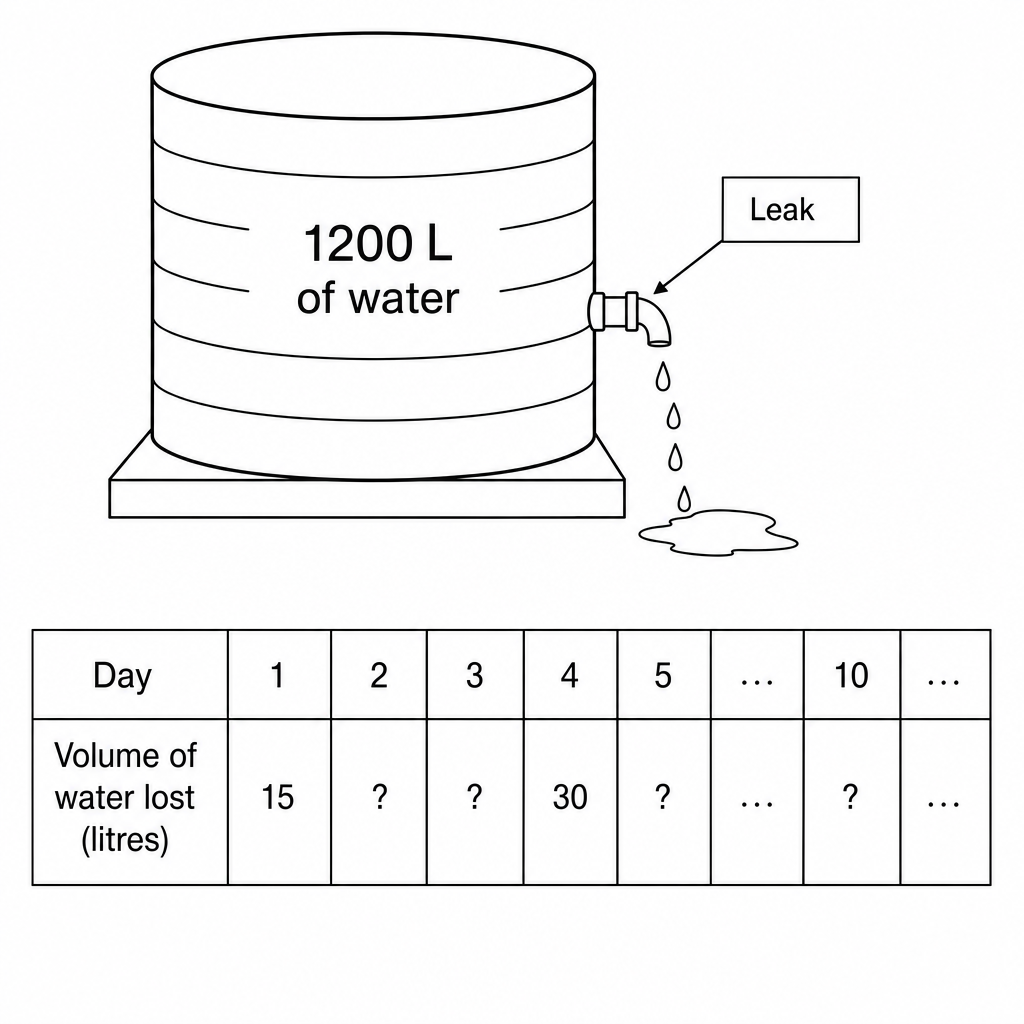
Show that the common difference of the sequence is litres per day.
Hence find the volume of water lost on the tenth day.
Calculate the number of litres of water remaining in the tank at the end of the tenth day.
revisionprep.com
Summary Answer
Not available for this question.
Model Answer
Not available for this question.
Marking Scheme
Not available for this question.
Examiner Insights
Not available for this question.
Geometric sequences and series
A ball is dropped from . After each bounce it rises to of the height of the previous rise (the first rise is of ).
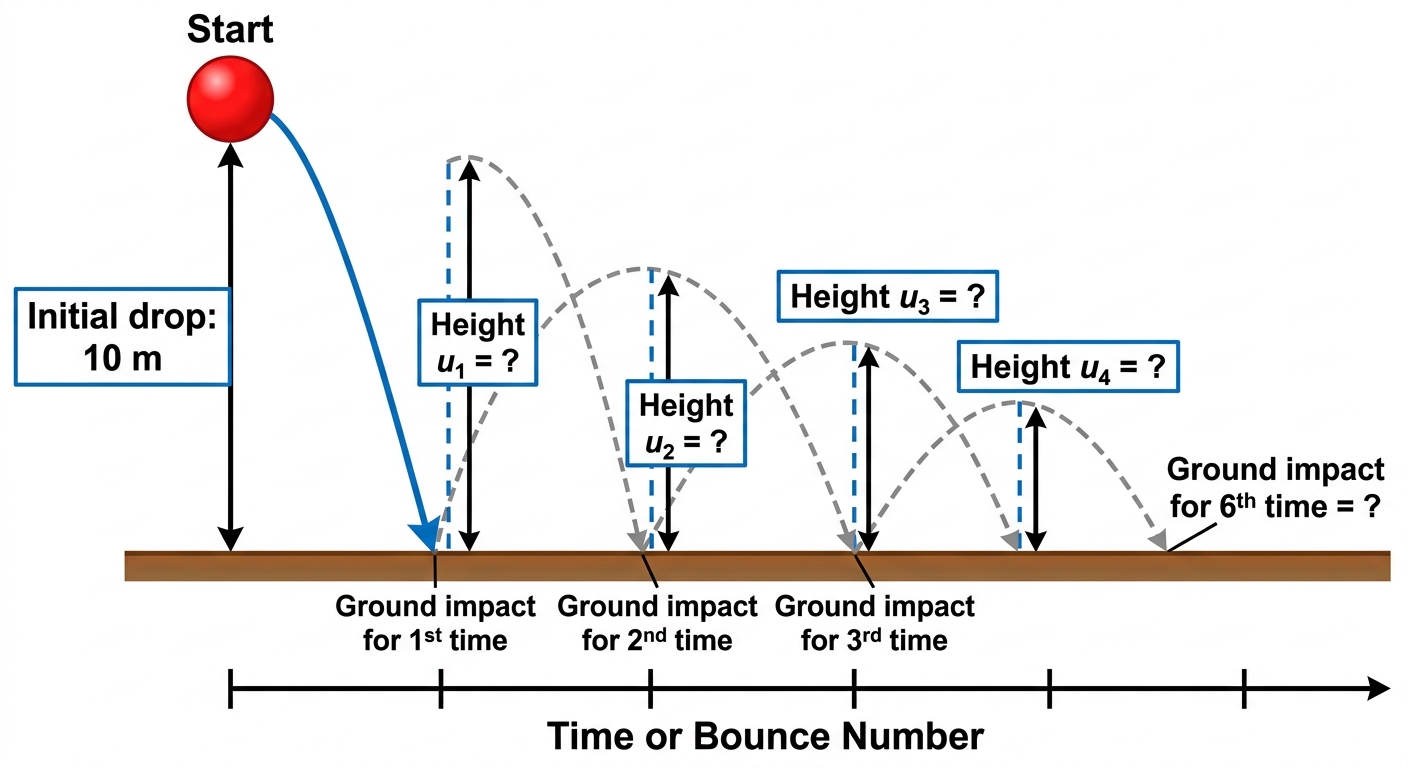
Write down the first term and common ratio of the bounce heights.
Find the height after the th bounce.
Find the total distance travelled until the ball hits the ground for the th time.
revisionprep.com
Summary Answer
Not available for this question.
Model Answer
Not available for this question.
Marking Scheme
Not available for this question.
Examiner Insights
Not available for this question.
Geometric sequences and series
A colony of bacteria doubles every hour. Initially there are bacteria.
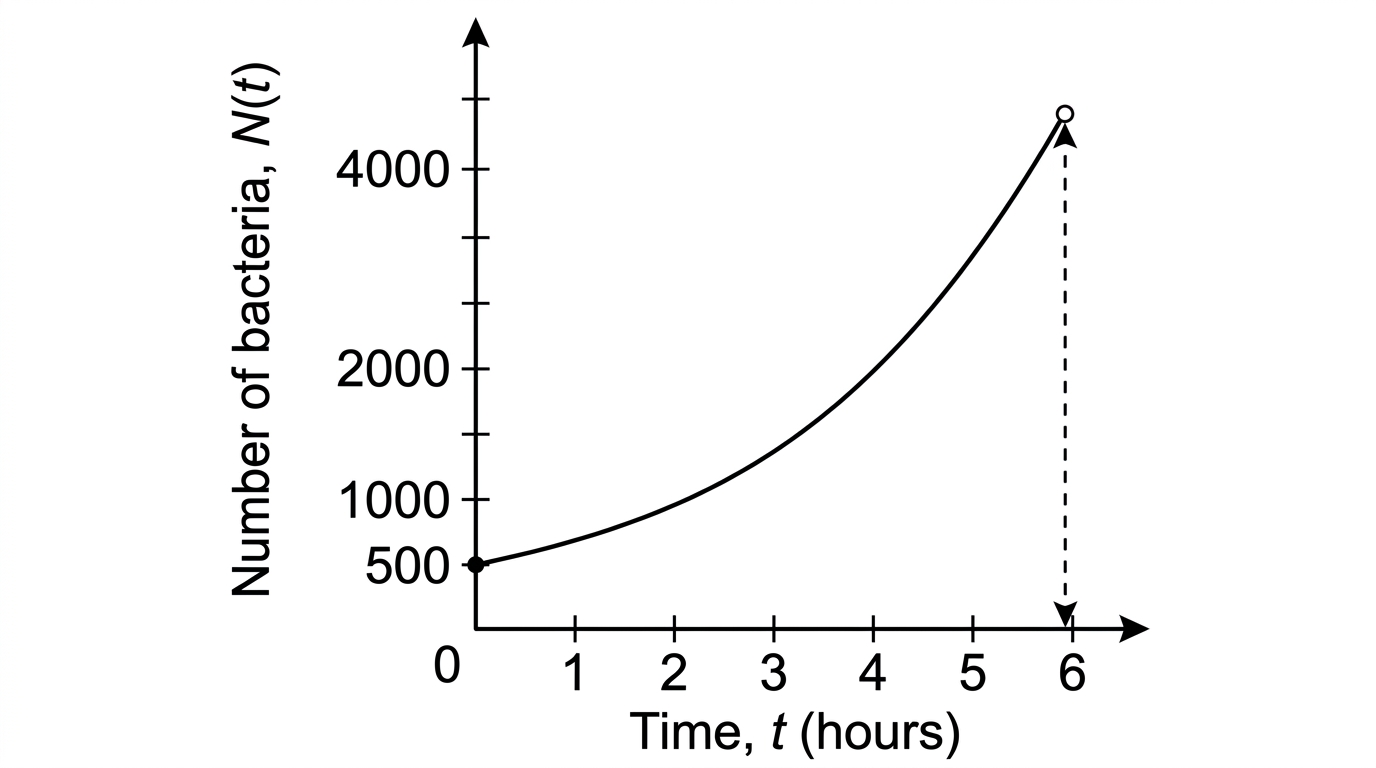
State the common ratio of the hourly populations.
Find the population after hours.
A second colony starts with bacteria and triples every hours. Show that after hours (where is even) the populations are and .
Determine which colony is larger after hours and after hours.
revisionprep.com
Summary Answer
Not available for this question.
Model Answer
Not available for this question.
Marking Scheme
Not available for this question.
Examiner Insights
Not available for this question.
Financial applications: compound interest and depreciation
Ji-woo invests an amount at a nominal annual interest rate of , compounded quarterly. The diagram shows how the value of the investment changes with time years. The dashed line is . The diagram is not to scale.
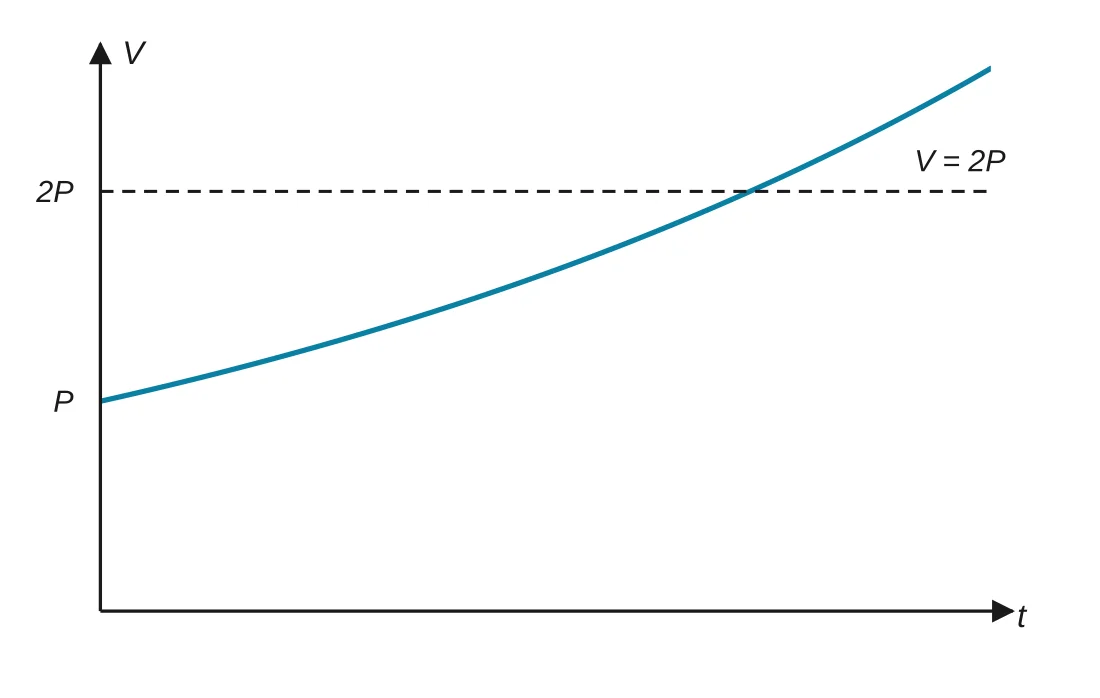
Show that the investment has doubled in value when .
Hence find , giving your answer in the form , where .
Interest is added only at the end of each quarter. Given that , find the least number of whole years after which the investment is worth at least .
revisionprep.com
Summary Answer
Not available for this question.
Model Answer
Not available for this question.
Marking Scheme
Not available for this question.
Examiner Insights
Not available for this question.
Financial applications: compound interest and depreciation
Car is bought new for USD 32 000 and depreciates by each year. Car is bought at the same time for USD 18 000 and depreciates by each year. The graph shows the value , in thousands of dollars, of each car years after it was bought.
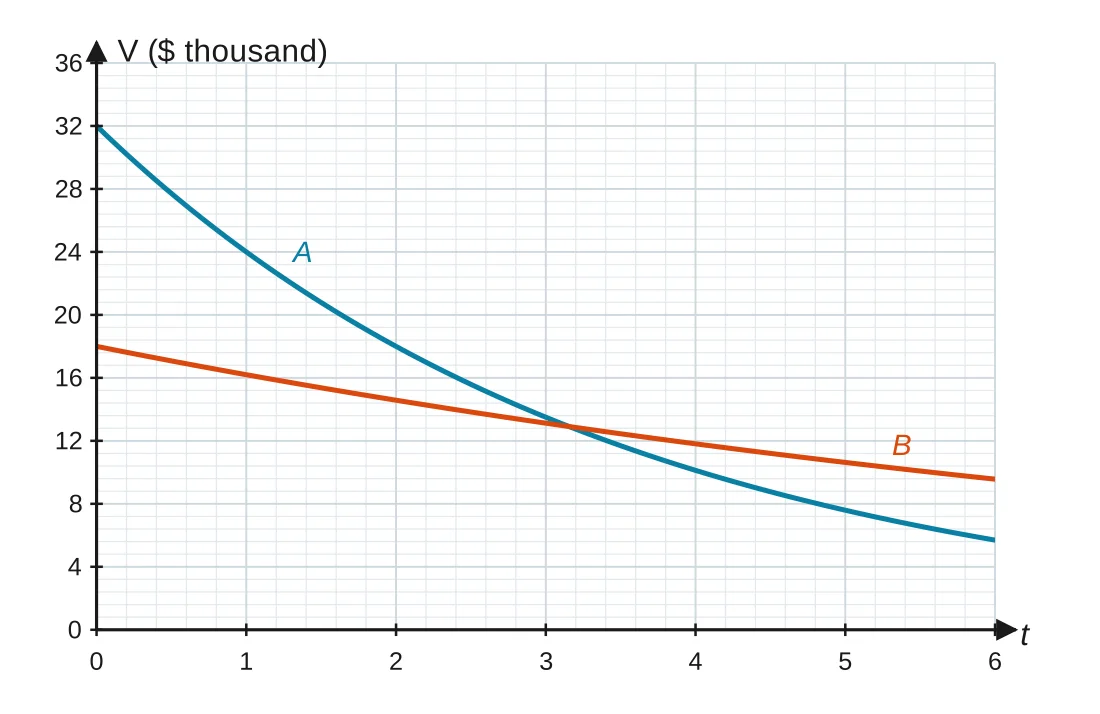
Find the value of car after years.
Find the value of car after years.
Show that the two cars have the same value when .
Hence find the value of when the two cars have the same value. Give your answer in the form , where .
revisionprep.com
Summary Answer
Not available for this question.
Model Answer
Not available for this question.
Marking Scheme
Not available for this question.
Examiner Insights
Not available for this question.
Sum of infinite convergent geometric sequences
A ball is dropped from a height of m onto level ground. After each bounce it rises to of the height from which it last fell, as shown in the diagram. Assume the ball bounces indefinitely.
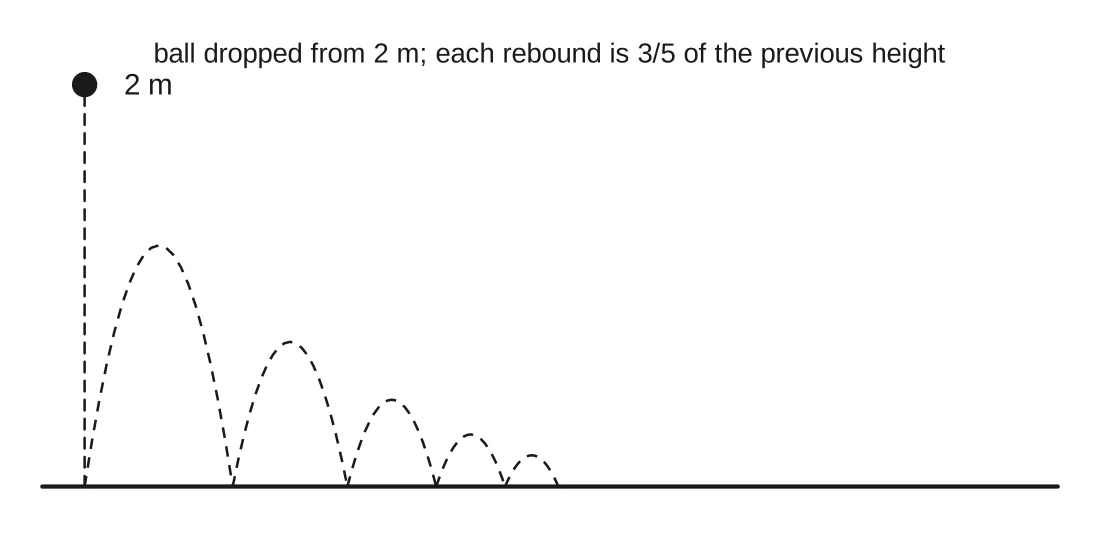
Find the height reached after the first bounce.
Show that the total vertical distance travelled by the ball is metres.
Find the total vertical distance travelled by the ball.
revisionprep.com
Summary Answer
Not available for this question.
Model Answer
Not available for this question.
Marking Scheme
Not available for this question.
Examiner Insights
Not available for this question.
Sum of infinite convergent geometric sequences
An equilateral triangle has sides of length cm. The midpoints of its sides are joined to form a second equilateral triangle . The midpoints of the sides of are joined to form , and the process continues without end, as shown in the diagram.
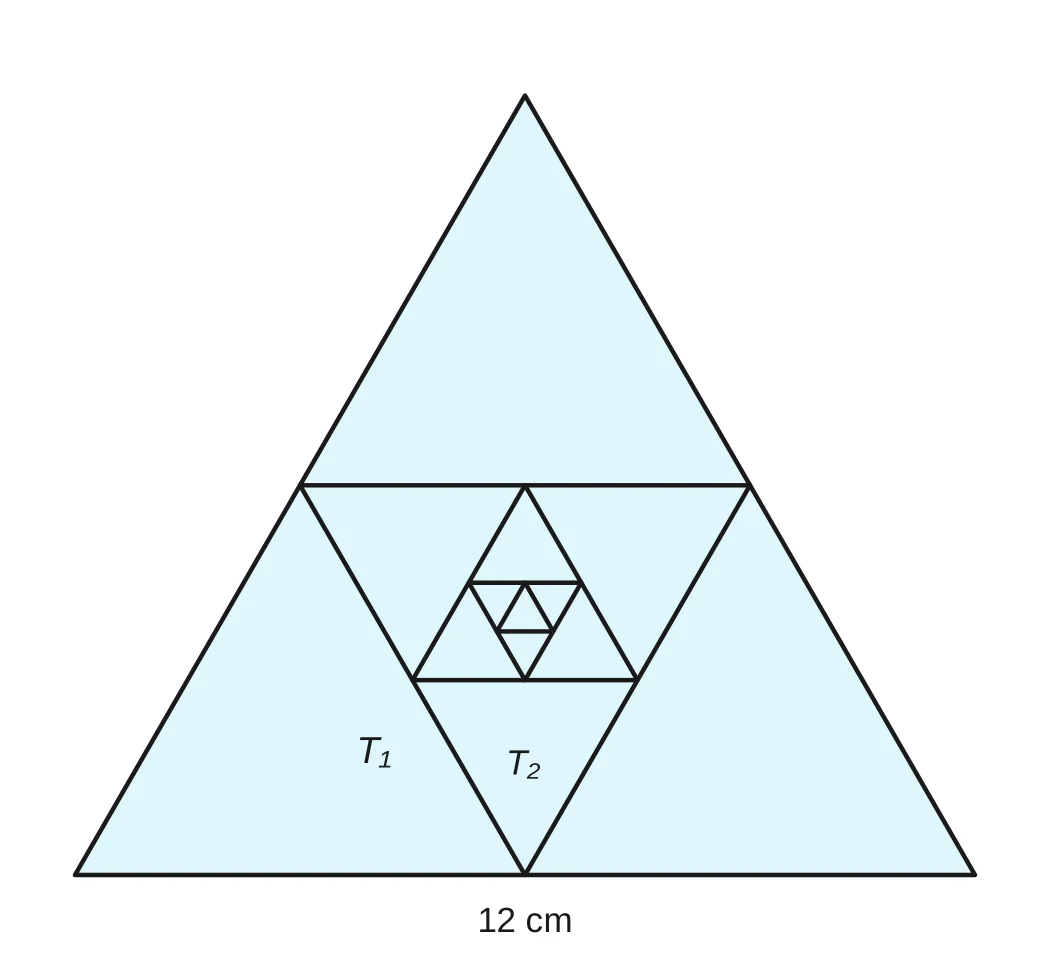
Write down the lengths of the sides of and .
Show that the perimeters of form a geometric sequence and state its common ratio.
Find the sum of the perimeters of all the triangles.
Show that the area of is cm.
Find the total area of all the triangles
revisionprep.com
Summary Answer
Not available for this question.
Model Answer
Not available for this question.
Marking Scheme
Not available for this question.
Examiner Insights
Not available for this question.
Challenge8 questions
Arithmetic sequences and series
The value of a piece of equipment falls by each year. Its value halves in exactly years.
Show that .
Find, as a fraction of the original value, the value of the equipment after years.
Find, in exact form, the value after years of equipment bought for €48 000, and the exact value of .
revisionprep.com
Summary Answer
Not available for this question.
Model Answer
Not available for this question.
Marking Scheme
Not available for this question.
Examiner Insights
Not available for this question.
Arithmetic sequences and series
A company is developing a new energy storage system. During testing, the voltage across a component is recorded at regular one-second intervals. The voltages form an arithmetic sequence.
At second, the voltage is volts. At seconds, the voltage is volts. The voltage is considered dangerous if it falls below volts.
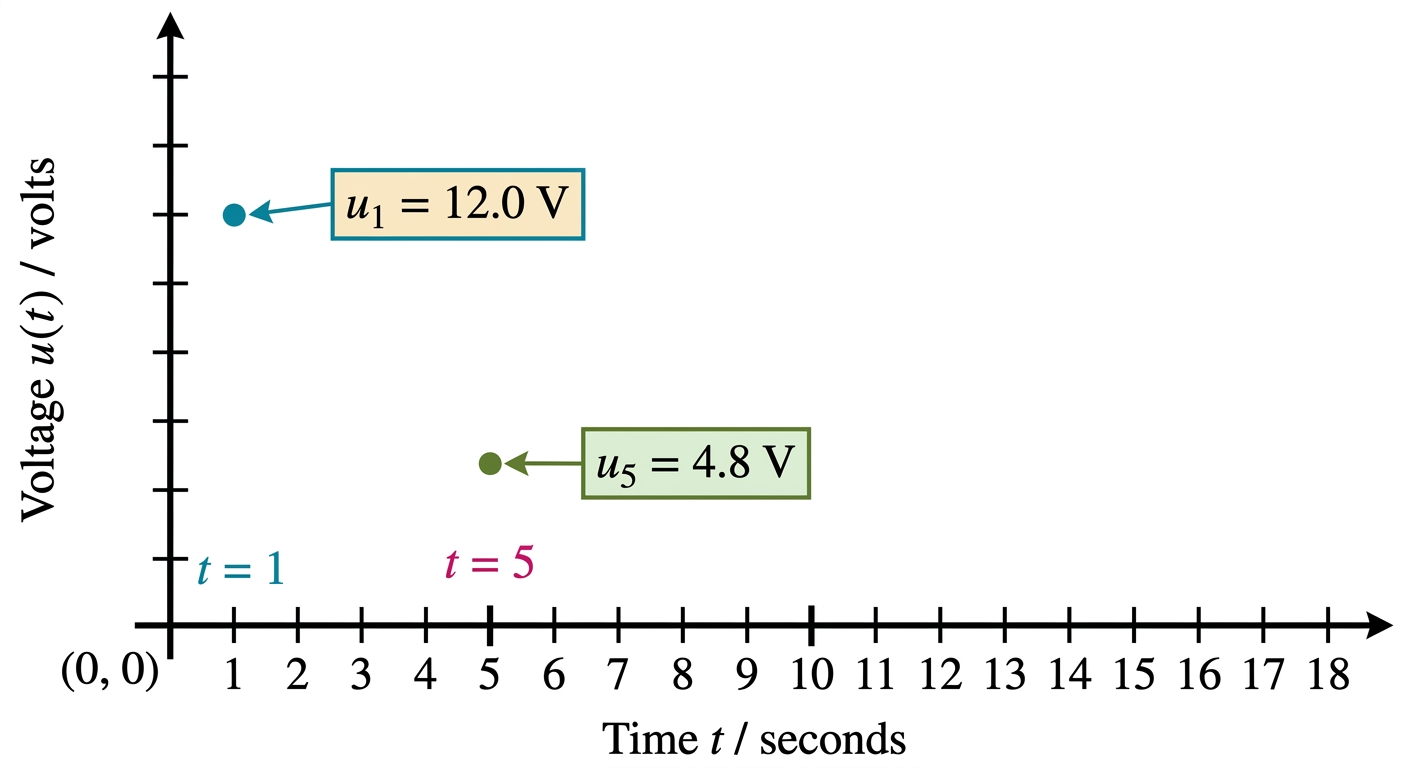
Determine the common difference of the sequence.
Determine the voltage at seconds.
Determine the first time , in seconds, at which the voltage becomes dangerous.
The engineers discover that was recorded incorrectly; the actual value is volts. Evaluate the effect of this recording error on the safety of the system.
revisionprep.com
Summary Answer
Not available for this question.
Model Answer
Not available for this question.
Marking Scheme
Not available for this question.
Examiner Insights
Not available for this question.
Arithmetic sequences and series
An infinite geometric series has first term , where , and sum to infinity .
Show that the common ratio is .
Find the set of values of for which such a series exists. (A geometric series must have .)
Given that the sum to infinity is , find the third term of the series.
revisionprep.com
Summary Answer
Not available for this question.
Model Answer
Not available for this question.
Marking Scheme
Not available for this question.
Examiner Insights
Not available for this question.
Arithmetic sequences and series
A civil engineering firm monitors the settling of a new bridge foundation. The vertical displacement (in millimetres) of the foundation is recorded at the end of each month. The displacements form an arithmetic sequence.
At the end of month 3, the displacement is . At the end of month 7, the displacement is .
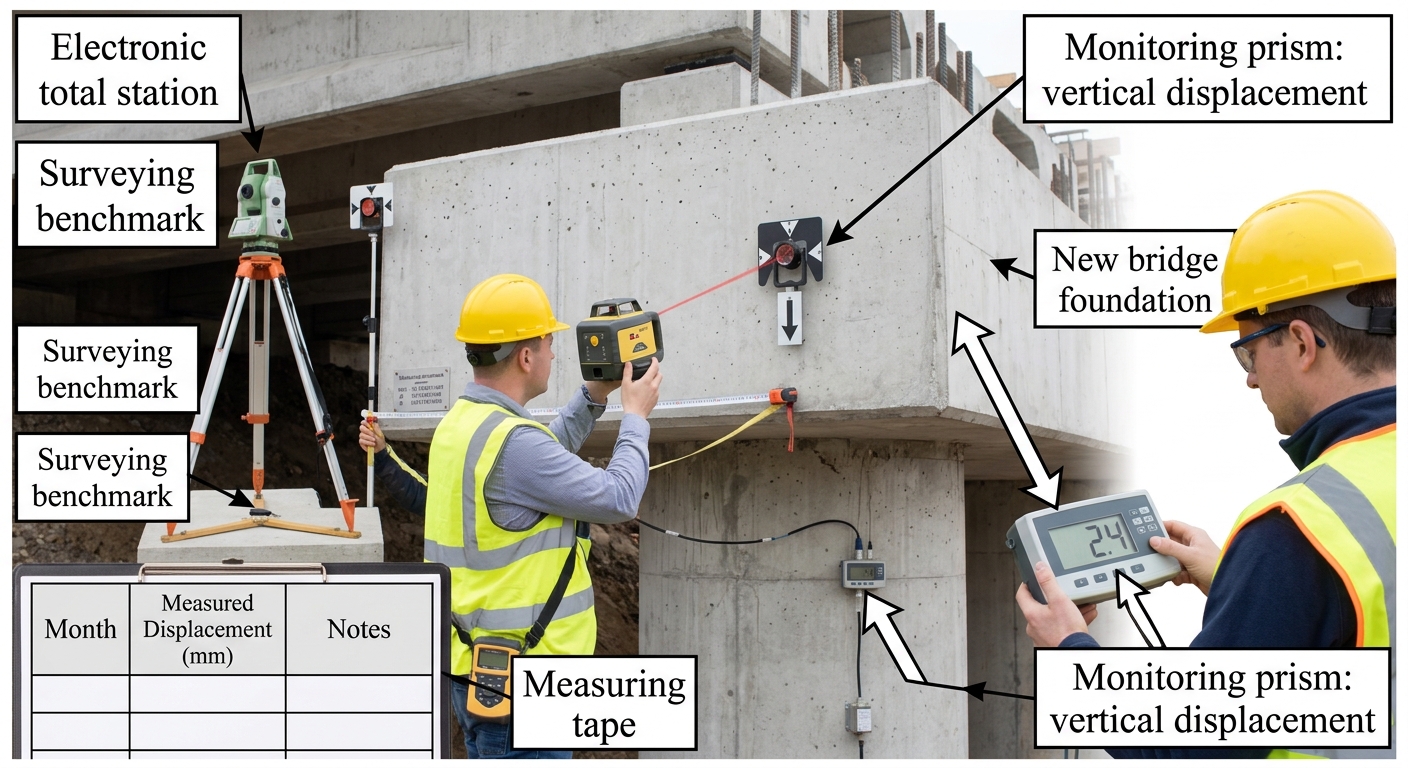
Determine the common difference and the first term of the sequence.
Determine the displacement at the end of month 15.
The safety limit for total cumulative displacement is . Determine the first month at which the cumulative total displacement exceeds this limit.
revisionprep.com
Summary Answer
Not available for this question.
Model Answer
Not available for this question.
Marking Scheme
Not available for this question.
Examiner Insights
Not available for this question.
Geometric sequences and series
A ball is dropped from a height of . On each bounce, it rebounds to of the height from which it fell.
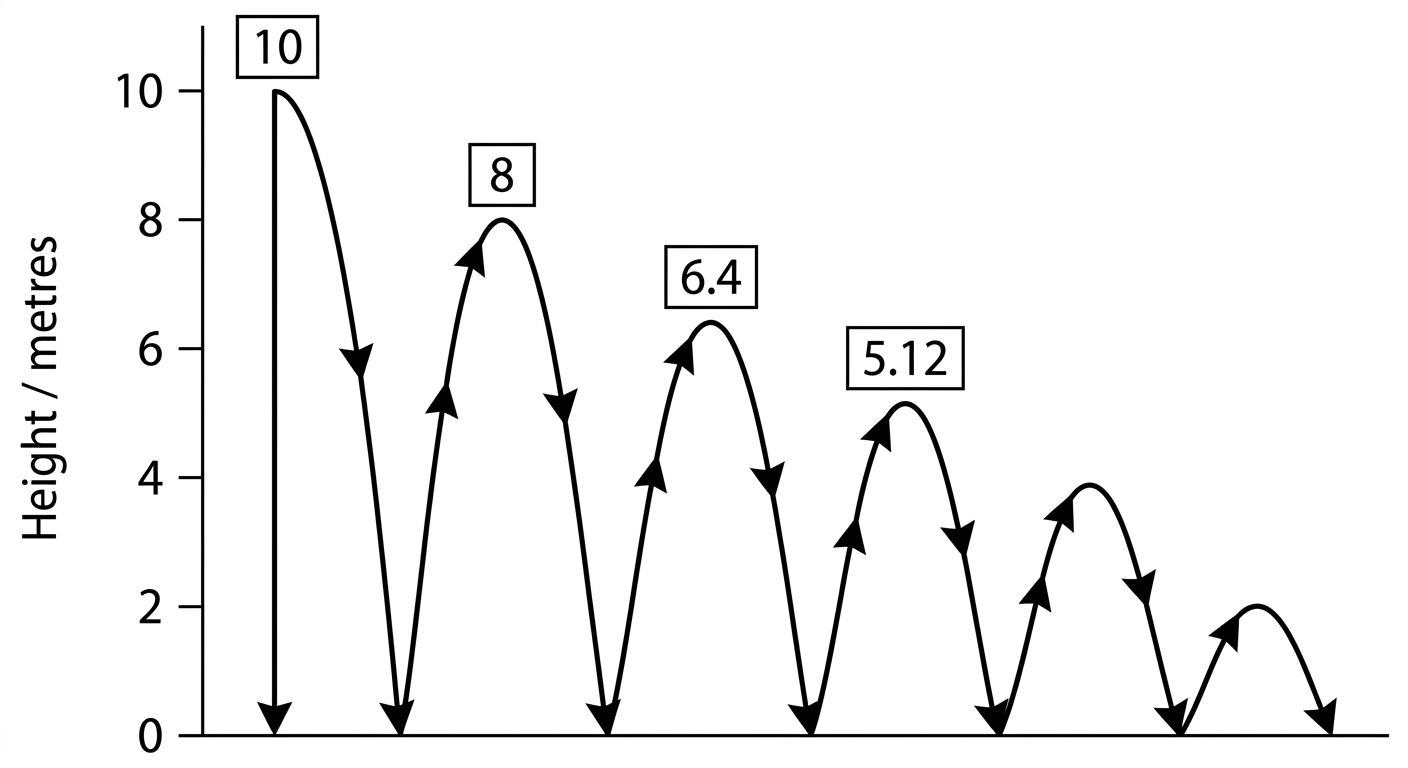
Show that the total vertical distance travelled by the ball, in metres, can be written as
Hence calculate the total vertical distance travelled by the ball before it comes to rest.
A second ball is also dropped from . It rebounds to a constant fraction of the height from which it fell on each bounce, and travels a total vertical distance of before coming to rest. Determine the common ratio of the geometric sequence of rebound heights. Give your answer as an exact fraction.
revisionprep.com
Summary Answer
Not available for this question.
Model Answer
Not available for this question.
Marking Scheme
Not available for this question.
Examiner Insights
Not available for this question.
Geometric sequences and series
A geometric sequence has first term and common ratio .
A second geometric sequence has first term and common ratio .
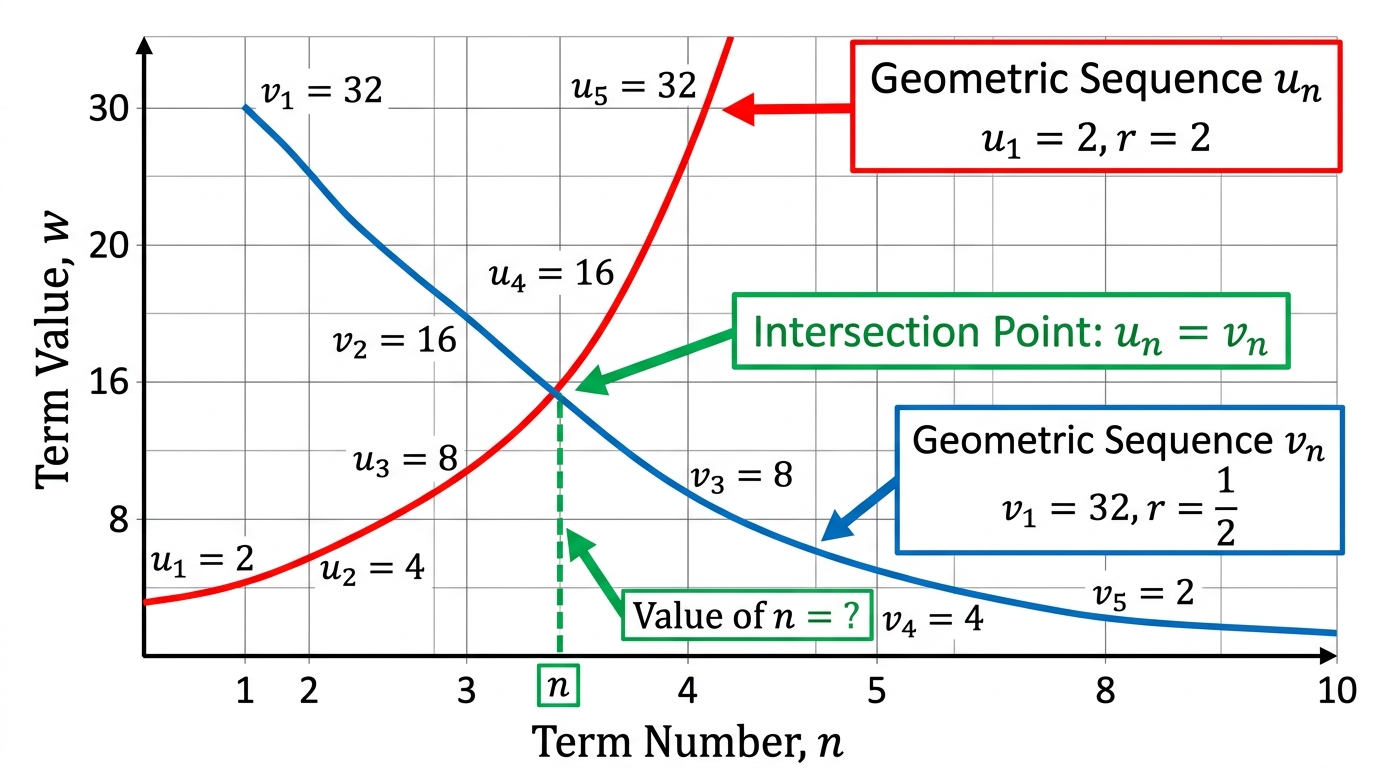
Show that and .
Hence determine the value of for which .
For the value of found in part (b), find the sum , giving your answer in the form where .
The product is evaluated for each positive integer . Determine whether is constant, and justify your answer.
revisionprep.com
Summary Answer
Not available for this question.
Model Answer
Not available for this question.
Marking Scheme
Not available for this question.
Examiner Insights
Not available for this question.
Financial applications: compound interest and depreciation
Bank P offers an interest rate of per annum, compounded annually. Bank Q offers a nominal annual interest rate of , compounded half-yearly. An amount invested in either bank for one year grows to the same value.
Find the value of .
Defne invested some money in Bank P. After years the value of her investment was ₺29 282. Find the amount she invested.
revisionprep.com
Summary Answer
Not available for this question.
Model Answer
Not available for this question.
Marking Scheme
Not available for this question.
Examiner Insights
Not available for this question.
Sum of infinite convergent geometric sequences
A shape is built in stages, as shown in the diagram. Stage is an equilateral triangle with sides of length and area . To form each new stage, every side of the previous stage is divided into three equal parts, and a new equilateral triangle is drawn outwards on the middle part, which is then removed.
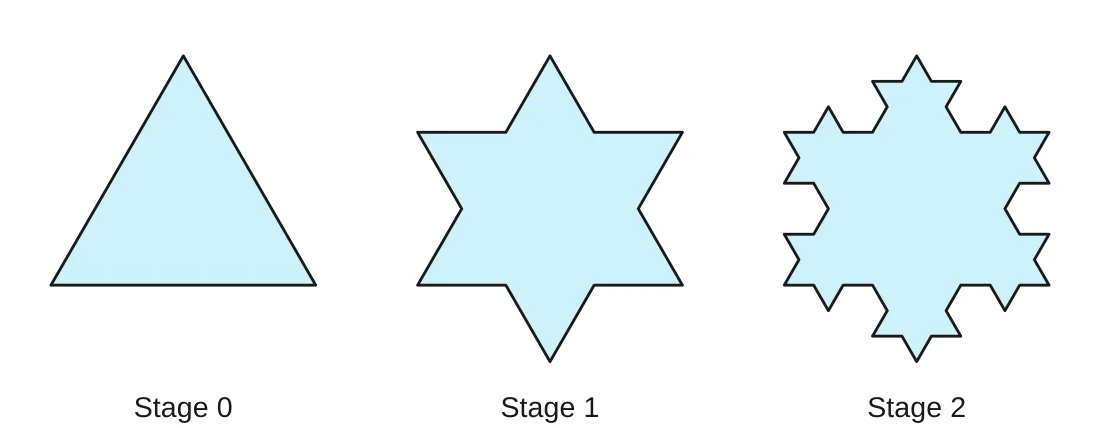
Write down the number of sides of the shape at stage and at stage .
Show that the perimeter of the shape at stage is , and explain why the perimeter does not approach a finite limit as increases.
Show that the total area added in forming stage from stage is .
Find, in terms of , the area that the shape approaches as increases without limit.
Given that cm, find this limiting area. Give your answer in the form cm, where .
revisionprep.com
Summary Answer
Not available for this question.
Model Answer
Not available for this question.
Marking Scheme
Not available for this question.
Examiner Insights
Not available for this question.
That's every free question here — 25 of 389.
+364 more questions, plus Mock Papers & Worksheets, are waiting in Premium.