Number, Exponents and Logarithms · Paper 1 — Free Maths AI HL Practice Questions
Free questions
Open in full, with answers, mark scheme and examiner insights.
Standard form a × 10ᵏ
A red blood cell has a diameter of m. Identical red blood cells are placed side by side in a straight line of length cm, as shown in the diagram (not to scale).
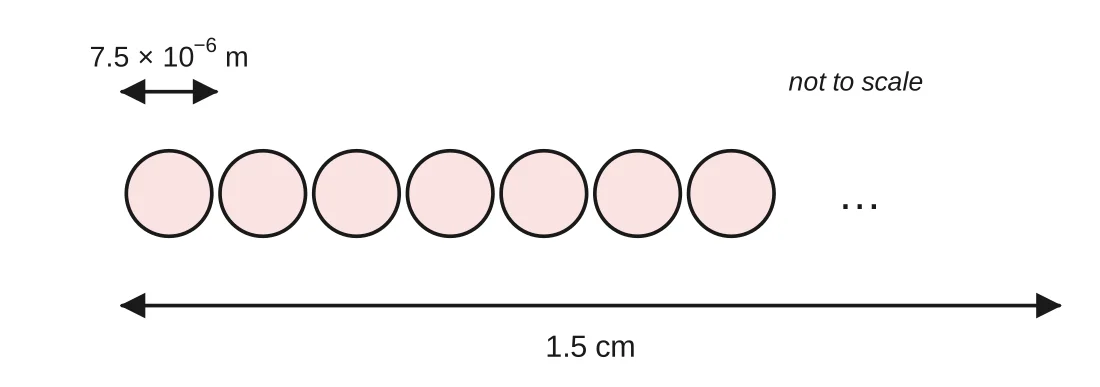
Write down the diameter of one cell as a decimal number of metres.
Find the number of cells in the line.
Write your answer to (b) in the form , where and .
revisionprep.com
Summary Answer
Not available for this question.
Model Answer
Not available for this question.
Marking Scheme
Not available for this question.
Examiner Insights
Not available for this question.
Laws of logarithms
The gain of an audio amplifier, in decibels (dB), is , where and are the input and output powers.
An amplifier multiplies the power by . Write down its gain.
A second amplifier multiplies the power by . Find its gain.
The two amplifiers are connected one after the other, so the power is multiplied by . Use the laws of logarithms to show that the total gain is the sum of the two gains, and write down its value.
revisionprep.com
Summary Answer
Not available for this question.
Model Answer
Not available for this question.
Marking Scheme
Not available for this question.
Examiner Insights
Not available for this question.
Approximation, upper and lower bounds, percentage error and estimation
Amara runs the m race shown in the diagram. The distance is m, correct to the nearest metre, and her time is seconds, correct to the nearest second.
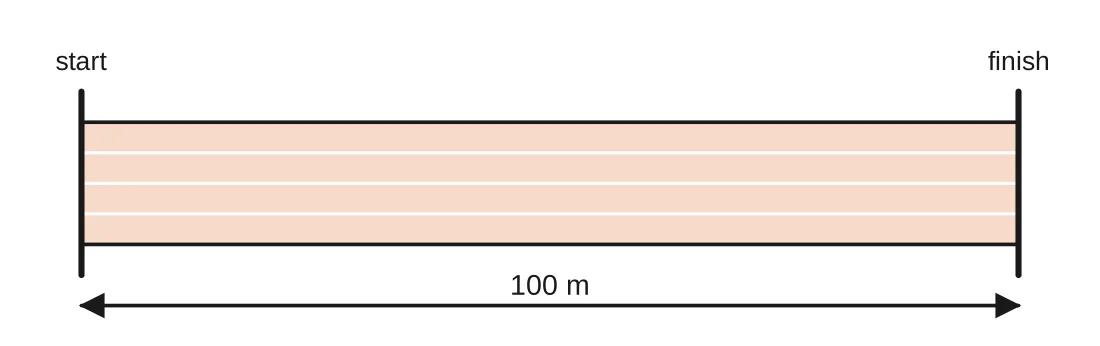
Write down the lower and upper bounds of the distance and of the time.
Find the upper bound of Amara's average speed. Give your answer correct to three significant figures.
Find the lower bound of Amara's average speed. Give your answer correct to three significant figures.
revisionprep.com
Summary Answer
Not available for this question.
Model Answer
Not available for this question.
Marking Scheme
Not available for this question.
Examiner Insights
Not available for this question.
Rational exponents
The number of bacteria in a culture, , hours after the start of an experiment is modelled by . The graph shows that when .
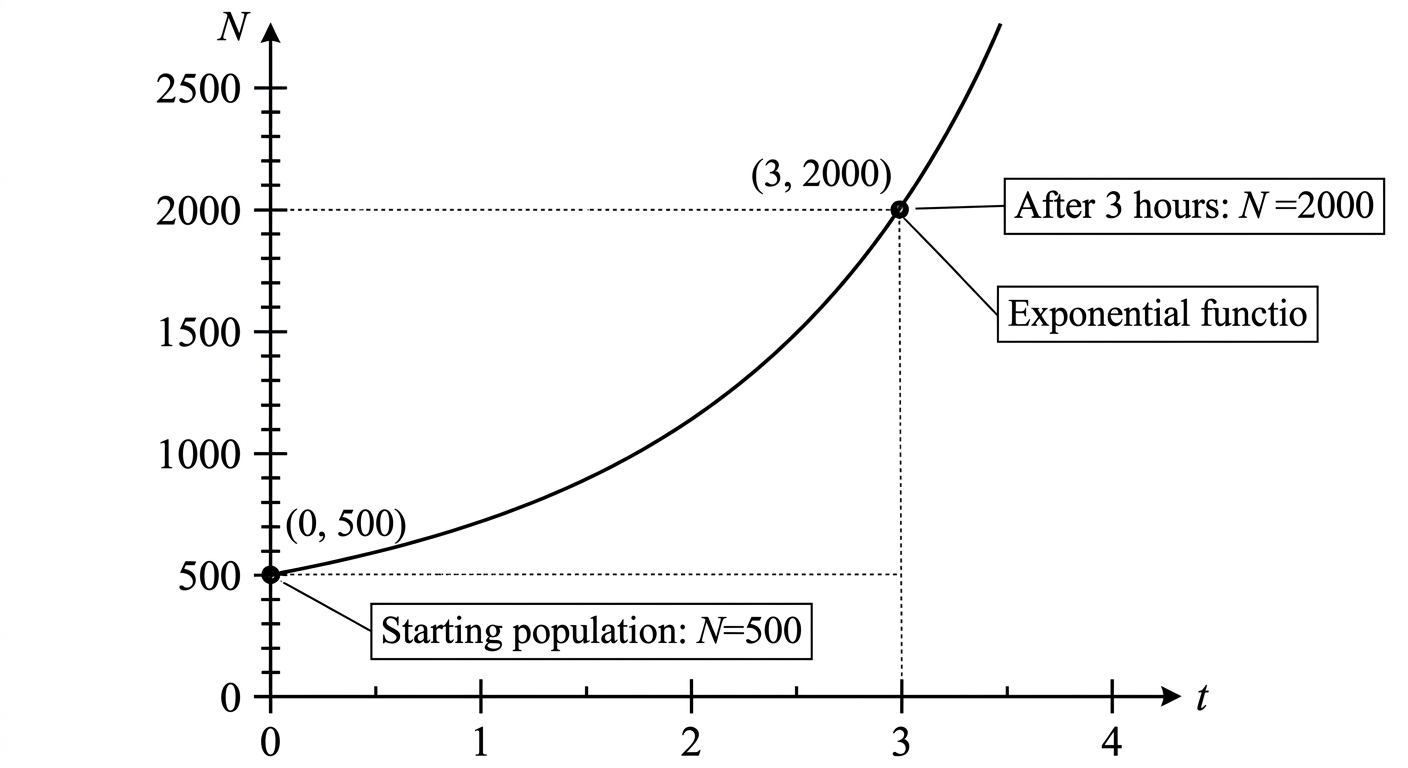
Show that .
Show that the model can be written as , and hence find the percentage increase in the number of bacteria each hour.
Find the time taken for the number of bacteria to reach , giving your answer in hours and minutes, to the nearest minute.
Give one reason why the model may not be reliable over hours.
revisionprep.com
Summary Answer
Not available for this question.
Model Answer
Not available for this question.
Marking Scheme
Not available for this question.
Examiner Insights
Not available for this question.
Standard form a × 10ᵏ
Let and , where .
It is given that and .
Show that .
Find the value of .
Hence find the value of and the value of .
revisionprep.com
Summary Answer
Not available for this question.
Model Answer
Not available for this question.
Marking Scheme
Not available for this question.
Examiner Insights
Not available for this question.
Laws of exponents with integer exponents; introduction to logarithms
The pH of a solution is , where is in mol dm. The diagram shows solution A, with mol dm, and solution B, with pH 2.50. dm of A is mixed with dm of B, and .
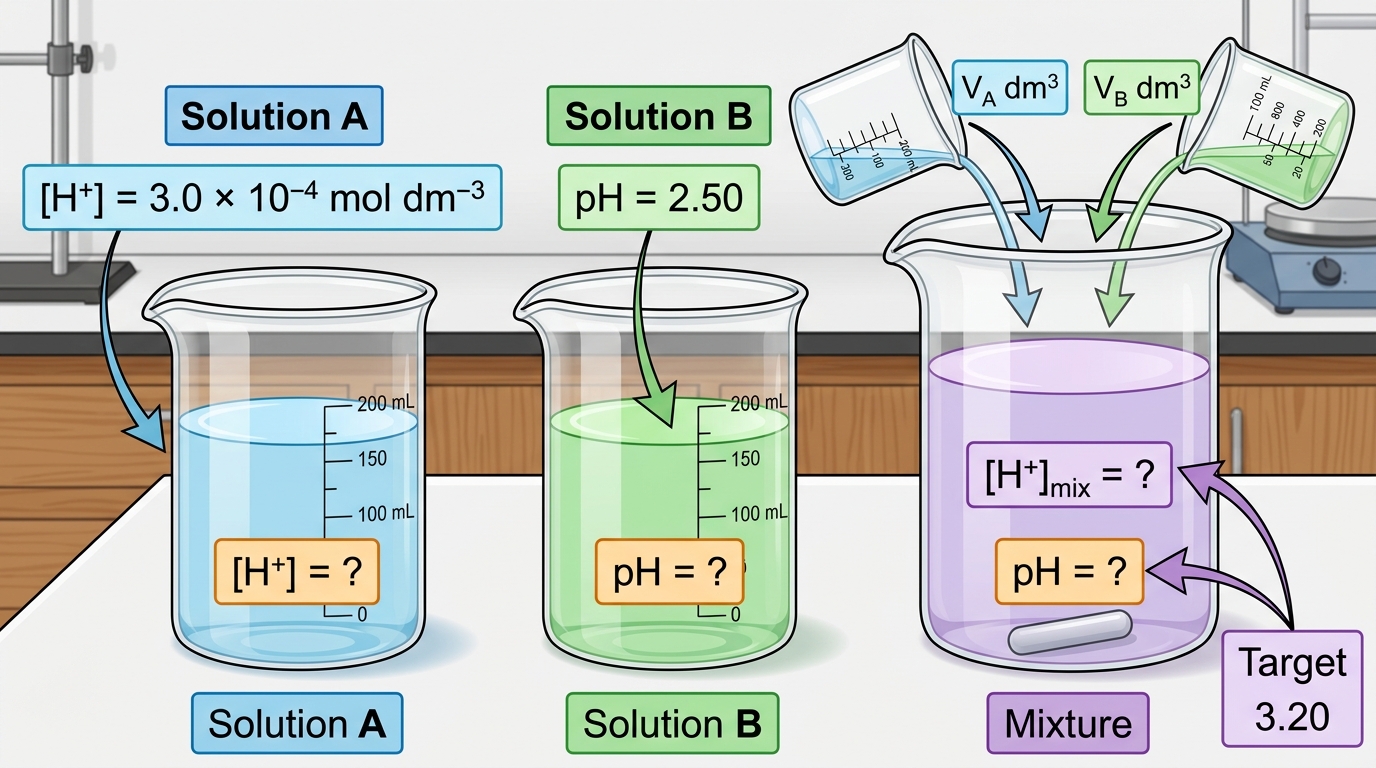
Find the pH of solution A, correct to three significant figures.
Write down , and the value of that gives a pH of 3.20.
Find the value of that gives a mixture of pH 3.20.
revisionprep.com
Summary Answer
Not available for this question.
Model Answer
Not available for this question.
Marking Scheme
Not available for this question.
Examiner Insights
Not available for this question.
That's every free question here — 6 of 201.
+195 more questions, plus Mock Papers & Worksheets, are waiting in Premium.