You're viewing free preview questions. Upgrade to access more Maths AI HL questions.Upgrade
Arithmetic Sequences and Series · Paper 2 — Free Maths AI HL Practice Questions
1MasterySAQ-SDefinition and general term of arithmetic sequences6 marksPaper 2~9 min

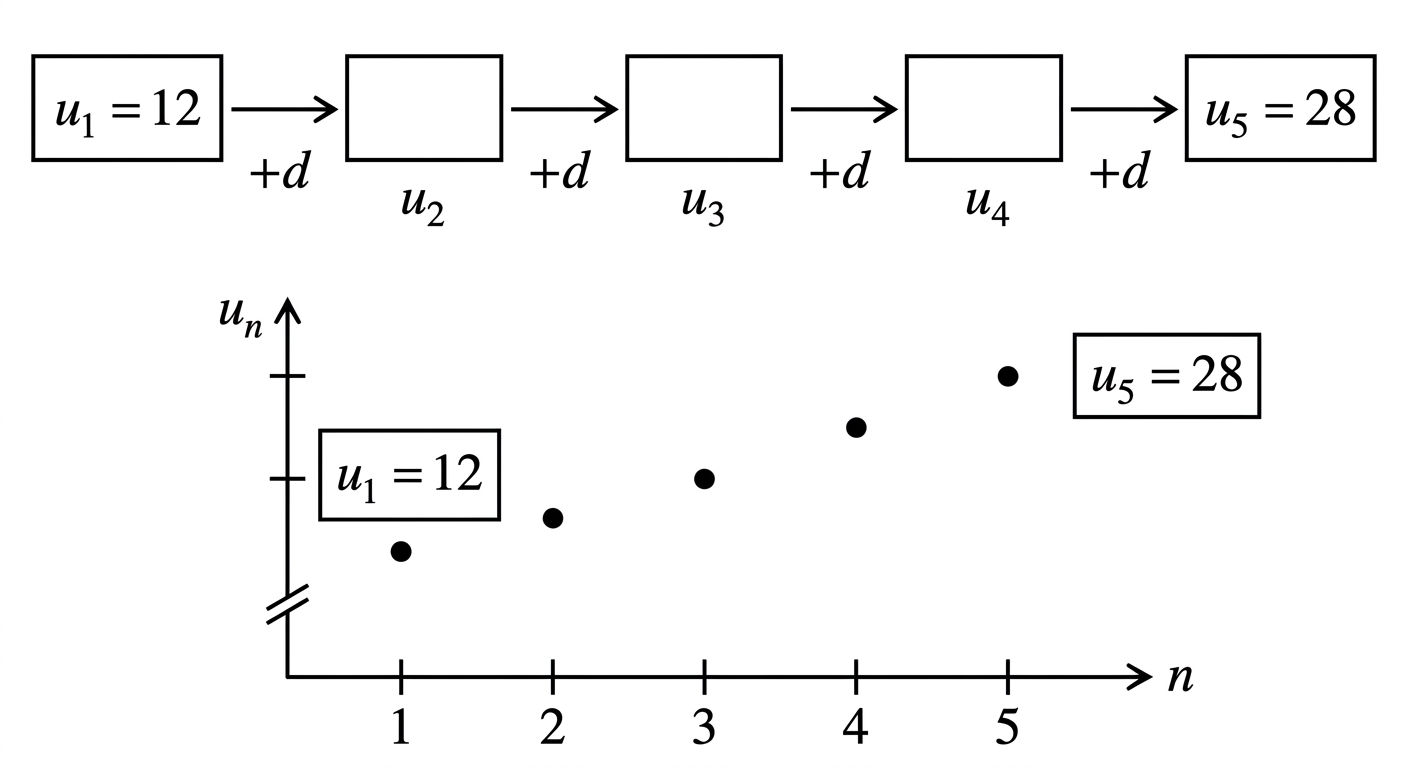
The first term of an arithmetic sequence is . The fifth term is .
(a)
State the common difference, . [1 mark]
(b)
Determine the general term in the form , where . [2 marks]
(c)
Find the smallest value of for which the sum of the first terms exceeds . [3 marks]

Solutions
2MasterySAQ-SDefinition and general term of arithmetic sequences6 marksPaper 2~9 min
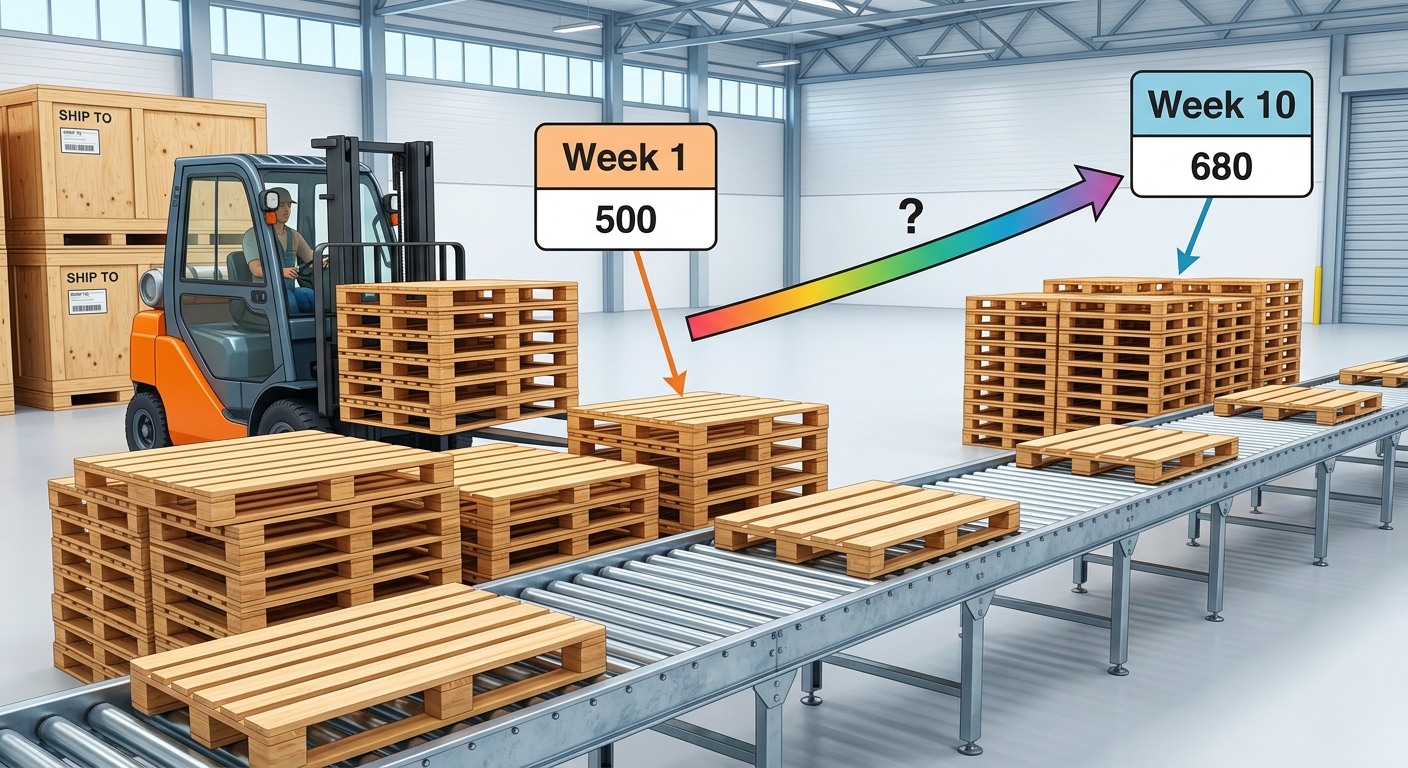
A company produces wooden pallets. In week 1, they produce 500 pallets. The production increases by a fixed number each week, forming an arithmetic sequence. In week 10, they produce 680 pallets.
(a)
State the weekly increase in production. [1 mark]
(b)
Determine an expression for the number of pallets produced in week , denoted . [2 marks]
(c)
The company receives a contract requiring a cumulative total of at least 40 000 pallets. Determine the minimum number of complete weeks needed to fulfil this contract. [3 marks]
Solutions
3MasterySAQ-SSum of an arithmetic sequence6 marksPaper 2~9 min
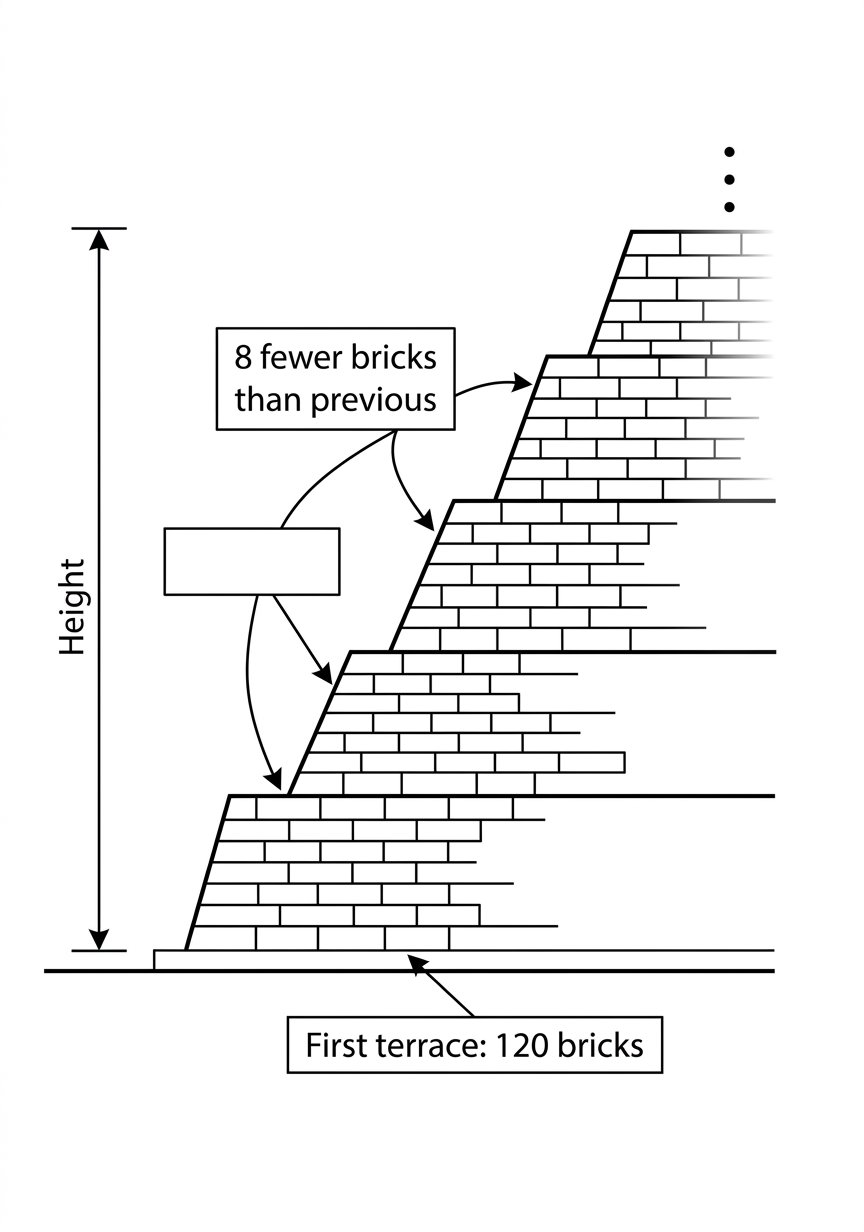
A construction company is building a terraced garden. The first terrace requires bricks. Each subsequent terrace requires fewer bricks than the previous one. Terraces are built in sequence for as long as the number of bricks required is positive.
Formulae: ;
(a)
Calculate the number of bricks required for the th terrace. [2 marks]
(b)
Determine the total number of terraces that can be built, and hence calculate the total number of bricks used. [4 marks]
Solutions
4MasterySAQ-SSum of an arithmetic sequence6 marksPaper 2~9 min
Data
;
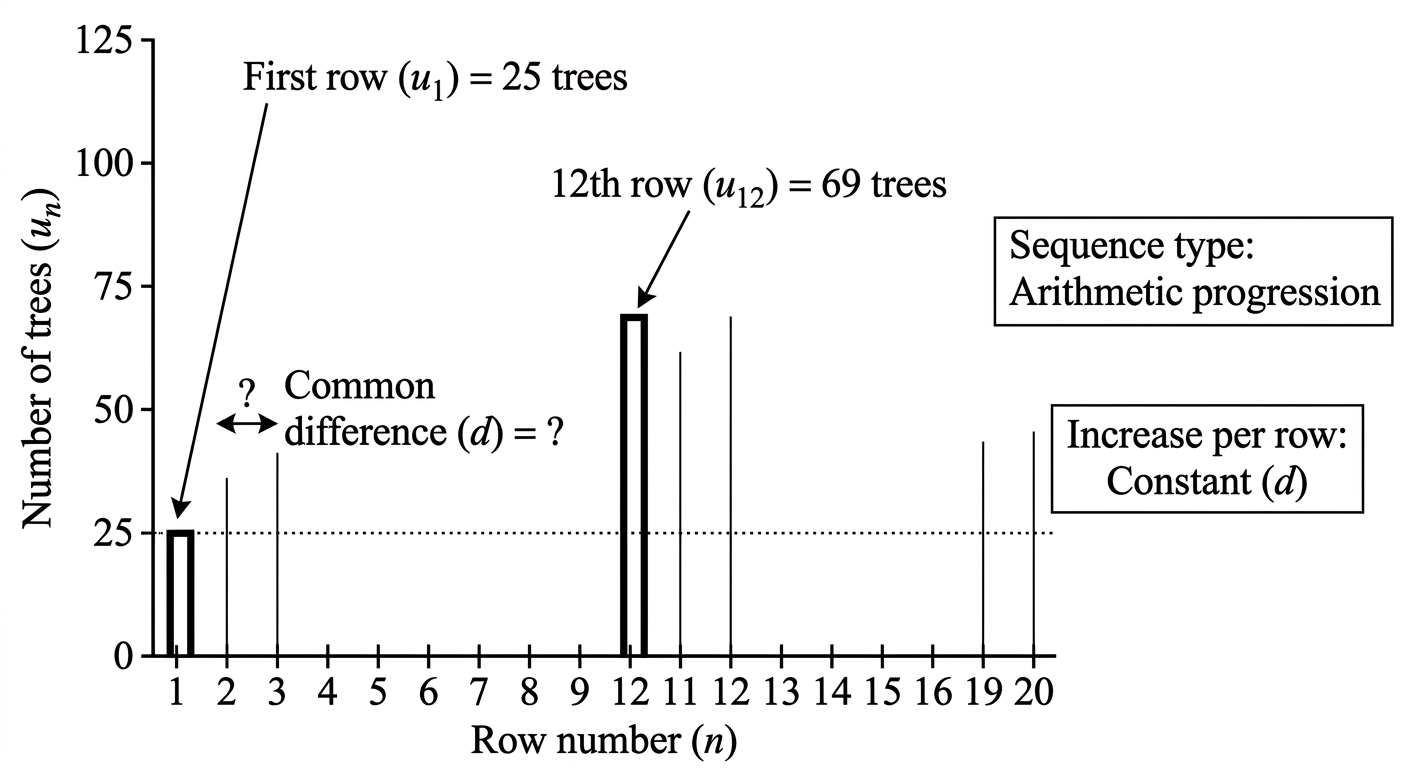
A farmer plants trees in rows. The first row has trees. Each subsequent row has a constant number of additional trees. The th row has trees.
(a)
Calculate the common difference of the arithmetic sequence. [2 marks]
(b)
Calculate the total number of trees planted in the first rows. [3 marks]
(c)
The farmer has space for at most rows and a total budget allowing a maximum of trees. Determine which constraint is reached first, justifying your answer. [1 mark]
Solutions
5MasterySAQ-SSum of an arithmetic sequence6 marksPaper 2~9 min
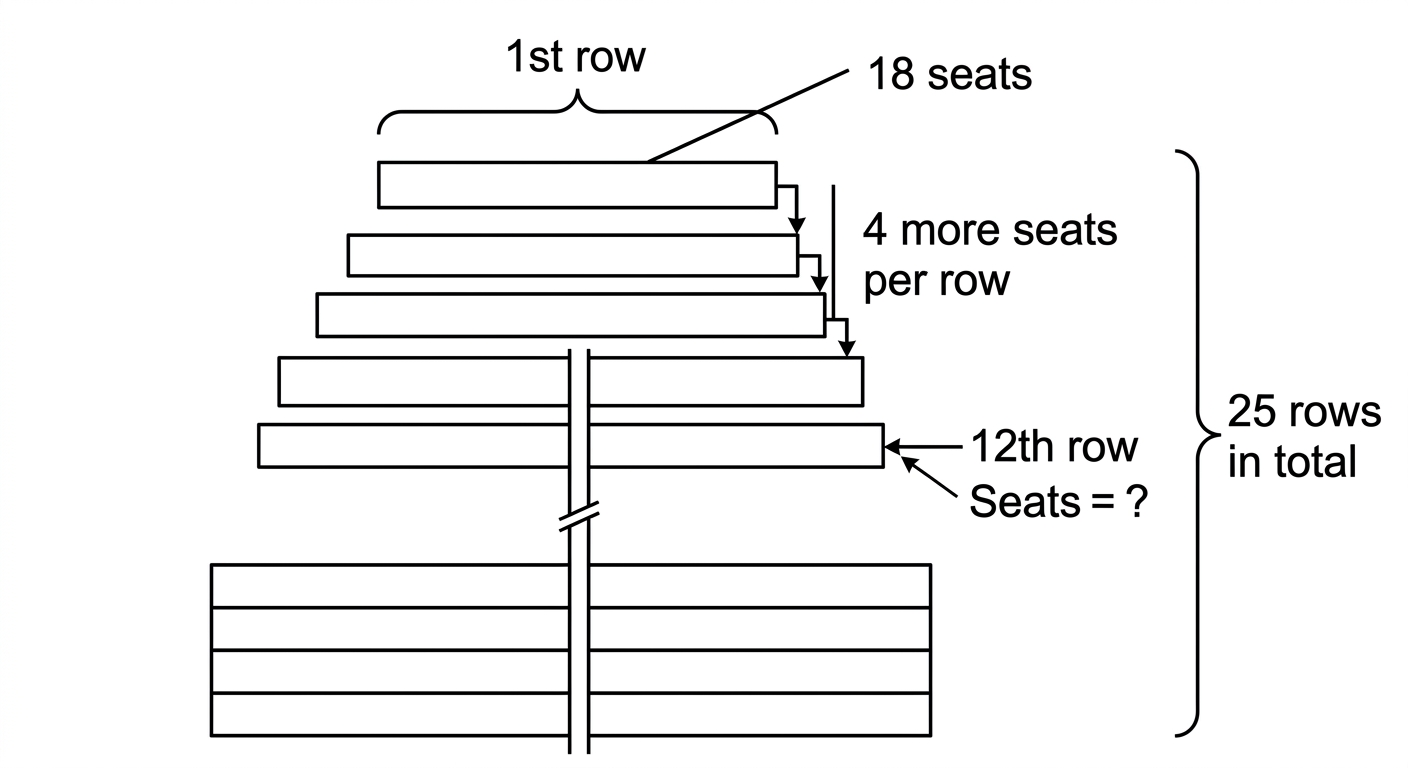
A cinema has 25 rows of seats. The first row has 18 seats. Each subsequent row has 4 more seats than the row in front of it.
(a)
Calculate the number of seats in the th row. [2 marks]
(b)
Determine the total number of seats in the cinema. [2 marks]
(c)
The cinema plans to add a new section. The new section begins immediately after the existing 25 rows and continues the same arithmetic pattern. The new section must contain at least 1000 seats.
Determine the minimum number of additional rows needed, and state the total number of seats in the new section with this minimum number of rows. [2 marks]
Solutions
6MasterySAQ-SApplications of arithmetic sequences in real-world contexts6 marksPaper 2~9 min
Data
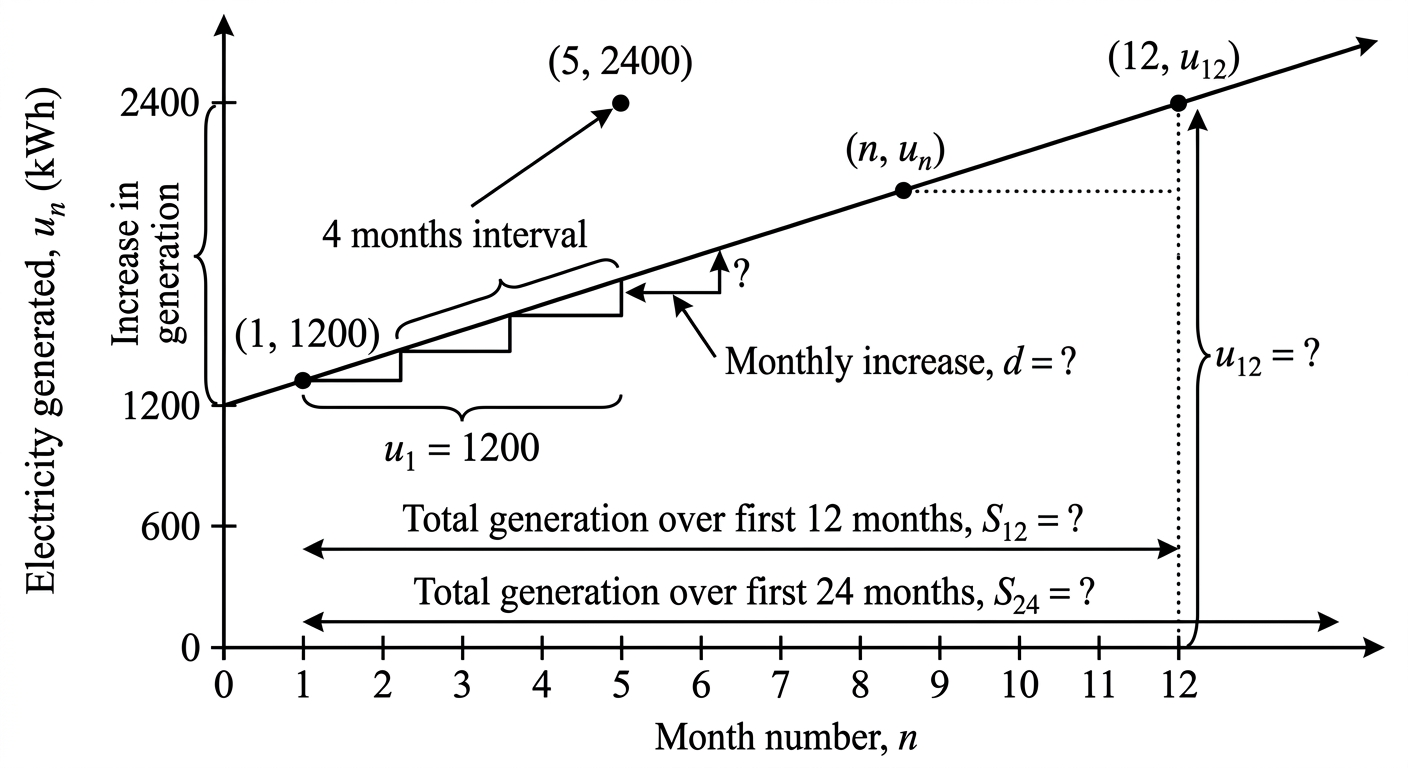
A small business owner installs a solar panel system to reduce electricity costs. The system generates electricity at a rate that increases linearly each month as more panels are activated. In the first month, the system generates kWh. In the fifth month, it generates kWh. The owner assumes this linear trend continues.
(a)
Calculate the common difference of the arithmetic sequence representing the monthly generation. [2 marks]
(b)
Determine the total electricity generated over the first months. [2 marks]
(c)
The owner's target is to generate a cumulative total of at least kWh. Determine the minimum number of complete months required to meet this target. [2 marks]
Solutions
7MasterySAQ-SApplications of arithmetic sequences in real-world contexts6 marksPaper 2~9 min
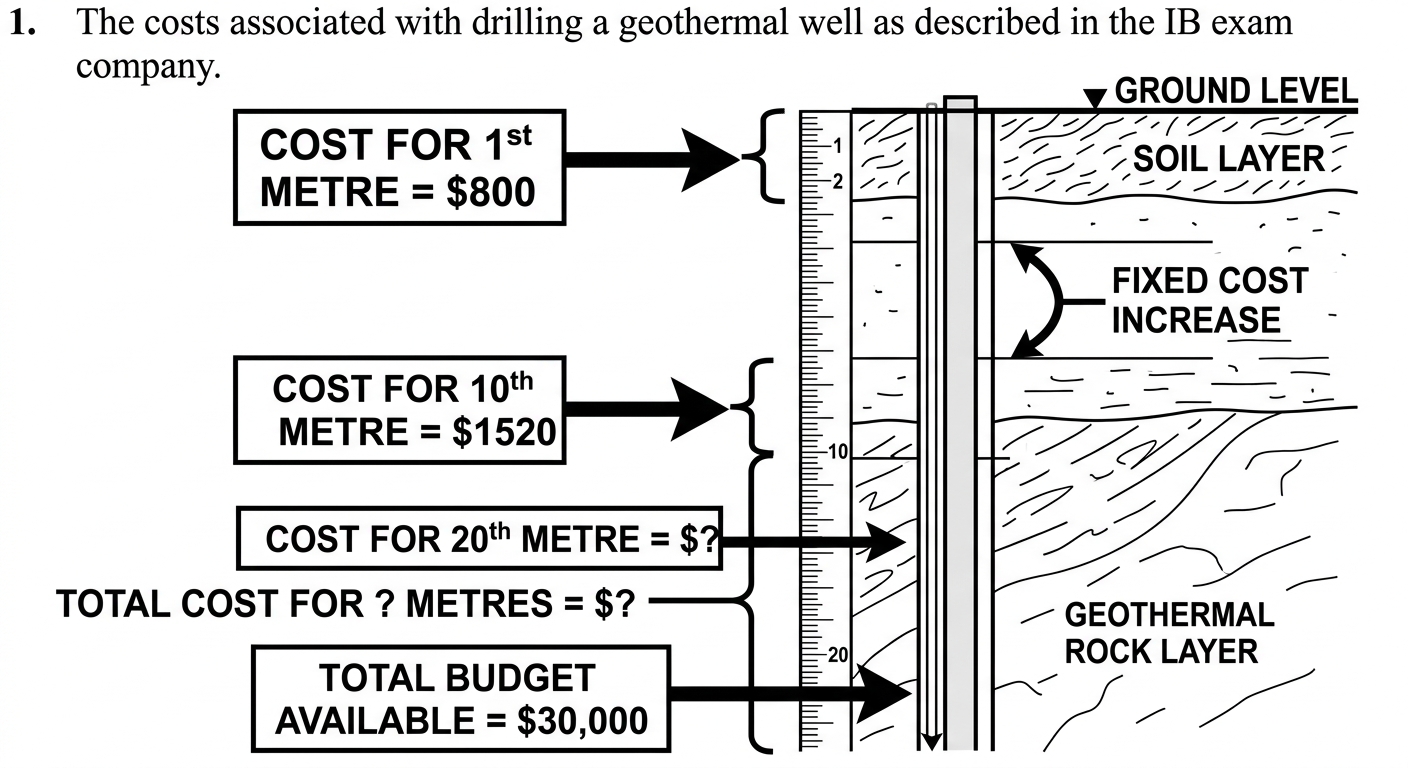
A company drills a well for geothermal energy. The drilling cost for the first metre is dollars. The cost for each subsequent metre increases by a fixed amount. The cost for the th metre is dollars.
(a)
Calculate the common difference of the arithmetic sequence representing the cost per metre. [2 marks]
(b)
Determine the total cost to drill the first metres. [2 marks]
(c)
The company has a budget of dollars. Calculate the maximum number of complete metres that can be drilled without exceeding the budget. [2 marks]
Solutions
8MasterySAQ-SDefinition and general term of arithmetic sequences8 marksPaper 2~12 min
A biologist records the height of a bamboo plant each day. On day , the height is . The height increases by a constant daily amount, forming an arithmetic sequence. On day , the height is .
(a)
Show that the daily growth rate is . [1 mark]
(b)
Determine an expression for the height on day . [2 marks]
(c)
Calculate the day on which the height first exceeds . [2 marks]
(d)
The biologist claims that, at this growth rate, the total height gained over the first days will exceed . Determine whether this claim is correct, showing all reasoning. [3 marks]
Solutions
9MasterySAQ-SDefinition and general term of arithmetic sequences6 marksPaper 2~9 min
A small business sells handmade candles. In the first month, they sell 60 candles. Their sales increase by a fixed number each month. In the th month, they sell candles. The number of candles sold in month is .
(a)
Show that the monthly increase in sales is candles per month. [2 marks]
(b)
Calculate the number of candles sold in month . [2 marks]
(c)
The business needs to sell a total of at least candles to break even. Determine the minimum number of complete months required to reach this total. [2 marks]
Solutions
10MasterySAQ-SDefinition and general term of arithmetic sequences6 marksPaper 2~9 min
A library has a membership drive. In the first month, new members join. The library expects the number of new members each month to increase by a constant amount .
(a)
In the th month, new members join. Calculate . [2 marks]
(b)
Calculate the number of new members predicted to join the th month. [2 marks]
(c)
The library's goal is to reach a cumulative total of at least new members. Determine the first month by the end of which this goal is met. [2 marks]
Solutions
11MasterySAQ-SDefinition and general term of arithmetic sequences6 marksPaper 2~9 min
An environmental scientist is tracking the growth of a bamboo plant. The height of the plant on day 1 is . It grows at a constant rate each day. On day 12, the height is . The height on day is denoted by .
(a)
Calculate the common difference , the daily growth in cm. [2 marks]
(b)
Calculate the height of the plant on day 30. [2 marks]
(c)
Determine the day on which the height first reaches at least . [2 marks]
Solutions
12MasterySAQ-SDefinition and general term of arithmetic sequences6 marksPaper 2~9 min
A training program requires an athlete to run a certain distance each week. In week 1, she runs . Each week she increases the distance by a constant amount. In week 10, she runs . The distance run in week is .
(a)
Calculate the weekly increase in distance. [2 marks]
(b)
Calculate the distance she will run in week 25. [2 marks]
(c)
The athlete's training program lasts complete weeks. She must run a total of at least over the program. Determine the minimum value of . [2 marks]
Solutions
13MasterySAQ-SDefinition and general term of arithmetic sequences6 marksPaper 2~9 min
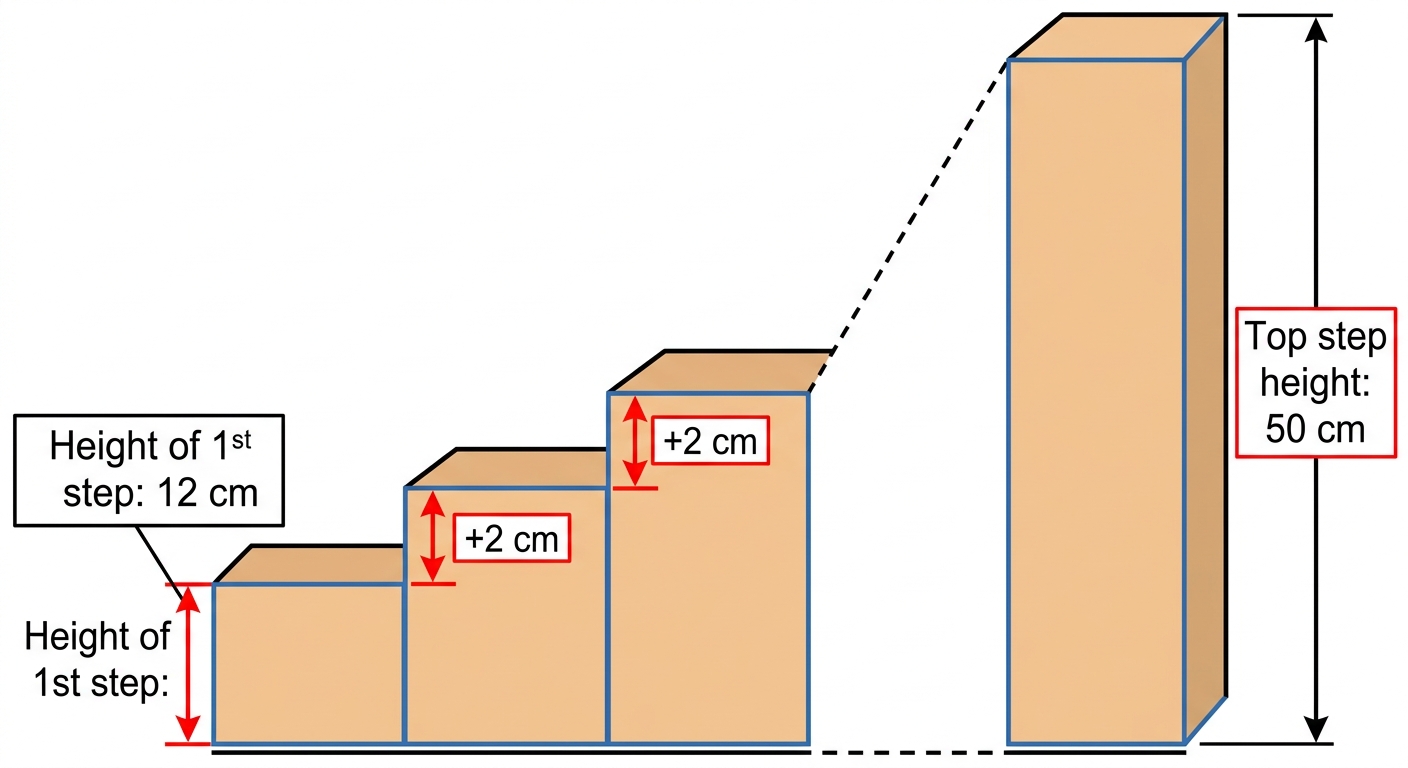
A construction company is building a staircase. The first step has a height of . Each subsequent step is higher than the previous step.
(a)
Show that the heights of the steps form an arithmetic sequence with common difference . [1 mark]
(b)
Calculate the height of the th step. [2 marks]
(c)
The total combined height of all steps must equal exactly . Determine the number of steps in the staircase. [3 marks]
Solutions
14MasterySAQ-SDefinition and general term of arithmetic sequences6 marksPaper 2~9 min
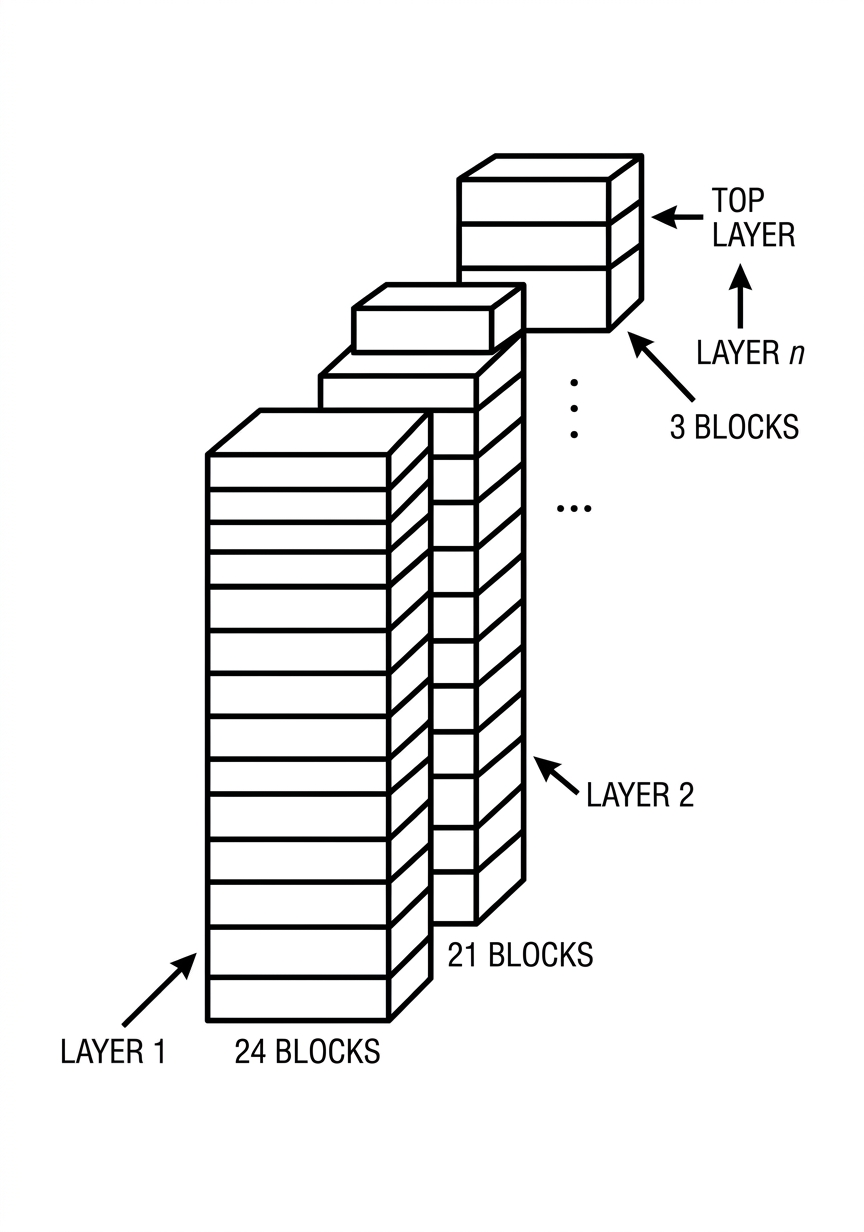
A construction company is building a tower of concrete blocks. The base layer (layer 1) contains blocks. Each subsequent layer contains fewer blocks than the layer below it. The top layer contains exactly blocks.
(a)
Determine the number of layers in the tower. [3 marks]
(b)
Calculate the total number of blocks used to build the tower. [2 marks]
(c)
Each concrete block has a mass of . The construction company can transport a maximum of of blocks per trip. Determine the minimum number of trips required to transport all the blocks needed to build the tower. [1 mark]
Solutions
15MasterySAQ-SDefinition and general term of arithmetic sequences6 marksPaper 2~9 min
A cinema has seats in the first row. Each subsequent row has more seats than the row in front of it. The last row has seats.
(a)
Determine the number of rows in the cinema. [3 marks]
(b)
Calculate the total number of seats in the cinema. [3 marks]
Solutions
16MasterySAQ-SDefinition and general term of arithmetic sequences6 marksPaper 2~9 min
A movie theatre has 20 rows of seats. The number of seats in each row forms an arithmetic sequence. The first row has 15 seats and the second row has 18 seats.
(a)
State the common difference of the sequence. [1 mark]
(b)
Calculate the number of seats in the th row. [2 marks]
(c)
The theatre manager claims the venue can seat more than 1000 people in total across all 20 rows. Determine whether this claim is correct. [3 marks]
Solutions
17MasterySAQ-SDefinition and general term of arithmetic sequences8 marksPaper 2~12 min
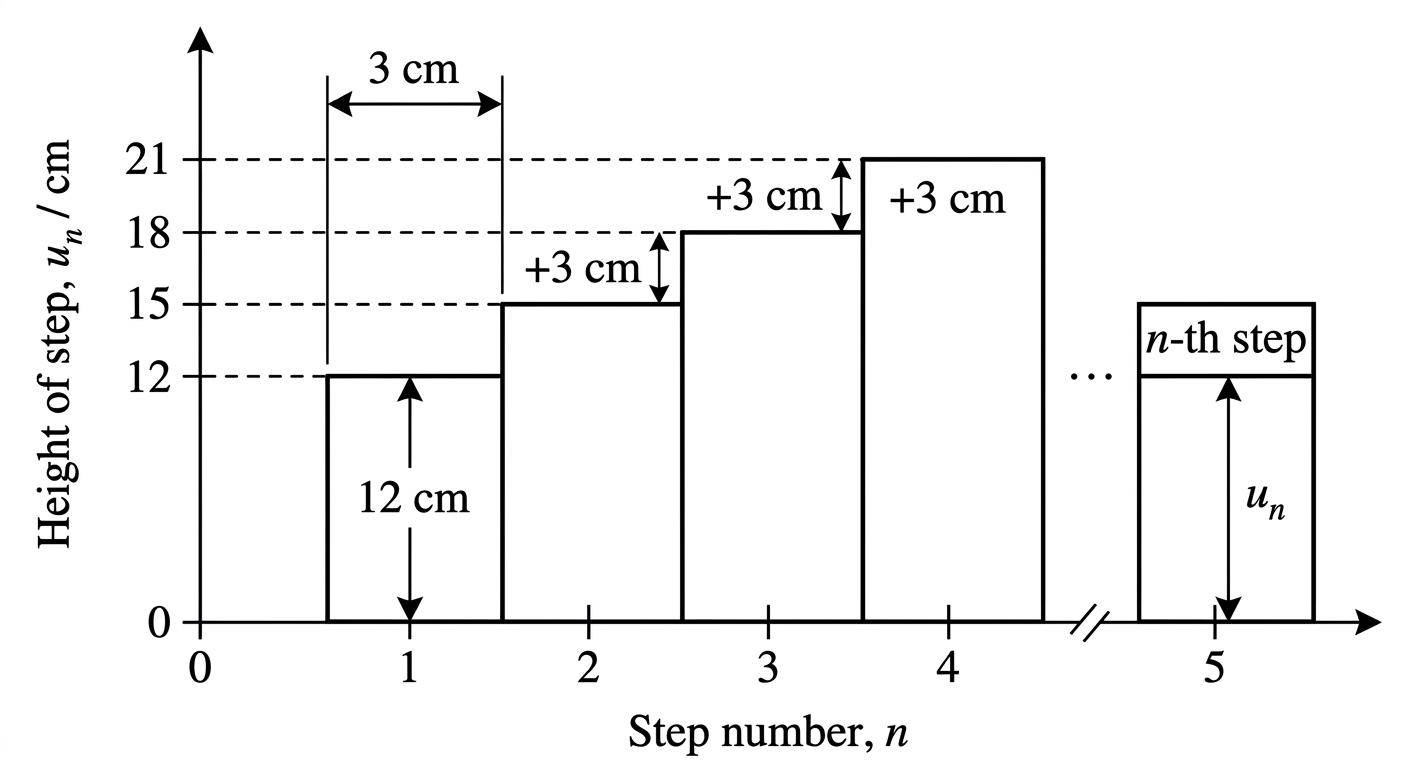
A construction company is building a staircase. The first step has a height of . Each subsequent step has a height that is more than the previous step. The staircase has steps.
(a)
Show that the height of the th step is given by . [2 marks]
(b)
Calculate the height of the th step. [2 marks]
(c)
The total height of the staircase is the sum of the heights of all steps. A building regulation states that the total height of a staircase must not exceed . Determine whether this staircase satisfies the regulation. [4 marks]
Solutions
18MasterySAQ-SSum of an arithmetic sequence6 marksPaper 2~9 min
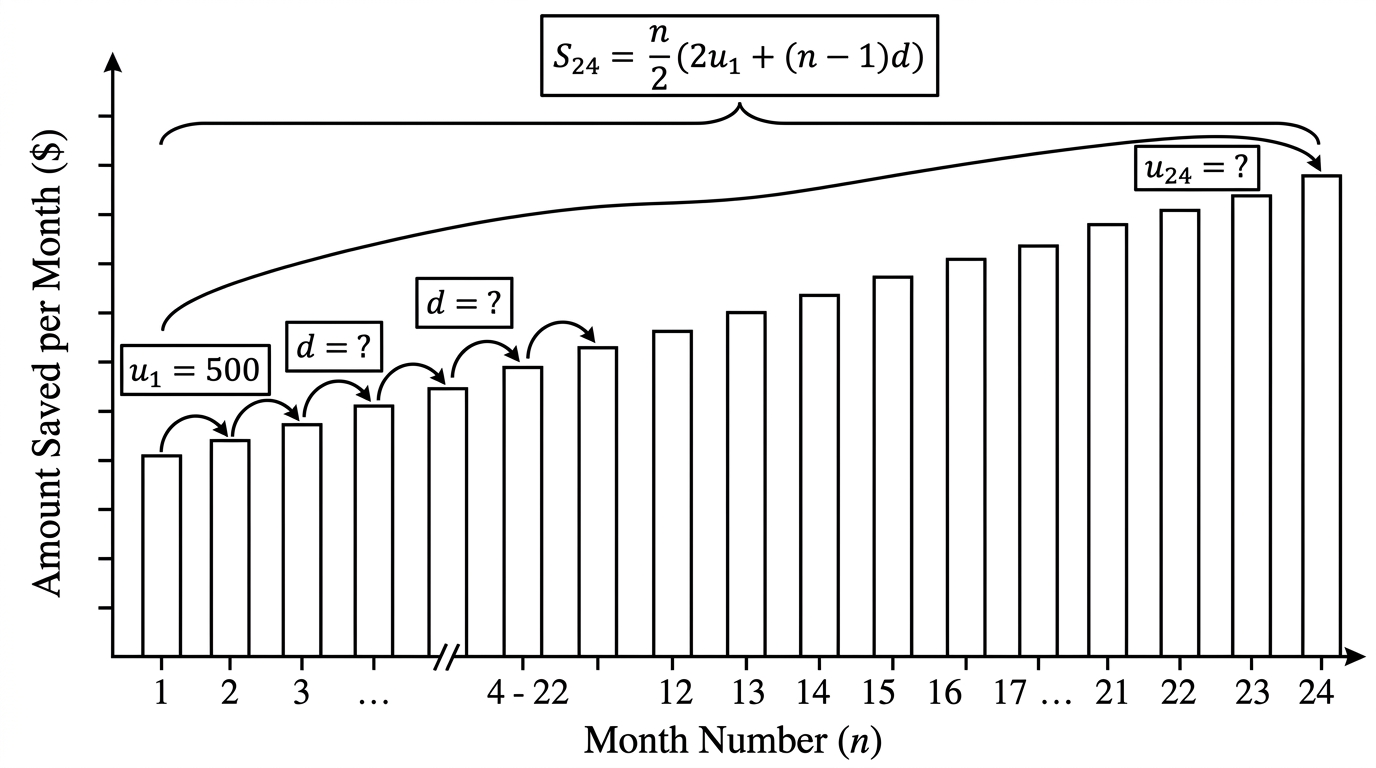
A small business owner saves money for equipment upgrades. In the first month she saves USD 500. Each subsequent month she increases her savings by a fixed amount compared to the previous month. After 24 months she has saved a total of USD 21 600.
(a)
Show that the amount saved in the 24th month is USD 1300. [3 marks]
(b)
Determine the first month in which her monthly savings exceed USD 1000. [3 marks]
Solutions
19MasterySAQ-SSum of an arithmetic sequence6 marksPaper 2~9 min
A farmer plants trees in rows. The first row has trees. Each subsequent row has more trees than the previous row. The total number of trees planted is .
(a)
Determine the number of rows planted. [4 marks]
(b)
The farmer has space for at most trees in any single row. Given your answer to part (a), determine the number of trees in the last row and hence state whether the farmer's land constraint is satisfied. Justify your answer. [2 marks]
Solutions
20MasterySAQ-SSum of an arithmetic sequence6 marksPaper 2~9 min
A small business sells handmade candles. In week 1, they sell candles. Each week they sell a fixed number more than the previous week. In week 7, they sell candles.
(a)
Determine the weekly increase in sales. [2 marks]
(b)
Calculate the total number of candles sold in the first weeks. [2 marks]
(c)
The business has a storage cost of USD 0.40 per unsold candle per week. They produce exactly candles every week regardless of sales. Determine the week in which cumulative production first exceeds cumulative sales, and calculate the total storage cost incurred in that week. [2 marks]
Solutions
Showing 20 of 90 free questions