You're viewing 4 free preview questions for Maths AI SL — subscribe to unlock 233 more, plus the Full Question Bank, Mock Papers & Worksheets.Upgrade
Transformations of Functions · Paper 1 — Free Maths AI SL Practice Questions
1FoundationSAQ-STranslation, reflection, stretching and compression5 marksPaper 1~8 min

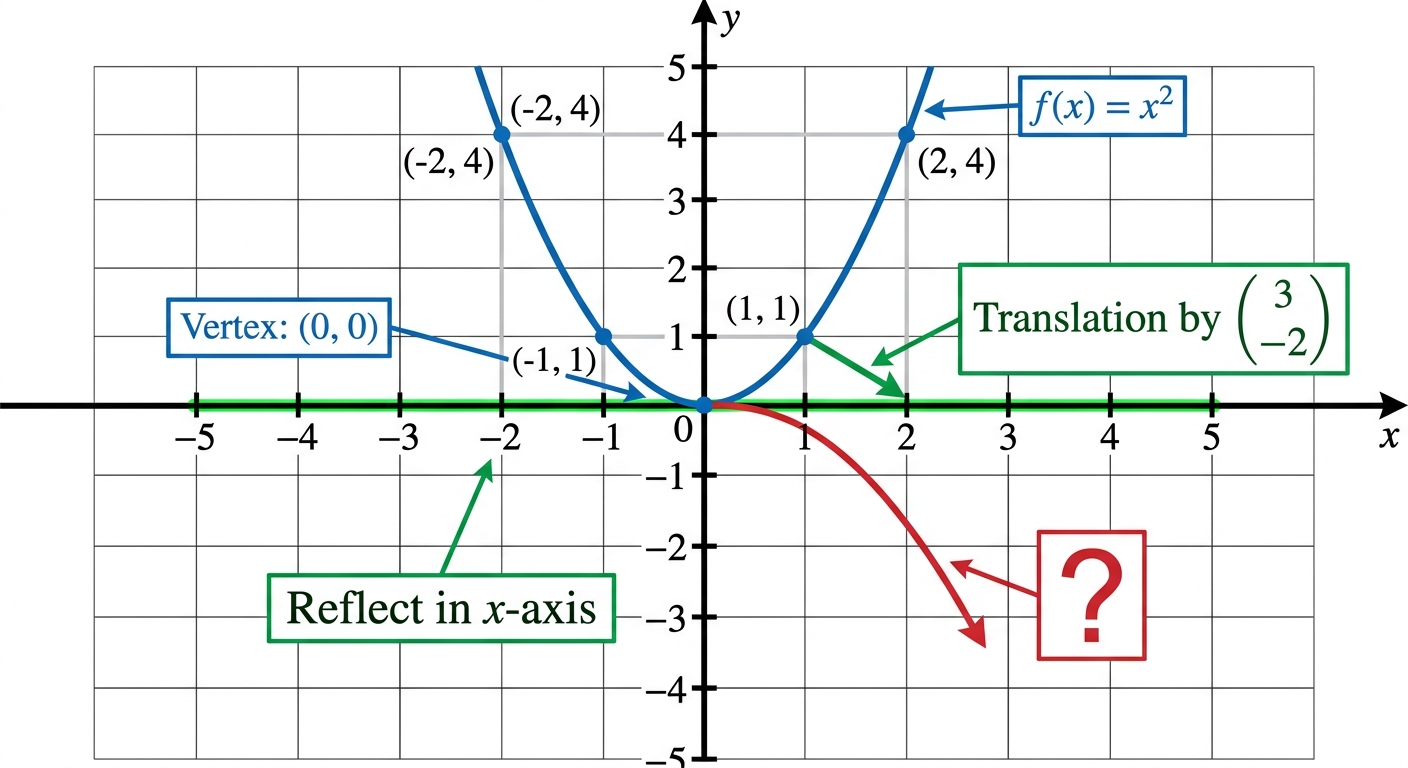
A function is defined by for .
(a)
The graph of is translated by . Find the equation of the resulting function , giving your answer in the form . [2 marks]
(b)
The graph of is then reflected in the -axis to give the function . Find the equation of , giving your answer in the form . [2 marks]
(c)
Write down the range of . [1 mark]

Solutions
2FoundationSAQ-STranslation, reflection, stretching and compression5 marksPaper 1~8 min
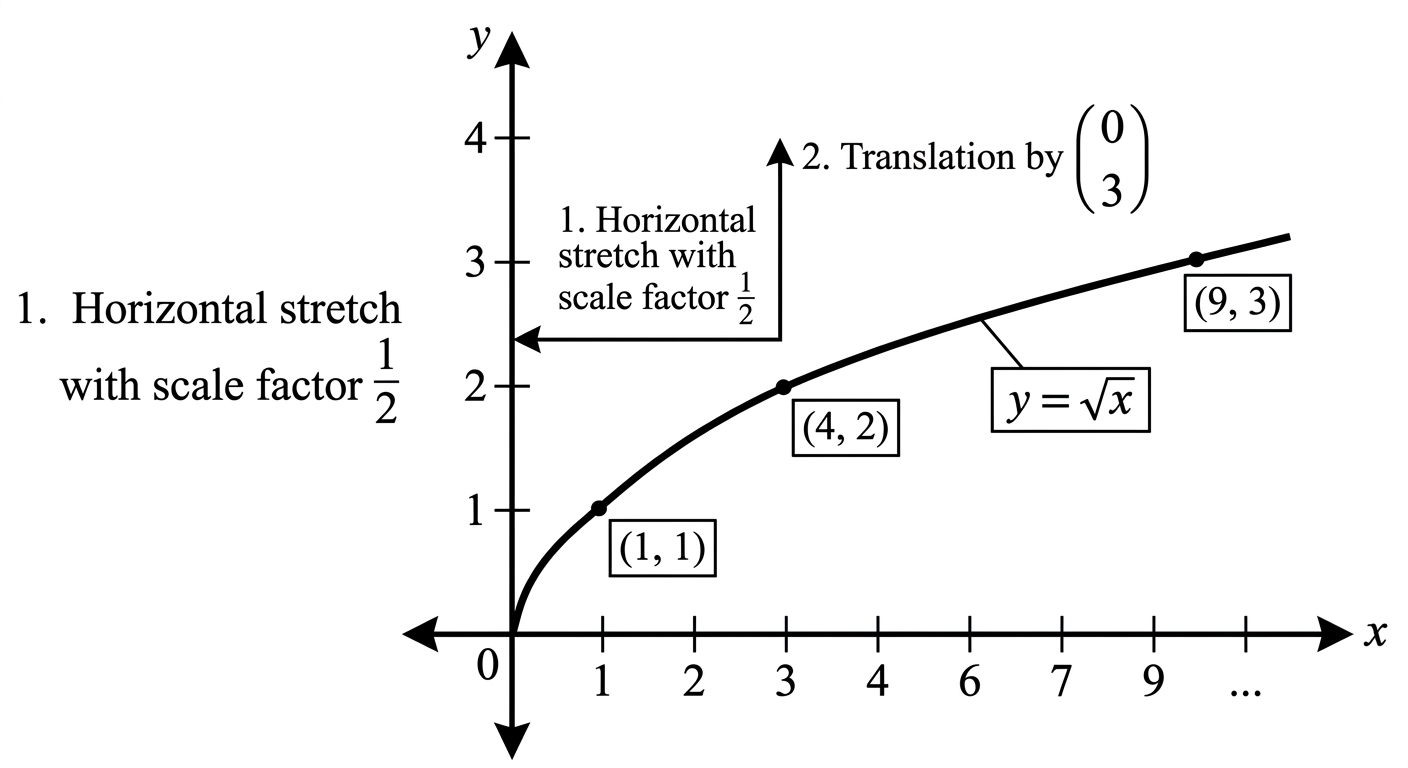
The graph of for is transformed by a horizontal stretch with scale factor , followed by a translation by .
(a)
Find the equation of the resulting function, giving your answer in the form , where , , and are integers. [3 marks]
(b)
State the range of the resulting function. [1 mark]
(c)
Find the coordinates of the point on the resulting graph where . [1 mark]
Solutions
3MasterySAQ-STranslation, reflection, stretching and compression6 marksPaper 1~9 min
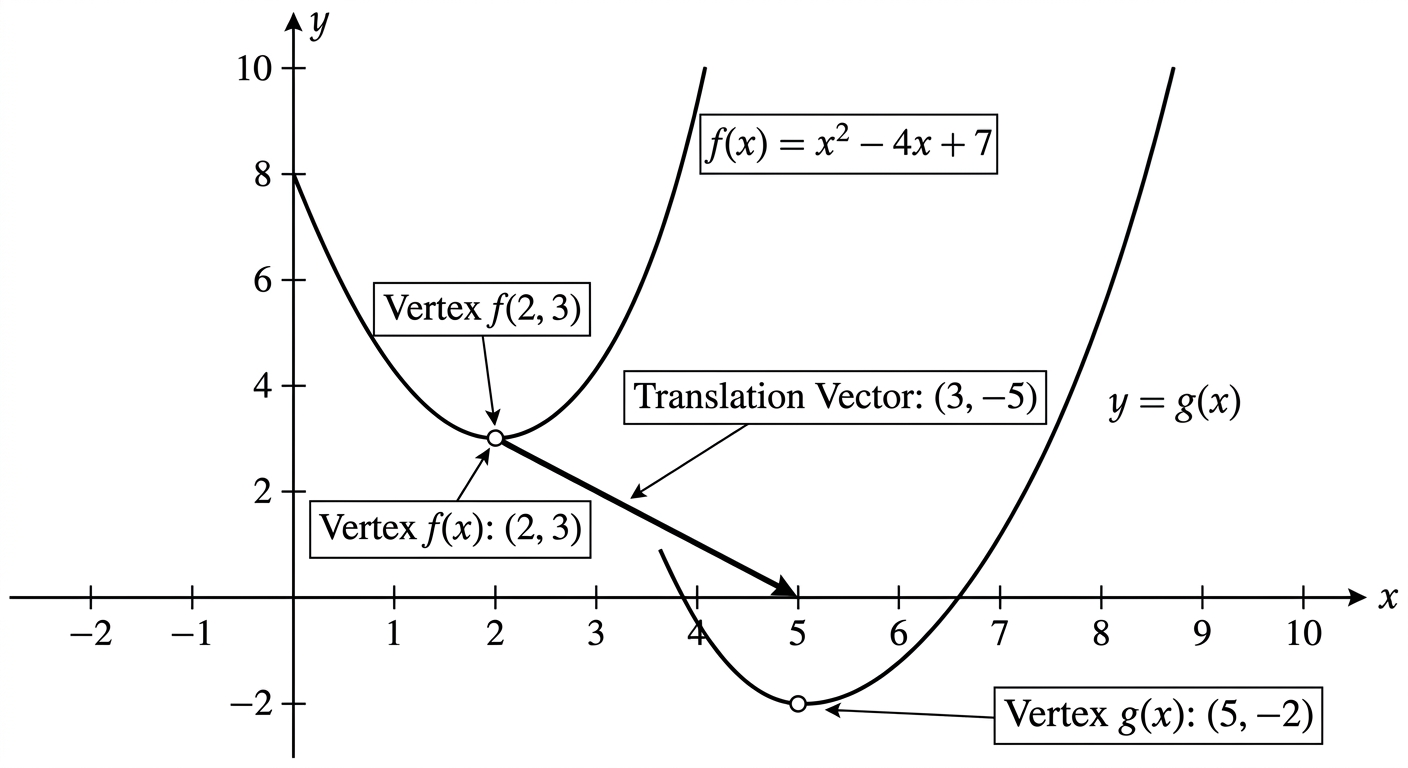
The function is defined by , for .
The graph of is translated by the vector to obtain the graph of a function .
(a)
Show that . [3 marks]
(b)
Write down the coordinates of the vertex of the graph of . [1 mark]
(c)
Hence, state the range of and explain why does not have an inverse function for . [2 marks]
Solutions
4ChallengeSAQ-LTranslation, reflection, stretching and compression7 marksPaper 1~11 min
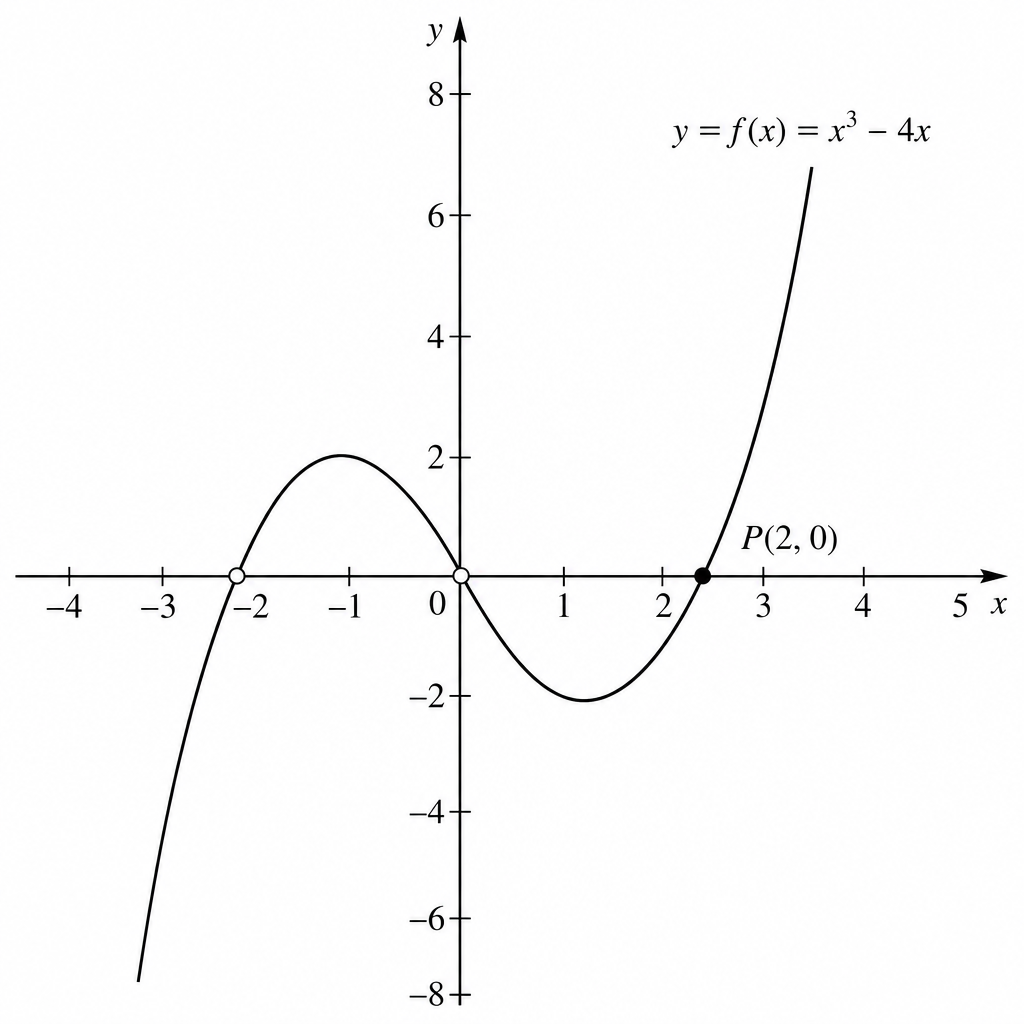
The function is defined by for .
The function is defined by .
(a)
State the sequence of three transformations, in the correct order, that maps the graph of onto the graph of . [3 marks]
(b)
The point lies on the graph of . Calculate the coordinates of the image of on the graph of . [2 marks]
(c)
(i) The -intercepts of occur where . Explain why the images of these points under the transformation are not -intercepts of . [1]
(ii) Determine the exact coordinates of the three points on the graph of that correspond to the -intercepts of . [2 marks]
(ii) Determine the exact coordinates of the three points on the graph of that correspond to the -intercepts of . [2 marks]
Solutions
That's every free question here — 4 of 237.
+233 more questions, plus Mock Papers & Worksheets, are waiting in Premium.