You're viewing 4 free preview questions for Maths AI SL — subscribe to unlock 175 more, plus the Full Question Bank, Mock Papers & Worksheets.Upgrade
Geometric Sequences and Series · Paper 1 — Free Maths AI SL Practice Questions
1FoundationSAQ-SDefinition and general term of geometric sequences5 marksPaper 1~8 min

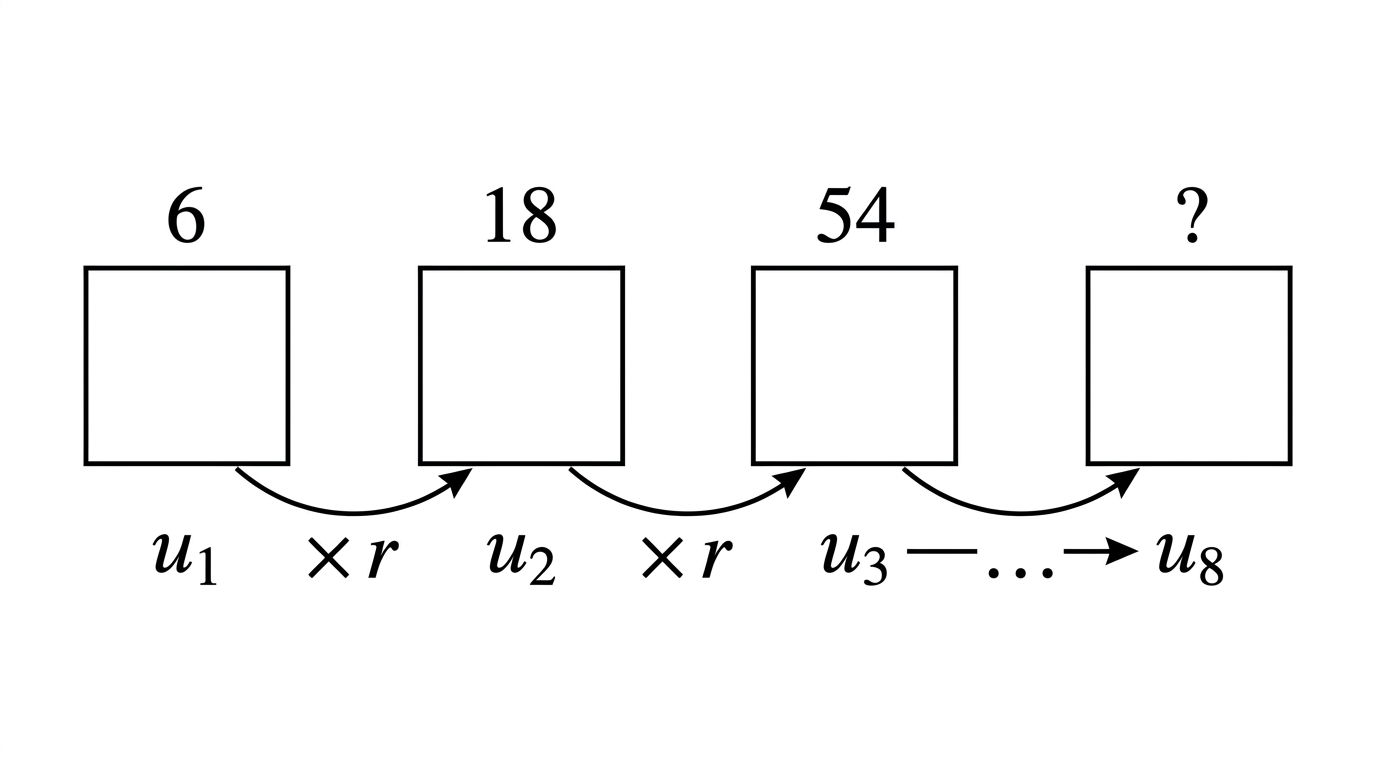
The first three terms of a geometric sequence are , , and .
(a)
State the common ratio, , of the sequence. [1 mark]
(b)
Find the value of the 8th term, . [2 marks]
(c)
Find the smallest value of such that the sum of the first terms exceeds . [2 marks]

Solutions
2FoundationSAQ-SDefinition and general term of geometric sequences7 marksPaper 1~11 min
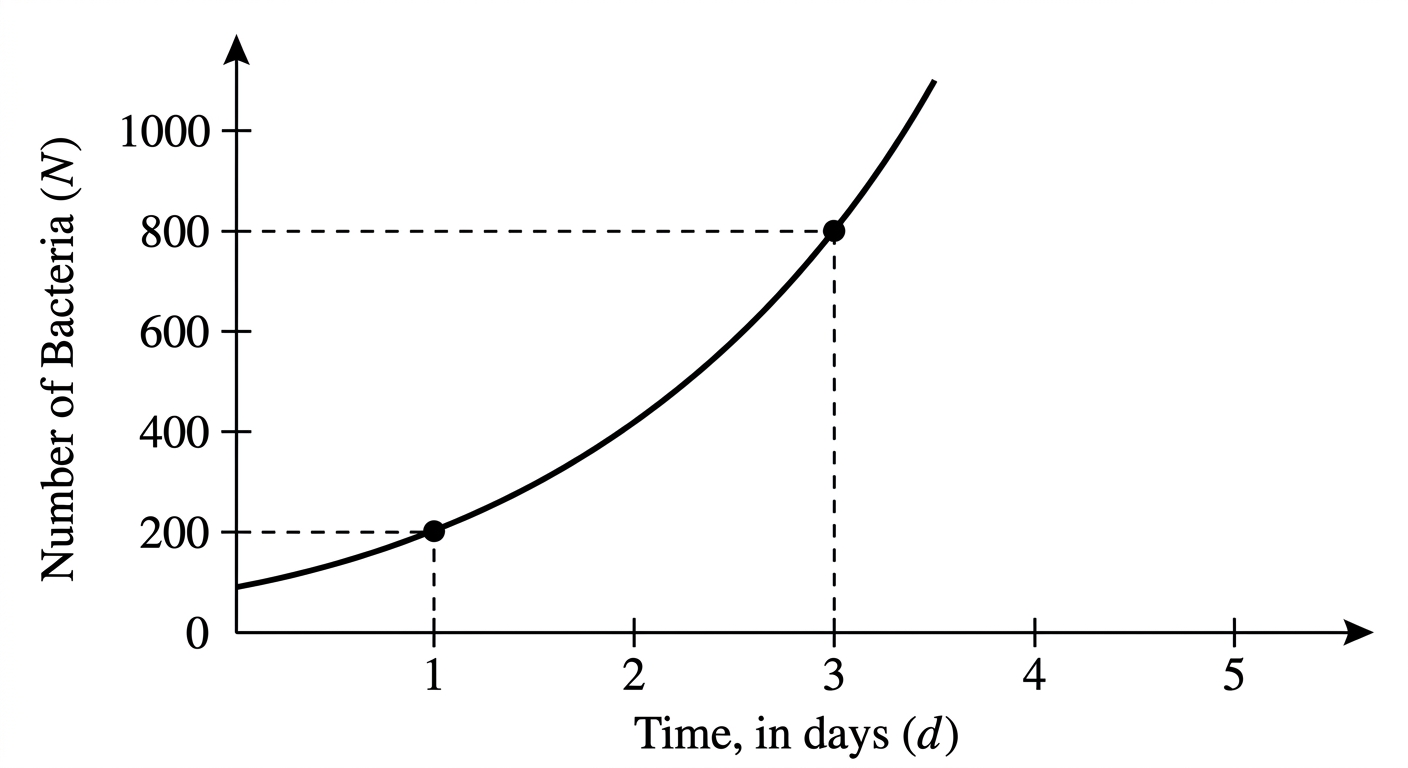
A population of bacteria grows according to a geometric sequence. On day 1, there are bacteria. On day 3, there are bacteria.
(a)
Find the common ratio, , of the sequence. [2 marks]
(b)
Find the total number of bacteria counted over the first 6 days. [2 marks]
(c)
A laboratory container can support a maximum of bacteria. Determine the first day on which the number of bacteria on that day exceeds the container's capacity. [3 marks]
Solutions
3MasterySAQ-SDefinition and general term of geometric sequences5 marksPaper 1~8 min
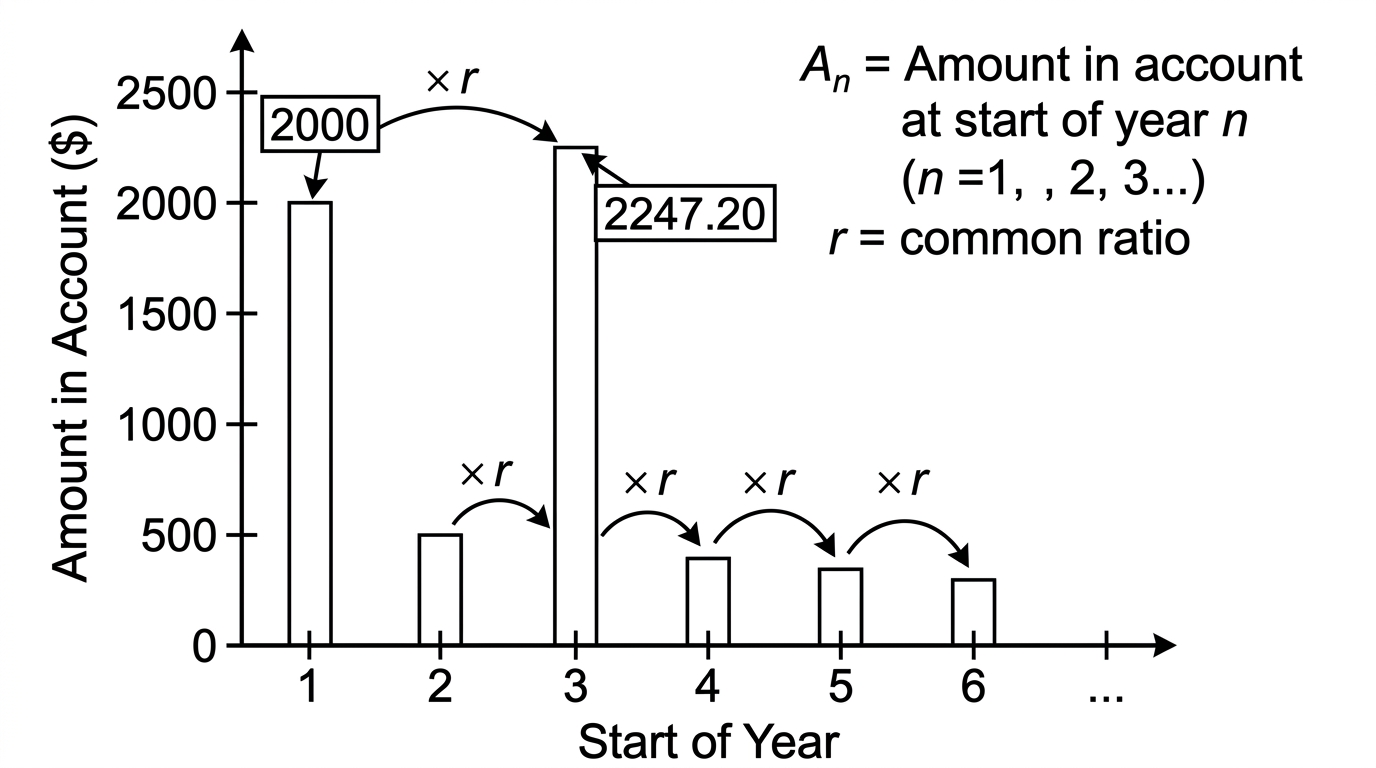
A new savings account is opened with an initial deposit of USD 2000. At the end of each year, interest is added so that the amount in the account at the start of each year forms a geometric sequence. The amount in the account at the start of the third year is USD 2247.20.
(a)
Show that the common ratio of the geometric sequence is . [2 marks]
(b)
Hence find the amount in the account at the start of the sixth year. Give your answer correct to the nearest dollar. [2 marks]
(c)
The account holder states: "By the start of the tenth year, the total interest earned will have exceeded USD 1000." Determine whether this statement is correct. [1 mark]
Solutions
4ChallengeSAQ-LDefinition and general term of geometric sequences8 marksPaper 1~12 min
Data
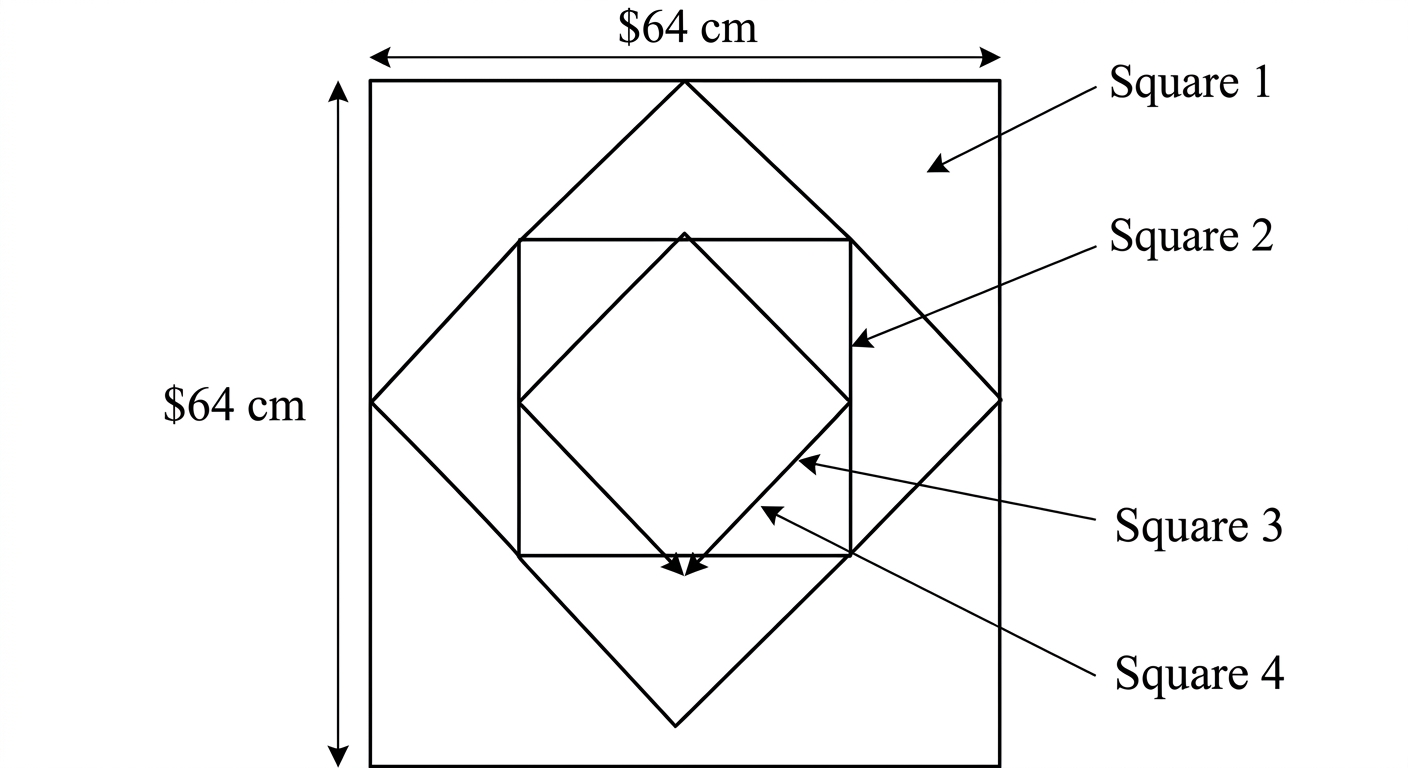
A fractal pattern is created by drawing squares. The largest square has side length . Each subsequent square is drawn inside the previous one, with its vertices at the midpoints of the sides of the previous square, so the side length of each new square is times the side length of the previous square.
(a)
Determine the side length of the th square.
The areas of the squares form a geometric sequence with first term and common ratio . [3 marks]
(b)
Determine the total area of the first squares.
The pattern continues indefinitely. The artist claims that the total area of all the squares is less than . [3 marks]
(c)
Determine whether the artist's claim is correct. [2 marks]
Solutions
That's every free question here — 4 of 179.
+175 more questions, plus Mock Papers & Worksheets, are waiting in Premium.