Work, Energy, and Power · Paper 2 — Free Physics HL Practice Questions
Free questions
Open in full, with answers, mark scheme and examiner insights.
Work done by a force and the work–energy principle
The diagram shows a spring of spring constant that is slowly compressed by from its natural length. The spring obeys Hooke's law.
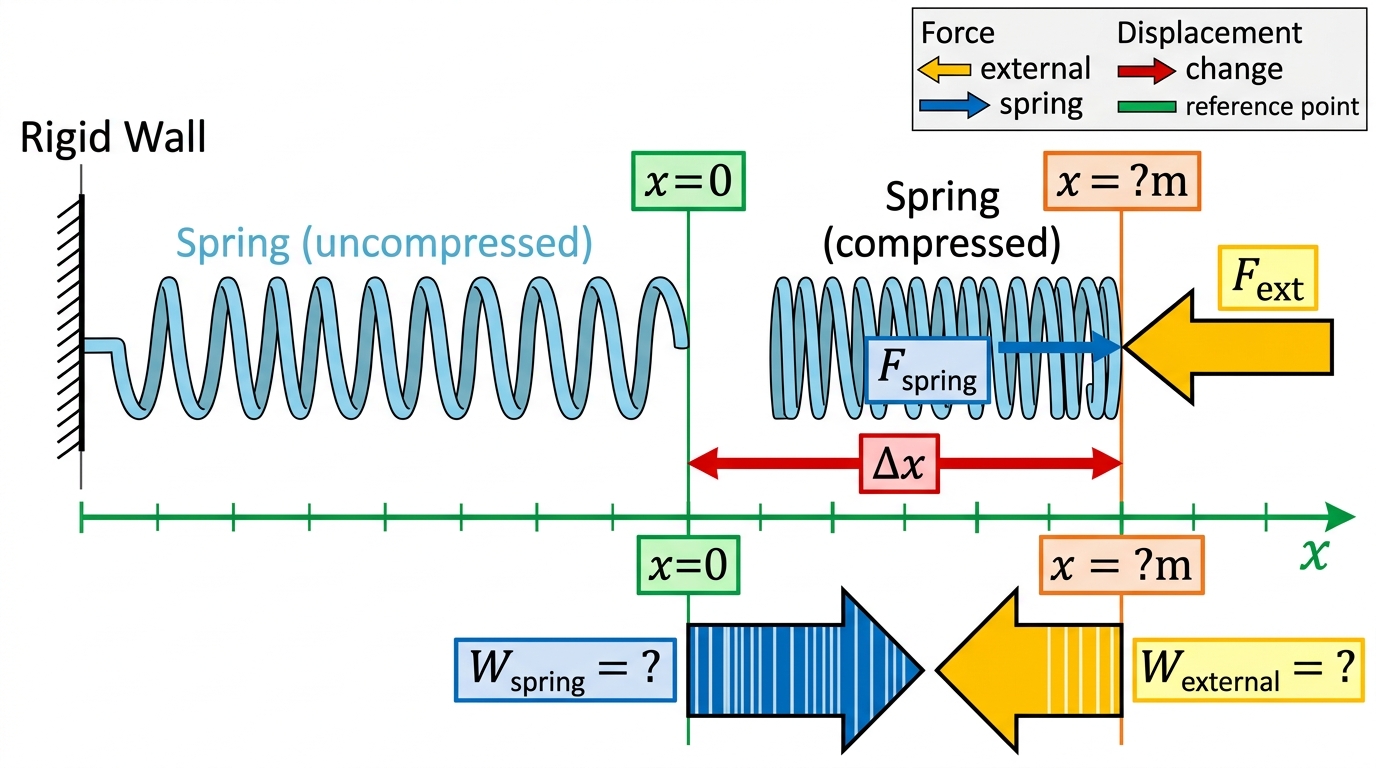
State what happens to the energy transferred by the compressing force.
Show that the work done in compressing the spring is .
The spring then launches a block of mass across a rough horizontal surface. The block reaches a maximum speed of . Determine the energy dissipated by friction up to this point.
revisionprep.com
Summary Answer
Not available for this question.
Model Answer
Not available for this question.
Marking Scheme
Not available for this question.
Examiner Insights
Not available for this question.
Power and efficiency
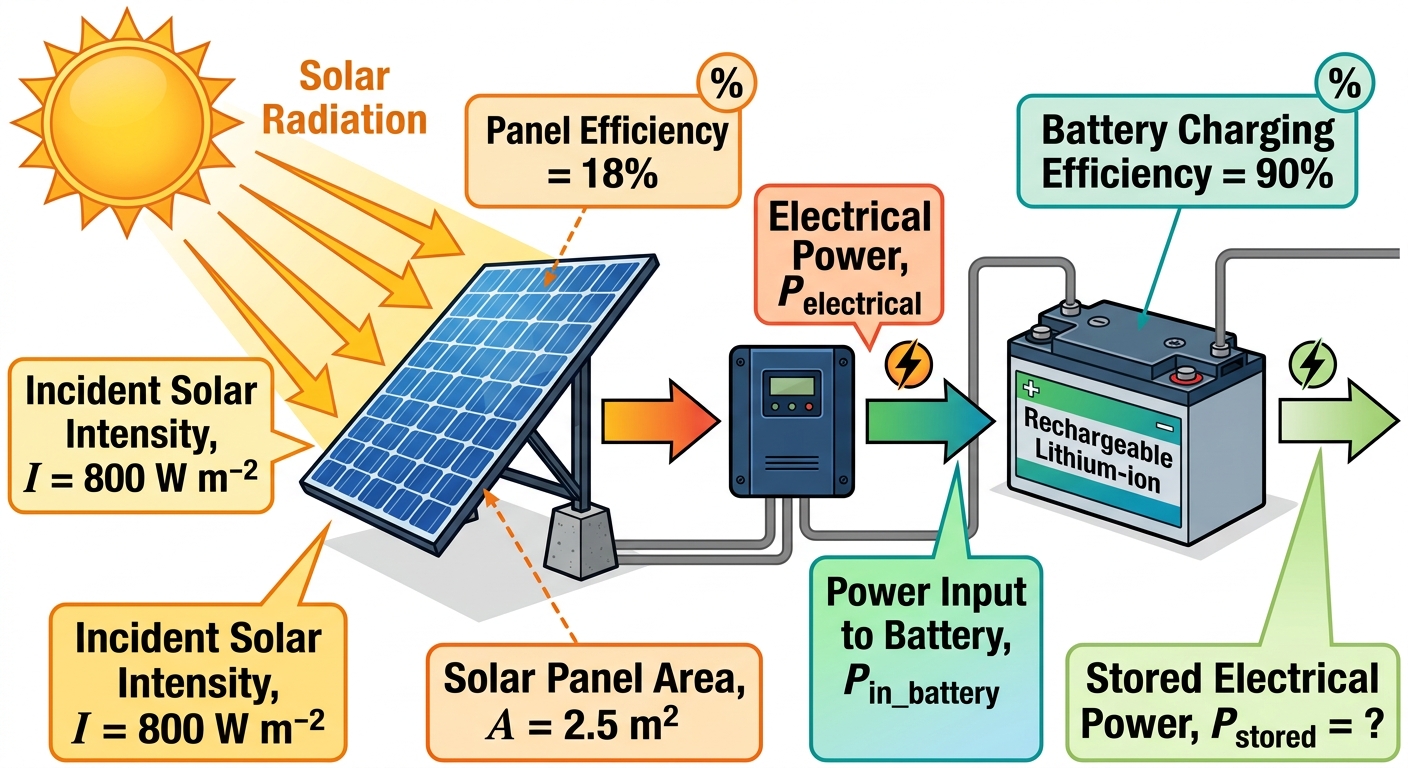
The diagram shows a solar panel of area that receives solar radiation of intensity . The panel converts 18% of the incident energy into electrical energy, which charges a battery. The charging process has an efficiency of 90%.
State what is meant by the efficiency of an energy transfer device.
Calculate the electrical power output of the panel.
Determine the rate at which energy is stored in the battery.
revisionprep.com
Summary Answer
Not available for this question.
Model Answer
Not available for this question.
Marking Scheme
Not available for this question.
Examiner Insights
Not available for this question.
Kinetic, gravitational potential and elastic potential energy
The diagram shows a ball of mass dropped from rest above the top of a vertical spring. The ball compresses the spring by a maximum of before it stops momentarily. Air resistance is negligible. Take .
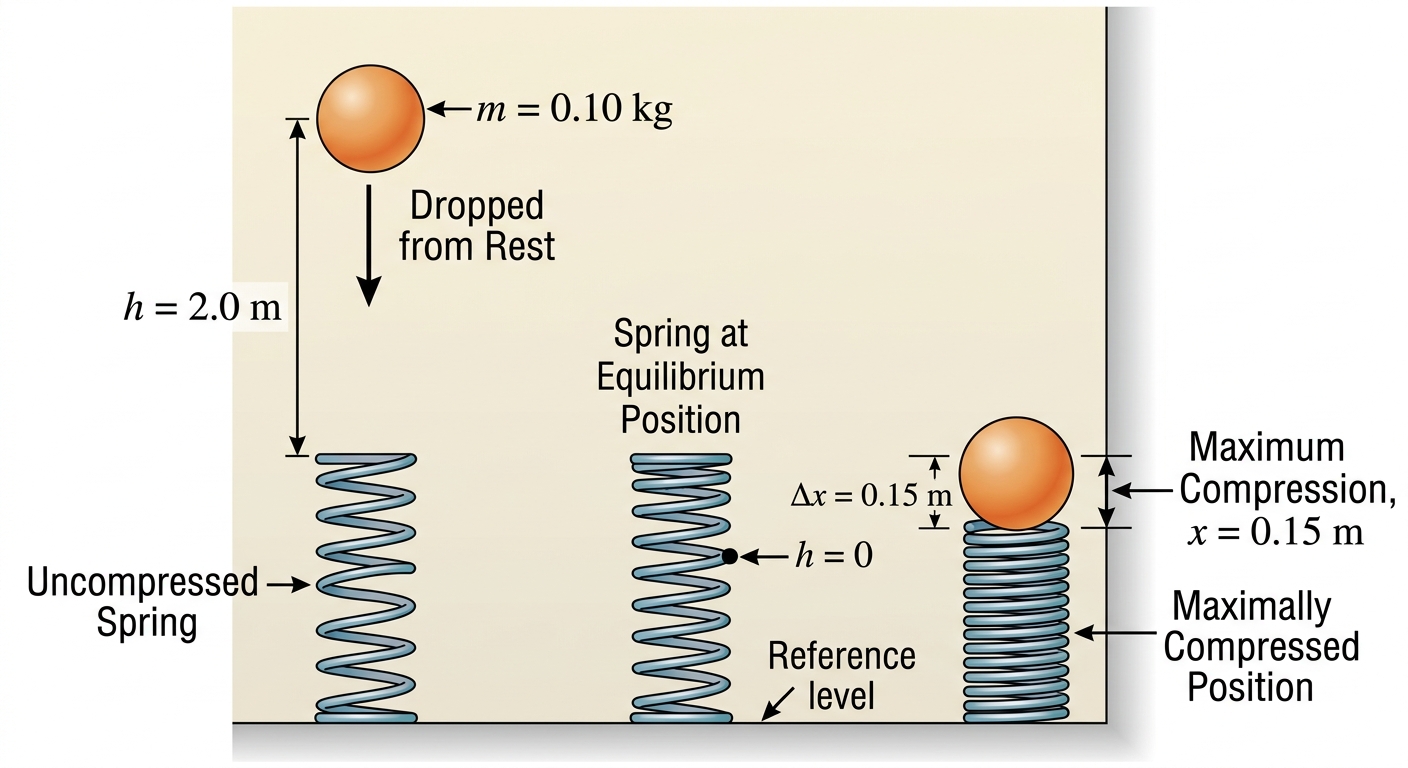
Describe the energy changes from the release of the ball until the spring is at maximum compression.
Calculate the spring constant of the spring.
revisionprep.com
Summary Answer
Not available for this question.
Model Answer
Not available for this question.
Marking Scheme
Not available for this question.
Examiner Insights
Not available for this question.
Energy density of fuels
A pumped-storage station stores energy by raising water to a reservoir above its turbines. It is designed to deliver of electrical energy. The turbines and generators are efficient. The pumps are efficient. The density of water is .
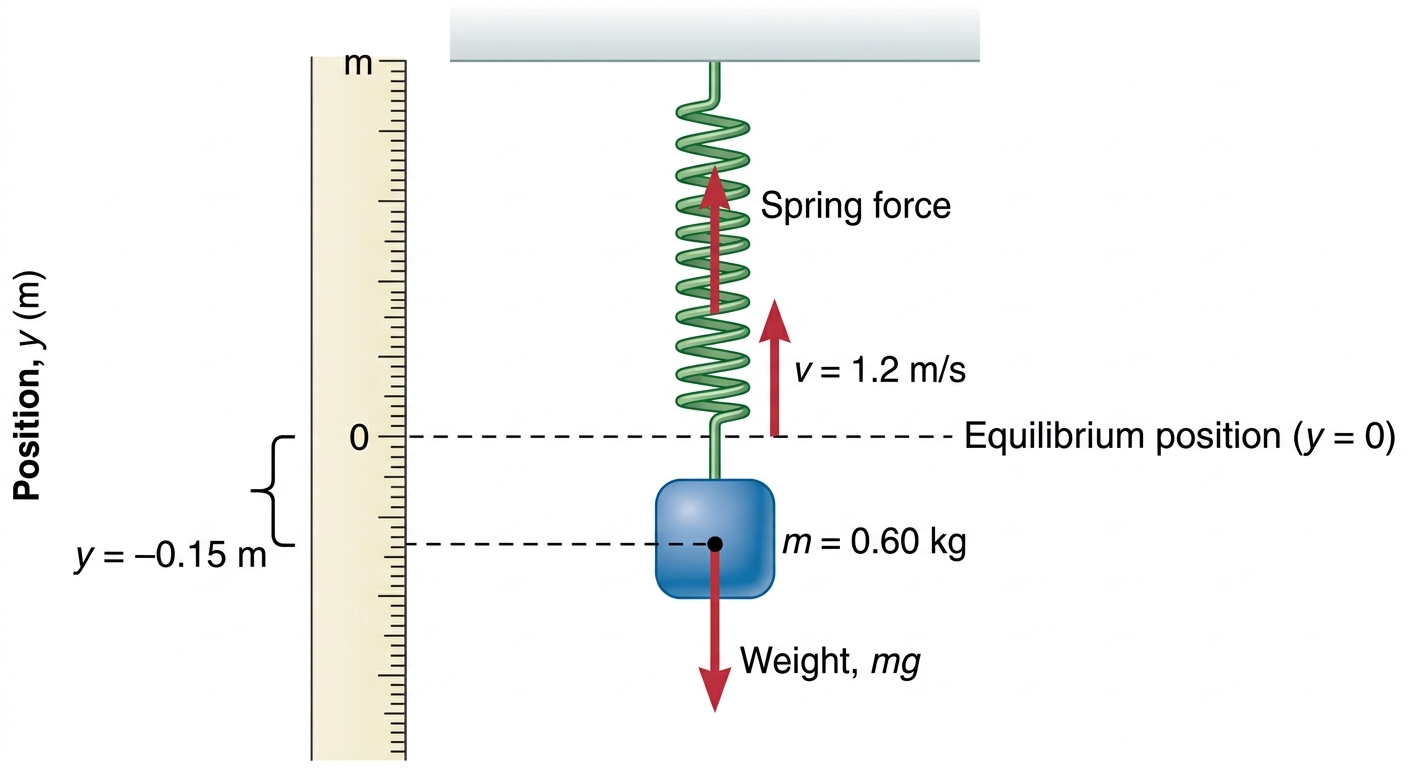
Calculate the gravitational energy stored per cubic metre of water in the upper reservoir.
Determine the volume of water that must be released to deliver .
Diesel has an energy density of . Calculate the volume of diesel that contains of chemical energy.
Determine the average power if the energy is delivered steadily over .
revisionprep.com
Summary Answer
Not available for this question.
Model Answer
Not available for this question.
Marking Scheme
Not available for this question.
Examiner Insights
Not available for this question.
Work done by a force and the work–energy principle
The graph shows how the tension in a rubber cord varies with its extension . A toy launcher stretches the cord by and then releases it to fire a ball of mass horizontally.
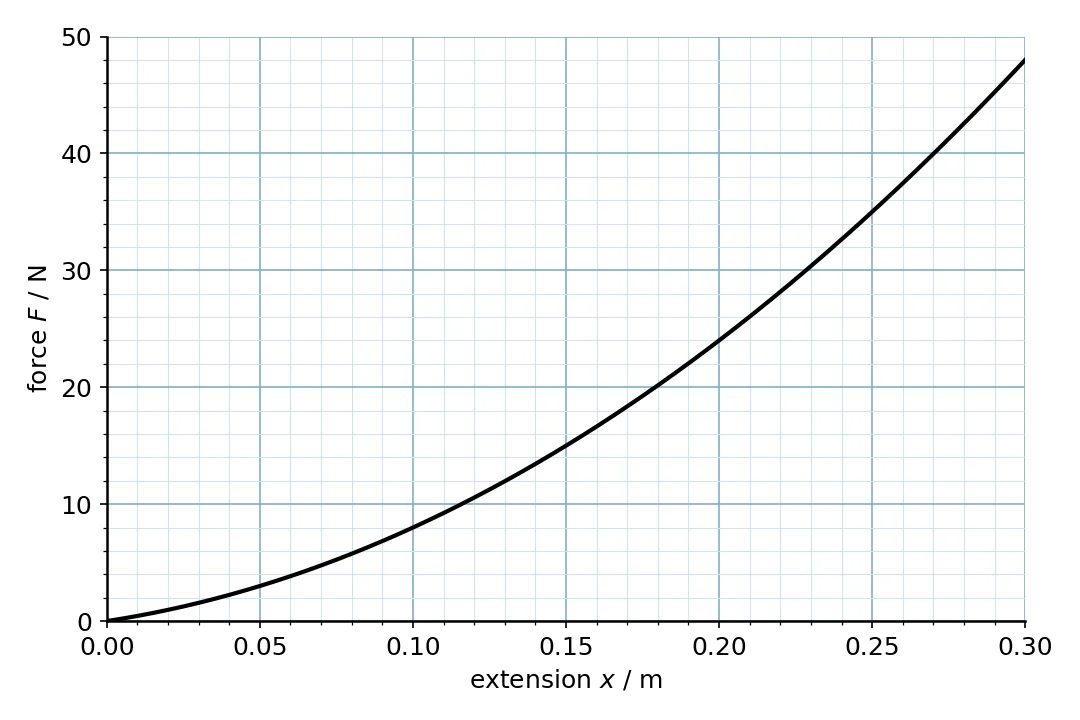
A student calculates the work done in stretching the cord to as . Explain why this overestimates the work done.
Estimate the work done in stretching the cord to .
75% of the work done in stretching the cord is transferred to the kinetic energy of the ball. Determine the launch speed of the ball.
Show that stretching the cord to only stores about one-sixth of the energy stored at .
revisionprep.com
Summary Answer
Not available for this question.
Model Answer
Not available for this question.
Marking Scheme
Not available for this question.
Examiner Insights
Not available for this question.
Conservation of energy and Sankey diagrams
The diagram shows a pendulum bob of mass on a light string of length , released from rest with the string at to the vertical. Take .
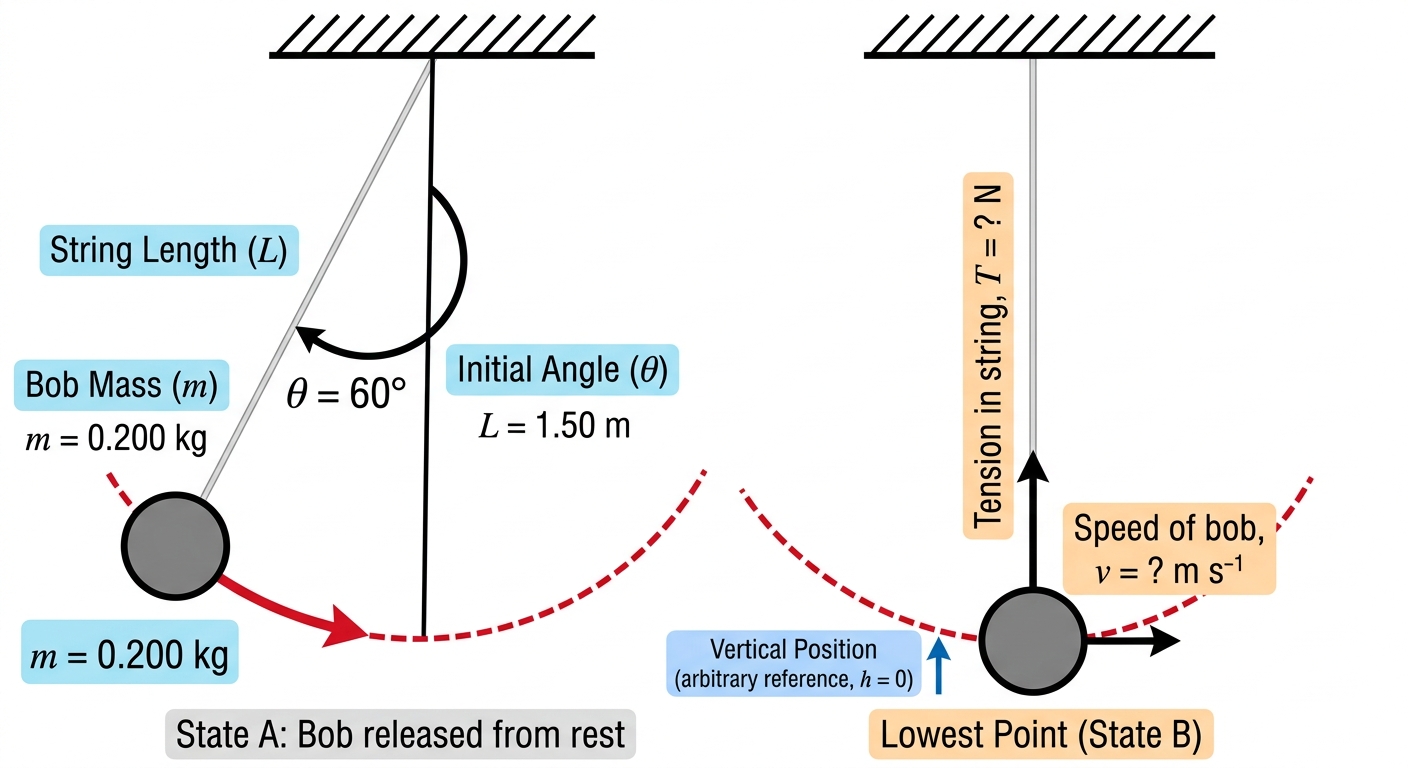
Determine the speed of the bob at the lowest point.
Determine the tension in the string at the lowest point.
The bob is given an extra push at the lowest point so that it moves in a complete vertical circle. Determine the minimum speed at the top of the circle for the string to stay taut.
Explain why the bob could pass over the top at a lower speed if the string were replaced by a light rigid rod.
Show that the minimum speed at the lowest point for the bob to complete the vertical circle is , where is the length of the string, and calculate its value.
Explain why the tension in the string at the lowest point is greater than the weight of the bob, and calculate the tension when the bob passes the lowest point at the speed found in (d).
revisionprep.com
Summary Answer
Not available for this question.
Model Answer
Not available for this question.
Marking Scheme
Not available for this question.
Examiner Insights
Not available for this question.
That's every free question here — 6 of 203.
+197 more questions, plus Mock Papers & Worksheets, are waiting in Premium.