Motion in Electromagnetic Fields · Paper 1 — Free Physics SL Practice Questions
Free questions
Open in full, with answers, mark scheme and examiner insights.
Motion of charged particles in uniform magnetic fields (F = qvB sin θ)
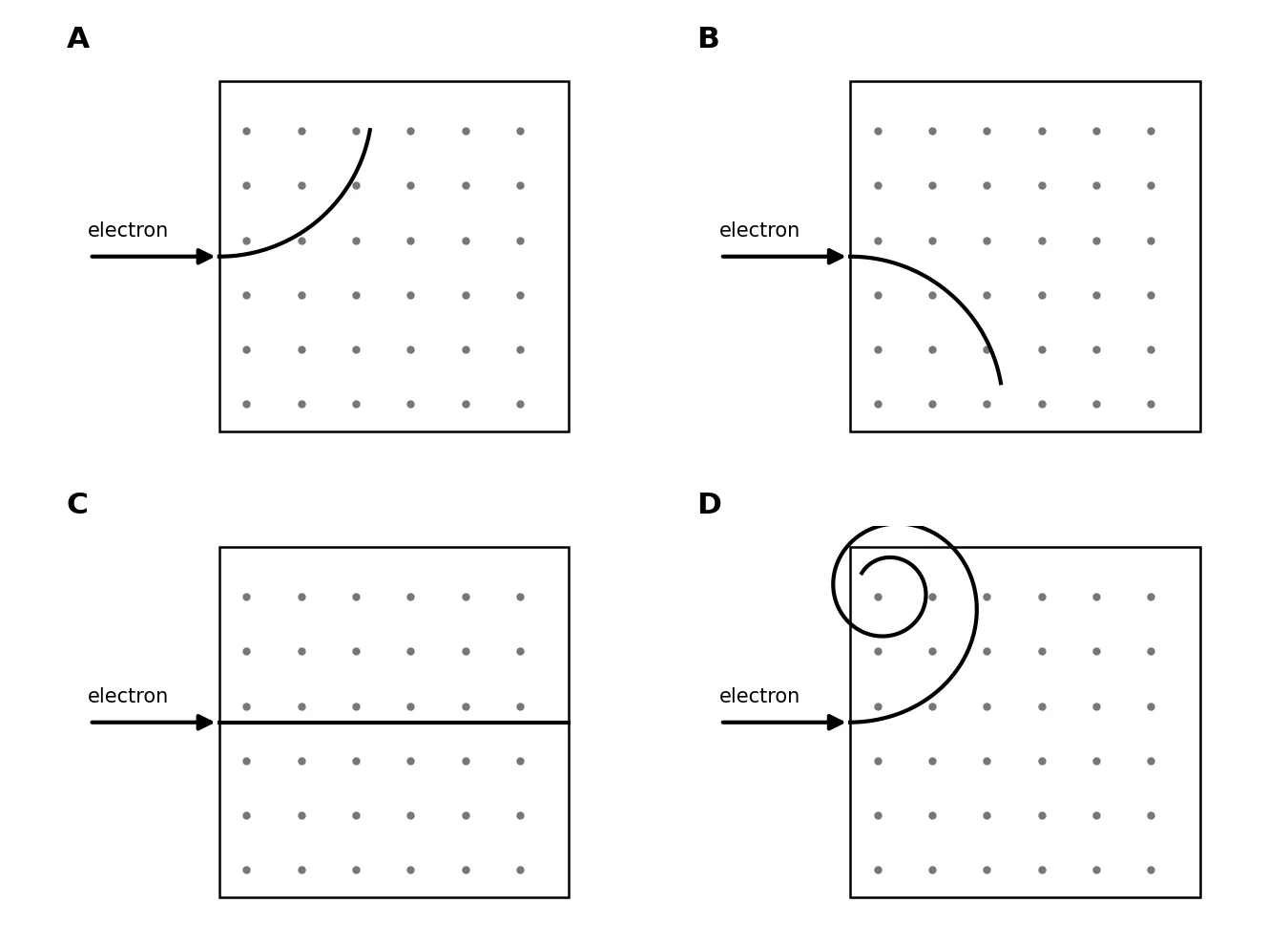
An electron moves to the right and enters a region of uniform magnetic field directed out of the page. Which shows the path of the electron in the field?
revisionprep.com
Summary Answer
Not available for this question.
Model Answer
Not available for this question.
Marking Scheme
Not available for this question.
Examiner Insights
Not available for this question.
Magnetic flux, flux linkage and Faraday's law (HL content — moving to HL only)
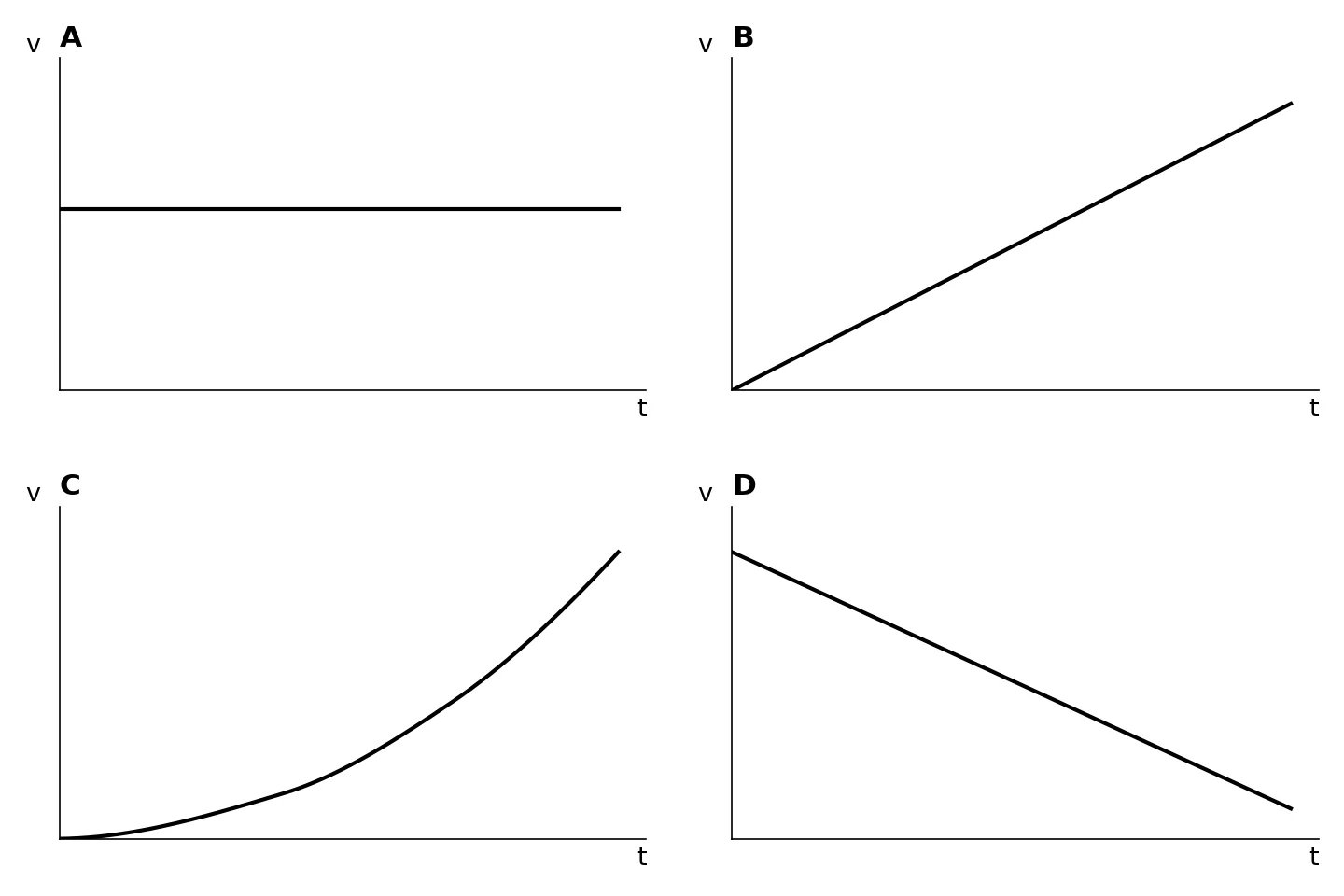
An electron is released from rest in a uniform electric field. Which graph shows how its speed varies with time ?
revisionprep.com
Summary Answer
Not available for this question.
Model Answer
Not available for this question.
Marking Scheme
Not available for this question.
Examiner Insights
Not available for this question.
Motion of charged particles in uniform electric fields
A small charged conducting sphere of mass hangs on an insulating thread between two vertical parallel plates apart. When a potential difference is applied across the plates the thread makes an angle with the vertical. The angle is measured to , which gives the error bars on shown in Figure 1.
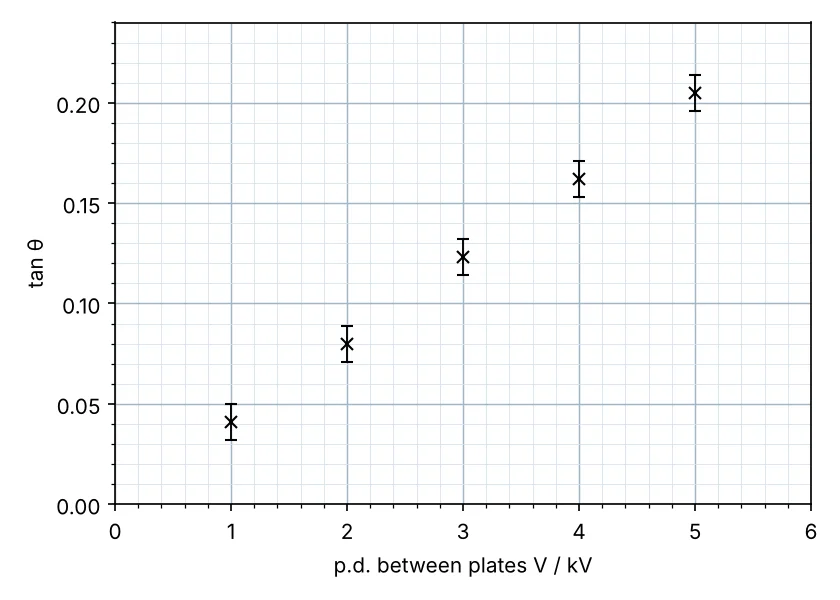
Explain why is expected to be proportional to .
Determine the gradient of the line of best fit in SI units.
Determine the charge on the sphere.
Suggest why the reading at has the largest percentage uncertainty, and why charge leaking from the sphere would make the gradient too small.
revisionprep.com
Summary Answer
Not available for this question.
Model Answer
Not available for this question.
Marking Scheme
Not available for this question.
Examiner Insights
Not available for this question.
Motion of charged particles in uniform magnetic fields (F = qvB sin θ)
Singly charged ions of known mass number are accelerated from rest through the same potential difference and enter a uniform magnetic field at right angles to it. Each ion travels a semicircle and strikes a detector a distance from the entry slit. Table 1 shows the results.
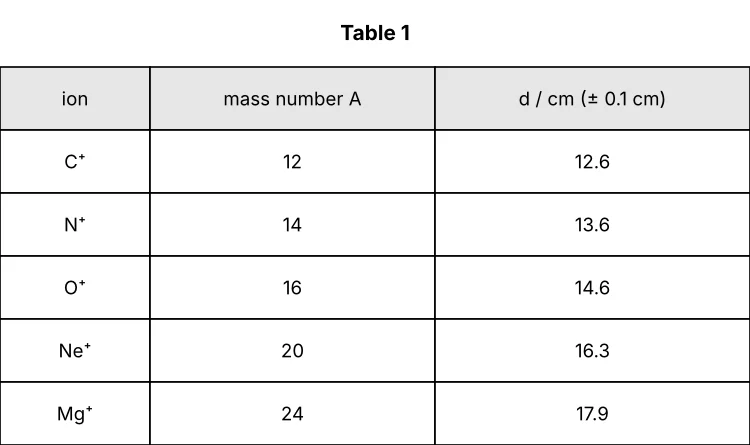
State why is expected to be proportional to .
An unknown singly charged ion strikes the detector at . Determine its mass number, using the data for the ion.
Calculate the percentage uncertainty in for the ion and hence the percentage uncertainty in the mass number found in (b) that comes from this reading.
revisionprep.com
Summary Answer
Not available for this question.
Model Answer
Not available for this question.
Marking Scheme
Not available for this question.
Examiner Insights
Not available for this question.
Motion of charged particles in uniform electric fields
Electrons are accelerated from rest through a potential difference and then travel a distance of at constant speed through a field-free tube. The time of flight along the tube is measured electronically, with an uncertainty of . Figure 1 shows a graph of against .
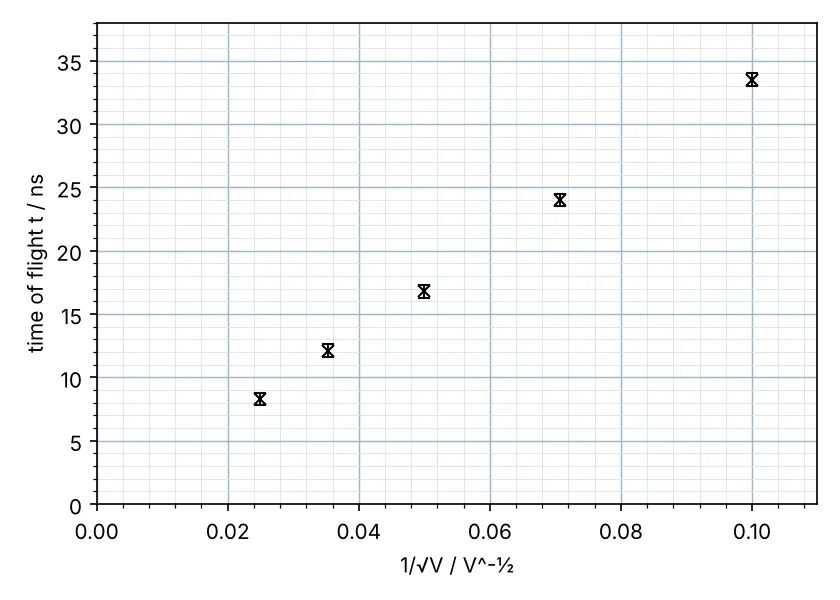
Explain why the graph is expected to be a straight line through the origin.
Determine the gradient of the line of best fit in SI units.
Determine for the electron.
The timing circuit adds a constant delay of to every reading. Explain the effect on the graph and on your value of .
Suggest which reading is affected most, in percentage terms, by this delay.
revisionprep.com
Summary Answer
Not available for this question.
Model Answer
Not available for this question.
Marking Scheme
Not available for this question.
Examiner Insights
Not available for this question.
Motion of charged particles in uniform magnetic fields (F = qvB sin θ)
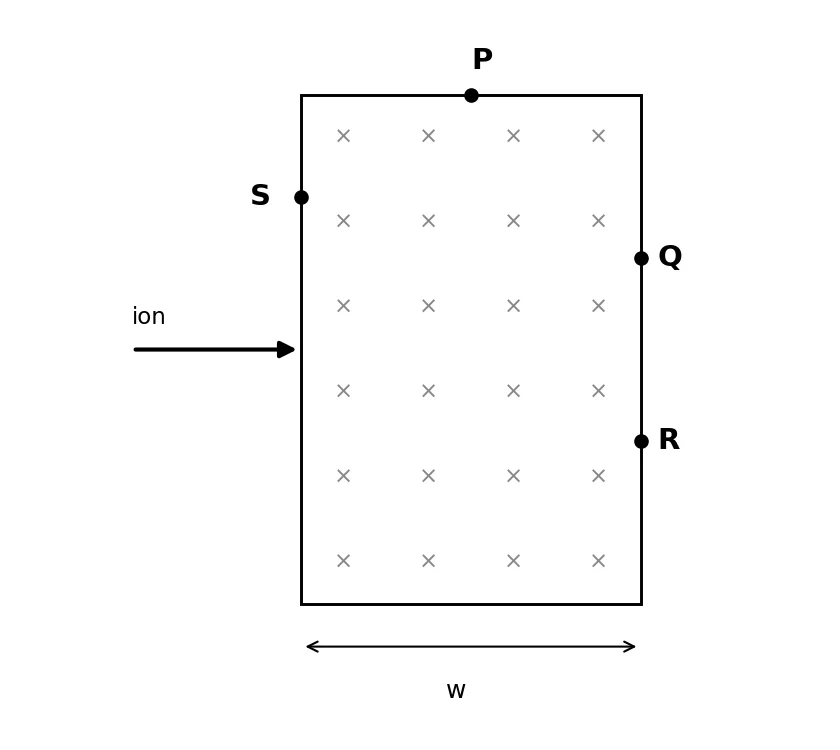
A positive ion enters a square region of uniform magnetic field directed into the page, moving at right angles to the edge of the region. The radius of the ion's path in the field is twice the width of the region. At which point does the ion leave the field?
revisionprep.com
Summary Answer
Not available for this question.
Model Answer
Not available for this question.
Marking Scheme
Not available for this question.
Examiner Insights
Not available for this question.
That's every free question here — 6 of 147.
+141 more questions, plus Mock Papers & Worksheets, are waiting in Premium.