You're viewing 1 free preview question for Physics SL — subscribe to unlock 150 more, plus the Full Question Bank, Mock Papers & Worksheets.Upgrade
Current and Circuits · Paper 2 — Free Physics SL Practice Questions
1ChallengeSAQ-LElectric charge and current7 marksPaper 2~11 min

Data
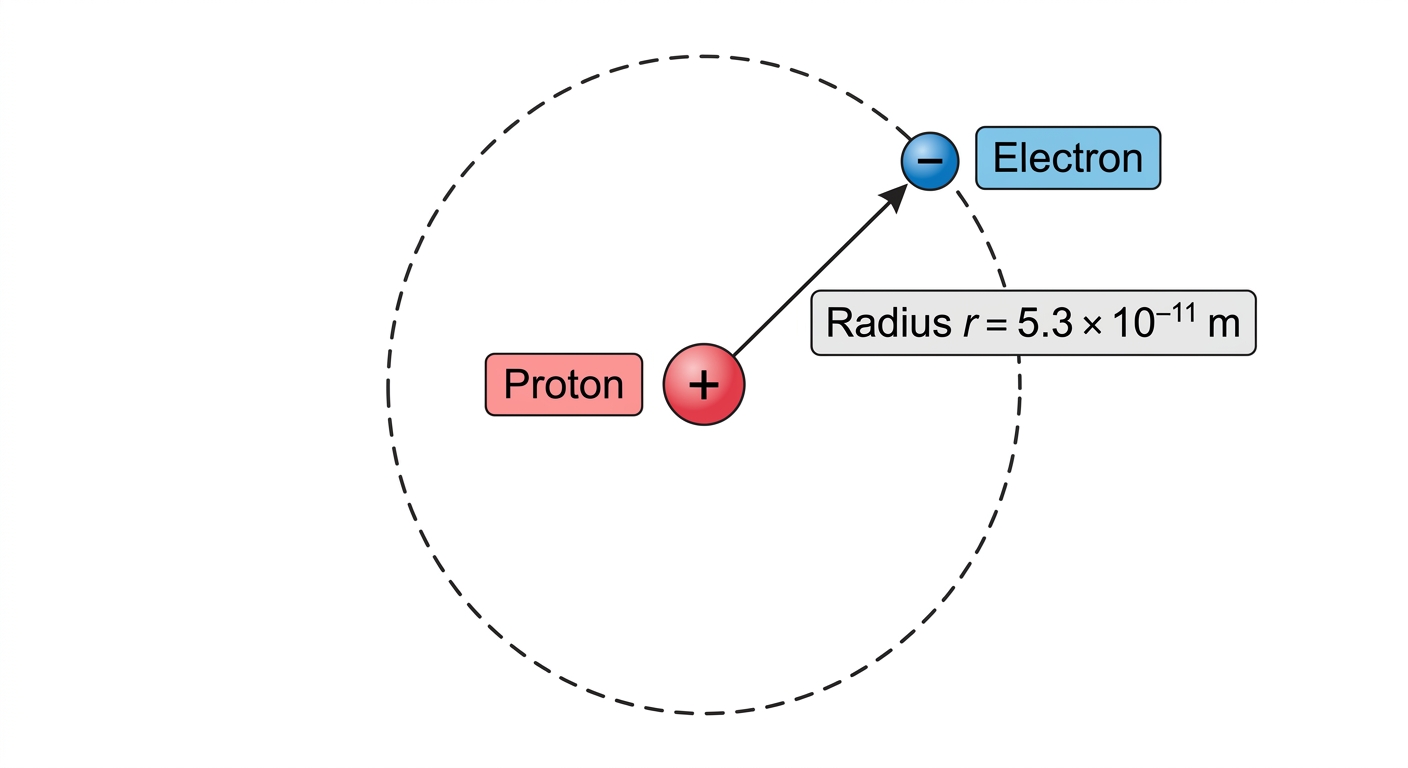
A simple model of a hydrogen atom treats the electron as orbiting the proton in a circular path at a radius of .
(a)
Determine the electrostatic force between the electron and the proton. [2 marks]
(b)
Determine the orbital speed of the electron, assuming the electrostatic force provides the centripetal force. [2 marks]
(c)
Determine the period of the electron's orbit. [1 mark]
(d)
The speed of light is . Calculate the ratio for the orbiting electron and hence evaluate whether a classical (non-relativistic) treatment is valid for this model. [2 marks]

Solutions
That's every free question here — 1 of 151.
+150 more questions, plus Mock Papers & Worksheets, are waiting in Premium.