Thermal Energy Transfers · Paper 2 — Free Physics SL Practice Questions
Free questions
Open in full, with answers, mark scheme and examiner insights.
Molecular model of matter, density, temperature and internal energy
A metal sphere of mass and specific heat capacity is heated to and placed in a stream of air at . The graph shows its temperature as it cools.
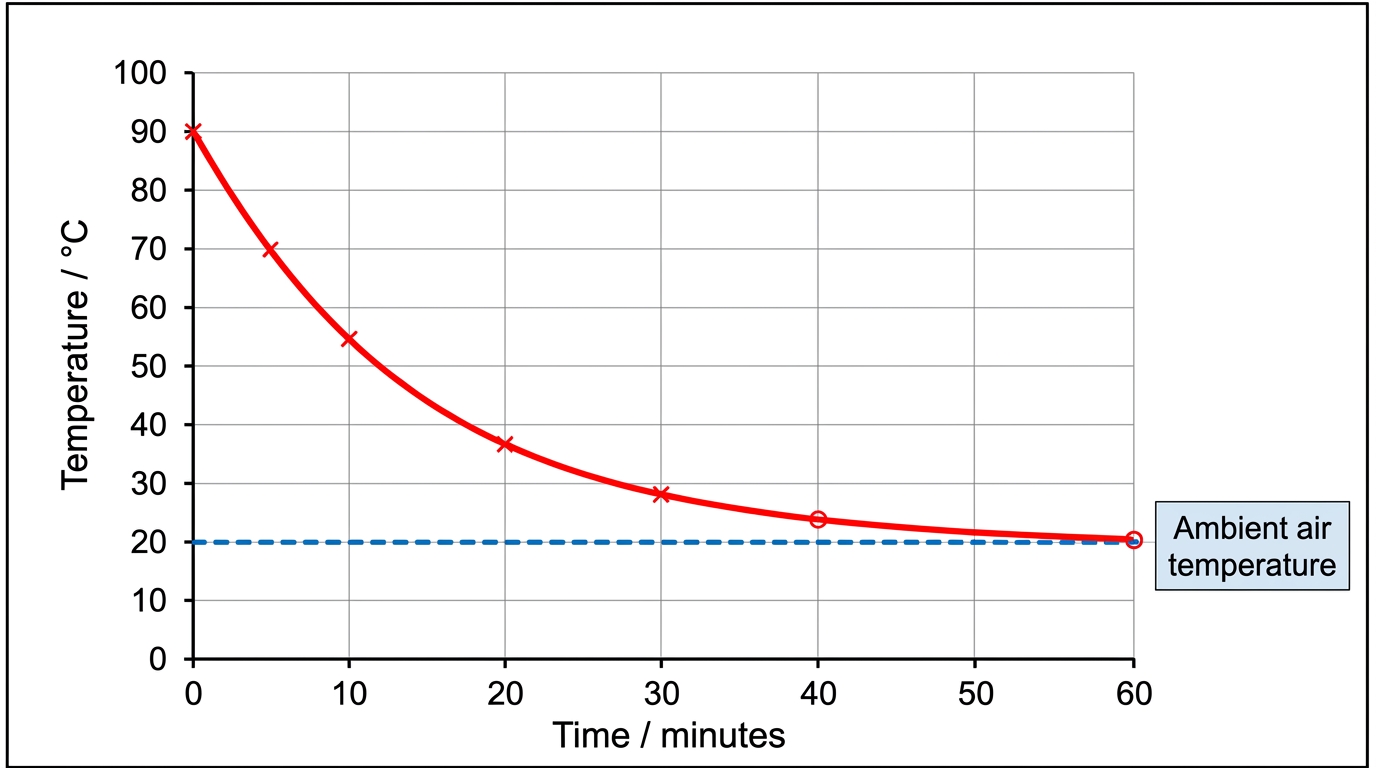
State how the rate of energy loss from the sphere depends on the temperature difference between the sphere and the air.
Calculate the total energy lost by the sphere as it cools from to .
Explain, using the graph, why the rate of energy loss at minutes is greater than at minutes.
revisionprep.com
Summary Answer
Not available for this question.
Model Answer
Not available for this question.
Marking Scheme
Not available for this question.
Examiner Insights
Not available for this question.
Thermal radiation: black bodies, Stefan–Boltzmann law, Wien's law, luminosity and apparent brightness
A room is heated by the radiator shown, which sits near the floor. The radiator has a surface area of and emits thermal radiation at the rate per unit area given in the diagram.
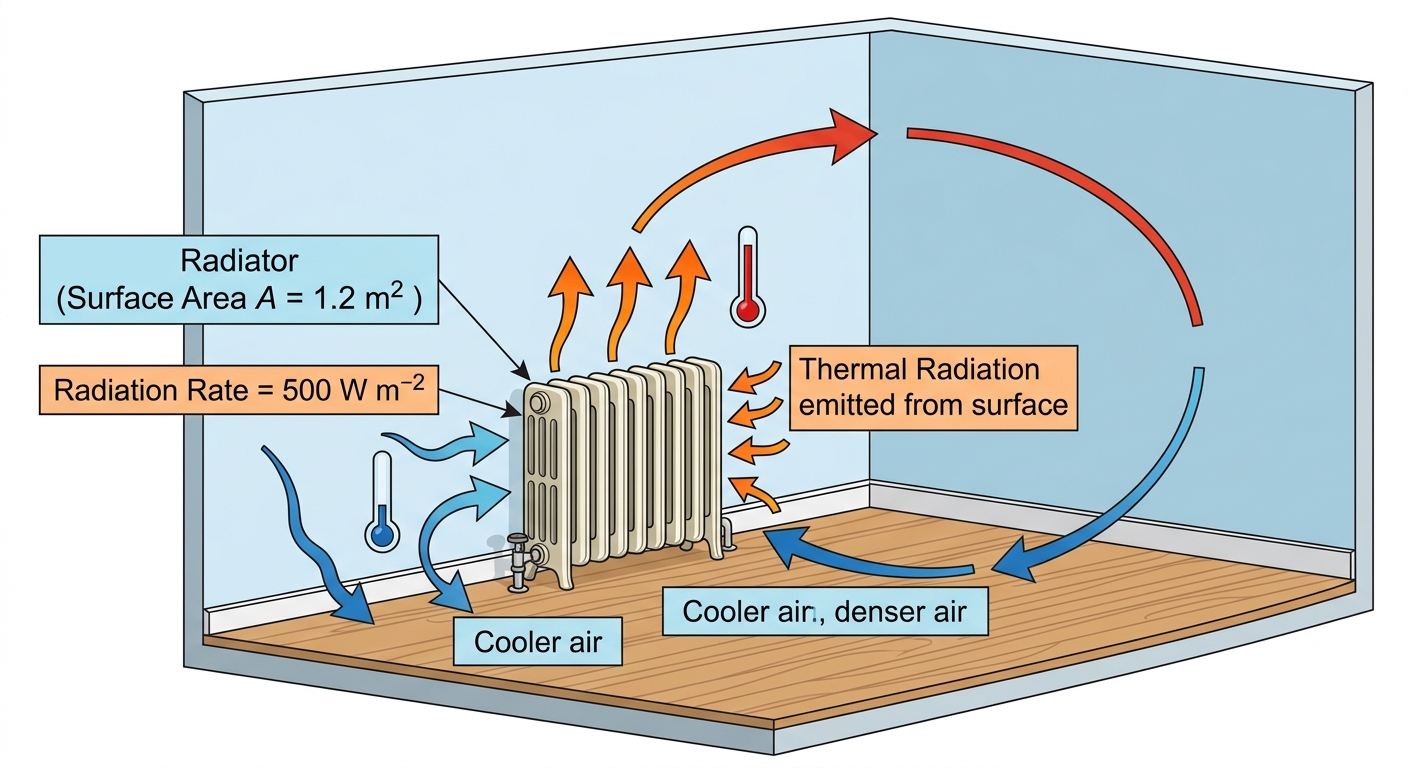
Describe how convection currents transfer thermal energy from the radiator to the rest of the room.
Calculate the total power radiated by the radiator.
Treating the radiator as a black body, determine its surface temperature.
revisionprep.com
Summary Answer
Not available for this question.
Model Answer
Not available for this question.
Marking Scheme
Not available for this question.
Examiner Insights
Not available for this question.
Molecular model of matter, density, temperature and internal energy
Two liquids, X and Y, of equal mass are heated by identical heaters for the same duration. The graph shows the temperature change of each liquid over time.
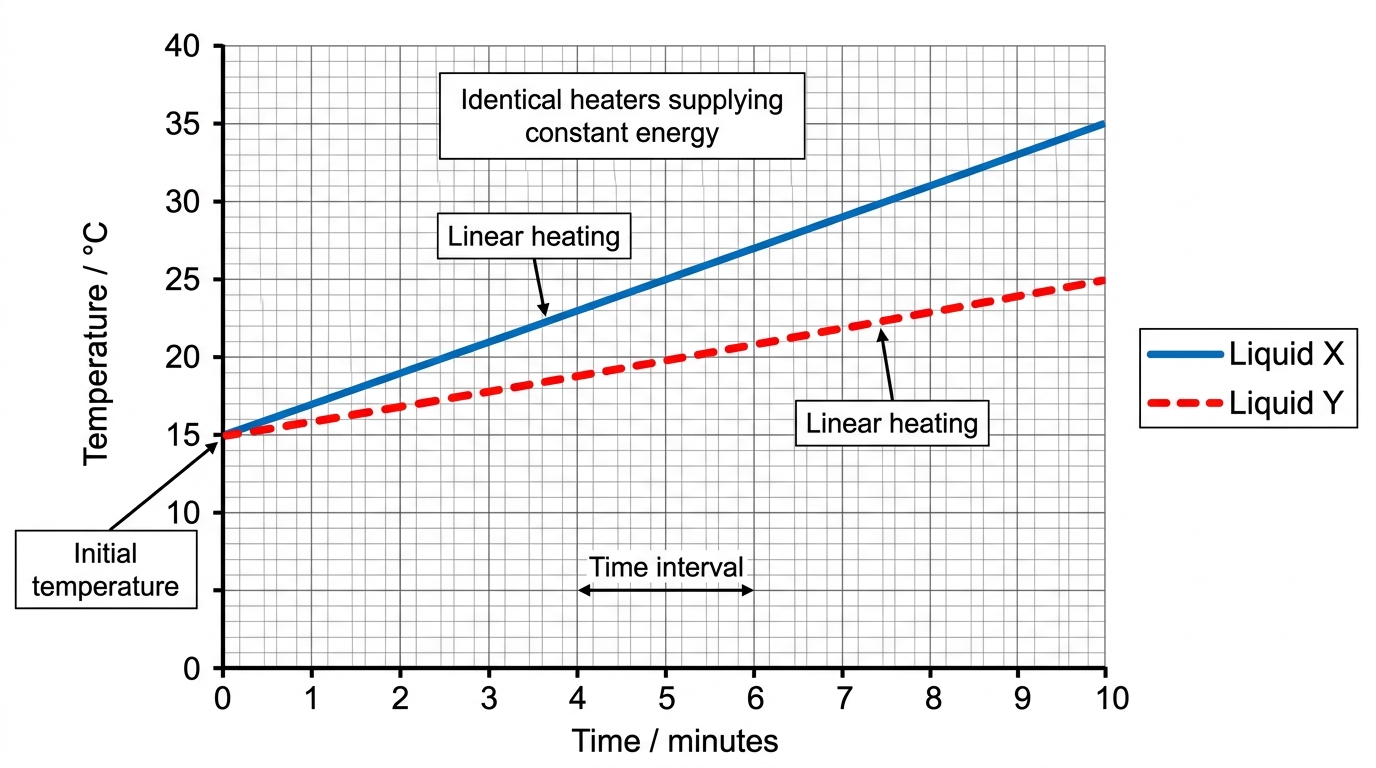
Deduce which liquid has the higher specific heat capacity. Use the graph and the equation to justify your answer.
The temperature of liquid X rises by when of energy is supplied to a sample of liquid X. The specific heat capacity of liquid X is . Calculate the mass of the sample.
revisionprep.com
Summary Answer
Not available for this question.
Model Answer
Not available for this question.
Marking Scheme
Not available for this question.
Examiner Insights
Not available for this question.
Specific heat capacity and specific latent heat
A 0.250 kg sample of an unnamed substance is heated at a constant power of 200 W. The graph shows temperature against time as the sample is heated from a solid at 0 °C to a liquid at 50 °C.
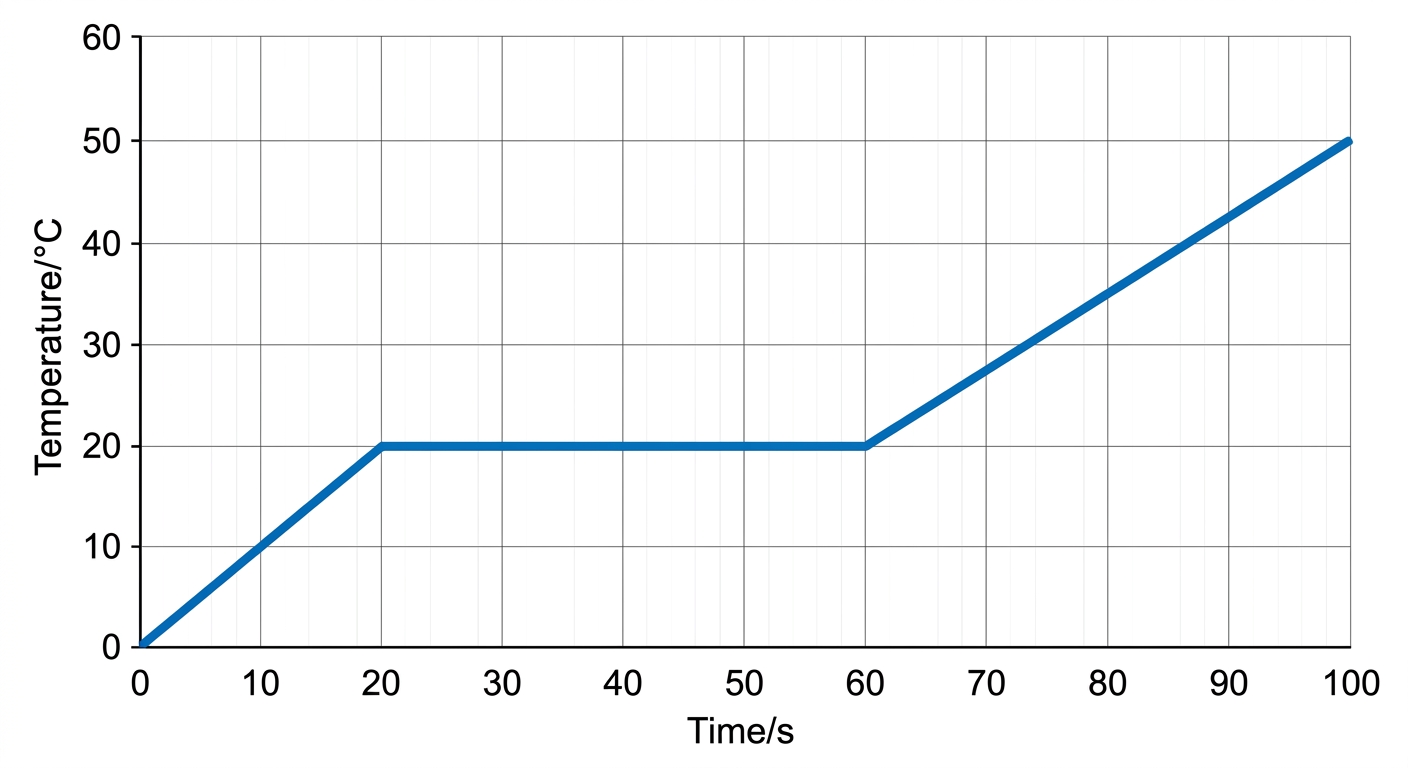
State what the horizontal section of the graph represents, and explain why the temperature does not change during this section.
Calculate the specific latent heat of fusion of the substance.
The specific heat capacity of the substance in its liquid phase can be determined from the third segment of the graph. Deduce the specific heat capacity of the liquid, and hence comment on whether the liquid phase or the solid phase has the greater specific heat capacity.
revisionprep.com
Summary Answer
Not available for this question.
Model Answer
Not available for this question.
Marking Scheme
Not available for this question.
Examiner Insights
Not available for this question.
Specific heat capacity and specific latent heat
A student measures the specific latent heat of vaporisation of ethanol using the heater shown, which runs at and . of ethanol is heated from and reaches its boiling point of after . After a further of heating the student records that all the ethanol has vaporised.
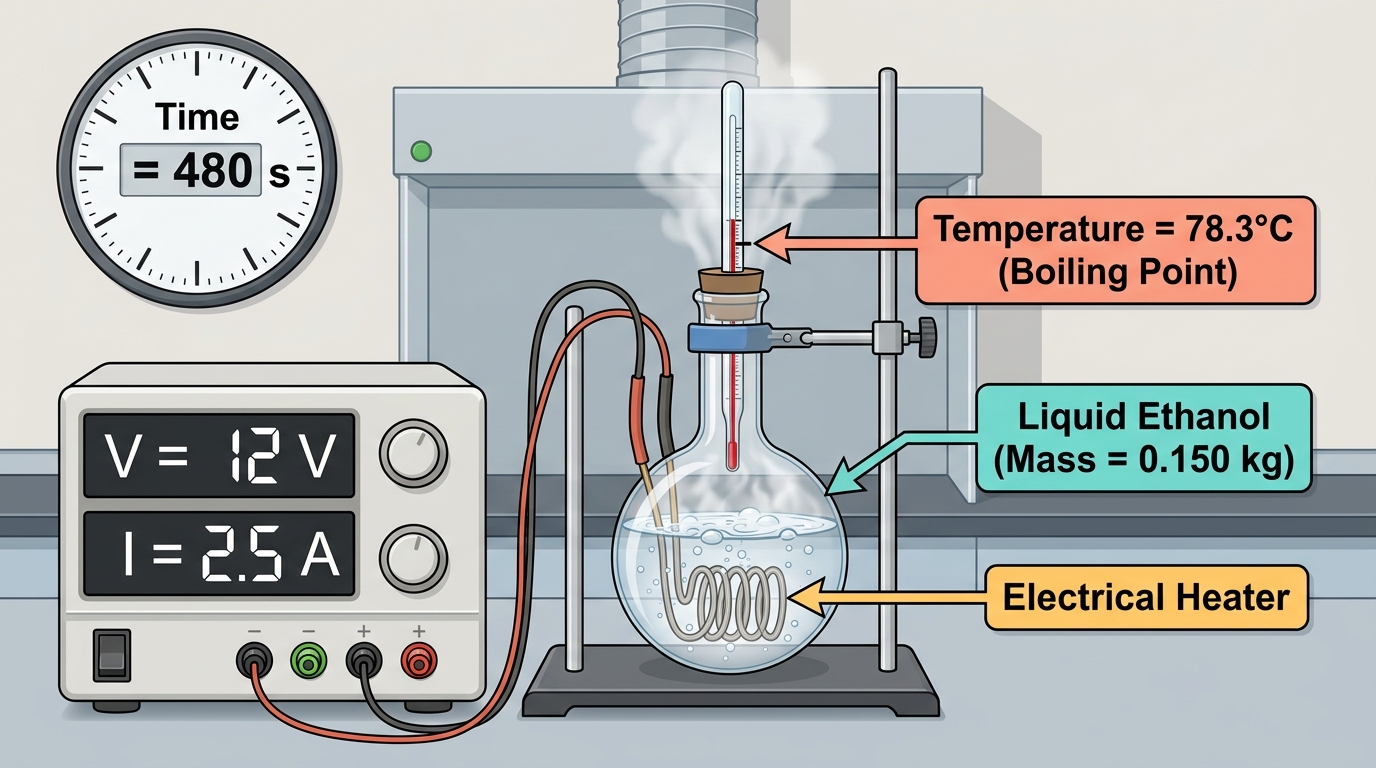
Calculate the specific heat capacity of liquid ethanol.
Calculate the specific latent heat of vaporisation found by the student.
The accepted value is . Explain why energy lost to the surroundings cannot account for the difference.
Suggest what the student recorded wrongly, and estimate the mass of ethanol that actually vaporised in the .
revisionprep.com
Summary Answer
Not available for this question.
Model Answer
Not available for this question.
Marking Scheme
Not available for this question.
Examiner Insights
Not available for this question.
Conduction (thermal conductivity) and convection
A double-glazed window has two glass panes, each thick, separated by a air gap. The thermal conductivity of glass is and of air is . The room is at and outside is . Only conduction is considered, using , and .
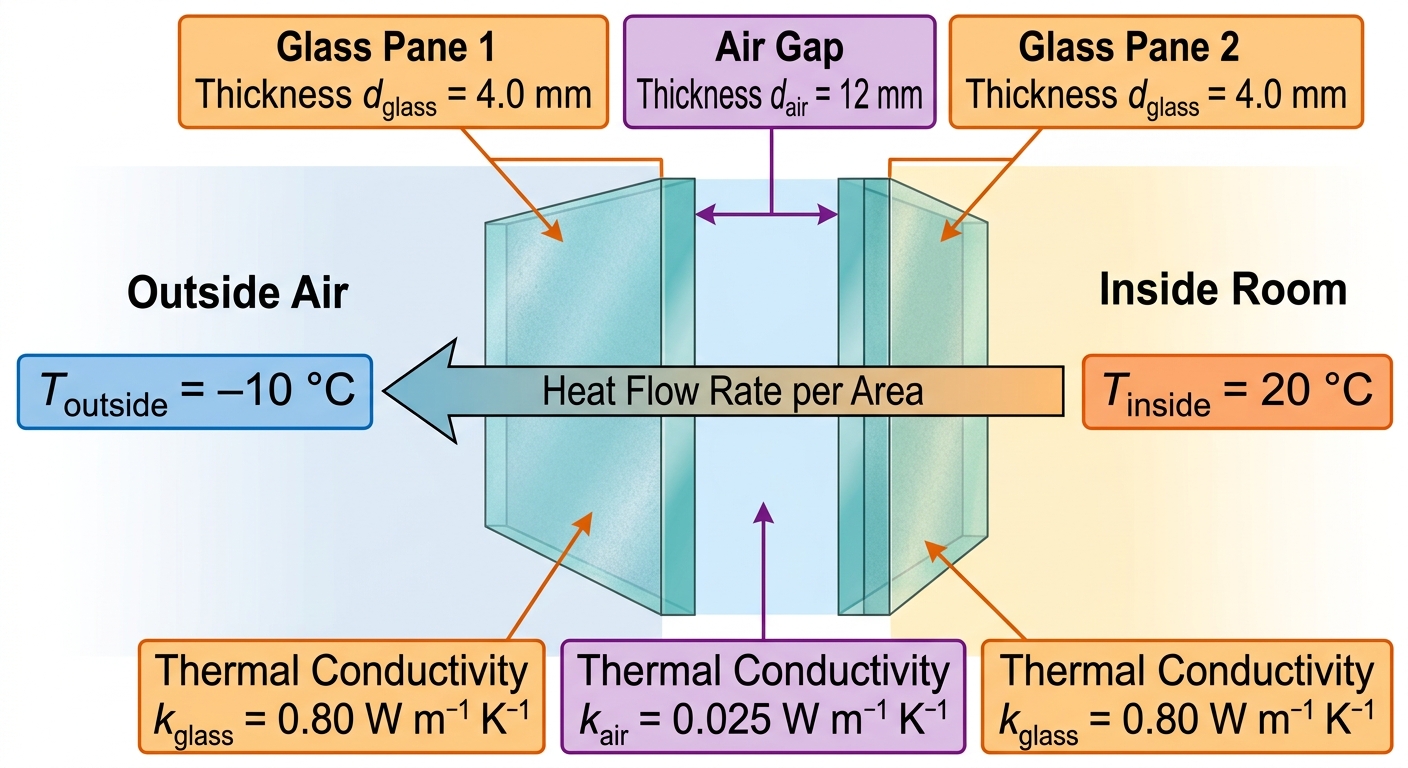
Determine the rate of energy loss per square metre through the window.
A third pane and a second identical air gap are added. Calculate the percentage reduction in energy loss per square metre.
Convection and radiation across the gap were ignored. Deduce whether the value in (a) is an overestimate or an underestimate of the real energy loss.
revisionprep.com
Summary Answer
Not available for this question.
Model Answer
Not available for this question.
Marking Scheme
Not available for this question.
Examiner Insights
Not available for this question.
That's every free question here — 6 of 293.
+287 more questions, plus Mock Papers & Worksheets, are waiting in Premium.