You're viewing free preview questions — 4 questions previewing here — subscribe to unlock 33 more, plus the Full Question Bank, Mock Papers & Worksheets.Upgrade
Solving Inequalities and Representing on Number Lines — Free MYP1 Mathematics Practice Questions

1QuestionInterpreting Inequalities in Real-Life ScenariosConcept Practice
2 marks~3 minCriterion D
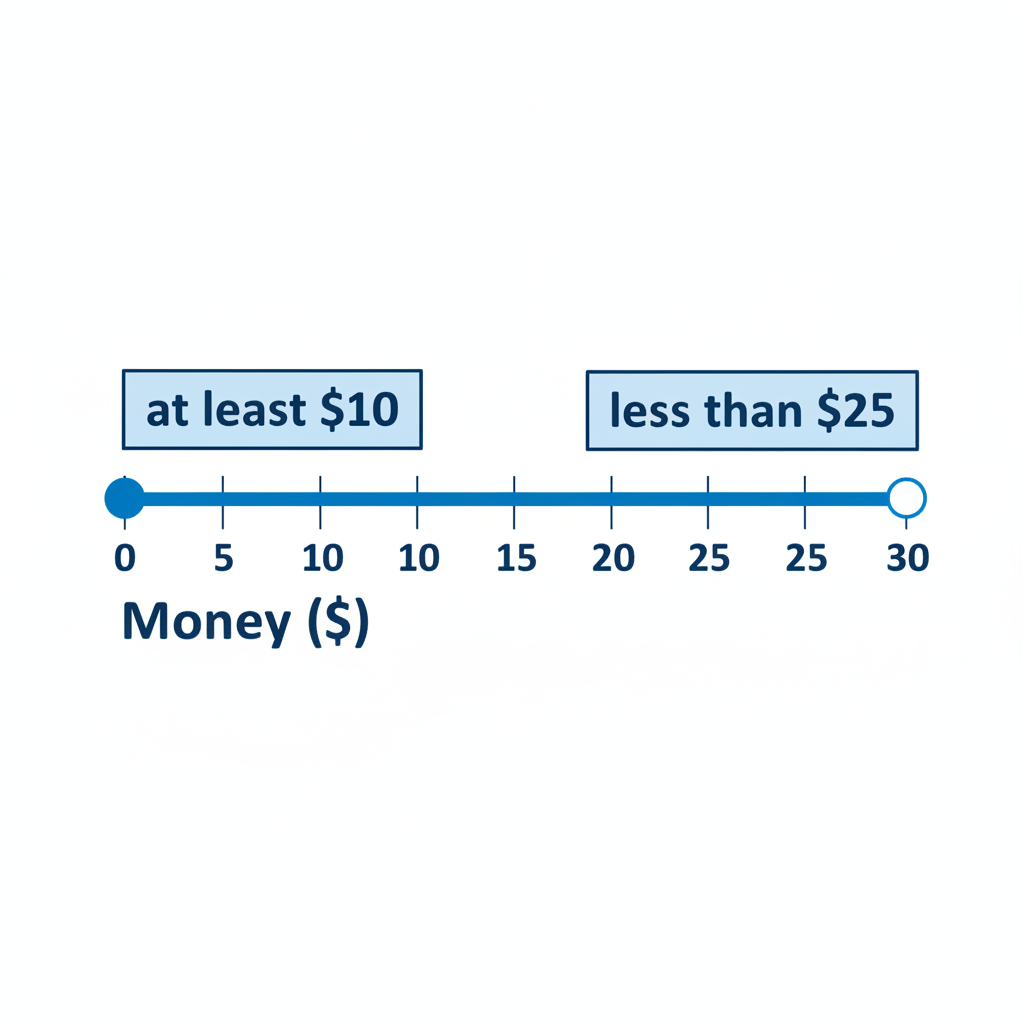
Mia has between 10 dollars and 25 dollars to spend each week on snacks and a movie ticket. She writes the inequality to model her spending.
a
Give an example of one real-life situation that can be shown using an inequality. [1]
b
Describe one reason why a simple inequality may not perfectly match real spending. [1]

Solutions
2QuestionSolving One-Step InequalitiesAssessment Practice
6 marks~9 minCriterion B
A conjecture states: "Adding the same number to both sides of an inequality always keeps the inequality sign the same."
a
Identify whether each result is True or False. [2]
, add :
, add :
, add :
, add :
, add :
, add :
b
State the general rule about what happens to an inequality when you add the same number to both sides. Use the word "preserves" in your answer. [2]
c
Describe how a number line shows why this rule works. [2]
Solutions
3QuestionUnderstanding Inequality SymbolsConcept Practice
2 marks~3 minCriterion C
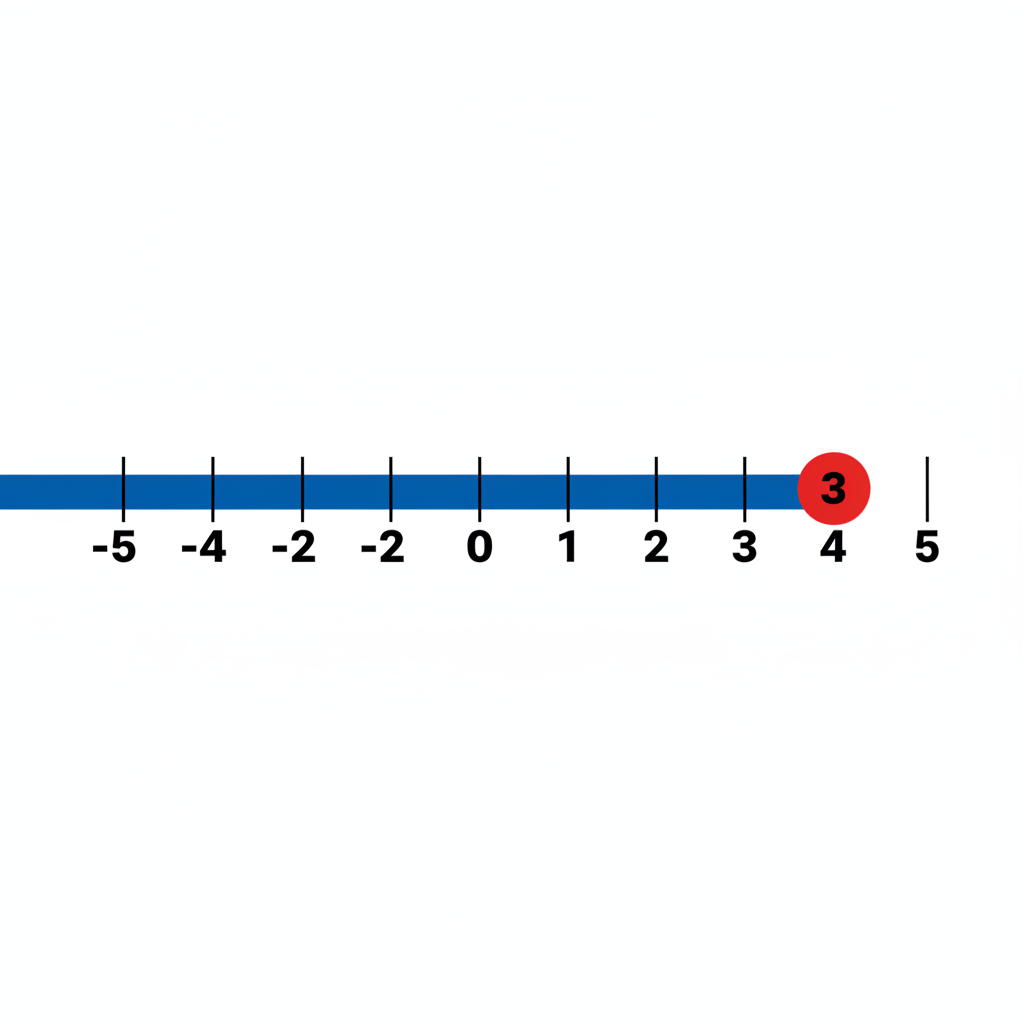
A number line is shown with a closed circle at and shading extending to the left.
a
Identify what the closed circle at tells you about the number . [1]
b
State the inequality shown by the number line. [1]
Solutions
4QuestionGraphing Inequalities on a Number LineConcept Practice
2 marks~3 minCriterion A
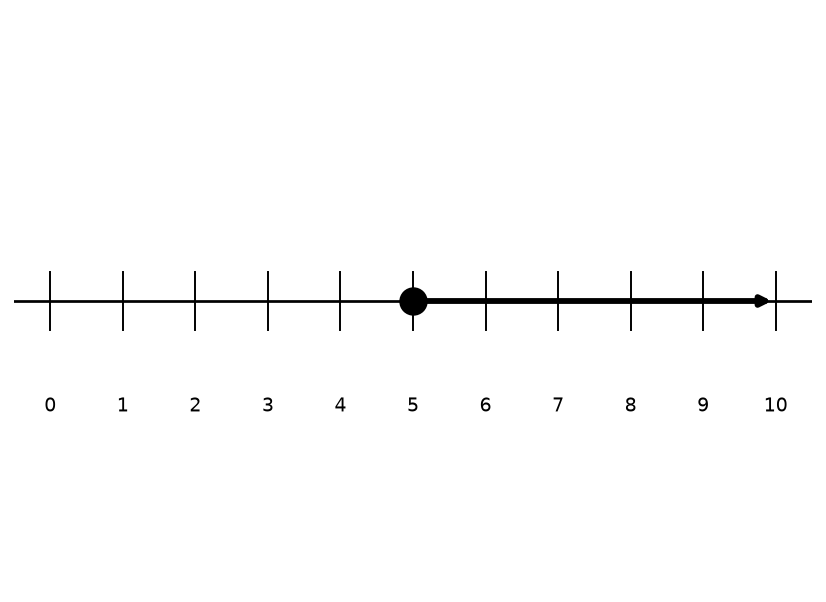
A school bus picks up students who live at least 5 km from school. Let be the distance, in kilometres, a student lives from school.
a
Identify what the inequality means for a student wanting to use the bus. [1]
b
Describe why the value 5 km matters in deciding who can use the bus. [1]
Solutions
That's every free question here — 4 of 37.
+33 more questions, plus Mock Papers & Worksheets, are waiting in Premium.