You're viewing free preview questions — 4 questions previewing here — subscribe to unlock 68 more, plus the Full Question Bank, Mock Papers & Worksheets.Upgrade
Operations with Decimals — Free MYP1 Mathematics Practice Questions

1QuestionAdding and Subtracting DecimalsConcept Practice
2 marks~3 minCriterion A
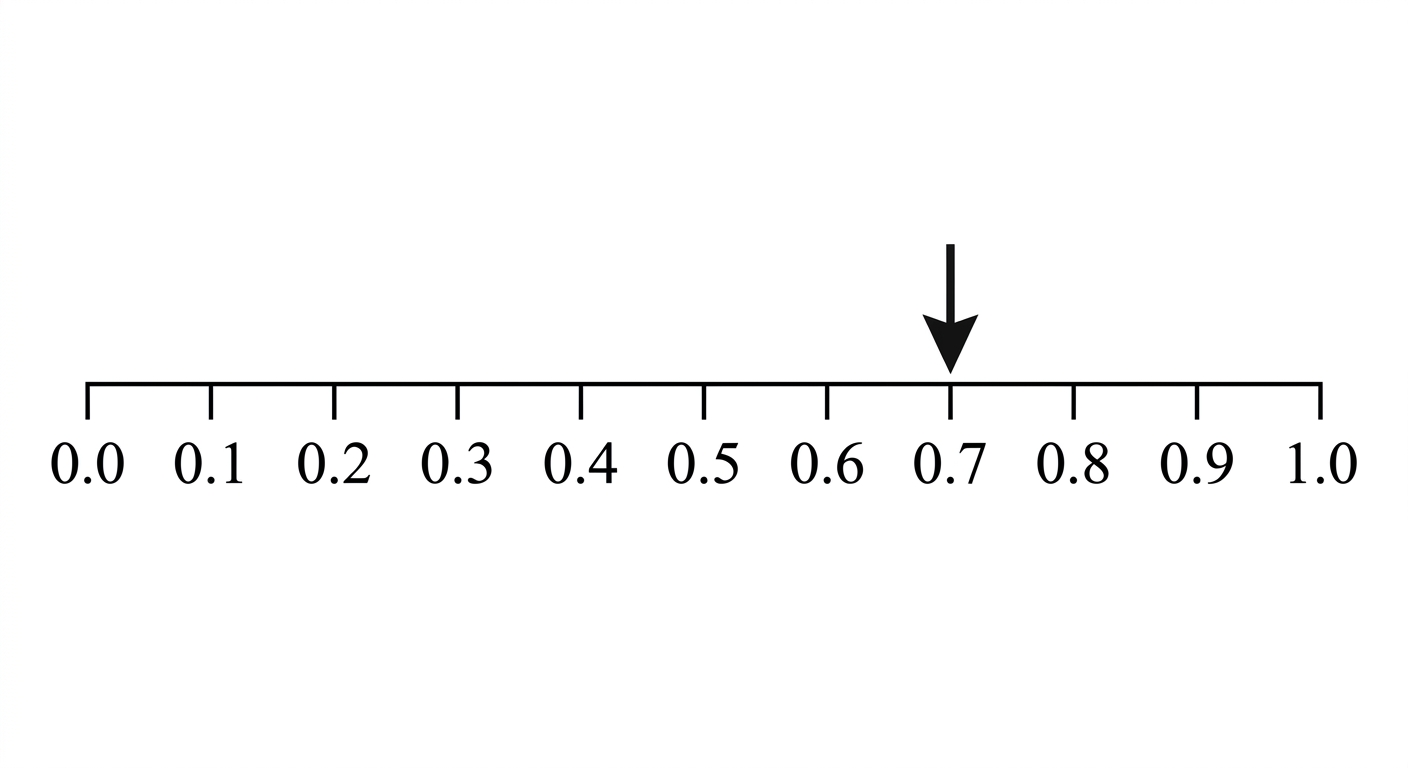
The number line below shows the numbers from to , split into ten equal parts.
A point is marked on the line at the arrow.
A point is marked on the line at the arrow.
a
Identify how much each small step is worth on this number line. [1]
b
State the decimal value shown by the arrow. [1]

Solutions
2QuestionAdding and Subtracting DecimalsAssessment Practice
4 marks~6 minCriterion D
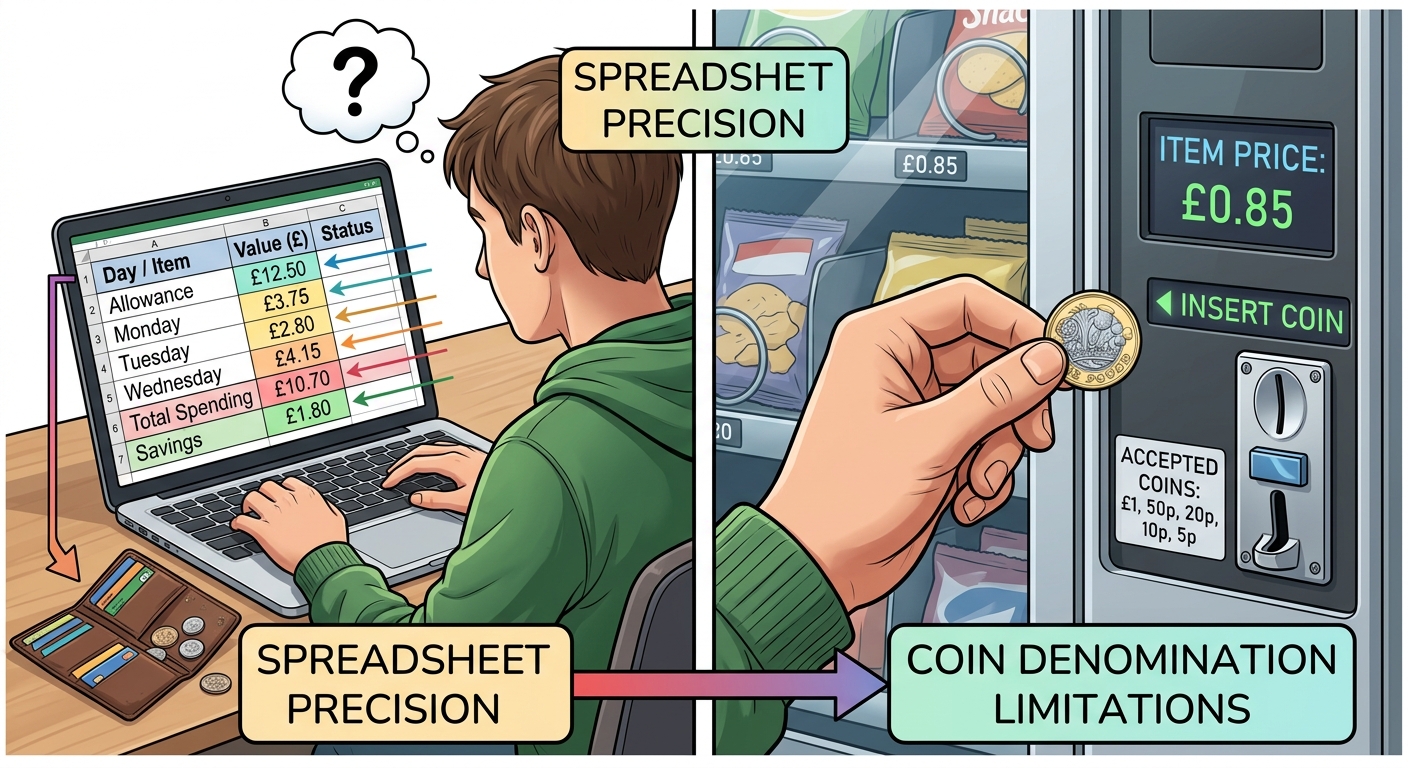
Mia has £12.50 pocket money. She spends £3.75 on Monday, £2.80 on Tuesday, and £4.15 on Wednesday.
a
Calculate how much Mia spends in total over the three days. [1]
b
Mia thinks she has £1.80 left. State whether she is correct. [1]
c
Mia pays for a £0.85 snack with a £1 coin. She gets 10p change instead of 15p because the machine has no 5p coins. Describe how this means the amount of money Mia actually has could be different from what her spending record shows. [2]
Solutions
3QuestionConverting Between Fractions and DecimalsAssessment Practice
8 marks~12 minCriterion C
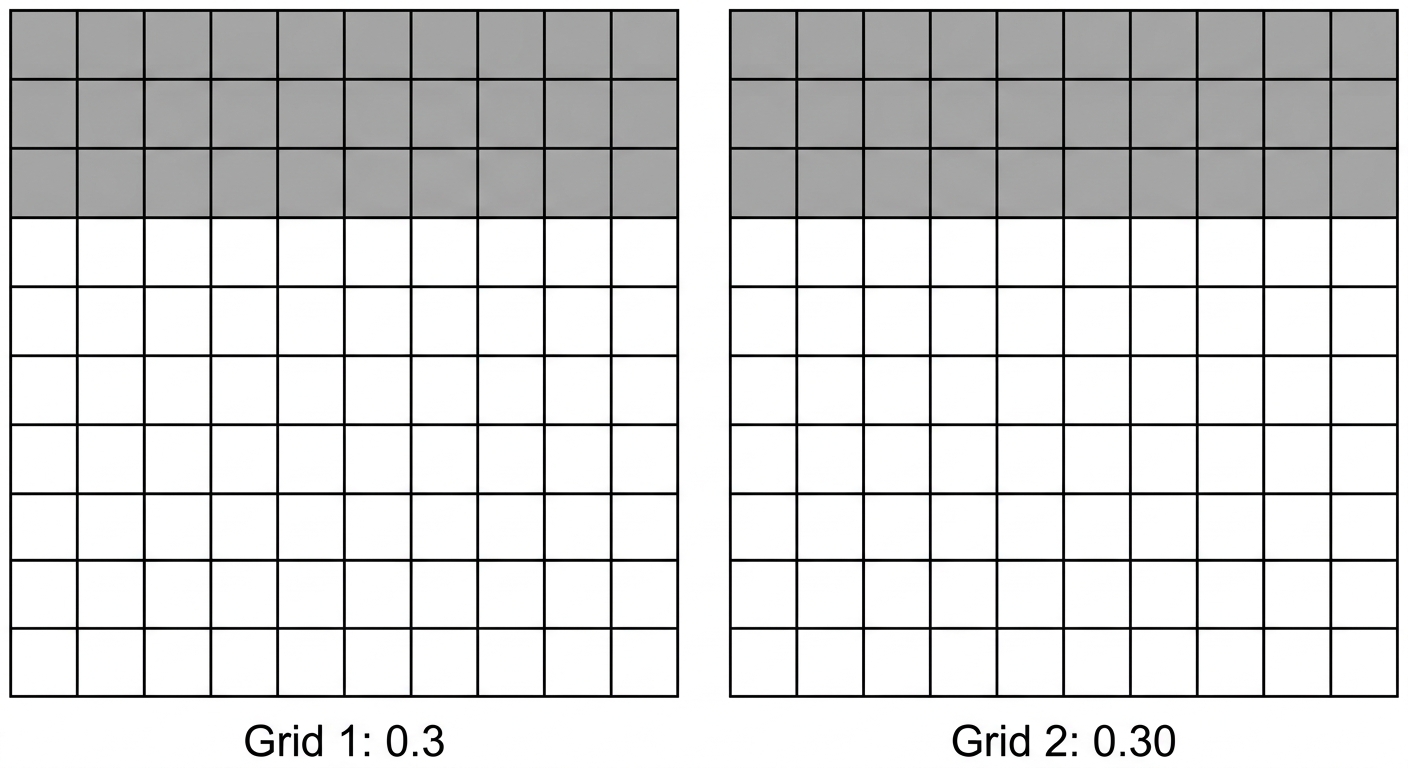
A student says: "0.3 equals , and 0.30 equals . Because is bigger than , the numbers 0.3 and 0.30 are different."
a
Shade a 10 × 10 grid to show 0.3. State how many squares you shaded. [1]
b
Shade a second 10 × 10 grid to show 0.30. Describe what you notice about the two grids. [3]
c
Describe whether the student's claim is correct or incorrect. Use the word equal or not equal and give one reason using the grids or place value. [4]
Solutions
4QuestionAdding and Subtracting DecimalsAssessment Practice
8 marks~12 minCriterion B
Look at these four additions:
a
Calculate each sum. [2]
b
Describe what you notice about all four answers. [2]
c
Describe what the decimal parts of each pair of numbers have in common. Use your answer to describe when two decimal numbers will add up to a whole number. [4]
Solutions
That's every free question here — 4 of 72.
+68 more questions, plus Mock Papers & Worksheets, are waiting in Premium.