You're viewing free preview questions — 4 questions previewing here — subscribe to unlock 49 more, plus the Full Question Bank, Mock Papers & Worksheets.Upgrade
Pattern Recognition in Real Life — Free MYP1 Mathematics Practice Questions

1QuestionAnalyzing and Explaining Real-World PatternsConcept Practice
2 marks~3 minCriterion A
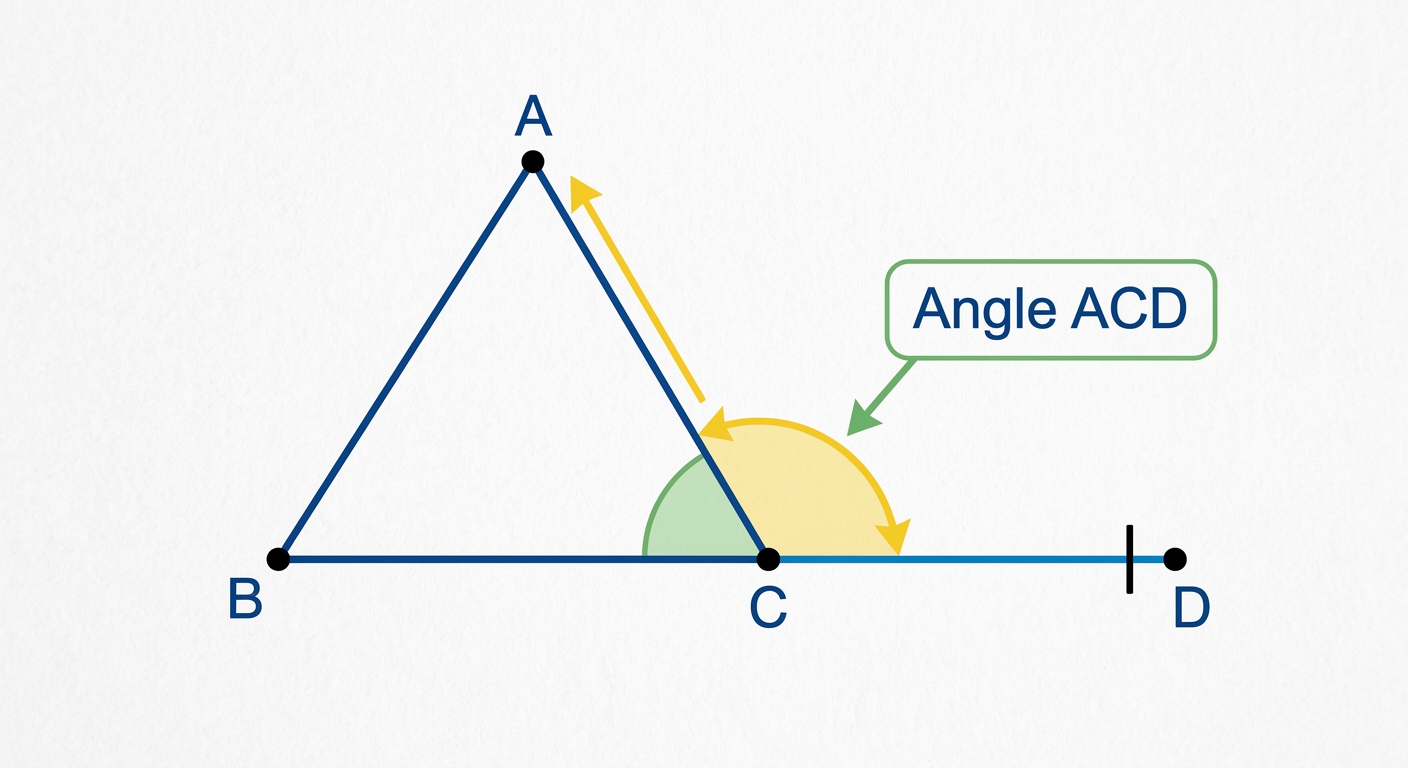
The diagram shows triangle with side extended to point .
a
Name angle . [1]
b
Describe where angle is in relation to the triangle. [1]

Solutions
2QuestionCultural Patterns in Art and DesignAssessment Practice
6 marks~9 minCriterion C
An Islamic tile pattern has a row of repeated shapes. The table shows how far each shape is from the centre of the pattern.
| Shape number | 1 | 2 | 3 | 4 |
|---|---|---|---|---|
| Distance from centre (cm) | 3 | 5 | 7 | 9 |
a
Identify the number that the distance goes up by each time. [1]
b
Describe how you can use the pattern in the table to find the distance of the 5th shape from the centre. [2]
c
The artist says: "Shape 10 is exactly 20 cm from the centre." State whether you agree or disagree, and give the correct distance. [3]
Solutions
3QuestionPatterns in Nature and ArchitectureConcept Practice
2 marks~3 minCriterion D
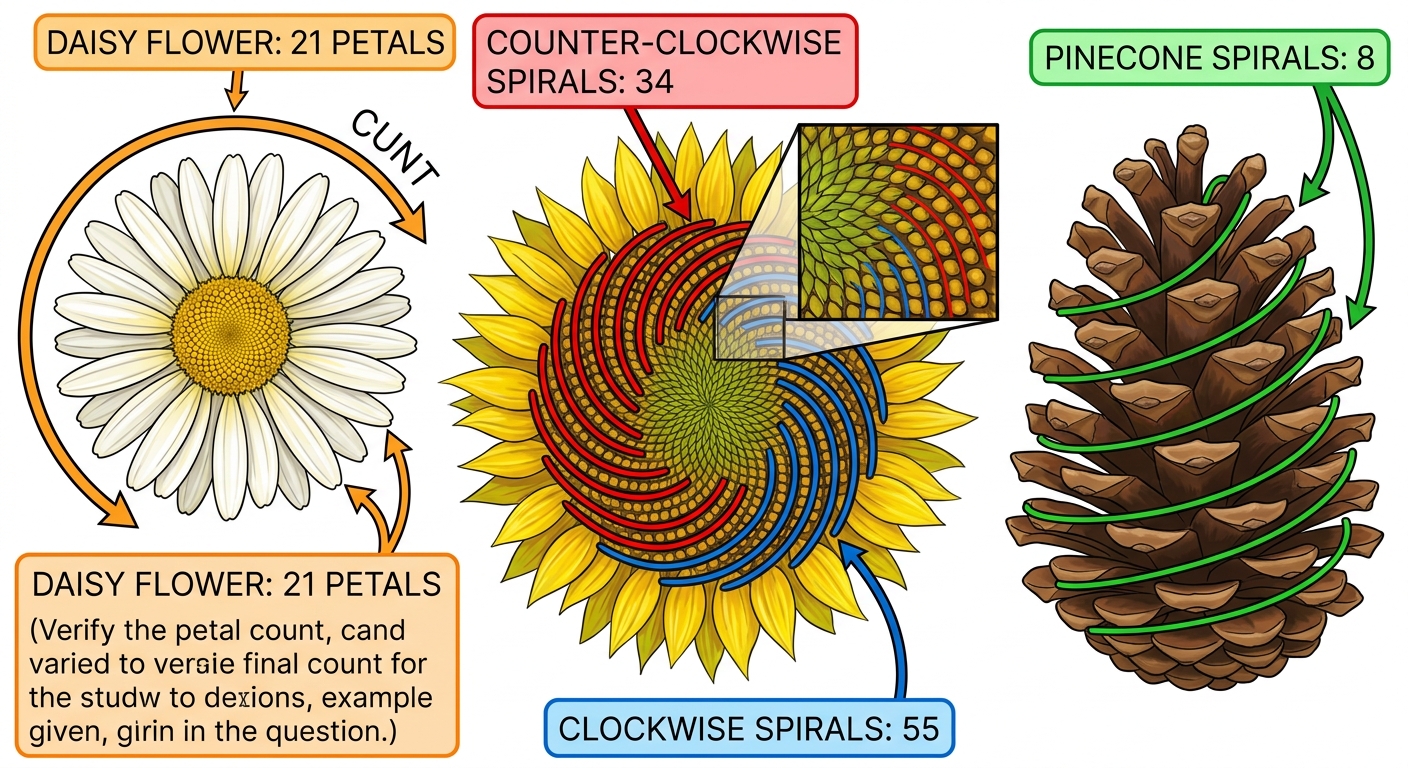
Daisies often have 13 or 21 petals, sunflowers often have 55, and pinecones often have 8 spirals. All of these numbers appear in the Fibonacci sequence, where each number is the sum of the two before it: 1, 1, 2, 3, 5, 8, 13, 21, 34, 55, …
a
Identify one example of the Fibonacci pattern found in a plant. [1]
b
Describe one way this pattern helps the plant to survive or grow. [1]
Solutions
4QuestionAnalyzing and Explaining Real-World PatternsConcept Practice
3 marks~5 minCriterion B
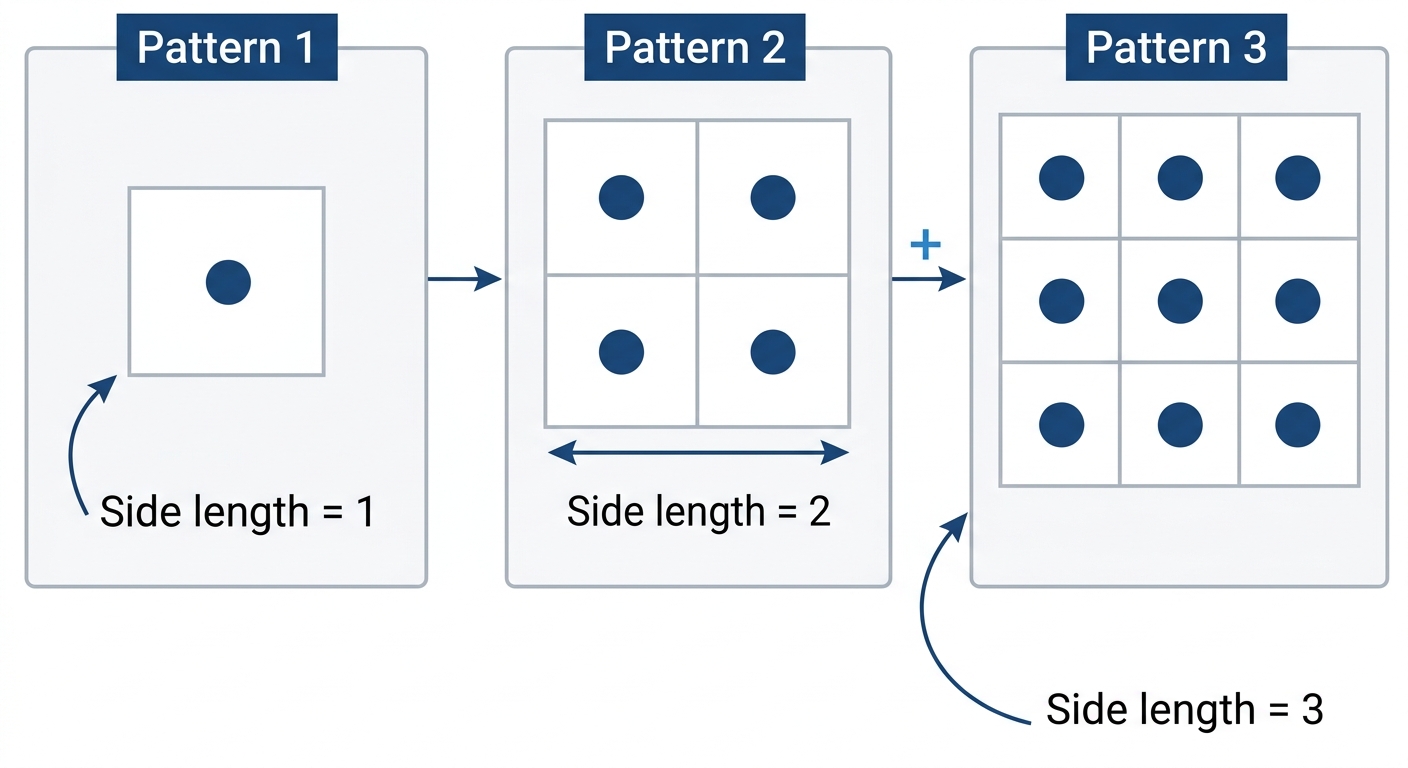
Each pattern in a sequence is made of dots arranged in a square.
Pattern 1: (1 dot). Pattern 2: (4 dots). Pattern 3: (9 dots).
Pattern 1: (1 dot). Pattern 2: (4 dots). Pattern 3: (9 dots).
a
Identify the number of dots in Pattern 4. [1]
b
State the number of dots in Pattern 10. [1]
c
Describe how you can find the number of dots in any pattern in this sequence. [1]
Solutions
That's every free question here — 4 of 53.
+49 more questions, plus Mock Papers & Worksheets, are waiting in Premium.