You're viewing free preview questions — 4 questions previewing here — subscribe to unlock 50 more, plus the Full Question Bank, Mock Papers & Worksheets.Upgrade
Probability with Dice Coins and Spinners — Free MYP1 Mathematics Practice Questions

1QuestionProbability of Rolling a DieConcept Practice
4 marks~6 minCriterion A
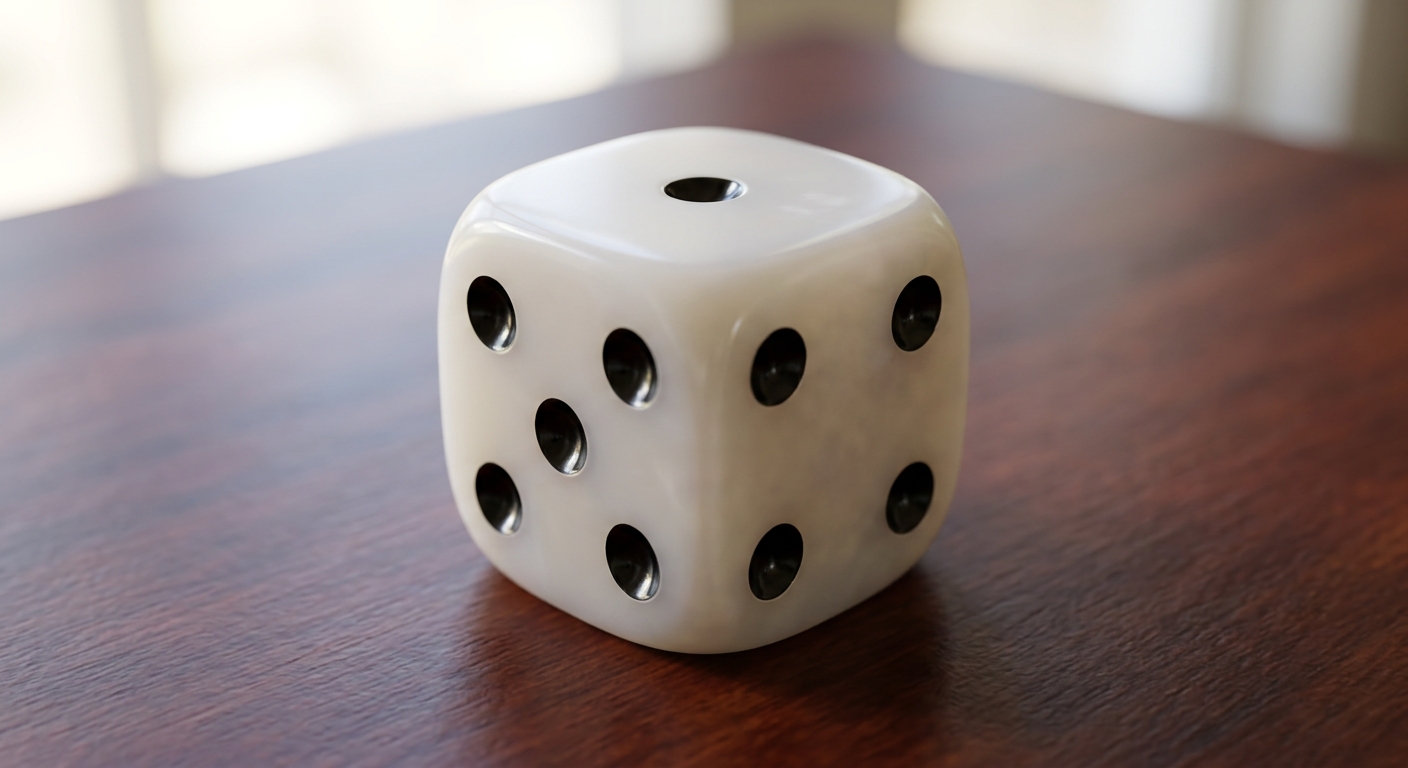
A standard six-sided die is shown in the diagram.
a
Name the number of faces on a standard die. [1]
b
List all the numbers that appear on a standard die. [1]
c
Describe how a standard die is different from a coin when you use each one to get a random result. [2]

Solutions
2QuestionUsing Multiple Dice or CoinsAssessment Practice
2 marks~3 minCriterion D
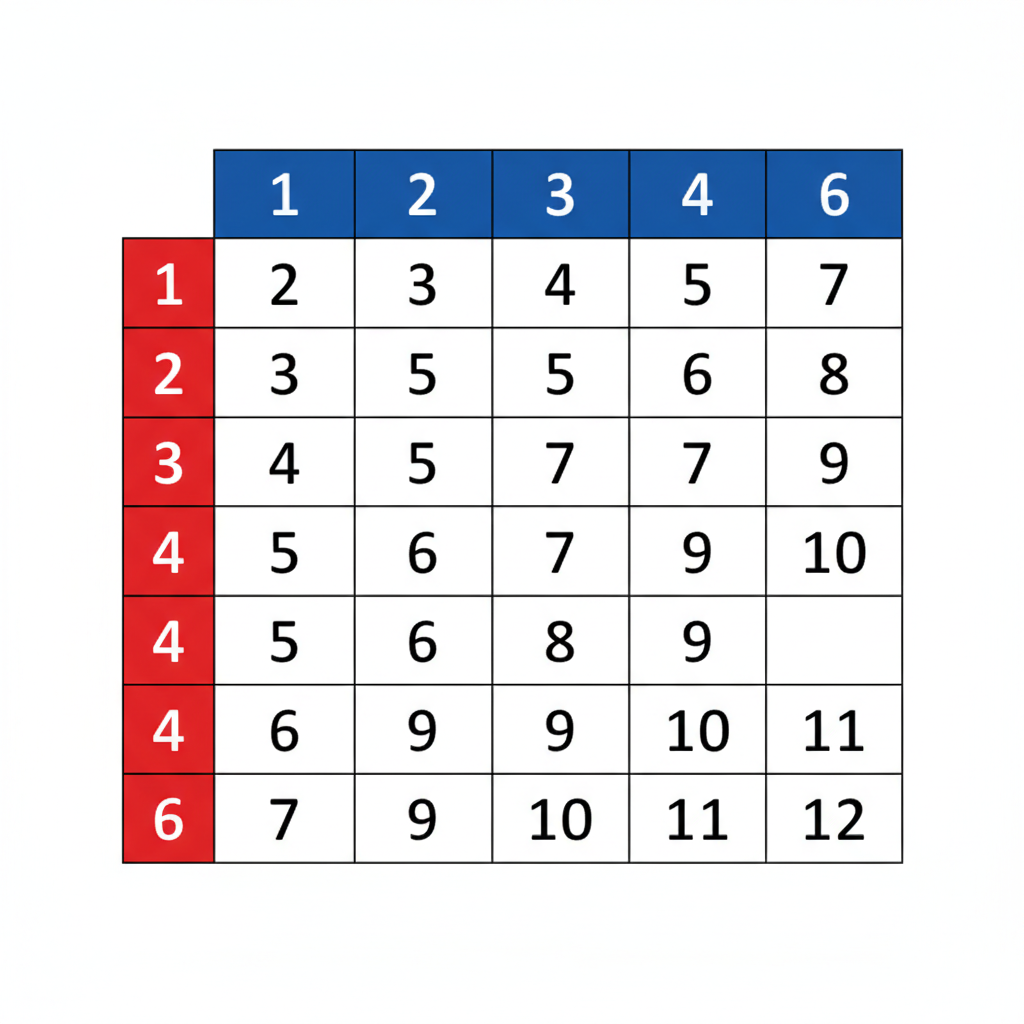
A board game designer rolls two six-sided dice to decide how players move.
a
Describe how listing all 36 possible outcomes helps the designer check whether the game is fair. [1]
b
Describe one reason why using two dice gives the designer a better chance of making the game fair than using one die. [1]
Solutions
3QuestionUsing Multiple Dice or CoinsConcept Practice
2 marks~3 minCriterion B
You roll two six-sided dice and add the two numbers together.
a
List the number of ways to make each sum by completing the table below. [1]
Sum: , Number of ways: \_\_\_
Sum: , Number of ways: \_\_\_
Sum: , Number of ways: \_\_\_
Sum: , Number of ways: \_\_\_
Sum: , Number of ways: \_\_\_
Sum: , Number of ways: \_\_\_
Sum: , Number of ways: \_\_\_
Sum: , Number of ways: \_\_\_
Sum: , Number of ways: \_\_\_
Sum: , Number of ways: \_\_\_
Sum: , Number of ways: \_\_\_
Sum: , Number of ways: \_\_\_
Sum: , Number of ways: \_\_\_
Sum: , Number of ways: \_\_\_
Sum: , Number of ways: \_\_\_
Sum: , Number of ways: \_\_\_
Sum: , Number of ways: \_\_\_
Sum: , Number of ways: \_\_\_
Sum: , Number of ways: \_\_\_
Sum: , Number of ways: \_\_\_
Sum: , Number of ways: \_\_\_
Sum: , Number of ways: \_\_\_
b
Identify the sum that can be made in the most ways and the sum that can be made in the fewest ways. [1]
Solutions
4QuestionProbability of Flipping a CoinAssessment Practice
4 marks~6 minCriterion C
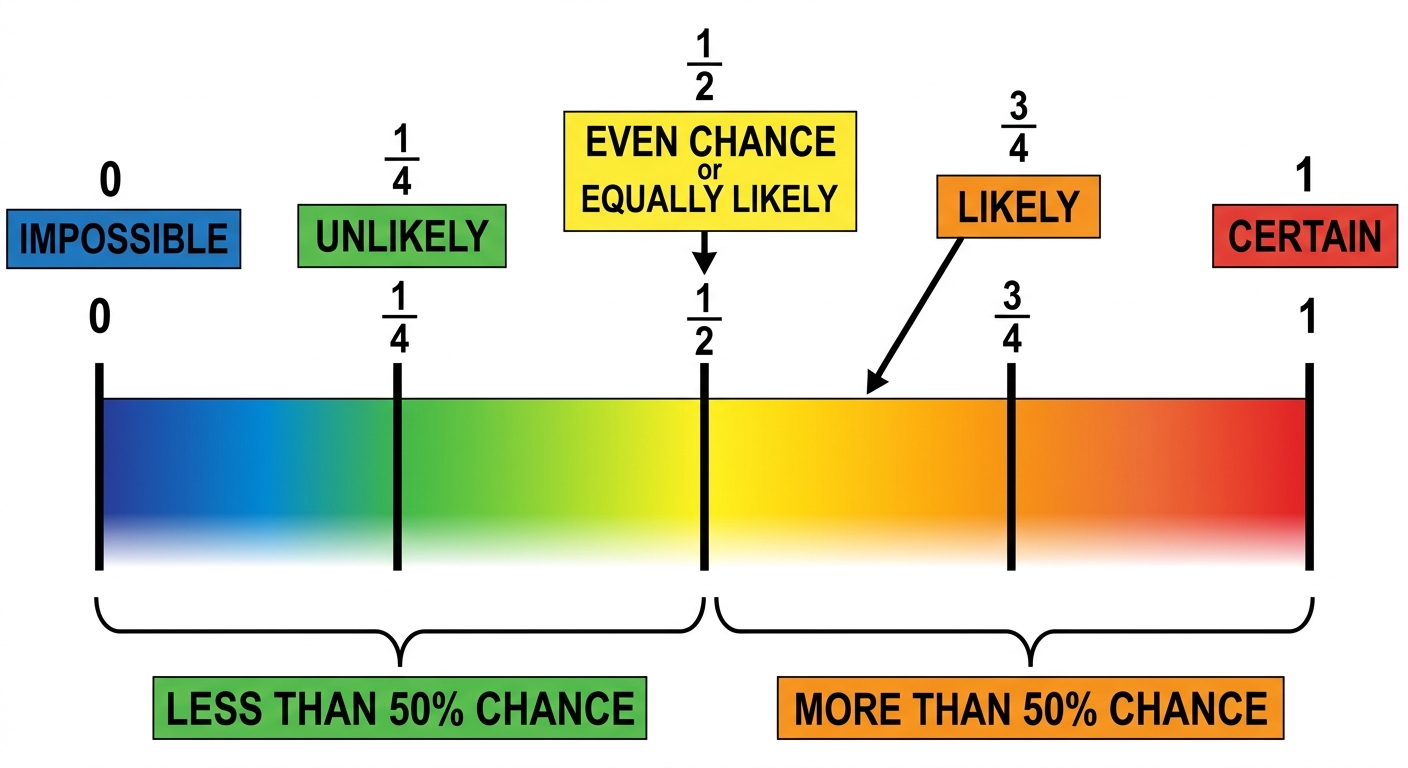
A student says that getting Heads when tossing a fair coin is a 'likely' event. Use the probability scale below to answer the questions.
a
State the probability of getting Heads when tossing a fair coin. [1]
b
Identify the word on the probability scale that correctly describes getting Heads. [1]
c
Describe how 'Even Chance' and 'Likely' are different on the probability scale, and give one example of a 'likely' event. [2]
Solutions
That's every free question here — 4 of 54.
+50 more questions, plus Mock Papers & Worksheets, are waiting in Premium.