You're viewing free preview questions — 4 questions previewing here — subscribe to unlock 55 more, plus the Full Question Bank, Mock Papers & Worksheets.Upgrade
Levels of Biological Organization — Free MYP1 Sciences Practice Questions

1QuestionExamples in Humans and PlantsConcept Practice
2 marks~3 minCriterion A
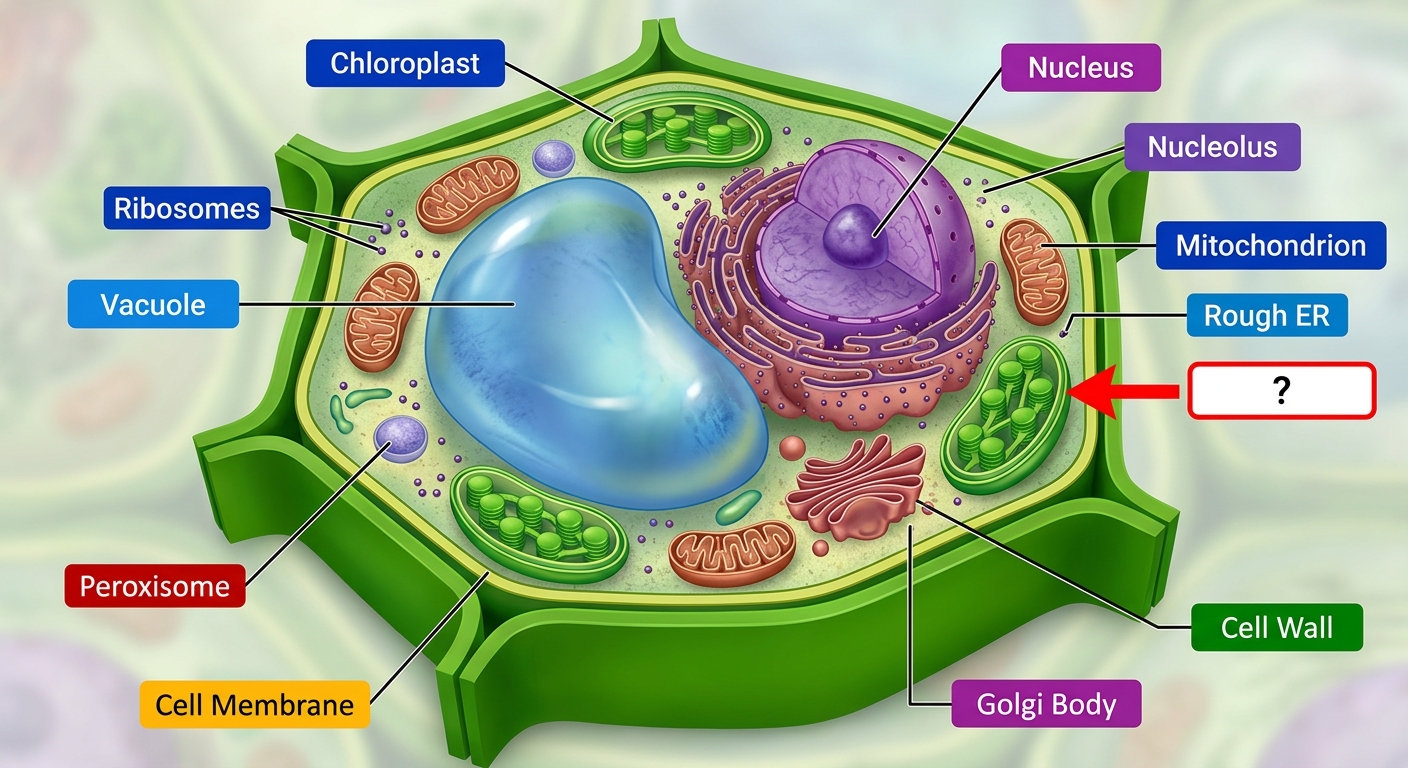
The diagram shows a plant cell. The arrow points to a green structure inside the cell.
a
Name the green structure shown by the arrow. [1]
b
Describe one job this structure does for the plant. [1]

Solutions
2QuestionExamples in Humans and PlantsAssessment Practice
4 marks~6 minCriterion D
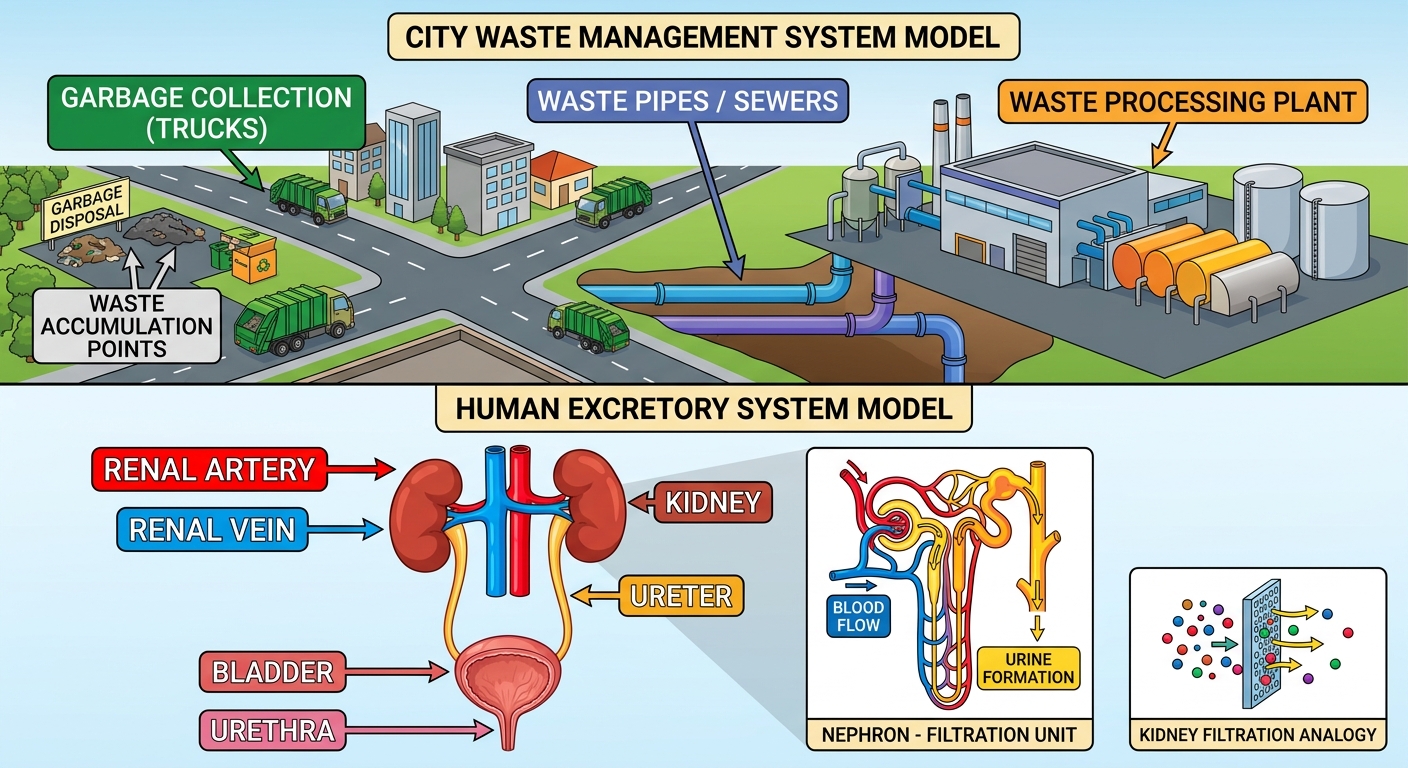
The kidneys clean your blood by removing waste and letting clean water pass back into your body.
a
Name one part of the human body that removes waste. [1]
b
Describe how the kidneys could give someone an idea for making a water filter for a village. [1]
c
A city's rubbish trucks and pipes are sometimes used to explain how the body removes waste. Describe one way that a cell is different from a rubbish truck or a pipe. [2]
Solutions
3QuestionImportance of Structural Organization in BiologyConcept Practice
2 marks~3 minCriterion B
A student places 5 radish seeds in soil and 5 radish seeds on a wet paper towel. After one week, she measures the height of each plant.
a
Identify the independent variable in this investigation. [1]
b
Describe what the student should keep the same to make this a fair test. [1]
Solutions
4QuestionInterdependence of LevelsConcept Practice
5 marks~8 minCriterion C
The table below shows how two organisms carry out three life processes.
Organism — Movement — Feeding — Responding to surroundings
Euglena (one cell): moves using a tail-like part — takes in food through its outer layer — detects light with a small eyespot
Human (many cells): uses muscle cells — uses digestive cells — uses nerve cells
Organism — Movement — Feeding — Responding to surroundings
Euglena (one cell): moves using a tail-like part — takes in food through its outer layer — detects light with a small eyespot
Human (many cells): uses muscle cells — uses digestive cells — uses nerve cells
a
Name one type of specialized cell that humans use, as shown in the table. [1]
b
Describe what would happen to a human if all their nerve cells stopped working. Use information from the table in your answer. [2]
c
A scientist says: "A single-celled organism is more independent than a human." Using the table, compare how Euglena and humans carry out their life processes, and explain whether you agree or disagree with the scientist. [2]
Solutions
That's every free question here — 4 of 59.
+55 more questions, plus Mock Papers & Worksheets, are waiting in Premium.