You're viewing free preview questions — 6 questions previewing here — subscribe to unlock 51 more, plus the Full Question Bank, Mock Papers & Worksheets.Upgrade
Back

Structure and Function of Cells — Free MYP1 Sciences Practice Questions

Free questions

Open in full, with answers, mark scheme and examiner insights.

Question 1Criterion A · Band 1-4 · Easy · 2 marksrevisionprep.com

Basic Structure of Plant and Animal Cells

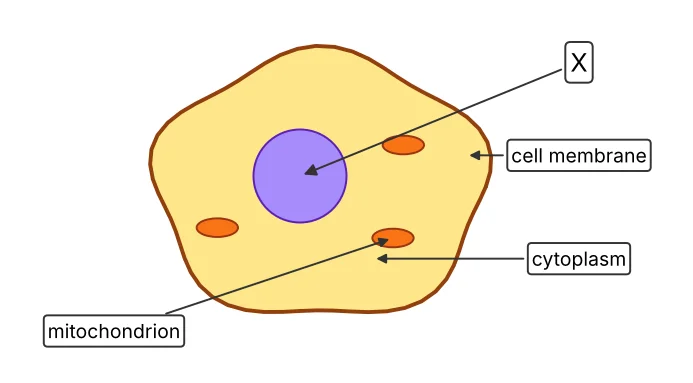
The picture shows an animal cell with one part marked X.

Every animal cell has a nucleus, cytoplasm and a cell membrane.
Question diagram
(a)
Name the part marked X, and state its job. [1]Criterion A (i) · Level 1-2
(b)
Describe where the cytoplasm is. [1]Criterion A (ii) · Level 3-4

revisionprep.com

Summary Answer

Not available for this question.

Model Answer

Not available for this question.

Marking Scheme

Not available for this question.

Examiner Insights

Not available for this question.

Question 2Criterion A · Band 1-4 · Easy · 2 marksrevisionprep.com

Functions of Cell Organelles Nucleus Cytoplasm etc

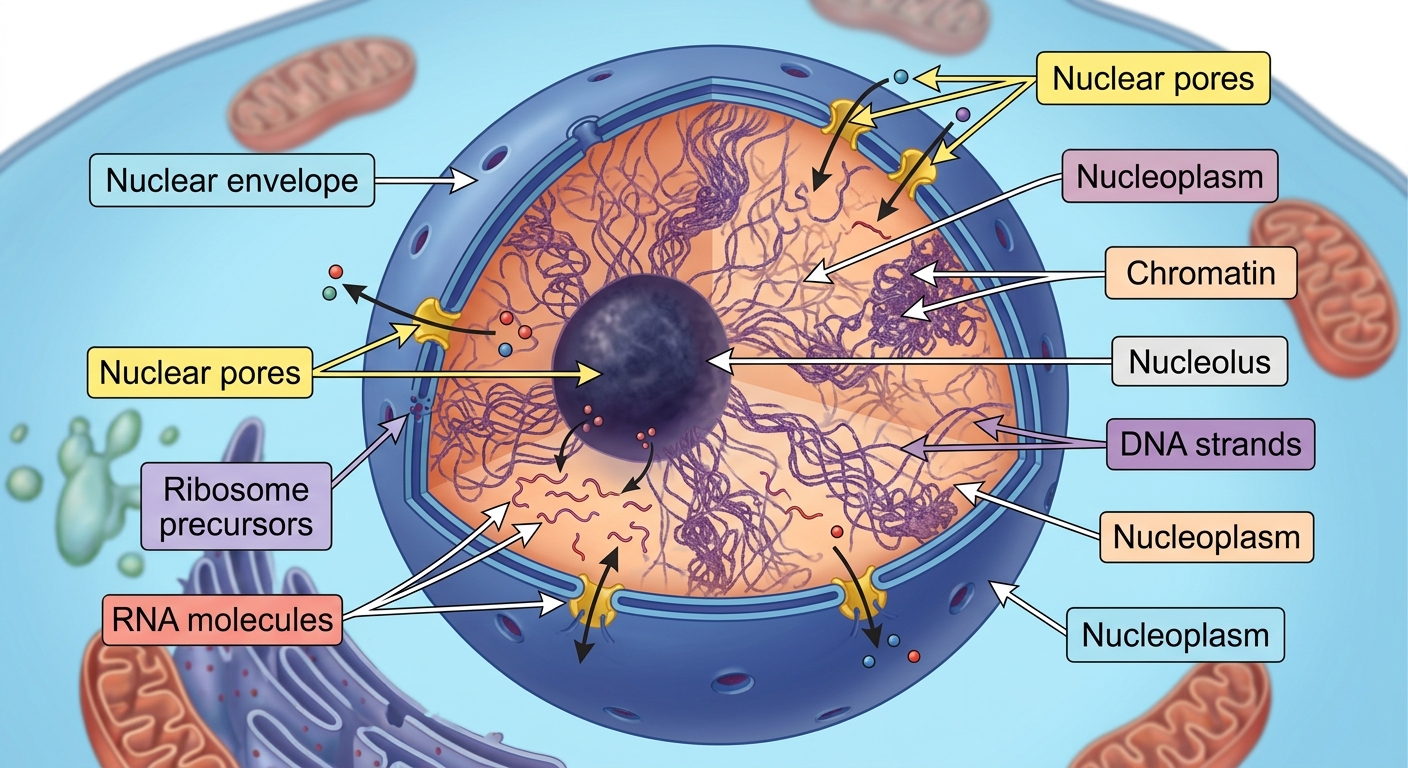
The picture shows the nucleus of a cell. Mitochondria are the sausage-shaped parts around it.

Mitochondria are found in nearly every animal and plant cell.
Question diagram
(a)
Describe the job of mitochondria. [1]Criterion A (ii) · Level 1-2
(b)
Suggest which cell would have more mitochondria: a muscle cell or a fat cell. [1]Criterion A (iii) · Level 3-4

revisionprep.com

Summary Answer

Not available for this question.

Model Answer

Not available for this question.

Marking Scheme

Not available for this question.

Examiner Insights

Not available for this question.

Question 3Criterion C · Band 1-6 · Medium · 6 marksrevisionprep.com

Comparing Prokaryotic and Eukaryotic Cells Introductory

Bacteria are prokaryotes. In warm food, one bacterium splits into two about every 20 minutes.
0 min: 1
20 min: 2
40 min: 4
60 min: 8
80 min: 16
(a)
Describe the pattern. [1]Criterion C (iii) · Level 1-2
(b)
Plot a line graph with labelled axes. [2]Criterion C (ii) · Level 3-4
(c)
Predict the number after 2 hours. [1]Criterion C (iii) · Level 3-4
(d)
Explain why food left out for a few hours can make you ill. [1]

(e) Suggest why a fridge keeps food safe for longer. [1]
Criterion C (iv) · Level 5-6

revisionprep.com

Summary Answer

Not available for this question.

Model Answer

Not available for this question.

Marking Scheme

Not available for this question.

Examiner Insights

Not available for this question.

Question 4Criterion C · Band 1-6 · Medium · 6 marksrevisionprep.com

Importance of Cell Membrane and Cytoplasm

Leah cuts equal potato pieces and puts them in salt water of different strengths for 1 hour. She weighs them before and after.
0% salt: +10% mass
2% salt: +4%
4% salt: −2%
6% salt: −8%
(a)
Describe the pattern. [1]Criterion C (iii) · Level 1-2
(b)
Plot a line graph of change in mass against salt strength, with labelled axes. [2]Criterion C (ii) · Level 3-4
(c)
Estimate the salt strength where the mass would not change. [1]Criterion C (iii) · Level 3-4
(d)
Explain why the potato loses mass in 6% salt water. [1]

(e) Suggest why salting cucumber slices makes them go soft. [1]
Criterion C (iv) · Level 5-6

revisionprep.com

Summary Answer

Not available for this question.

Model Answer

Not available for this question.

Marking Scheme

Not available for this question.

Examiner Insights

Not available for this question.

Question 5Criterion B · Band 1-6 · Medium · 6 marksrevisionprep.com

Understanding the Cell as the Basic Unit of Life

Mina wants to look at onion cells under a school microscope. She has an onion, tweezers, a slide, a cover slip, iodine stain and a dropper.
(a)
Describe how she should get a thin layer of onion cells onto the slide. [1]Criterion B (iii) · Level 1-2
(b)
Explain why she adds iodine stain. [1]Criterion B (iii) · Level 3-4
(c)
Explain why the cover slip is lowered at an angle. [1]Criterion B (iii) · Level 3-4
(d)
State which objective lens she should start with. [1]

(e) State one safety rule, with a reason. [1]

(f) Predict two parts she will see in the stained cells. [1]
Criterion B (iii) · Level 3-4

revisionprep.com

Summary Answer

Not available for this question.

Model Answer

Not available for this question.

Marking Scheme

Not available for this question.

Examiner Insights

Not available for this question.

Question 6Criterion B · Band 1-8 · Challenge · 7 marksrevisionprep.com

Basic Structure of Plant and Animal Cells

Theo wants to find out if all plant cells have chloroplasts. He looks at cells from a leaf, an onion bulb and a root under a microscope, and counts chloroplasts in 5 cells of each.
Leaf3230283129
Onion bulb00000
Root00000
(a)
Write a hypothesis. [1]Criterion B (i) · Level 1-2
(b)
Identify the independent and the dependent variable. [2]Criterion B (i) · Level 3-4
(c)
Calculate the mean number of chloroplasts in a leaf cell. [1]Criterion B (ii) · Level 3-4
(d)
Explain why he counted 5 cells, not 1. [1]

(e) Explain the results, and suggest why it is useful for root and onion bulb cells not to have chloroplasts. [2]
Criterion B (iii) · Level 3-4

revisionprep.com

Summary Answer

Not available for this question.

Model Answer

Not available for this question.

Marking Scheme

Not available for this question.

Examiner Insights

Not available for this question.

That's every free question here — 6 of 57.

+51 more questions, plus Mock Papers & Worksheets, are waiting in Premium.

Upgrade