Phases of the Moon and Eclipses — Free MYP1 Sciences Practice Questions
Free questions
Open in full, with answers, mark scheme and examiner insights.
Lunar Phases and Their Cycle
The Moon's phases go in this order: new moon, waxing crescent, first quarter, waxing gibbous, full moon, waning gibbous, third quarter, waning crescent.
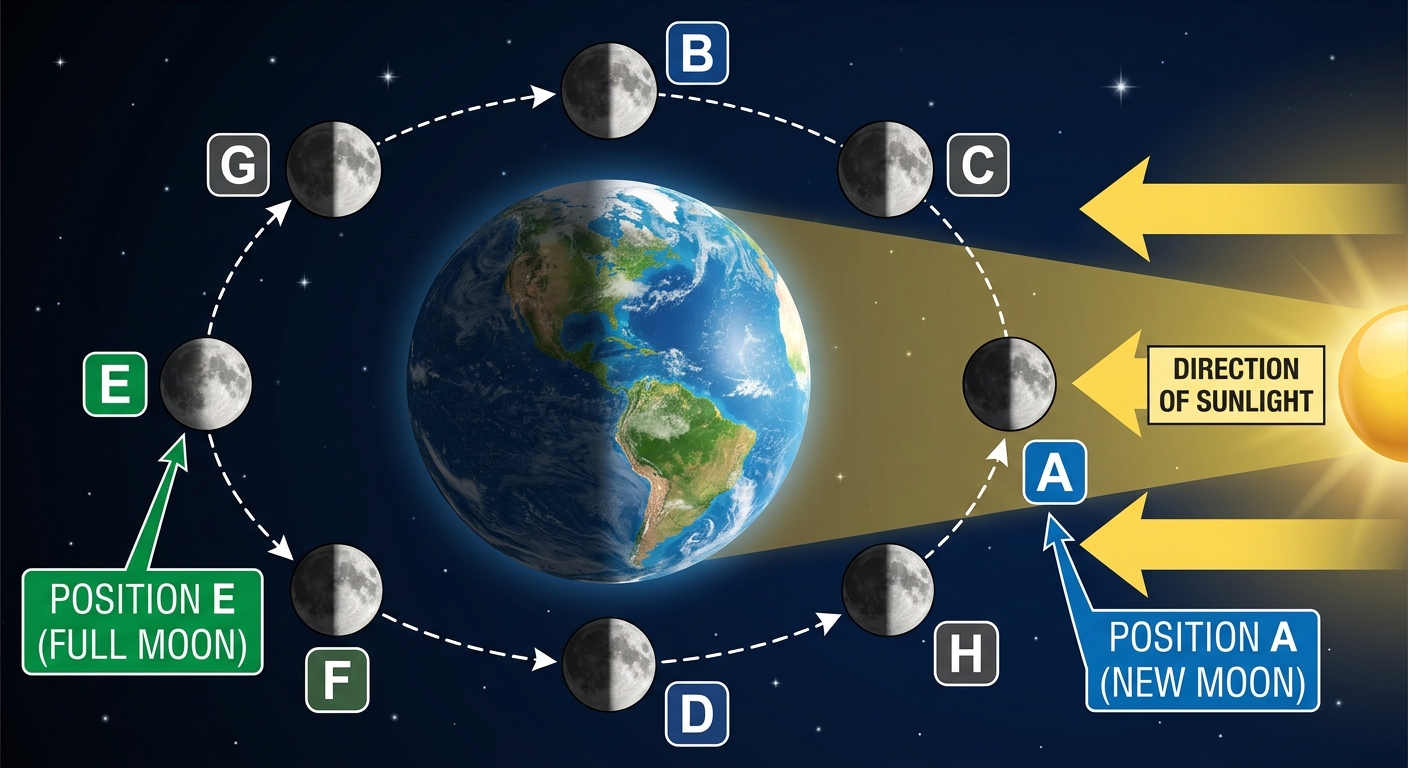
revisionprep.com
Summary Answer
Not available for this question.
Model Answer
Not available for this question.
Marking Scheme
Not available for this question.
Examiner Insights
Not available for this question.
Viewing Moon Phases from Earth
Baby sea turtles hatch at night and head for the brightest direction, which is normally the moonlit sea.
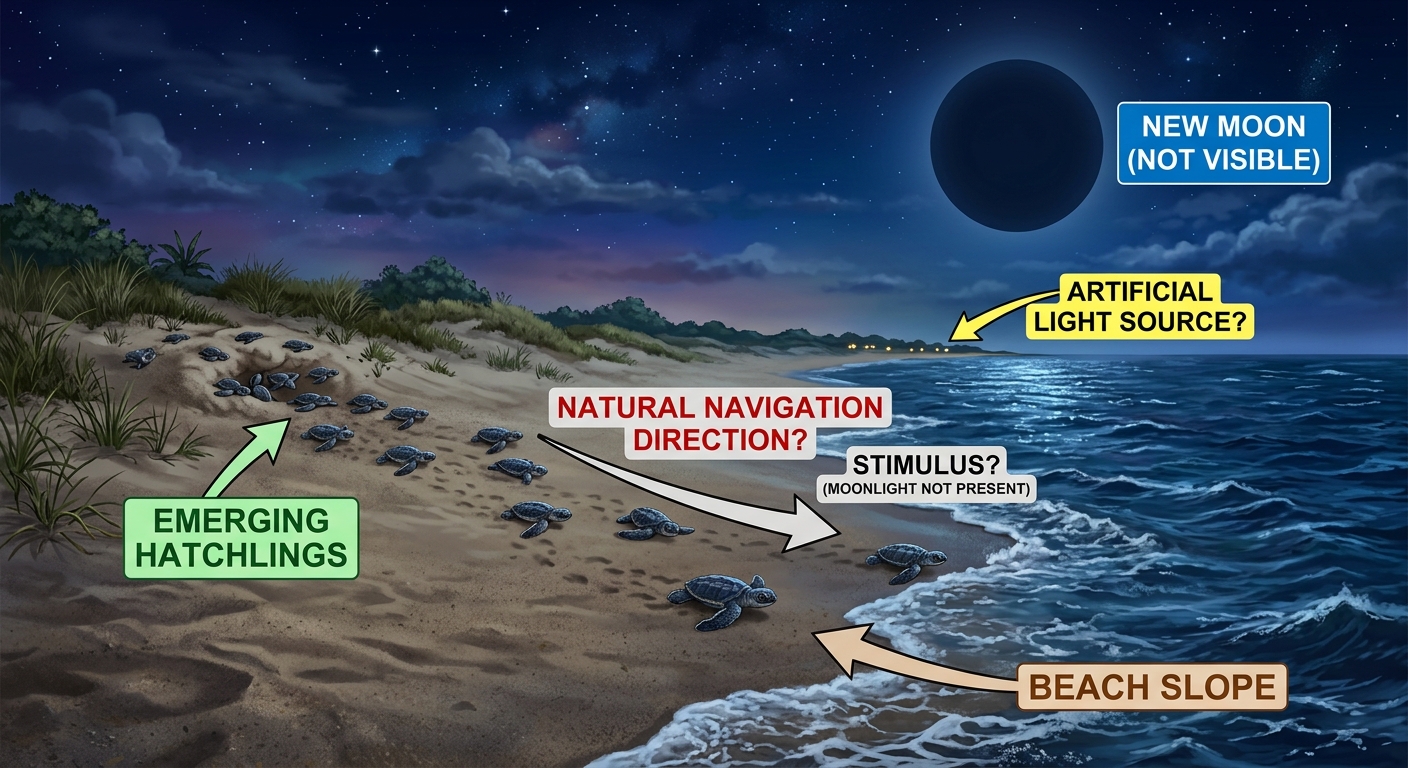
revisionprep.com
Summary Answer
Not available for this question.
Model Answer
Not available for this question.
Marking Scheme
Not available for this question.
Examiner Insights
Not available for this question.
Why the Moon Changes Appearance
(e) Explain one way the model is different from the real Moon and Earth. [2]Criterion B (ii) · Level 3-4
revisionprep.com
Summary Answer
Not available for this question.
Model Answer
Not available for this question.
Marking Scheme
Not available for this question.
Examiner Insights
Not available for this question.
Solar and Lunar Eclipses
Orbit flat, level with the lamp: 12 eclipses out of 12
Orbit tilted a little: 2 eclipses out of 12
(e) The real Moon has 12 or 13 new moons a year but only a few eclipses. Explain what this suggests about its orbit. [2]Criterion B (ii) · Level 3-4
revisionprep.com
Summary Answer
Not available for this question.
Model Answer
Not available for this question.
Marking Scheme
Not available for this question.
Examiner Insights
Not available for this question.
Tides and Moon Gravitational Effects Introductory
| Day | 1 | 4 | 8 | 11 | 15 | 19 | 22 | 26 | 29 |
|---|---|---|---|---|---|---|---|---|---|
| Tidal range (m) | 4.0 | 3.2 | 2.0 | 3.0 | 4.1 | 3.1 | 2.1 | 3.3 | 4.0 |
Day 1 and Day 29 were new moons. Day 15 was a full moon.
(e) Predict the tidal range on Day 37, and give a reason. [1]Criterion C (iv) · Level 3-4
revisionprep.com
Summary Answer
Not available for this question.
Model Answer
Not available for this question.
Marking Scheme
Not available for this question.
Examiner Insights
Not available for this question.
Lunar Phases and Their Cycle
| Day | 0 | 4 | 7 | 11 | 15 | 18 | 22 | 26 | 29 |
|---|---|---|---|---|---|---|---|---|---|
| Lit (%) | 0 | 20 | 50 | 85 | 100 | 85 | 50 | 15 | 0 |
(e) Explain why the graph is a hill shape. Use the words orbit and sunlight. Then predict the percentage lit on day 33, with a reason. [3]Criterion C (iii) · Level 3-4
revisionprep.com
Summary Answer
Not available for this question.
Model Answer
Not available for this question.
Marking Scheme
Not available for this question.
Examiner Insights
Not available for this question.
That's every free question here — 6 of 49.
+43 more questions, plus Mock Papers & Worksheets, are waiting in Premium.