You're viewing free preview questions — 6 questions previewing here — subscribe to unlock 49 more, plus the Full Question Bank, Mock Papers & Worksheets.Upgrade
Back

The Solar System — Free MYP1 Sciences Practice Questions

Free questions

Open in full, with answers, mark scheme and examiner insights.

Question 1Criterion A · Band 1-2 · Easy · 2 marksrevisionprep.com

Planets Moons and Other Celestial Bodies

The picture shows the Sun and the four inner planets.

The four inner planets are rocky.

(a) Name the planets marked A, B, C and D in the picture. [2]
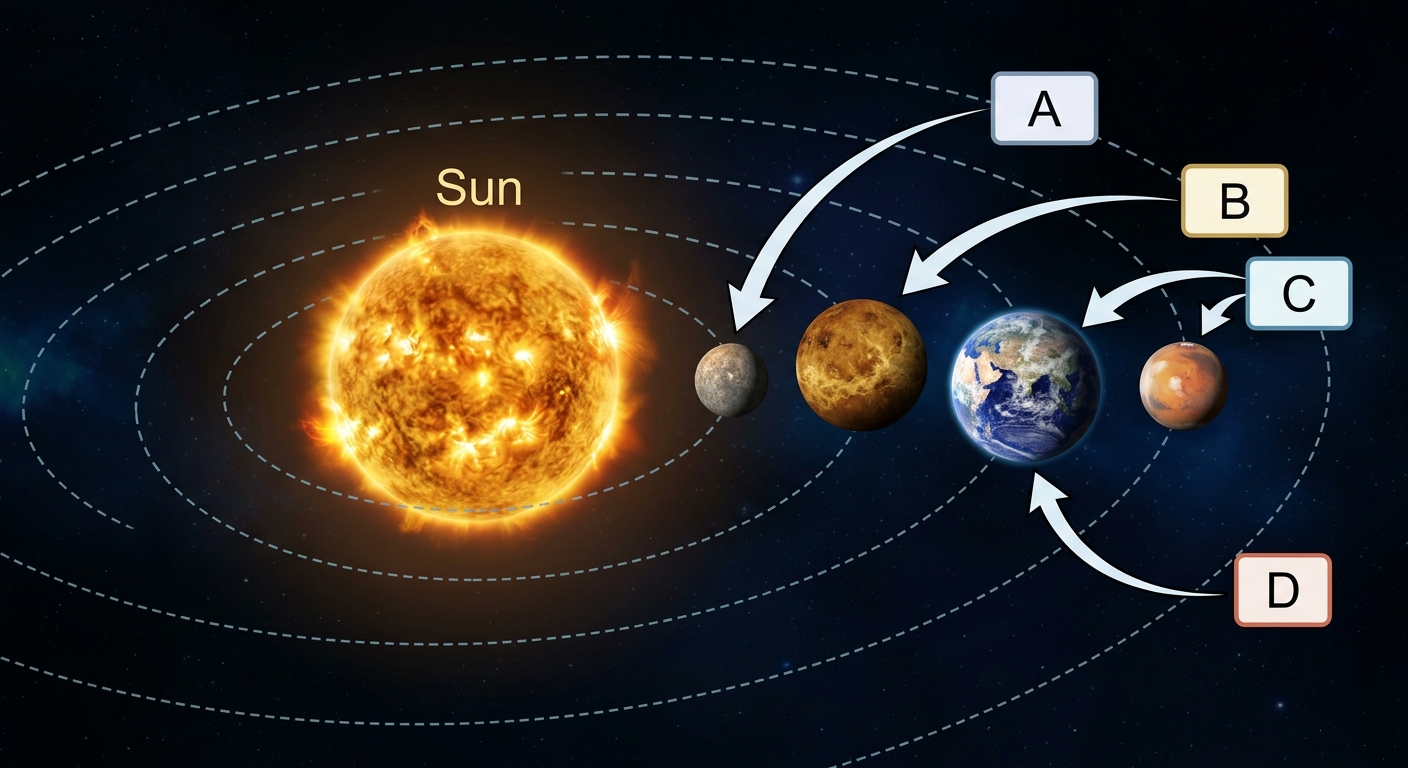
Question diagram

revisionprep.com

Summary Answer

Not available for this question.

Model Answer

Not available for this question.

Marking Scheme

Not available for this question.

Examiner Insights

Not available for this question.

Question 2Criterion D · Band 1-4 · Easy · 2 marksrevisionprep.com

Movements of Planets Around the Sun

The picture shows the Earth's orbit and the seasons.

Earth's tilt as it orbits the Sun gives us seasons.
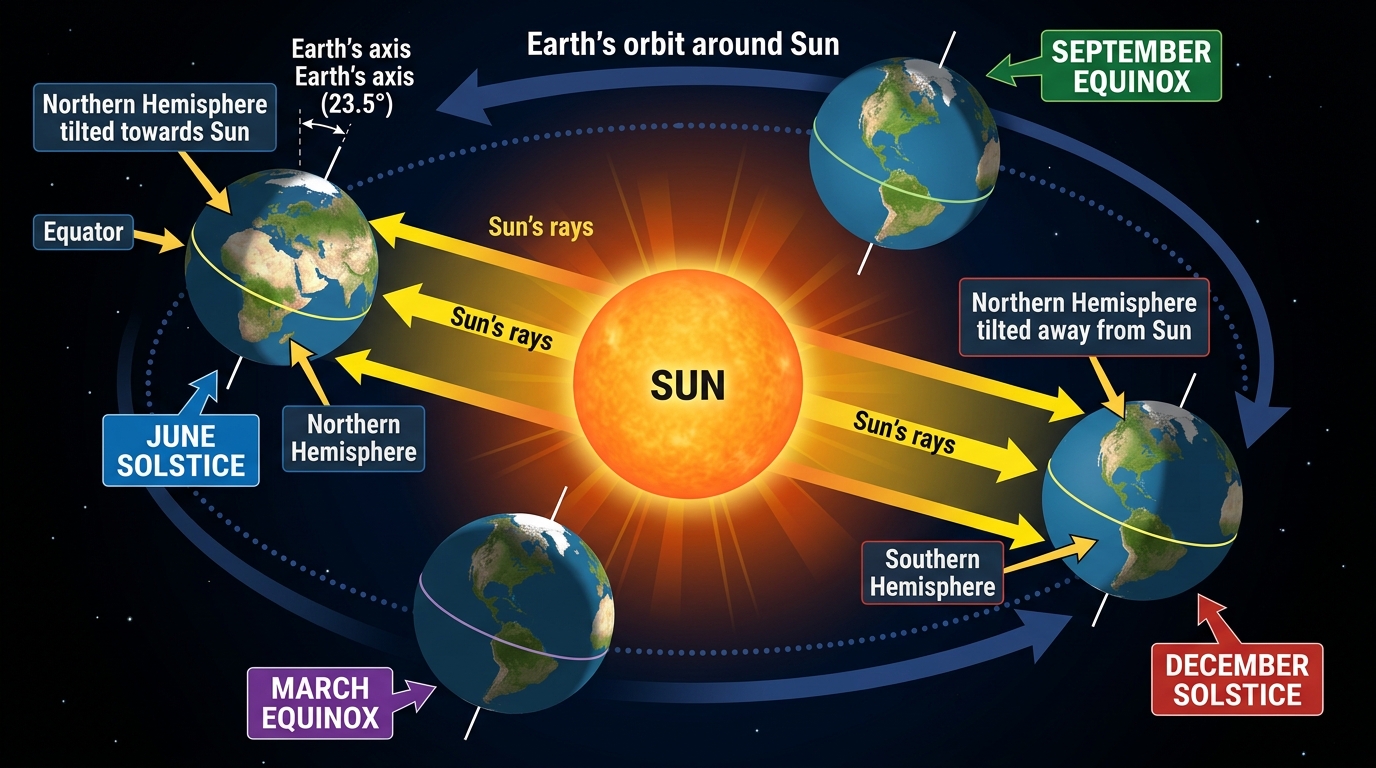
Question diagram
(a)
Identify the season when farmers in many countries plant seeds. [1]Criterion D (i) · Level 1-2
(b)
Describe how seasons affect one everyday activity. [1]Criterion D (ii) · Level 3-4

revisionprep.com

Summary Answer

Not available for this question.

Model Answer

Not available for this question.

Marking Scheme

Not available for this question.

Examiner Insights

Not available for this question.

Question 3Criterion C · Band 1-6 · Medium · 6 marksrevisionprep.com

Structure and Order of the Solar System

A class makes a scale model of the Solar System on the school field. They use 10 cm for every 1 AU (1 AU is the Earth–Sun distance).
Mercury: 0.4 AU
Venus: 0.7 AU
Earth: 1.0 AU
Mars: 1.5 AU
Jupiter: 5.2 AU
Saturn: 9.5 AU
Neptune: 30 AU
(a)
Calculate how far from the Sun each planet goes on the field. [2]Criterion C (iii) · Level 1-2
(b)
Plot the planets as points along a line from the Sun, with a labelled scale. [2]Criterion C (ii) · Level 3-4
(c)
Describe where the big gap is. [1]Criterion C (iii) · Level 3-4
(d)
Explain why the model could not also show the planets' sizes to the same scale. [1]Criterion C (iv) · Level 5-6

revisionprep.com

Summary Answer

Not available for this question.

Model Answer

Not available for this question.

Marking Scheme

Not available for this question.

Examiner Insights

Not available for this question.

Question 4Criterion B · Band 1-6 · Medium · 6 marksrevisionprep.com

Asteroids Comets and Meteoroids

Kiko models craters on the Moon by dropping a marble into a tray of flour from different heights. She measures the width of each crater.
20 cm: 3 cm
40 cm: 4 cm
60 cm: 5 cm
80 cm: 6 cm
(a)
Write a hypothesis. [1]Criterion B (i) · Level 1-2
(b)
Identify the independent and the dependent variable. [2]Criterion B (i) · Level 3-4
(c)
State two things she must keep the same. [1]Criterion B (iii) · Level 3-4
(d)
Describe how she could make the flour surface fair each time. [1]

(e) Explain what the model suggests about big craters on the Moon. [1]
Criterion B (iii) · Level 3-4

revisionprep.com

Summary Answer

Not available for this question.

Model Answer

Not available for this question.

Marking Scheme

Not available for this question.

Examiner Insights

Not available for this question.

Question 5Criterion C · Band 1-6 · Medium · 5 marksrevisionprep.com

Historical Models of the Solar System

In 1610 Galileo looked at Jupiter through his telescope. He saw a small star-like dot that moved from night to night. Distance of the dot from Jupiter (in Jupiter widths, + right, − left):
Night 1: +4
Night 2: +2
Night 3: −1
Night 4: −4
Night 5: −2
Night 6: +1
(a)
Describe the pattern in the dot's position. [1]Criterion C (iii) · Level 1-2
(b)
Plot a line graph of position against night with labelled axes. [2]Criterion C (ii) · Level 3-4
(c)
Suggest what the dot was. [1]Criterion C (iv) · Level 3-4
(d)
Explain why this was a problem for the Earth-centred model. [1]Criterion C (iv) · Level 5-6

revisionprep.com

Summary Answer

Not available for this question.

Model Answer

Not available for this question.

Marking Scheme

Not available for this question.

Examiner Insights

Not available for this question.

Question 6Criterion B · Band 1-8 · Challenge · 7 marksrevisionprep.com

Planets Moons and Other Celestial Bodies

Ana wants to model why inner planets are hotter. She places thermometers at 20, 40, 60 and 80 cm from a lamp (the "Sun") and reads them after 10 minutes.
20 cm: 45 °C
40 cm: 32 °C
60 cm: 27 °C
80 cm: 24 °C
(a)
Identify the independent and the dependent variable. [2]Criterion B (i) · Level 1-2
(b)
State two things she kept the same. [1]Criterion B (iii) · Level 3-4
(c)
Describe the conclusion. [1]Criterion B (ii) · Level 3-4
(d)
Explain what the model shows about Mercury and Neptune. [1]

(e) Suggest one way the model is different from the real Solar System, and use the results to predict the temperature at 100 cm. [2]
Criterion B (ii) · Level 5-6

revisionprep.com

Summary Answer

Not available for this question.

Model Answer

Not available for this question.

Marking Scheme

Not available for this question.

Examiner Insights

Not available for this question.

That's every free question here — 6 of 55.

+49 more questions, plus Mock Papers & Worksheets, are waiting in Premium.

Upgrade