You're viewing free preview questions — 6 questions previewing here — subscribe to unlock 56 more, plus the Full Question Bank, Mock Papers & Worksheets.Upgrade
Back

Weathering and Erosion — Free MYP1 Sciences Practice Questions

Free questions

Open in full, with answers, mark scheme and examiner insights.

Question 1Criterion A · Band 1-4 · Easy · 2 marksrevisionprep.com

Definition and Types of Weathering

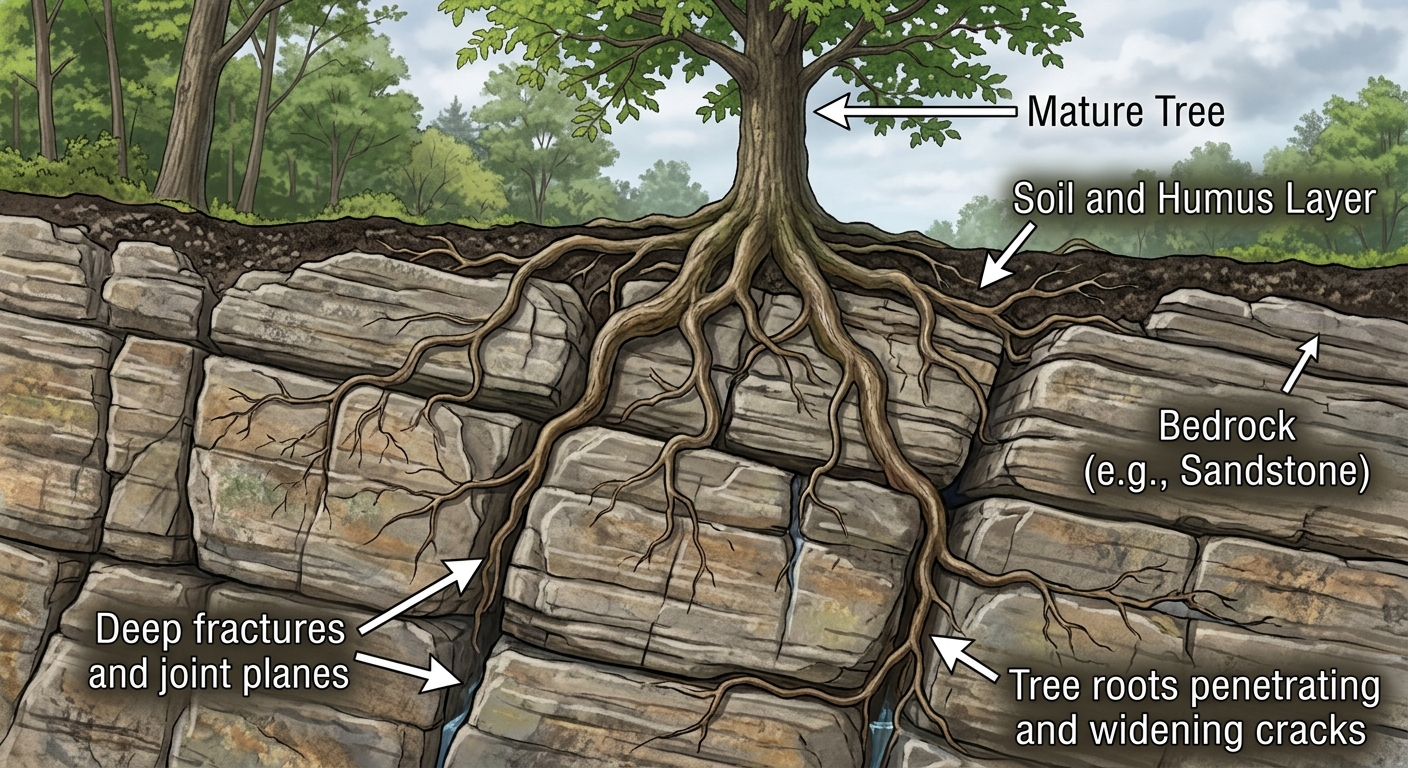
The diagram shows tree roots growing into cracks in a rock face.
Question diagram
(a)
Name this type of weathering. [1]Criterion A (i) · Level 1-2
(b)
Predict what will happen to the rock over many years. [1]Criterion A (iii) · Level 3-4

revisionprep.com

Summary Answer

Not available for this question.

Model Answer

Not available for this question.

Marking Scheme

Not available for this question.

Examiner Insights

Not available for this question.

Question 2Criterion D · Band 1-4 · Easy · 2 marksrevisionprep.com

Human Impacts on Erosion and Soil Loss

The picture compares a forested hillside and a cleared hillside.

Trees on a hillside are cut down, leaving the soil bare.
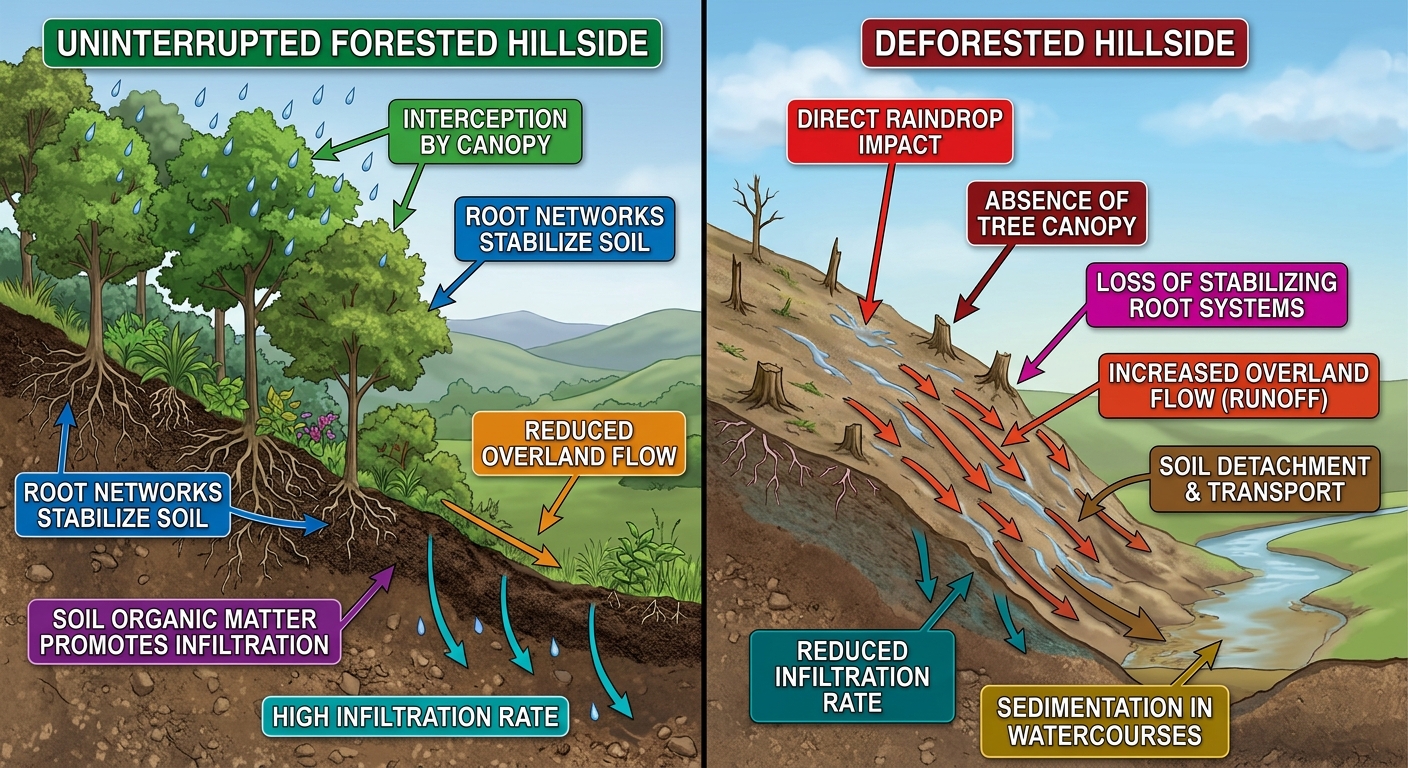
Question diagram
(a)
State one way tree roots protect soil. [1]Criterion D (i) · Level 1-2
(b)
Describe one effect on people living below the hill. [1]Criterion D (ii) · Level 3-4

revisionprep.com

Summary Answer

Not available for this question.

Model Answer

Not available for this question.

Marking Scheme

Not available for this question.

Examiner Insights

Not available for this question.

Question 3Criterion B · Band 1-6 · Medium · 6 marksrevisionprep.com

Processes of Erosion by Wind Water Ice

Raj builds a model river from a long tray of sand. He raises one end and pours 1 litre of water from the top. He collects the sand that washes out at the bottom.
Tray raised 5 cm: 20 g
10 cm: 55 g
15 cm: 110 g
(a)
Write a hypothesis. [1]Criterion B (i) · Level 1-2
(b)
Identify the independent and the dependent variable. [2]Criterion B (i) · Level 3-4
(c)
State two things he must keep the same. [1]Criterion B (iii) · Level 3-4
(d)
Describe the conclusion. [1]

(e) Explain where the sand ends up in a real river, and why. [1]
Criterion B (ii) · Level 3-4

revisionprep.com

Summary Answer

Not available for this question.

Model Answer

Not available for this question.

Marking Scheme

Not available for this question.

Examiner Insights

Not available for this question.

Question 4Criterion C · Band 1-6 · Medium · 6 marksrevisionprep.com

Soil Formation and Composition

Ben adds 100 mL of water to 100 g of each dry soil and measures how much water it holds after draining.
Sandy soil: 20 mL
Loam: 45 mL
Clay soil: 70 mL
Compost-rich soil: 60 mL
(a)
Draw a bar chart of the data with labelled axes. [2]Criterion C (ii) · Level 1-2
(b)
Identify the soil that holds the least water. [1]Criterion C (iii) · Level 3-4
(c)
Calculate the percentage of the water the clay held. [1]Criterion C (iii) · Level 3-4
(d)
Explain why compost-rich soil holds much more water than sandy soil. [1]

(e) Suggest which soil a gardener in a dry area should choose, with a reason. [1]
Criterion C (iv) · Level 5-6

revisionprep.com

Summary Answer

Not available for this question.

Model Answer

Not available for this question.

Marking Scheme

Not available for this question.

Examiner Insights

Not available for this question.

Question 5Criterion C · Band 1-6 · Medium · 6 marksrevisionprep.com

Prevention and Control of Erosion

A village must choose how to protect a 100 m slope above its school.
Grass planting: soil loss cut by 70%, cost 200 dollars, ready in 6 months
Stone wall: cut by 85%, cost 3000 dollars, ready in 1 month
Terraces: cut by 90%, cost 5000 dollars, ready in 3 months
(a)
Draw a bar chart of the percentage reduction for each method, with labelled axes. [2]Criterion C (ii) · Level 1-2
(b)
Identify the most effective method. [1]Criterion C (iii) · Level 3-4
(c)
Calculate how much more the stone wall costs than grass. [1]Criterion C (iii) · Level 3-4
(d)
Suggest which method the village should choose if it has little money, with a reason. [1]

(e) Explain one drawback of your choice. [1]
Criterion C (iv) · Level 5-6

revisionprep.com

Summary Answer

Not available for this question.

Model Answer

Not available for this question.

Marking Scheme

Not available for this question.

Examiner Insights

Not available for this question.

Question 6Criterion B · Band 1-8 · Challenge · 7 marksrevisionprep.com

Definition and Types of Weathering

Zoe wants to model freeze-thaw weathering. She soaks 6 pieces of chalk in water. She puts 3 in a freezer overnight then thaws them, repeating this 5 times. The other 3 stay in a fridge.
Mass lost after 5 cycles:
Freezer chalk4 g5 g6 g
Fridge chalk0 g1 g0 g
(a)
Identify the independent and the dependent variable. [2]Criterion B (i) · Level 1-2
(b)
Explain why she kept some chalk in the fridge. [1]Criterion B (iii) · Level 3-4
(c)
Calculate the mean mass lost by the freezer chalk. [1]Criterion B (ii) · Level 3-4
(d)
Describe the conclusion. [1]

(e) Explain why mountain roads get more potholes in winter, and suggest one thing road builders could do to reduce this. [2]
Criterion B (ii) · Level 3-4

revisionprep.com

Summary Answer

Not available for this question.

Model Answer

Not available for this question.

Marking Scheme

Not available for this question.

Examiner Insights

Not available for this question.

That's every free question here — 6 of 62.

+56 more questions, plus Mock Papers & Worksheets, are waiting in Premium.

Upgrade