You're viewing free preview questions — 6 questions previewing here — subscribe to unlock 39 more, plus the Full Question Bank, Mock Papers & Worksheets.Upgrade
Back

Energy Flow and Pyramids — Free MYP1 Sciences Practice Questions

Free questions

Open in full, with answers, mark scheme and examiner insights.

Question 1Criterion D · Band 1-4 · Easy · 3 marksrevisionprep.com

Energy Loss at Each Trophic Level

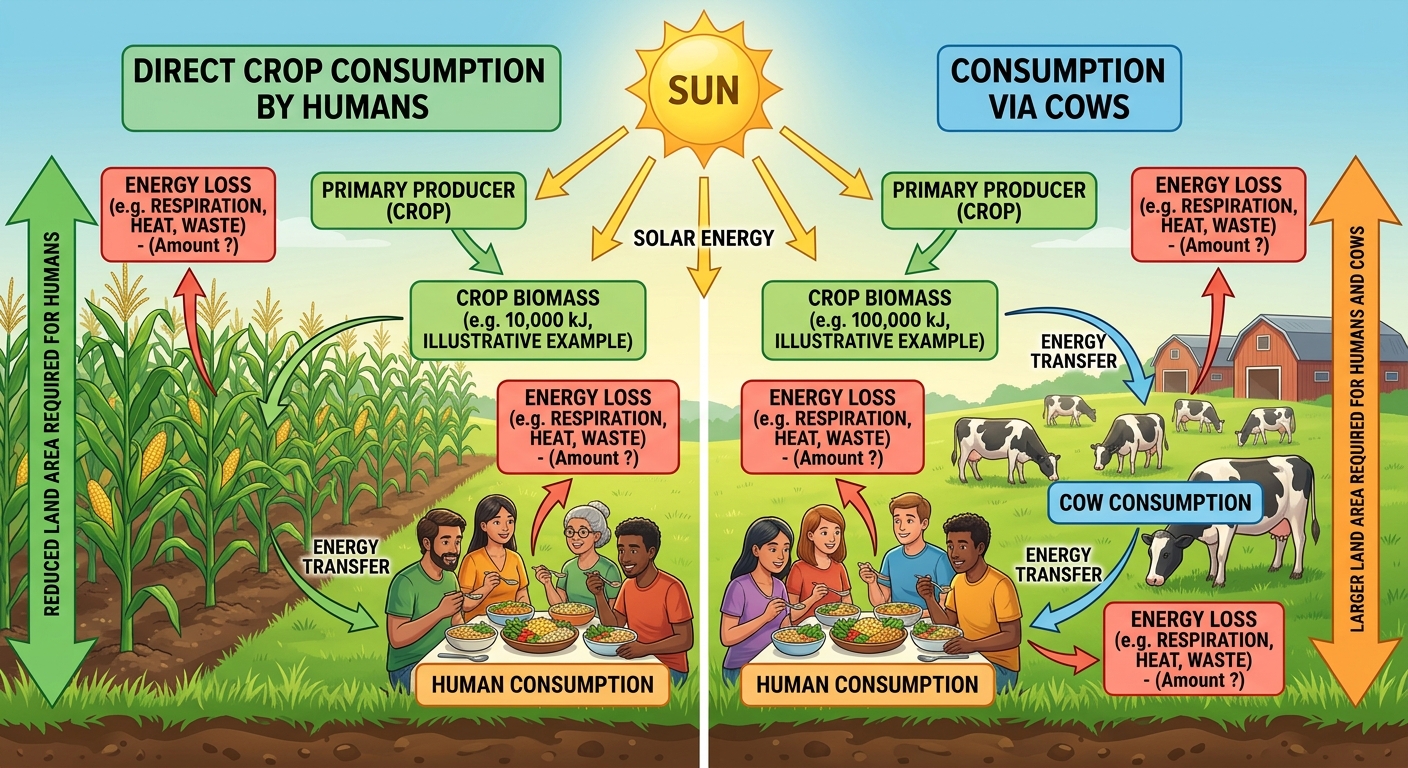
The picture compares two ways of using farmland: people eating the crops directly, or feeding the crops to cows and eating the beef.

Land can grow crops for people to eat, or crops can be fed to cows and people then eat the beef.
Question diagram
(a)
State what happens to most of the energy in the crops a cow eats. [1]Criterion D (i) · Level 1-2
(b)
Explain why eating crops directly needs less farmland than eating beef. [2]Criterion D (i) · Level 3-4

revisionprep.com

Summary Answer

Not available for this question.

Model Answer

Not available for this question.

Marking Scheme

Not available for this question.

Examiner Insights

Not available for this question.

Question 2Criterion A · Band 1-4 · Easy · 3 marksrevisionprep.com

Efficiency of Energy Transfer

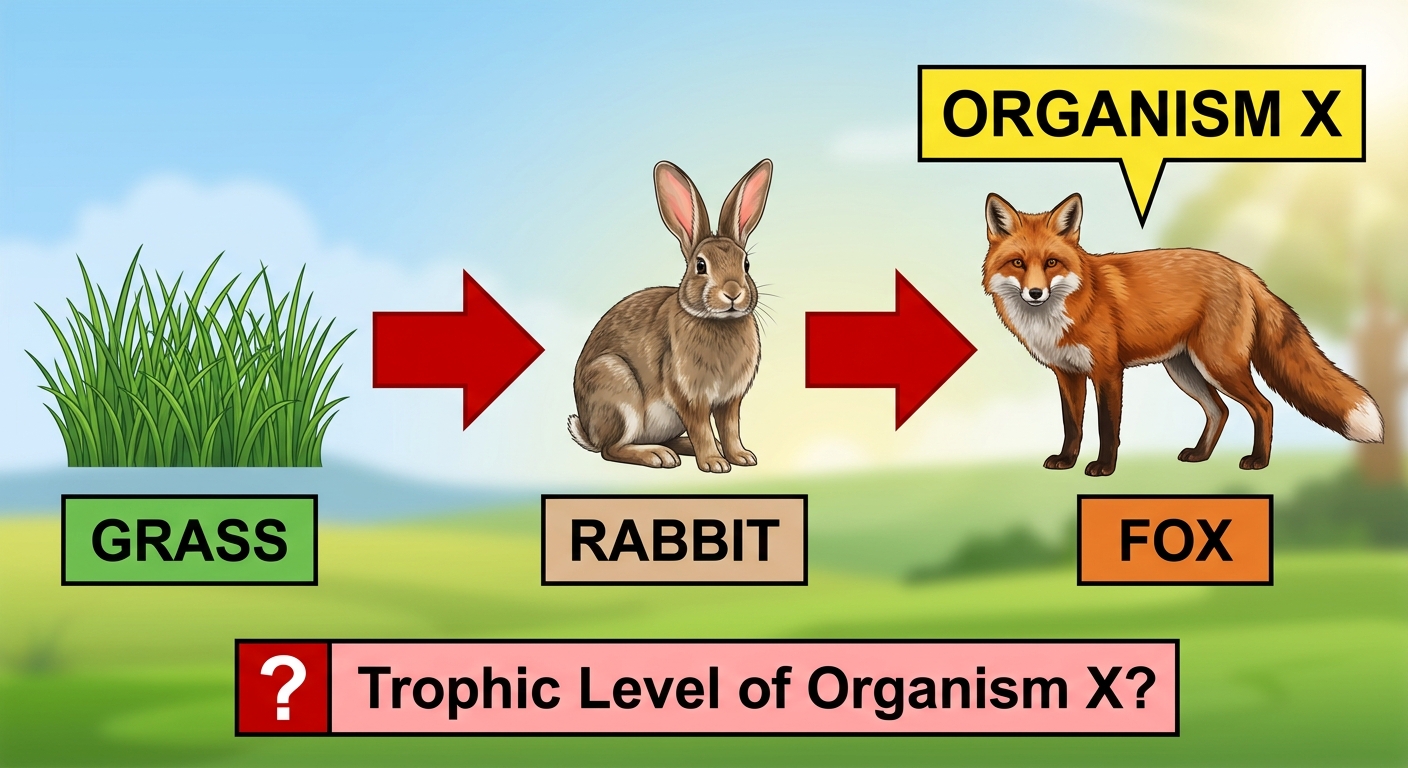
The picture shows: grass → rabbit → fox (labelled Organism X).
Question diagram
(a)
Identify the trophic level of Organism X. [1]Criterion A (i) · Level 1-2
(b)
The grass stores 5000 kJ and transfer is 10% efficient. Calculate the energy reaching Organism X. [2]Criterion A (ii) · Level 3-4

revisionprep.com

Summary Answer

Not available for this question.

Model Answer

Not available for this question.

Marking Scheme

Not available for this question.

Examiner Insights

Not available for this question.

Question 3Criterion B · Band 1-6 · Medium · 8 marksrevisionprep.com

Energy Loss at Each Trophic Level

Ravi's class keeps mealworms (beetle larvae) in a tub. They want to know how much of the bran the mealworms eat is turned into body mass.
Research question: what percentage of the bran eaten by mealworms becomes mealworm body mass?
(a)
Outline the problem being investigated, using the idea of energy transfer. [1]Criterion B (i) · Level 1-2
(b)
Write a testable prediction and give a scientific reason for it. [2]Criterion B (ii) · Level 3-4
(c)
State two measurements they must take, and how. [2]Criterion B (iii) · Level 3-4
(d)
Give two variables that must be kept the same, and one way to make the results more reliable. [2]

(e) Describe one way to treat the mealworms with care during the investigation. [1]
Criterion B (iii) · Level 5-6

revisionprep.com

Summary Answer

Not available for this question.

Model Answer

Not available for this question.

Marking Scheme

Not available for this question.

Examiner Insights

Not available for this question.

Question 4Criterion A · Band 1-6 · Medium · 5 marksrevisionprep.com

Pyramid of Numbers and Biomass

Numbers in a grassland food chain:
Grass plants: 5000
Grasshoppers: 500
Frogs: 50
Hawks: ?
(a)
Name the type of diagram that uses these numbers. [1]Criterion A (i) · Level 1-2
(b)
Describe the pattern in the numbers. [1]Criterion A (iii) · Level 3-4
(c)
Predict the number of hawks if the pattern continues. [1]Criterion A (iii) · Level 3-4
(d)
Explain why real pyramids of numbers do not always follow such a neat pattern. [2]Criterion A (iii) · Level 5-6

revisionprep.com

Summary Answer

Not available for this question.

Model Answer

Not available for this question.

Marking Scheme

Not available for this question.

Examiner Insights

Not available for this question.

Question 5Criterion A · Band 1-6 · Medium · 8 marksrevisionprep.com

Limitations of Pyramids in Real Ecosystems

A park food chain: grass (1000 plants) → grasshoppers (100) → small birds (10).
(a)
Name the producer. [1]Criterion A (i) · Level 1-2
(b)
Describe what happens to energy when a grasshopper eats grass. [2]Criterion A (i) · Level 3-4
(c)
Explain why there are 10 times fewer small birds than grasshoppers. [2]Criterion A (ii) · Level 3-4
(d)
A disease kills half the grasshoppers. Predict and explain the effect on the small birds. [2]

(e) State one reason pyramids of numbers can be misleading. [1]
Criterion A (iii) · Level 5-6

revisionprep.com

Summary Answer

Not available for this question.

Model Answer

Not available for this question.

Marking Scheme

Not available for this question.

Examiner Insights

Not available for this question.

Question 6Criterion C · Band 1-8 · Challenge · 9 marksrevisionprep.com

Interpreting Energy Pyramids

Ravi's class measured how much of the bran eaten by mealworms became body mass. They used three tubs for 7 days.
Tub 1bran eaten 20 gmealworm mass gained 2.0 g
Tub 2bran eaten 25 gmealworm mass gained 3.0 g
Tub 3bran eaten 20 gmealworm mass gained 1.6 g

Their prediction was: 'Less than half of the bran eaten will become body mass.'
(a)
Calculate the percentage of bran turned into body mass in each tub. [2]Criterion C (i) · Level 1-2
(b)
Calculate the mean percentage. [1]Criterion C (i) · Level 3-4
(c)
Explain the results using scientific reasoning. [2]Criterion C (ii) · Level 3-4
(d)
Discuss whether the results support the prediction. [1]

(e) The tubs were weighed with the droppings still in the bran. Explain how this affects the results, discuss whether the prediction is still supported once this error is taken into account, and suggest an improvement. [3]
Criterion C (iii) · Level 3-4

revisionprep.com

Summary Answer

Not available for this question.

Model Answer

Not available for this question.

Marking Scheme

Not available for this question.

Examiner Insights

Not available for this question.

That's every free question here — 6 of 45.

+39 more questions, plus Mock Papers & Worksheets, are waiting in Premium.

Upgrade