You're viewing free preview questions — 6 questions previewing here — subscribe to unlock 64 more, plus the Full Question Bank, Mock Papers & Worksheets.Upgrade
Back

Habitats and Adaptations — Free MYP1 Sciences Practice Questions

Free questions

Open in full, with answers, mark scheme and examiner insights.

Question 1Criterion D · Band 1-4 · Easy · 2 marksrevisionprep.com

Definition of Habitat and Examples

The picture shows the park and the building work.

A local park is being turned into a car park, destroying the habitat of animals living there.
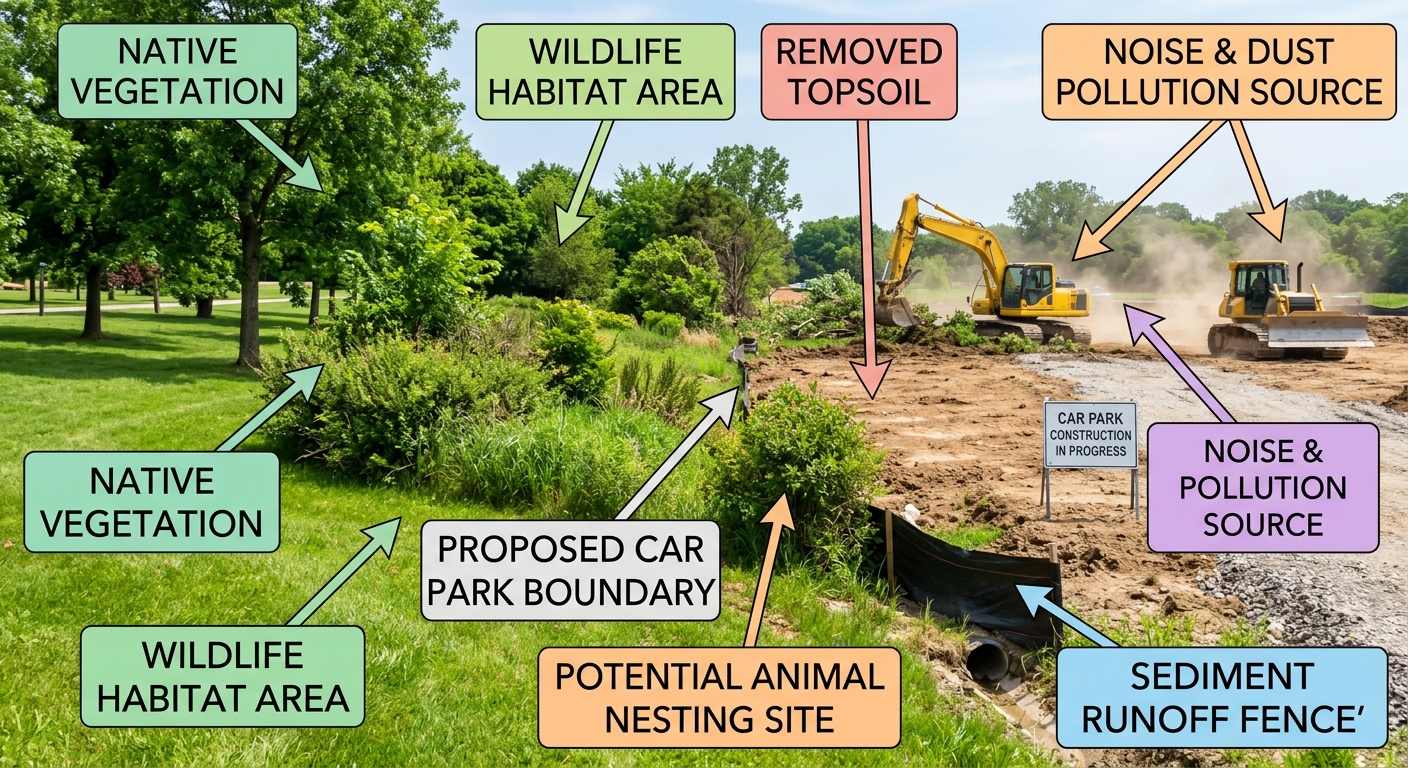
Question diagram
(a)
The picture shows a sediment runoff fence. Suggest one other action people could take to protect the animals. [1]Criterion D (i) · Level 1-2
(b)
Describe one problem with that action. [1]Criterion D (iii) · Level 3-4

revisionprep.com

Summary Answer

Not available for this question.

Model Answer

Not available for this question.

Marking Scheme

Not available for this question.

Examiner Insights

Not available for this question.

Question 2Criterion A · Band 1-4 · Easy · 4 marksrevisionprep.com

Adaptations for Survival in Extreme Environments
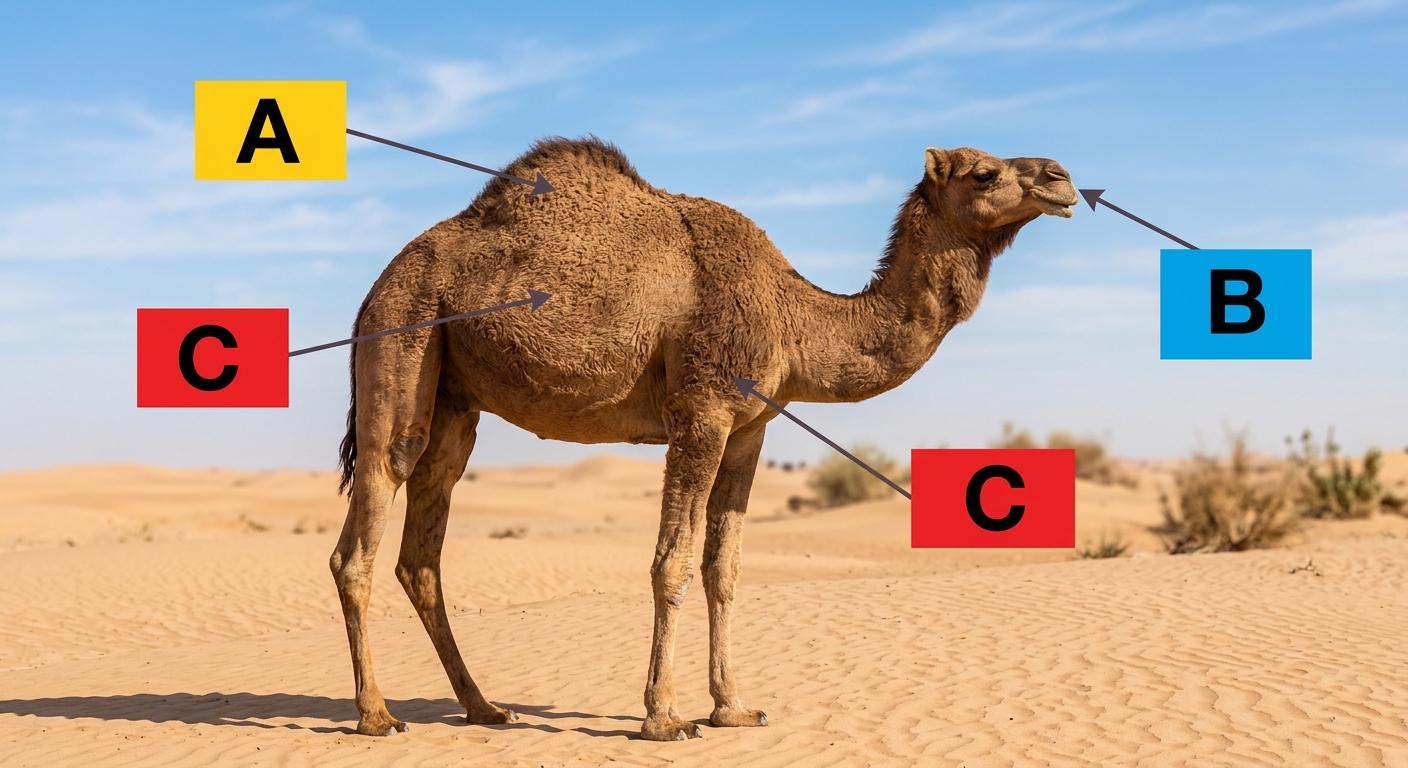
The picture shows a camel with labels A (hump), B (nostrils) and C (thick fur).
Question diagram
(a)
State what feature A stores. [1]Criterion A (i) · Level 1-2
(b)
Describe how feature B helps in a sandstorm. [1]Criterion A (ii) · Level 3-4
(c)
Compare how thick fur helps the camel and the polar bear. [2]Criterion A (iii) · Level 3-4

revisionprep.com

Summary Answer

Not available for this question.

Model Answer

Not available for this question.

Marking Scheme

Not available for this question.

Examiner Insights

Not available for this question.

Question 3Criterion C · Band 1-6 · Medium · 4 marksrevisionprep.com

Definition of Habitat and Examples

A rabbit needs food, water, shelter and space.
Location A: food (grass, leaves); water not recorded; shelter (bushes, tall grass); space not recorded
Location B: food not recorded; shelter (bushes, tall grass, rock gaps)
(a)
Identify one food at Location A. [1]Criterion C (iii) · Level 1-2
(b)
Explain why we cannot yet say Location A is a good habitat. [1]Criterion C (iv) · Level 3-4
(c)
A student says B is better because it has more shelter. Discuss this claim. [2]Criterion C (iv) · Level 5-6

revisionprep.com

Summary Answer

Not available for this question.

Model Answer

Not available for this question.

Marking Scheme

Not available for this question.

Examiner Insights

Not available for this question.

Question 4Criterion B · Band 1-6 · Medium · 4 marksrevisionprep.com

Structural and Behavioral Adaptations

Kemi models animal insulation. She wraps beakers of warm water in different numbers of layers of felt and measures the temperature drop in 10 minutes.
Layers0123
Temperature drop (°C)201286
(a)
Describe the pattern. [1]Criterion B (iii) · Level 1-2
(b)
Describe how the effect of each extra layer changes. [1]Criterion B (iii) · Level 3-4
(c)
Predict the drop with 4 layers, and link the model to arctic animals. [2]Criterion B (iii) · Level 5-6

revisionprep.com

Summary Answer

Not available for this question.

Model Answer

Not available for this question.

Marking Scheme

Not available for this question.

Examiner Insights

Not available for this question.

Question 5Criterion C · Band 1-6 · Medium · 6 marksrevisionprep.com

How Adaptations Increase Chances of Survival

Kofi tests how blubber (fat) helps animals in icy water. He puts on a plastic glove filled with a thick layer of vegetable fat, and an empty plastic glove on the other hand. He puts both hands in a bowl of cold (not icy) water and times how long until each hand feels too cold, up to a limit of 60 s. A teacher watches.
Empty glove: 12 s, 15 s, 13 s
Fat-filled glove: 60 s, 60 s, 60 s (stopped at the limit)
(a)
Calculate the mean time for the empty glove. [1]Criterion C (iii) · Level 1-2
(b)
Present the results in a table with headings and units. [2]Criterion C (ii) · Level 3-4
(c)
Explain what the results show about blubber, and why it helps seals survive. [2]Criterion C (iv) · Level 5-6
(d)
Explain why the 60 s limit means we do not know the full effect of the fat. [1]Criterion C (iv) · Level 5-6

revisionprep.com

Summary Answer

Not available for this question.

Model Answer

Not available for this question.

Marking Scheme

Not available for this question.

Examiner Insights

Not available for this question.

Question 6Criterion B · Band 1-8 · Challenge · 8 marksrevisionprep.com

Different Types of Habitats Desert Forest Aquatic

Desert plants have thick, waxy leaves. Mia wants to find out whether a waxy coating slows water loss. She has paper towels, petroleum jelly (to act like wax), water, a balance and a sunny windowsill.
(a)
State the independent and dependent variables. [1]Criterion B (i) · Level 1-2
(b)
Predict the result, and explain using desert plants. [2]Criterion B (ii) · Level 3-4
(c)
Outline a fair method. [3]Criterion B (iii) · Level 5-6
(d)
Explain one way this model is different from a real leaf, and how that difference could make the results different from real life. [2]Criterion B (iii) · Level 7-8

revisionprep.com

Summary Answer

Not available for this question.

Model Answer

Not available for this question.

Marking Scheme

Not available for this question.

Examiner Insights

Not available for this question.

That's every free question here — 6 of 70.

+64 more questions, plus Mock Papers & Worksheets, are waiting in Premium.

Upgrade