You're viewing free preview questions — 6 questions previewing here — subscribe to unlock 50 more, plus the Full Question Bank, Mock Papers & Worksheets.Upgrade
Back

Interdependence in Organisms — Free MYP1 Sciences Practice Questions

Free questions

Open in full, with answers, mark scheme and examiner insights.

Question 1Criterion A · Band 1-2 · Easy · 2 marksrevisionprep.com

Interaction Between Digestive and Circulatory Systems
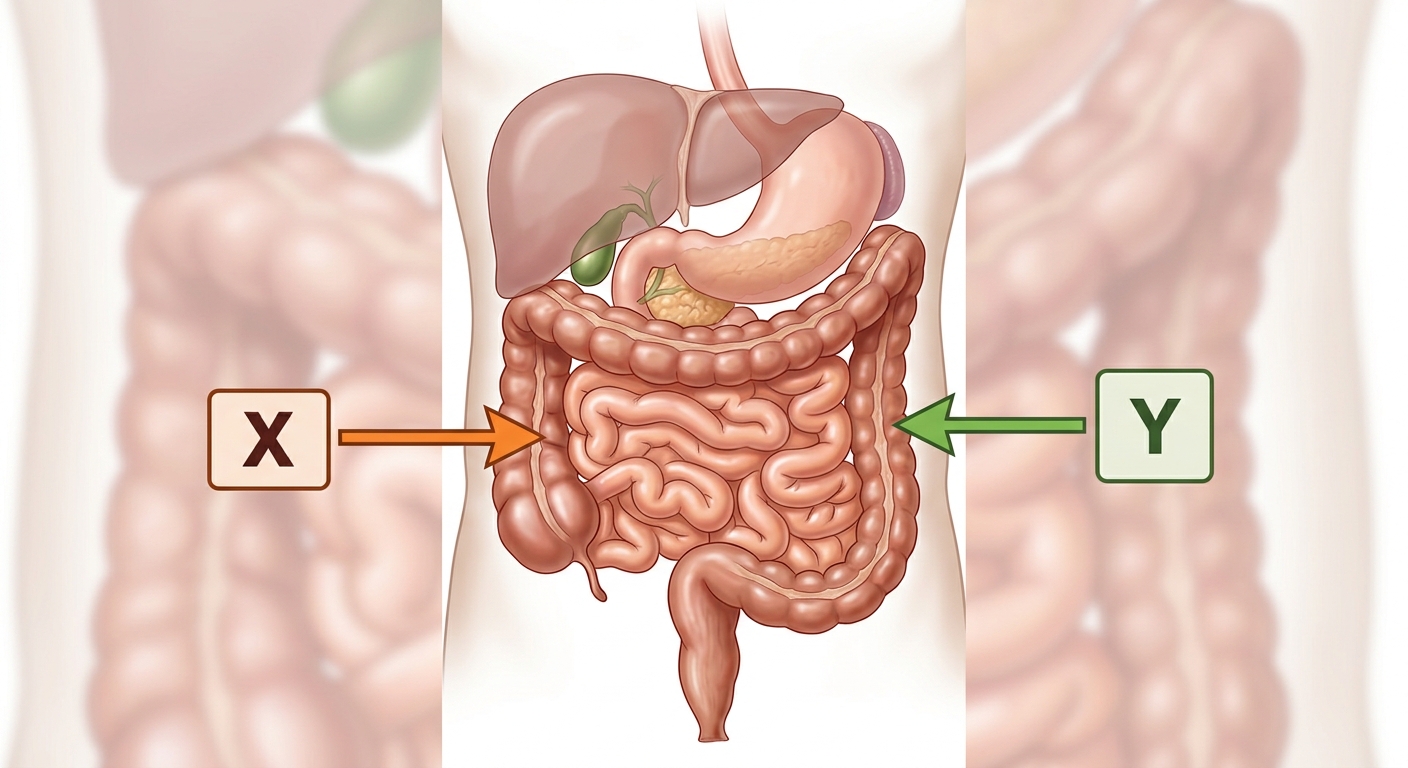
The picture shows part of the digestive system. X is the small intestine. Y is the large intestine.
Question diagram
(a)
Identify where digested nutrients pass into the blood. [1]Criterion A (ii) · Level 1-2
(b)
State what Y mainly absorbs. [1]Criterion A (i) · Level 1-2

revisionprep.com

Summary Answer

Not available for this question.

Model Answer

Not available for this question.

Marking Scheme

Not available for this question.

Examiner Insights

Not available for this question.

Question 2Criterion D · Band 1-4 · Easy · 2 marksrevisionprep.com

Consequences of System Failure

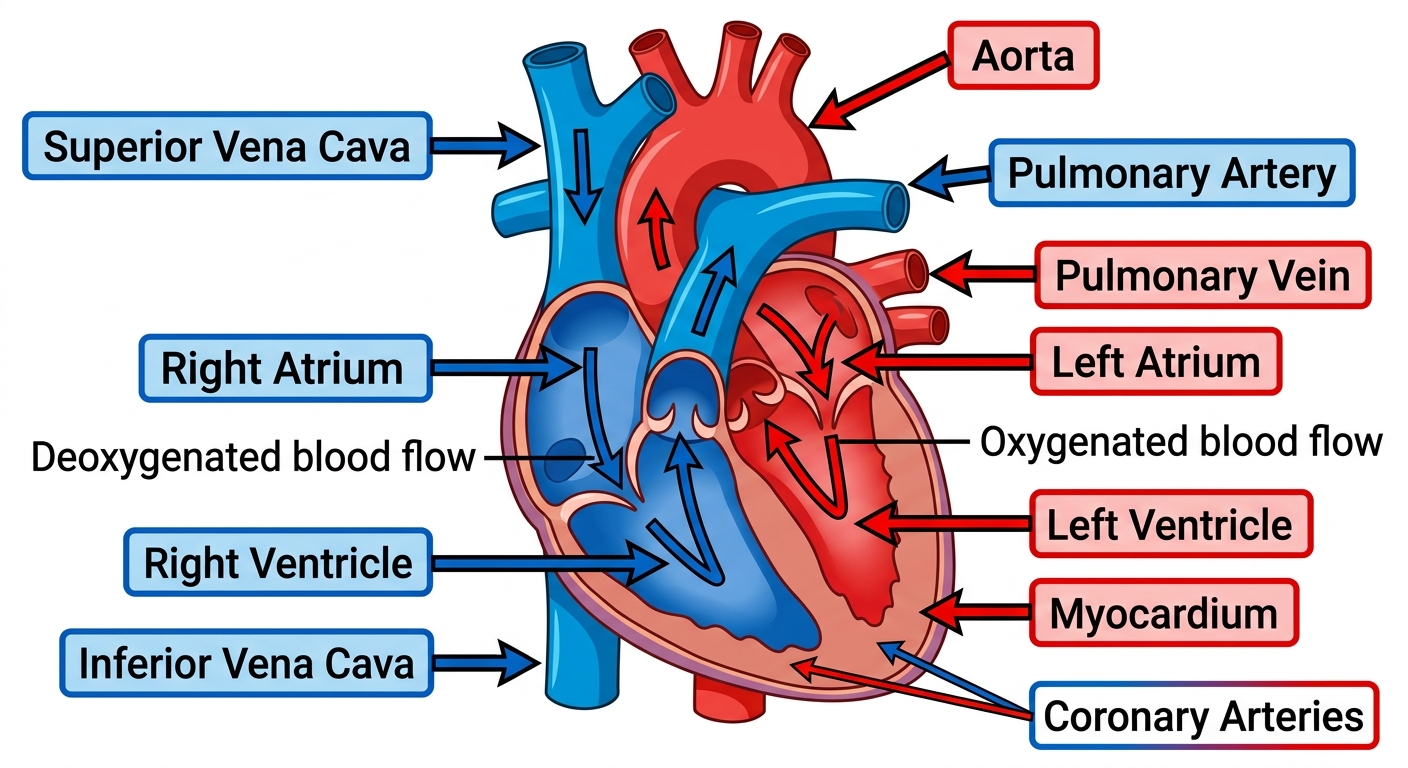
The picture shows the heart and its main blood vessels. In a heart attack, part of the heart muscle stops getting blood and is damaged.
Question diagram
(a)
Describe one way a heart attack could affect daily life. [1]Criterion D (ii) · Level 1-2
(b)
Suggest one healthy habit that lowers the risk of heart disease. [1]Criterion D (iii) · Level 3-4

revisionprep.com

Summary Answer

Not available for this question.

Model Answer

Not available for this question.

Marking Scheme

Not available for this question.

Examiner Insights

Not available for this question.

Question 3Criterion B · Band 1-6 · Medium · 4 marksrevisionprep.com

Transport of Nutrients and Oxygen to Cells

Animal groups and their hearts:
Fish: 2 chambers
Frogs: 3 chambers
Lizards: 3 chambers
Birds: 4 chambers
Mammals (such as humans): 4 chambers
(a)
Identify how many chambers a frog's heart has. [1]Criterion B (iii) · Level 1-2
(b)
Describe the pattern across the groups. [1]Criterion B (iii) · Level 3-4
(c)
A tuna weighs 200 kg. A student predicts it has 4 chambers because it is big. Explain why this is wrong. [2]Criterion B (iii) · Level 5-6

revisionprep.com

Summary Answer

Not available for this question.

Model Answer

Not available for this question.

Marking Scheme

Not available for this question.

Examiner Insights

Not available for this question.

Question 4Criterion C · Band 1-6 · Medium · 6 marksrevisionprep.com

How Systems Work Together in the Human Body

Your leg muscles need glucose and oxygen to release energy when you run. Three systems help: digestive, respiratory and circulatory.
(a)
State the job of each system in getting glucose and oxygen to the muscles. [1]Criterion C (i) · Level 1-2
(b)
Draw a flow diagram showing how glucose and oxygen reach a leg muscle cell, starting from a meal and a breath of air. [3]Criterion C (ii) · Level 3-4
(c)
Add the waste route for carbon dioxide to your diagram. [1]Criterion C (ii) · Level 3-4
(d)
Use your diagram to explain why a problem in one system affects the others. [1]Criterion C (iv) · Level 5-6

revisionprep.com

Summary Answer

Not available for this question.

Model Answer

Not available for this question.

Marking Scheme

Not available for this question.

Examiner Insights

Not available for this question.

Question 5Criterion B · Band 1-6 · Medium · 7 marksrevisionprep.com

Case Studies of System Interactions in Daily Life
Plants have systems too. Water travels up from the roots, through the stem, and escapes from the leaves. Ella wants to find out whether the leaves help pull water up. She has celery stalks (some with leaves, some with leaves removed), food colouring, water and a ruler.
Question diagram
(a)
State the independent and dependent variables. [1]Criterion B (i) · Level 1-2
(b)
Predict the result, with a reason. [2]Criterion B (ii) · Level 3-4
(c)
Outline a fair method. [3]Criterion B (iii) · Level 5-6
(d)
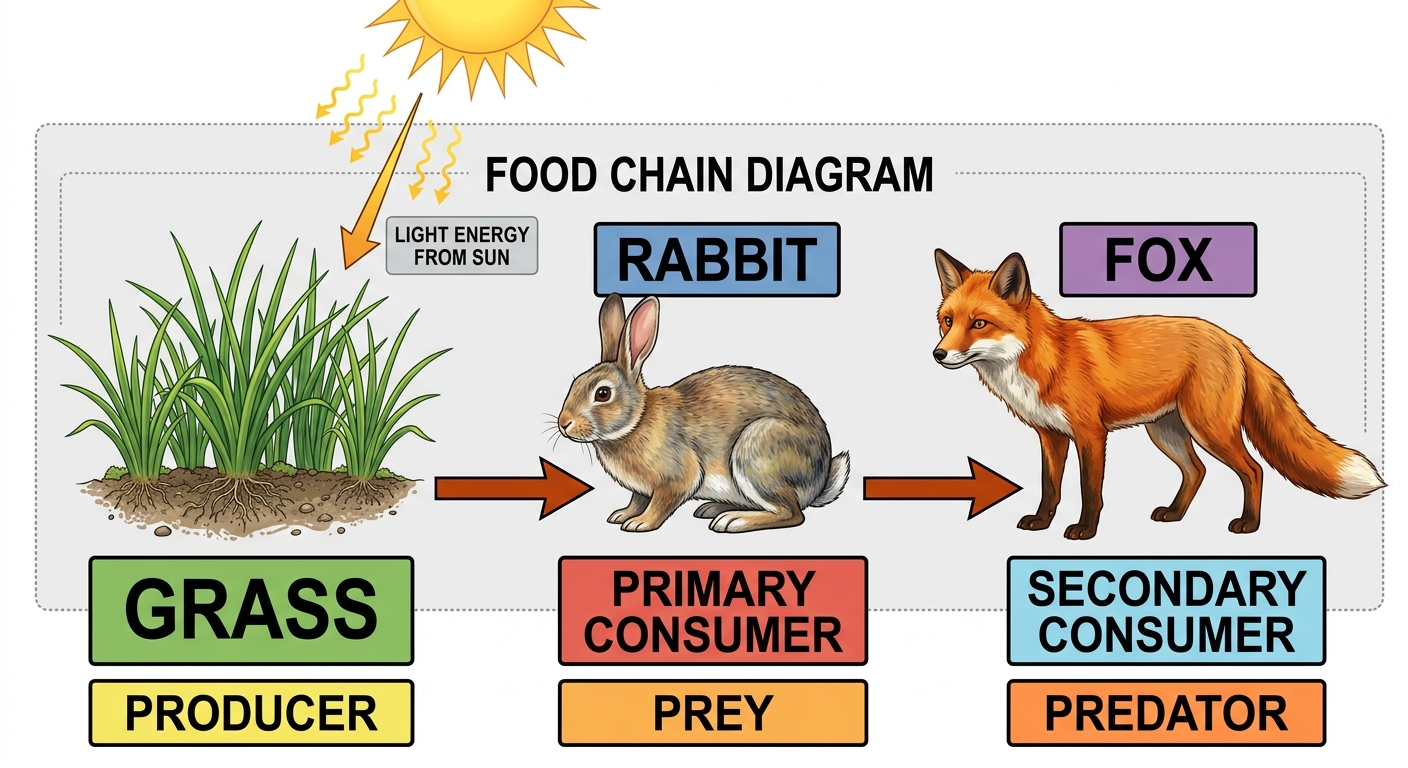
The picture shows a food chain that starts with grass. Explain how the grass's leaves and stem working together helps the rabbit and the fox. [1]Criterion B (iii) · Level 5-6

revisionprep.com

Summary Answer

Not available for this question.

Model Answer

Not available for this question.

Marking Scheme

Not available for this question.

Examiner Insights

Not available for this question.

Question 6Criterion B · Band 1-8 · Challenge · 8 marksrevisionprep.com

Transport of Nutrients and Oxygen to Cells

Ravi wants to find out how exercise affects how fast his heart pumps blood to his muscles. He will measure his pulse rate (beats per minute) after different activities. He has a stopwatch.
(a)
Describe how to measure pulse rate. [1]Criterion B (i) · Level 1-2
(b)
Predict the result, and explain using what muscles need. [2]Criterion B (ii) · Level 3-4
(c)
Outline a fair method for three activities, and explain how your method makes sure that any change in pulse rate is caused only by the activity. [4]Criterion B (iii) · Level 7-8
(d)
State one safety rule. [1]Criterion B (iii) · Level 3-4

revisionprep.com

Summary Answer

Not available for this question.

Model Answer

Not available for this question.

Marking Scheme

Not available for this question.

Examiner Insights

Not available for this question.

That's every free question here — 6 of 56.

+50 more questions, plus Mock Papers & Worksheets, are waiting in Premium.

Upgrade