You're viewing free preview questions — 4 questions previewing here — subscribe to unlock 67 more, plus the Full Question Bank, Mock Papers & Worksheets.Upgrade
Comparing and Ordering Numbers — Free MYP2 Mathematics Practice Questions

1QuestionInequalities and SymbolsConcept Practice
2 marks~3 minCriterion A
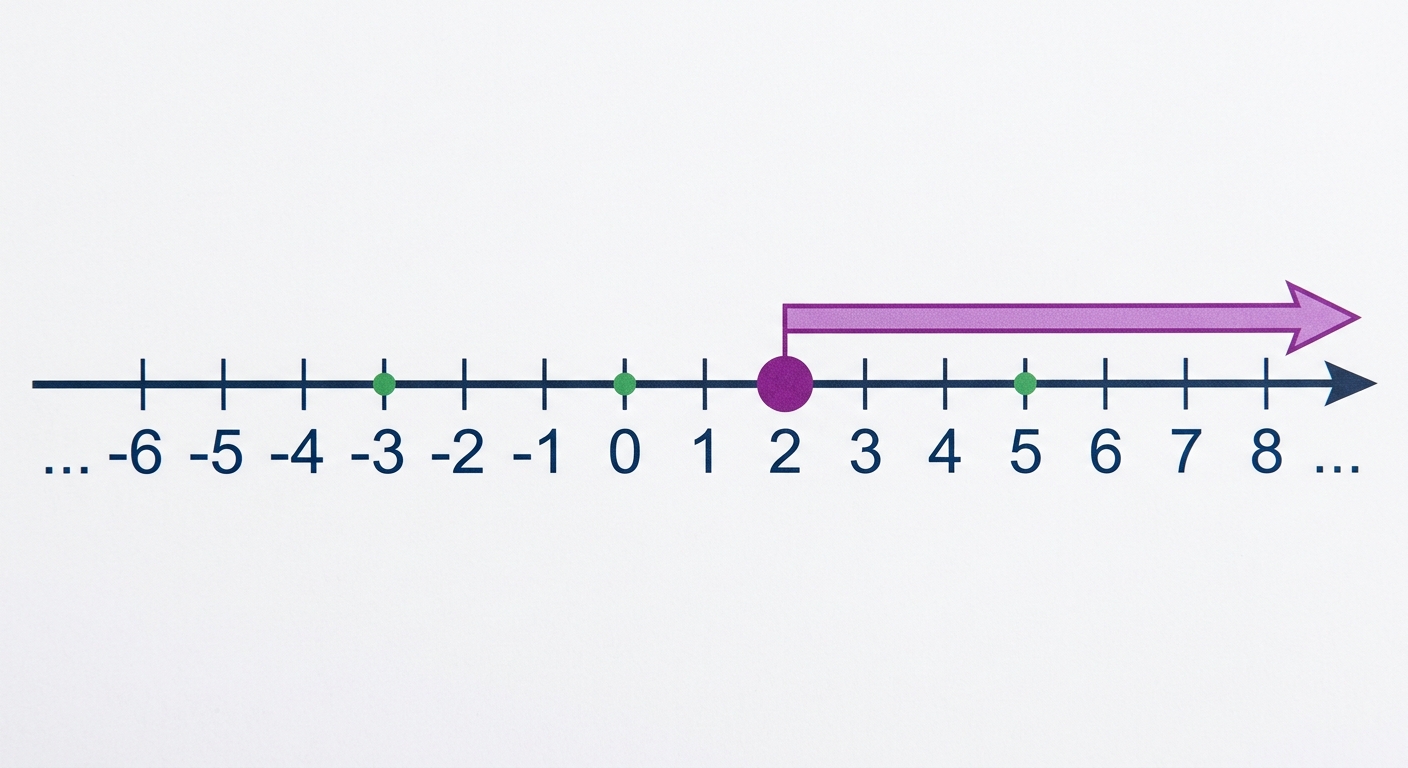
The number line below shows points marked at , , and .
a
Identify the inequality symbol needed when an open circle is used on a number line. [1]
b
Write the inequality that represents the shaded region shown on the number line. [1]

Solutions
2QuestionInequalities and SymbolsAssessment Practice
4 marks~6 minCriterion D
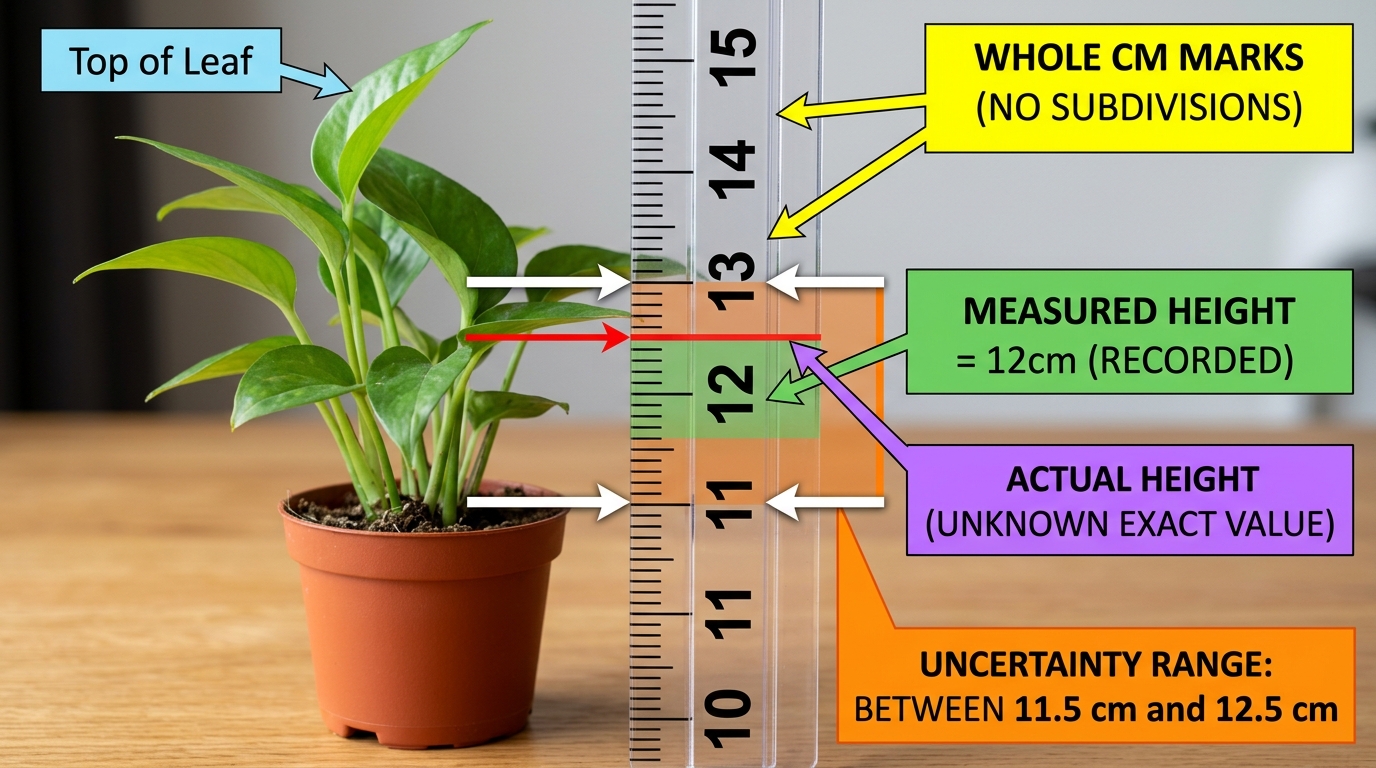
A student measures a plant's height using a ruler marked in whole centimetres only and records it as 12 cm. The actual height lies somewhere in the range (in cm).
a
State what the notation means in the inequality above. [1]
b
Explain why the inequality is a more honest record of the measurement than writing "height = 12 cm." [2]
c
Identify one real-world limitation of using this inequality to describe the plant's height. [1]
Solutions
3QuestionInequalities and SymbolsConcept Practice
3 marks~5 minCriterion C
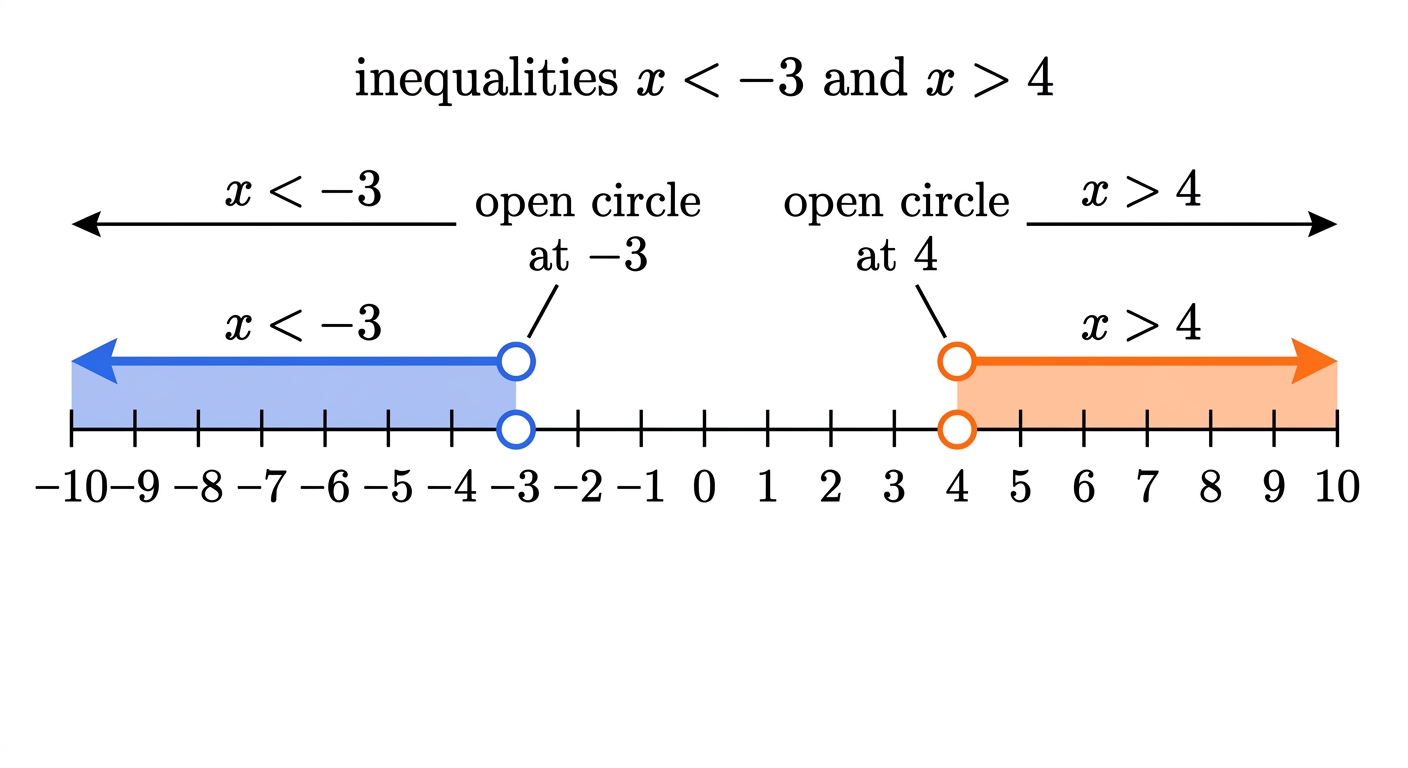
A number line shows points at and . The inequality is shown to the left of , and is shown to the right of . Both regions are shaded.
a
Identify one value of that satisfies and one value that satisfies . [1]
b
Explain why no single value of can satisfy both and at the same time. [1]
c
Compare the two shaded regions and describe what this tells you about the solution set for both inequalities together. [1]
Solutions
4QuestionInequalities and SymbolsAssessment Practice
5 marks~8 minCriterion B
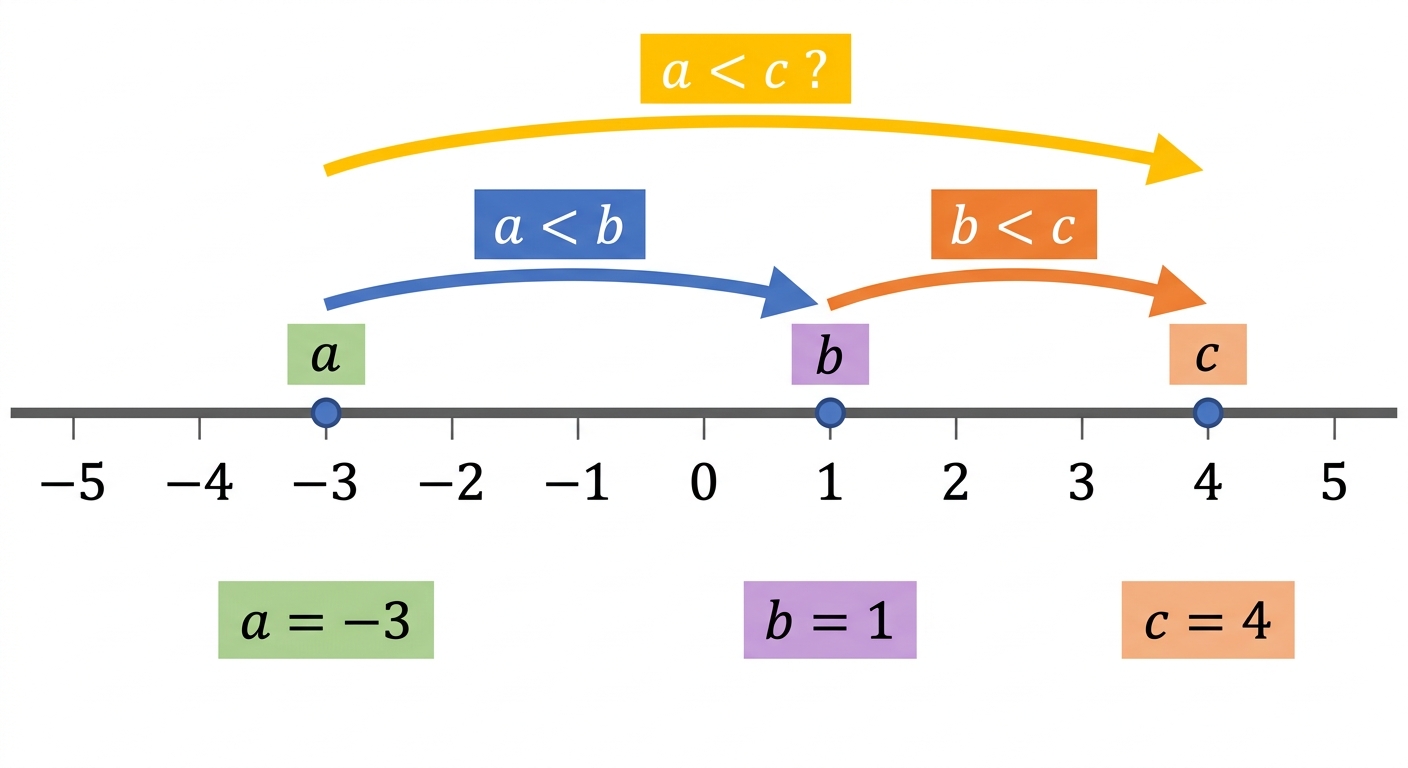
Given , , and , where and .
a
Identify the positions of , , and on the number line below by labelling each point. [1]
b
Explain why is true for these values, using the number line. [2]
c
Compare the statement "if and , then " with what your number line shows. Does this pattern hold for any real numbers? Give a reason. [2]
Solutions
That's every free question here — 4 of 71.
+67 more questions, plus Mock Papers & Worksheets, are waiting in Premium.