You're viewing free preview questions — 4 questions previewing here — subscribe to unlock 82 more, plus the Full Question Bank, Mock Papers & Worksheets.Upgrade
Divisibility and Remainders — Free MYP2 Mathematics Practice Questions

1QuestionApplications of Remainders in ContextConcept Practice
2 marks~3 minCriterion A
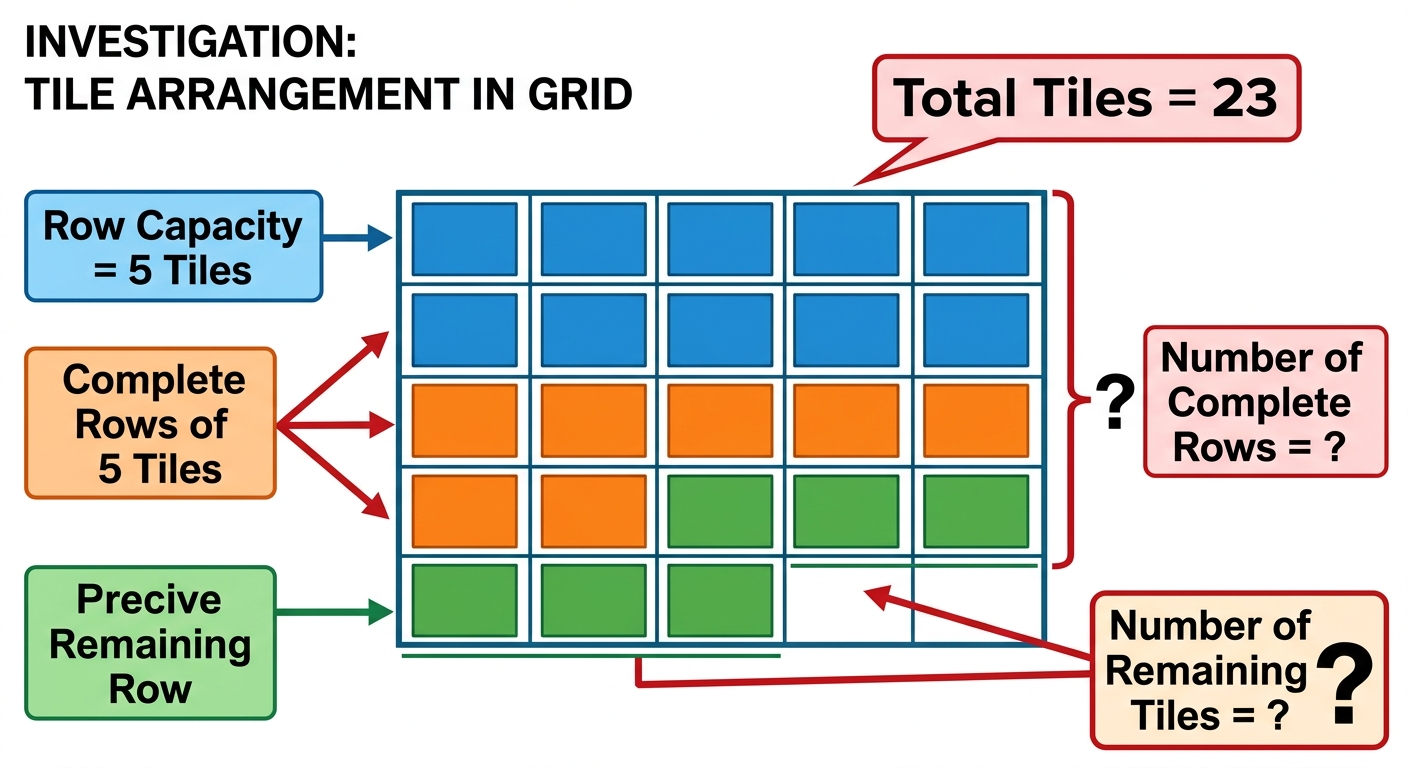
A baker arranges 23 identical rolls into trays. Each tray holds exactly 5 rolls.
a
State the number of complete trays that can be filled. [1]
b
Calculate the number of rolls left over after filling the complete trays. [1]

Solutions
2QuestionDivisibility Rules for Numbers 2 to 10Assessment Practice
3 marks~5 minCriterion B
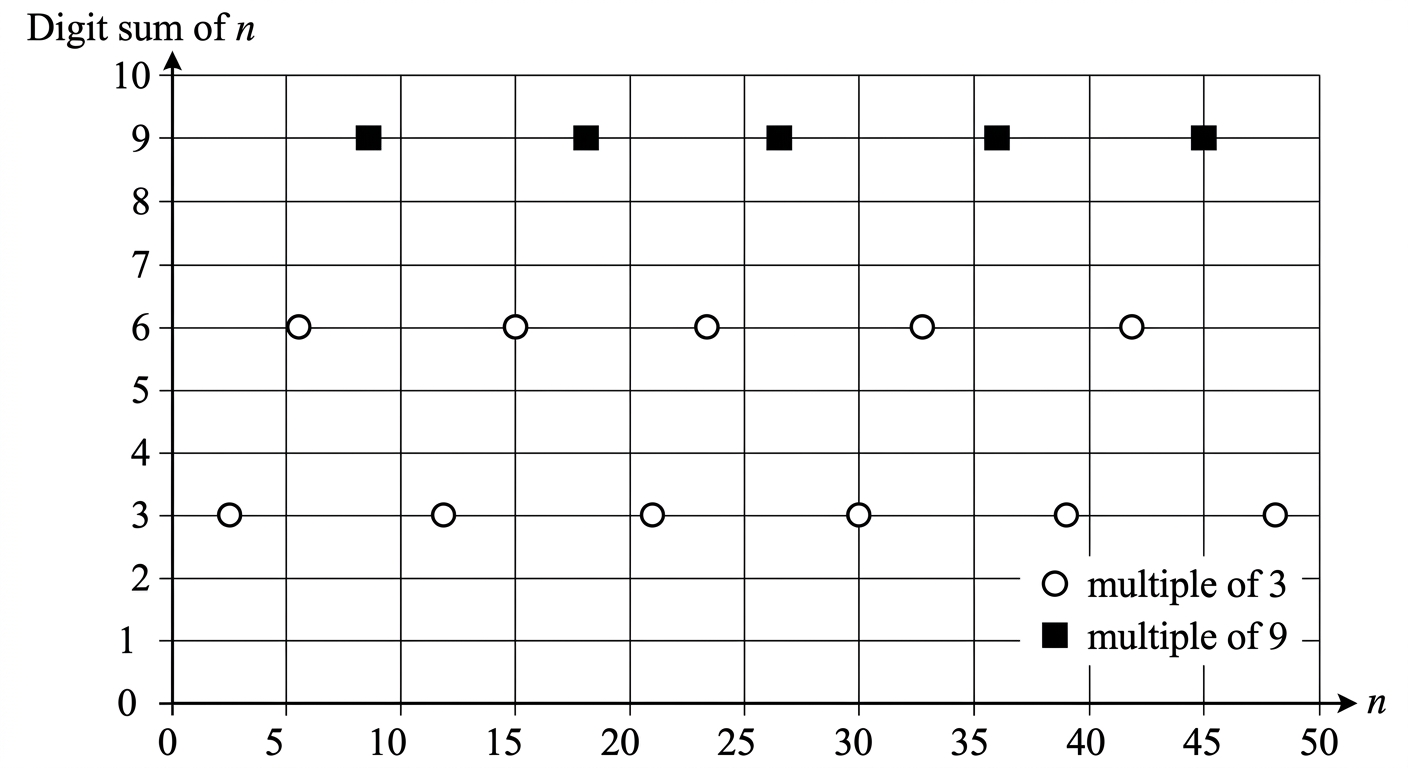
The graph below shows the digit sum of each multiple of 3 (circles) and each multiple of 9 (squares) from 1 to 50.
Digit sum means the result of adding all the digits of a number together (e.g. the digit sum of 27 is ).
Digit sum means the result of adding all the digits of a number together (e.g. the digit sum of 27 is ).
a
Identify one digit sum value shown for multiples of 9 on the graph. [1]
b
Explain why the digit sum test can be used to check if a number is divisible by 3. [1]
c
Compare the digit sums of multiples of 3 with those of multiples of 9, and explain what this tells you about the relationship between divisibility by 3 and divisibility by 9. [1]
Solutions
3QuestionApplications of Remainders in ContextAssessment Practice
6 marks~9 minCriterion D
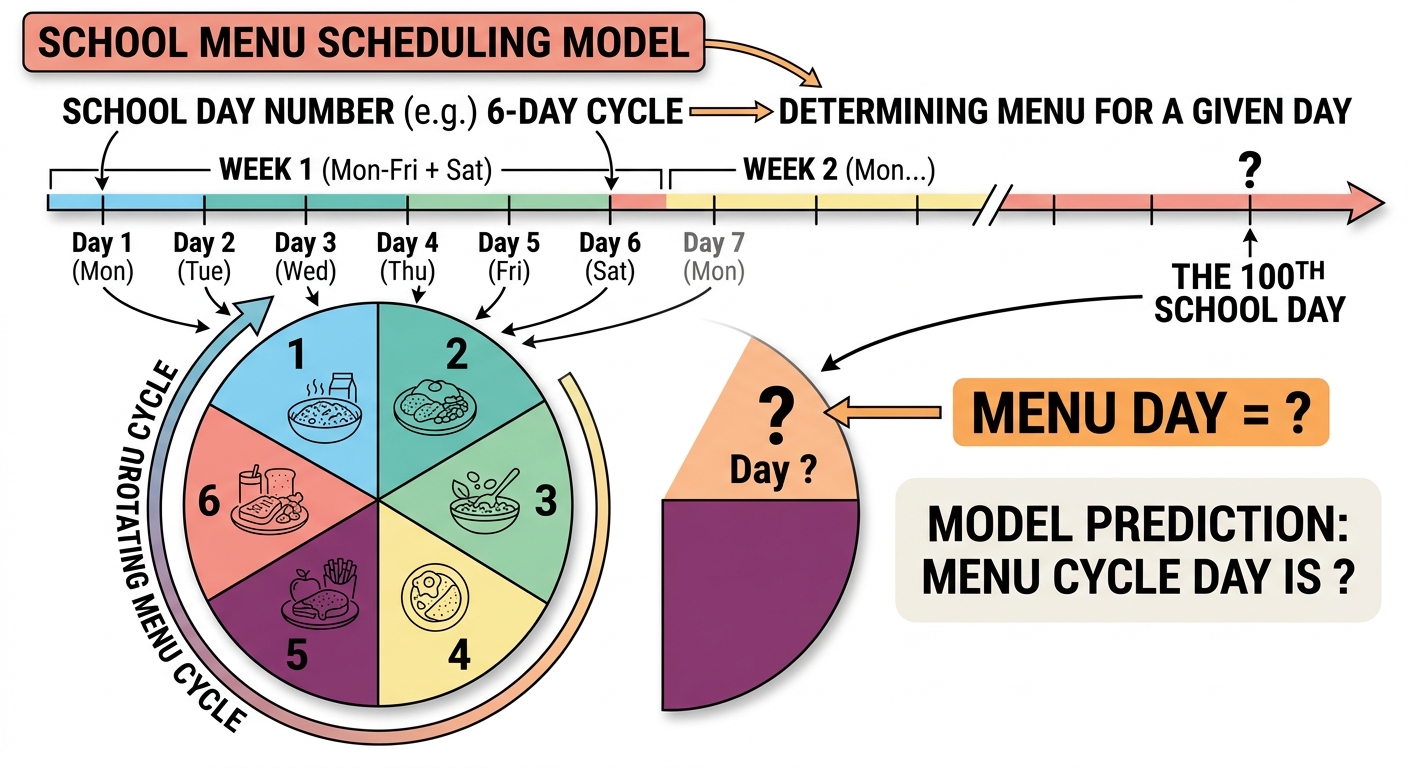
A school cafeteria uses a 6-day rotating menu cycle. Day 1 falls on the first Monday of term, and the cycle continues through every school day without skipping.
a
Calculate which day of the 6-day cycle falls on the 100th school day. [2]
b
Explain why the remainder method gives a reliable mathematical prediction for this cycle. [2]
c
Identify two real-world factors that could make this prediction inaccurate, and explain which factor is more likely to disrupt the cycle. [2]
Solutions
4QuestionApplications of Remainders in ContextAssessment Practice
8 marks~12 minCriterion C
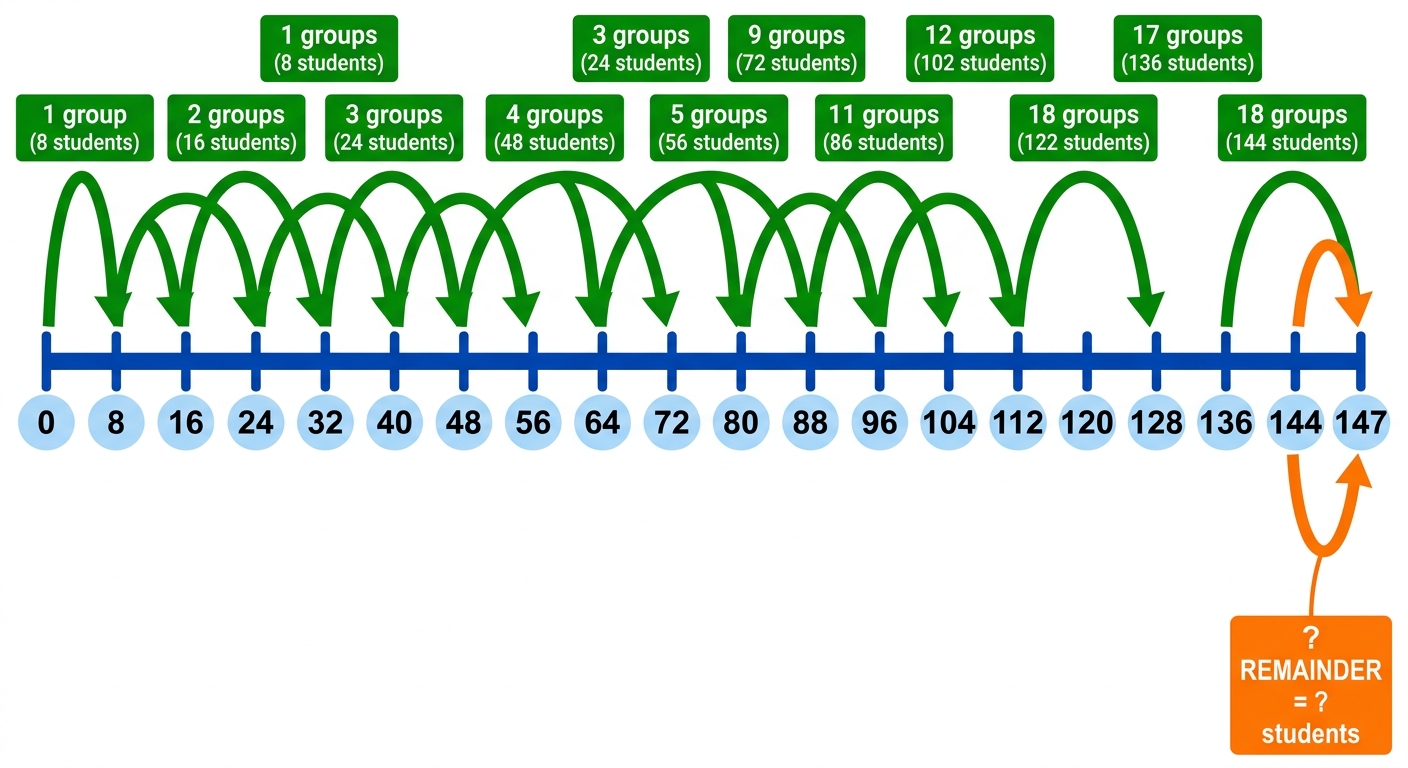
A school has 147 students forming groups of 8 for a workshop. Students left over (fewer than 8) join a separate mixed-age group. The principal claims that only 17 full groups can be formed.
a
Calculate the values of and in , where is the number of full groups and is the remainder. [2]
b
Show, using two steps of calculation, why the principal's claim that leads to a contradiction. [2]
c
State whether the principal's claim is correct or incorrect. Explain your answer using the division algorithm and identify how many students join the mixed-age group. [4]
Solutions
That's every free question here — 4 of 86.
+82 more questions, plus Mock Papers & Worksheets, are waiting in Premium.