You're viewing free preview questions — 4 questions previewing here — subscribe to unlock 70 more, plus the Full Question Bank, Mock Papers & Worksheets.Upgrade
Arithmetic and Geometric Sequences — Free MYP2 Mathematics Practice Questions

1QuestionRecognizing Geometric SequencesConcept Practice
2 marks~3 minCriterion B
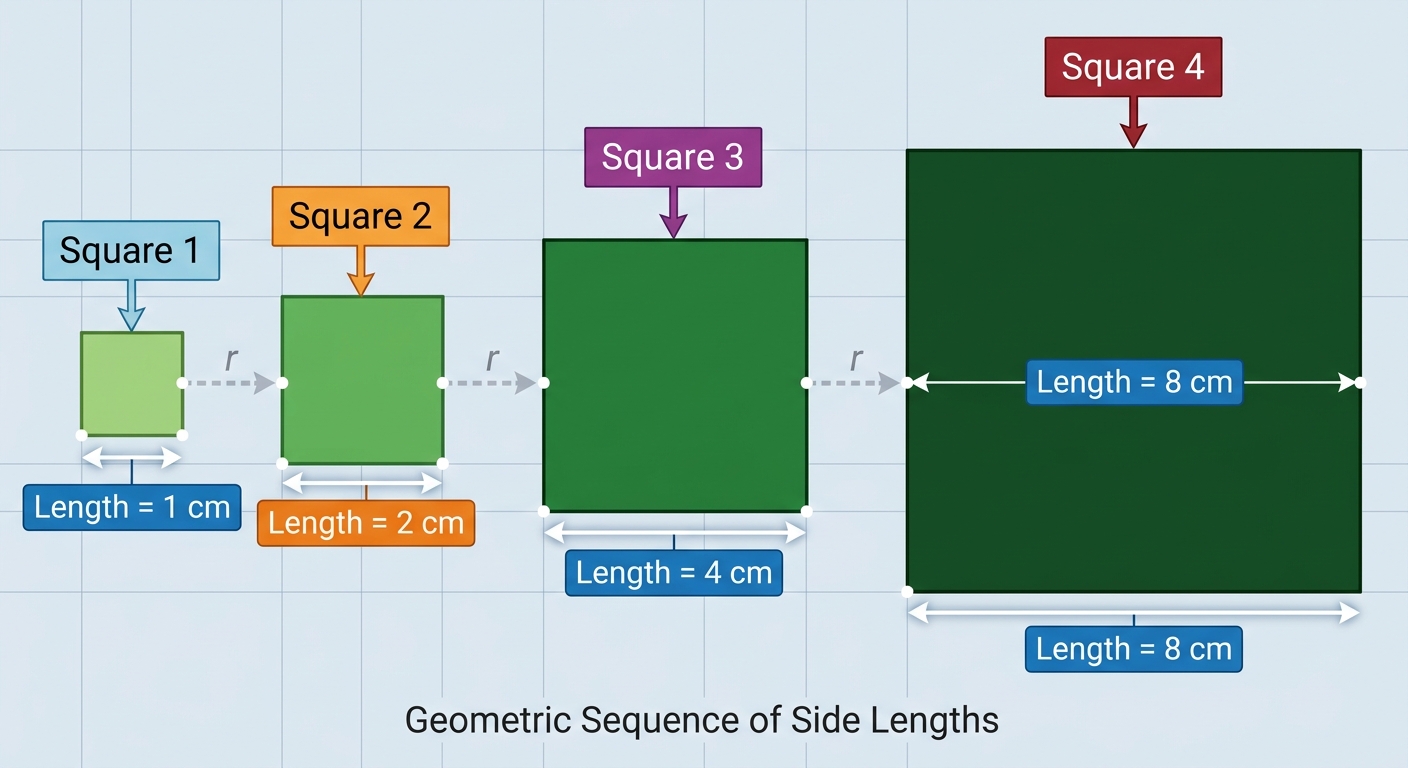
The side lengths of squares in a pattern form a geometric sequence (a sequence where each term is multiplied by the same number): 1 cm, 2 cm, 4 cm, 8 cm.
a
State the common ratio of this sequence. [1]
b
Show, using two different pairs of consecutive terms, that the ratio is the same throughout the sequence. [1]

Solutions
2QuestionFinding Common DifferencesAssessment Practice
4 marks~6 minCriterion C
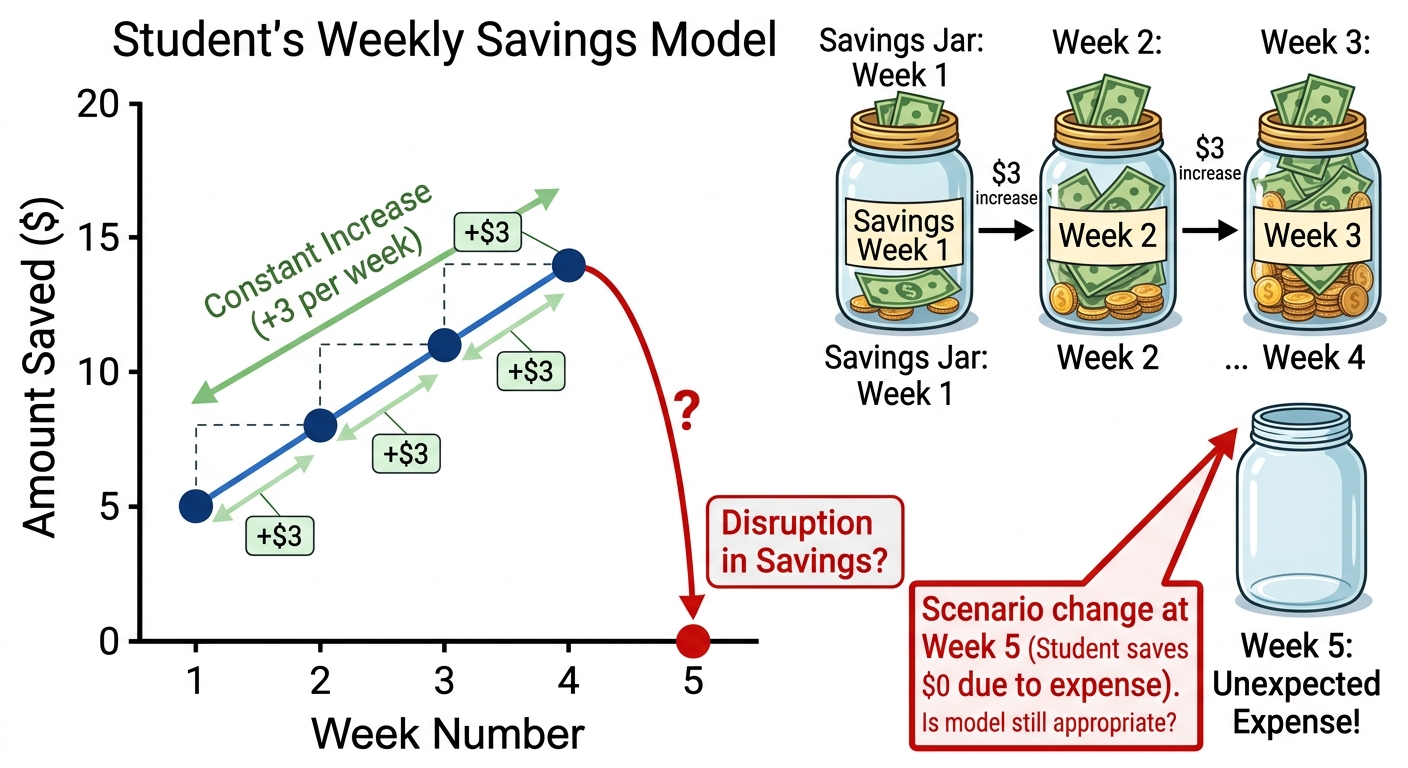
A student records weekly savings (in dollars) over four weeks: .
a
State whether these four values form an arithmetic sequence. Give one reason for your answer. [1]
b
The student saves dollars in week 5 due to an unexpected expense. Calculate the differences between consecutive terms for weeks 1–5 and explain why the sequence is no longer arithmetic. [2]
c
Identify one assumption the arithmetic sequence model makes about savings behaviour and explain why this assumption may not hold in real life. [1]
Solutions
3QuestionCalculating Common RatiosConcept Practice
2 marks~3 minCriterion A
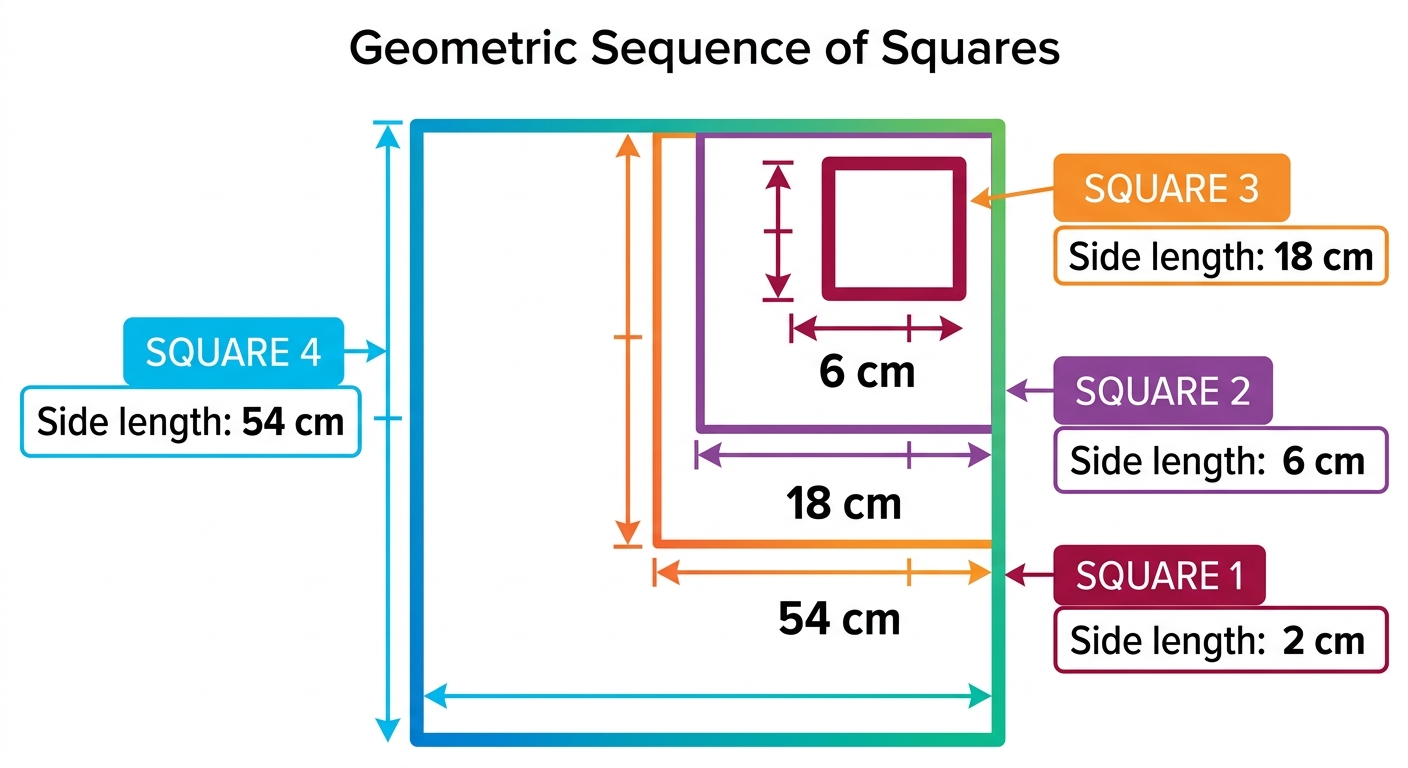
The side lengths of four squares form a geometric sequence (each term is multiplied by the same number):
Square 1: 2 cm
Square 2: 6 cm
Square 3: 18 cm
Square 4: 54 cm
Square 1: 2 cm
Square 2: 6 cm
Square 3: 18 cm
Square 4: 54 cm
a
State the name of the value that links consecutive terms in a geometric sequence. [1]
b
Calculate the common ratio of this sequence. [1]
Solutions
4QuestionIntroduction to Arithmetic SequencesAssessment Practice
5 marks~8 minCriterion D
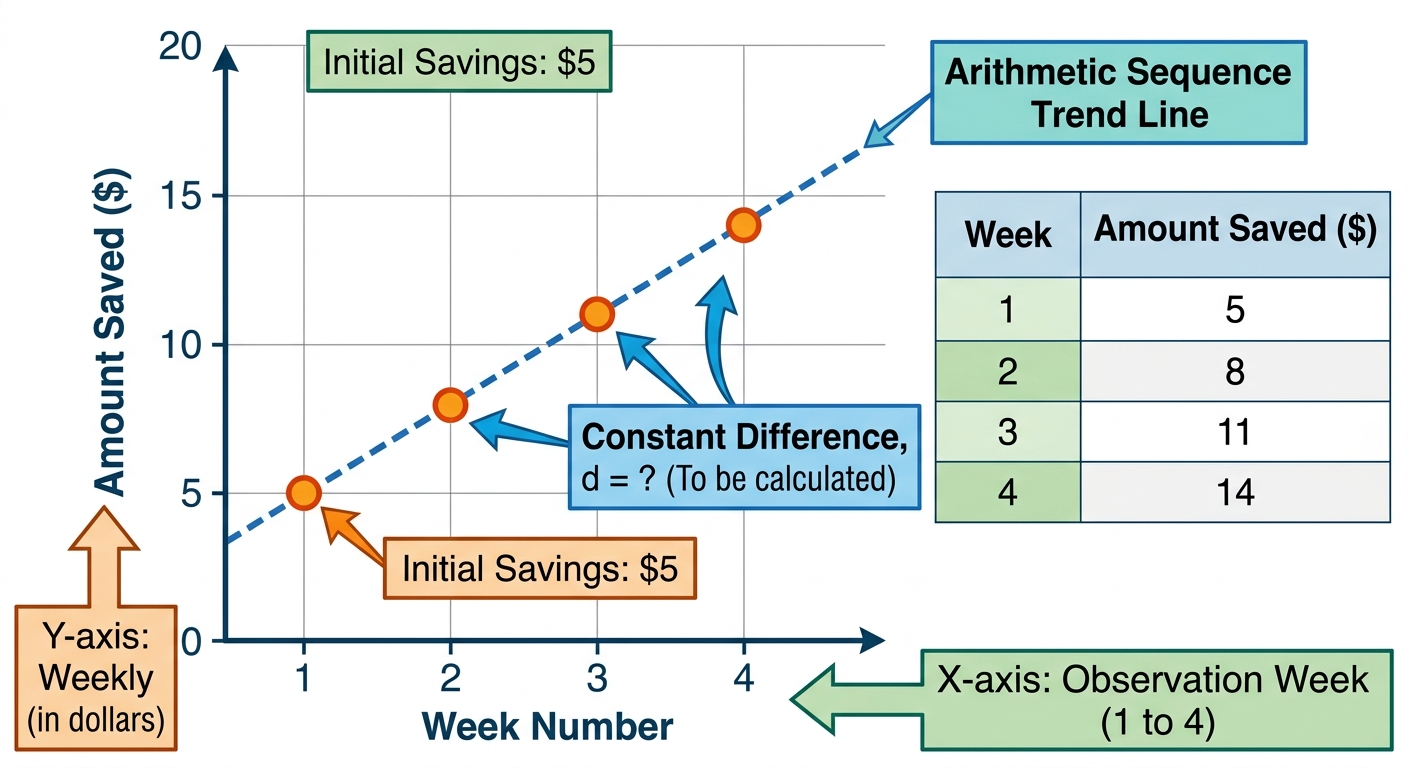
A student saves money each week. In week 1 they save 5 dollars, week 2 they save 8 dollars, week 3 they save 11 dollars, and week 4 they save 14 dollars. This is an arithmetic sequence (a number pattern with a constant difference between terms).
a
Identify the first term and the common difference of this sequence. [1]
b
Calculate the amount saved in week 10. Show all working. [2]
c
The student plans to buy birthday gifts in weeks 6 and 7, increasing their spending. Explain whether the arithmetic sequence model remains reliable for predicting savings beyond week 5, giving two reasons. [2]
Solutions
That's every free question here — 4 of 74.
+70 more questions, plus Mock Papers & Worksheets, are waiting in Premium.