You're viewing free preview questions — 4 questions previewing here — subscribe to unlock 81 more, plus the Full Question Bank, Mock Papers & Worksheets.Upgrade
Rocks and the Rock Cycle — Free MYP2 Sciences Practice Questions

1QuestionHow Each Type of Rock FormsConcept Practice
3 marks~5 minCriterion B
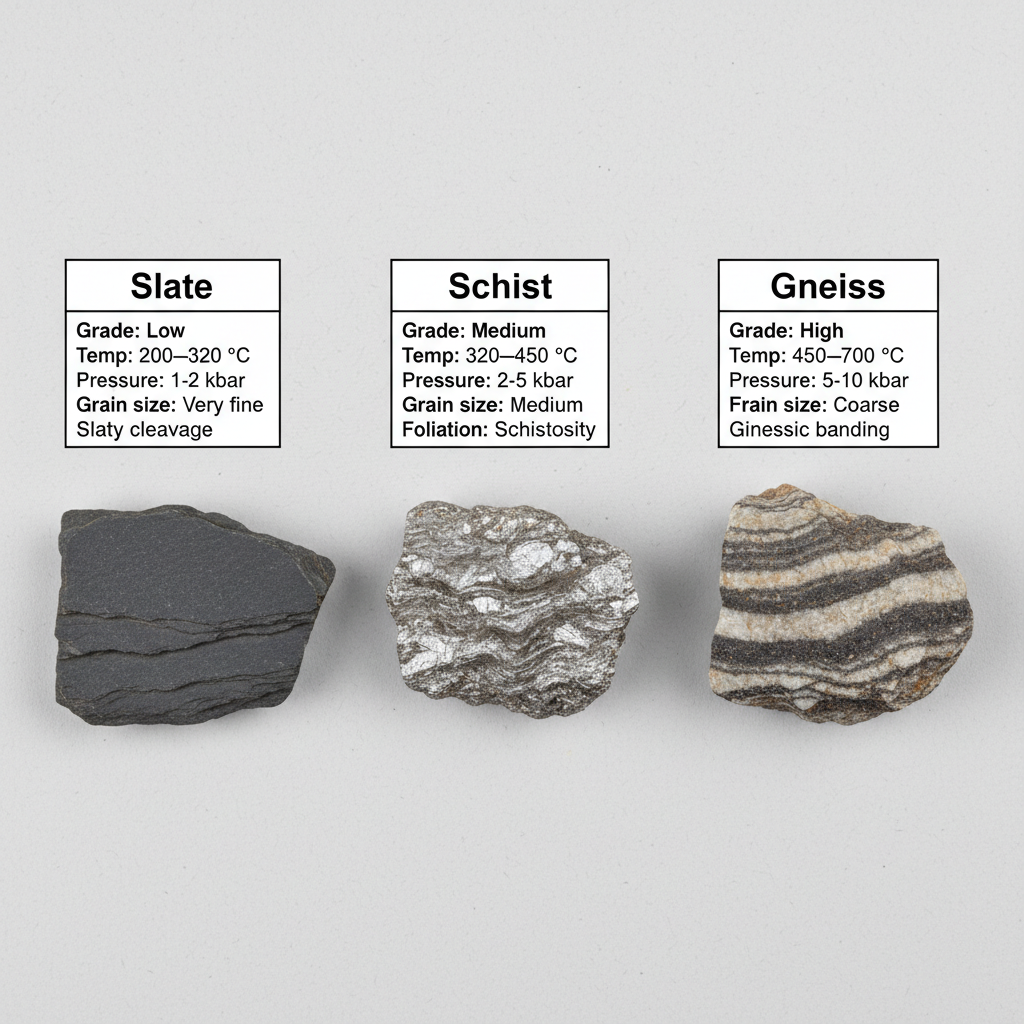
The table below shows data for three metamorphic rocks.
| Rock | Slate | Schist | Gneiss |
|---|---|---|---|
| Metamorphic grade | Low | Medium | High |
| Temperature (°C) | 200–320 | 320–450 | 450–700 |
| Grain size | Very fine | Medium | Coarse |
| Foliation type | Slaty cleavage | Schistosity | Gneissic banding |
a
Identify the trend in grain size as metamorphic grade increases from low to high. [1]
b
Explain why higher temperature and pressure cause grains to grow larger. [1]
c
Compare how foliation changes between slate and gneiss, and suggest why the change occurs. [1]

Solutions
2QuestionUses of Rocks and Minerals in Everyday LifeAssessment Practice
5 marks~8 minCriterion C
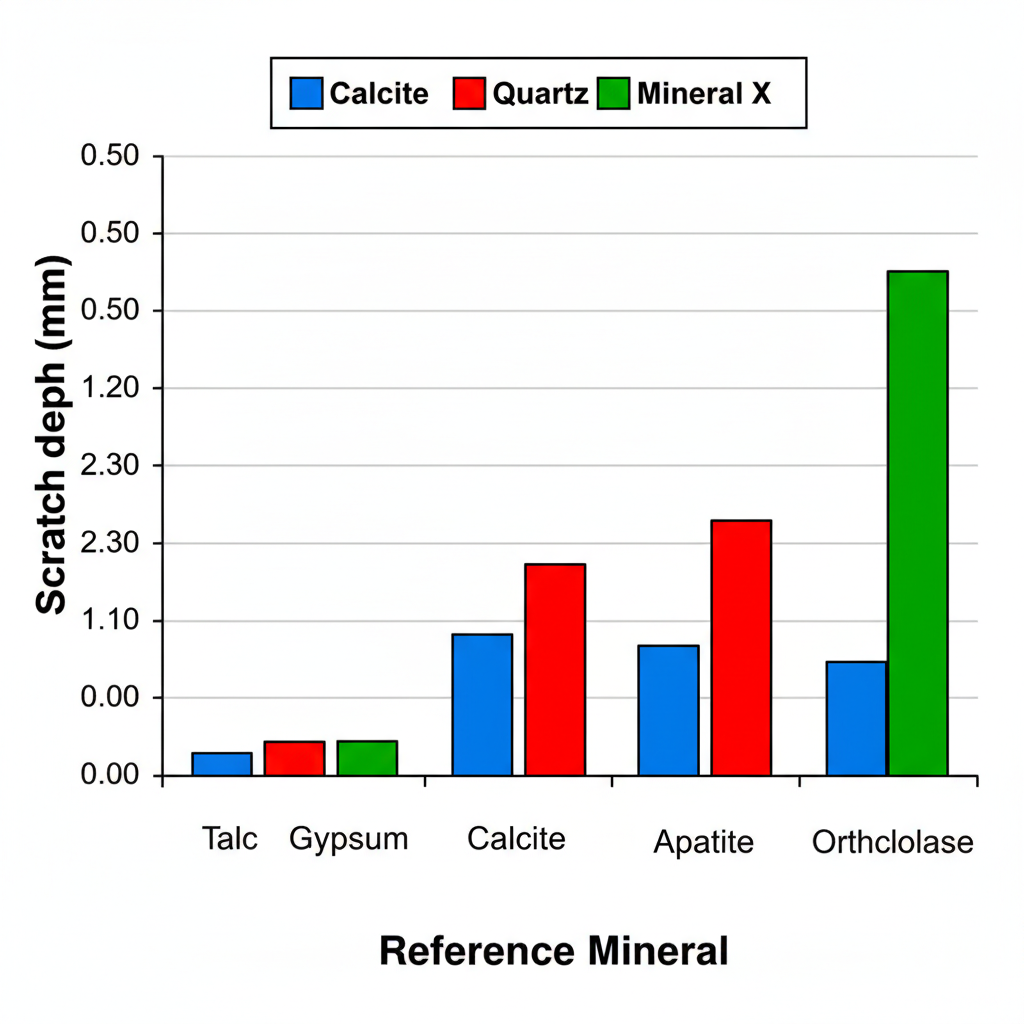
A student used reference minerals from the Mohs scale (hardness 1–7) to scratch three minerals: calcite, quartz, and unknown mineral X. Scratch depth (mm) was measured; a deeper scratch means the test mineral is softer.
Scratch depths (mm):
Reference mineral (Mohs hardness) — Calcite / Quartz / Mineral X
Gypsum (2): 0.00 / 0.00 / 0.00
Calcite (3): 0.00 / 0.00 / 0.05
Fluorite (4): 0.05 / 0.00 / 0.15
Apatite (5): 0.15 / 0.00 / 0.25
Orthoclase (6): 0.30 / 0.00 / 0.40
Quartz (7): 0.45 / 0.00 / 0.50
Scratch depths (mm):
Reference mineral (Mohs hardness) — Calcite / Quartz / Mineral X
Gypsum (2): 0.00 / 0.00 / 0.00
Calcite (3): 0.00 / 0.00 / 0.05
Fluorite (4): 0.05 / 0.00 / 0.15
Apatite (5): 0.15 / 0.00 / 0.25
Orthoclase (6): 0.30 / 0.00 / 0.40
Quartz (7): 0.45 / 0.00 / 0.50
a
Identify the reference mineral with the lowest Mohs hardness that produced a scratch on mineral X. [1]
b
Calculate the average scratch depth for calcite and for mineral X, using only the four reference minerals that scratched calcite (fluorite, apatite, orthoclase, quartz). Show your working. [2]
c
A student claims mineral X is harder than calcite but softer than quartz. Compare the scratch data for all three minerals and evaluate whether this claim is correct. [2]
Solutions
3QuestionHow Each Type of Rock FormsConcept Practice
3 marks~5 minCriterion A
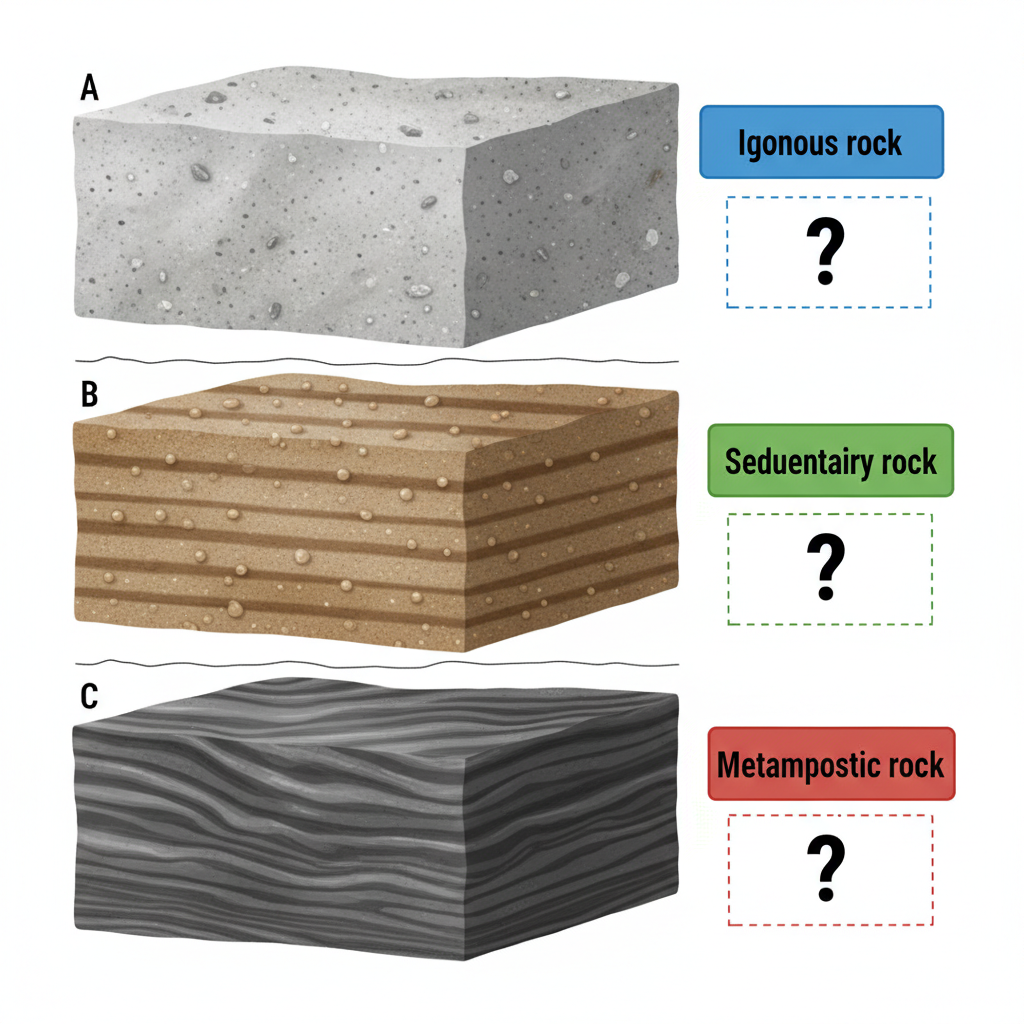
The diagram shows three rock layers: Layer A (igneous), Layer B (sedimentary), and Layer C (metamorphic).
Word bank: cooling of magma / compaction of sediments / heat and pressure
Word bank: cooling of magma / compaction of sediments / heat and pressure
a
Identify the formation process for Layer A (igneous rock). [1]
b
Describe how Layer B (sedimentary rock) forms, using the correct term from the word bank. [1]
c
Compare how Layer C (metamorphic rock) forms with how Layer A (igneous rock) forms. [1]
Solutions
4QuestionHow Each Type of Rock FormsAssessment Practice
6 marks~9 minCriterion D
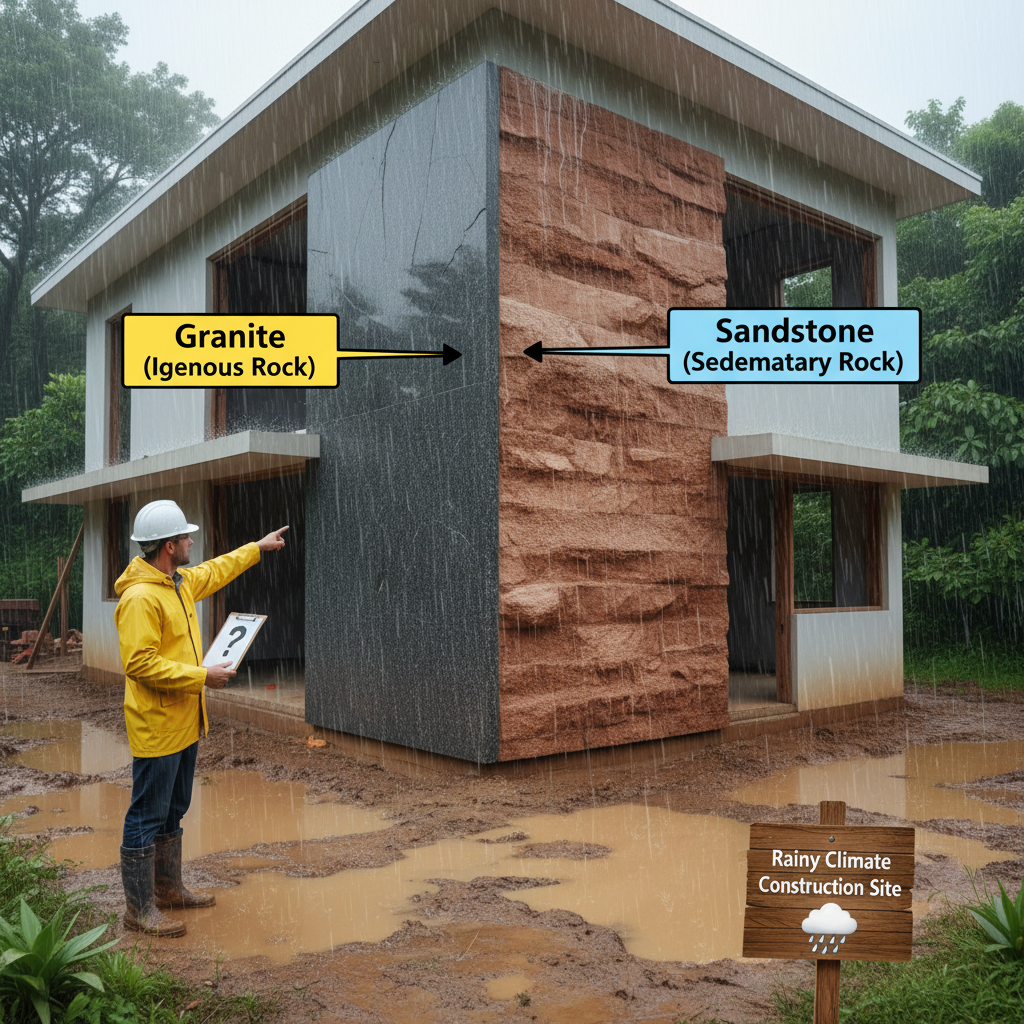
A construction company must choose between granite (an igneous rock) and sandstone (a sedimentary rock) for the exterior walls of a building in a rainy climate.
a
Describe how granite and sandstone each form, and identify one property of each rock that affects its suitability for exterior walls. [2]
b
Explain which rock the company should choose for this climate. [2]
c
Compare two limitations of your choice that could affect the practical outcome. [2]
Solutions
That's every free question here — 4 of 85.
+81 more questions, plus Mock Papers & Worksheets, are waiting in Premium.