You're viewing free preview questions — 4 questions previewing here — subscribe to unlock 80 more, plus the Full Question Bank, Mock Papers & Worksheets.Upgrade
Weathering and Erosion — Free MYP2 Sciences Practice Questions

1QuestionDefinition and Types of WeatheringConcept Practice
2 marks~3 minCriterion A
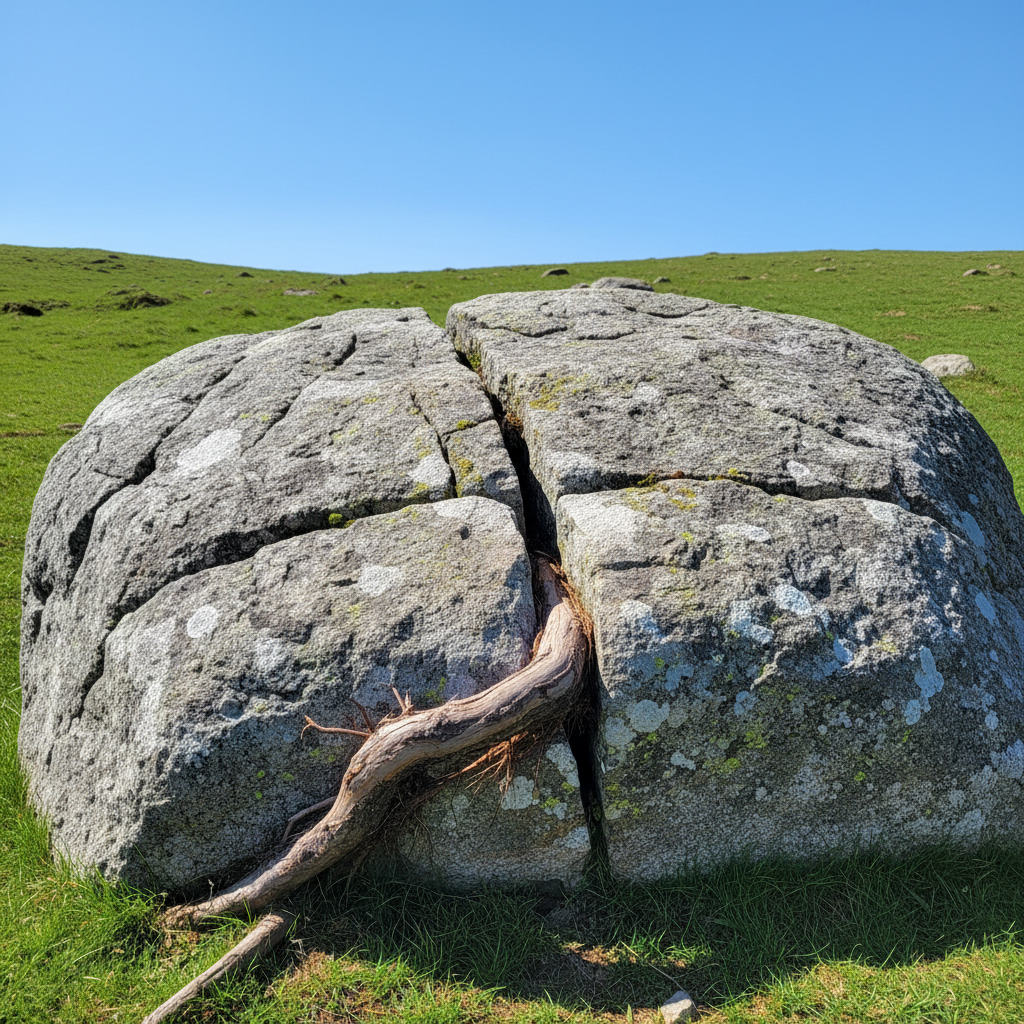
The diagram shows a rock with cracks into which a tree root is growing.
a
Identify the type of weathering shown in the diagram. [1]
b
Describe what the growing root is doing to the rock. [1]

Solutions
2QuestionDefinition and Types of WeatheringAssessment Practice
4 marks~6 minCriterion D
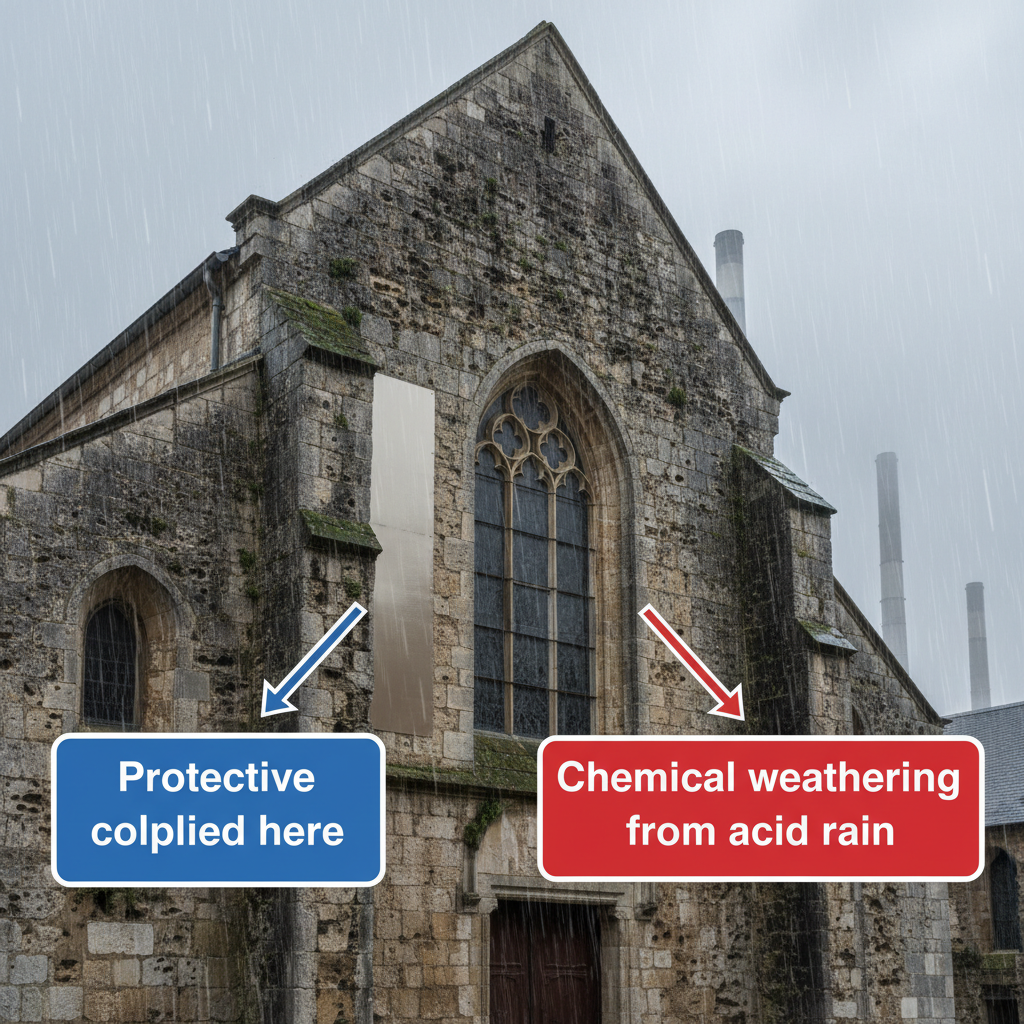
Acid rain forms when pollutants from factories and vehicles mix with rainwater, making it slightly acidic. This acid rain reacts chemically with limestone (calcium carbonate, ), slowly breaking it down — a process called chemical weathering. One solution is applying a clear protective coating to limestone surfaces.
a
Identify ONE advantage of using a protective coating on limestone buildings. [1]
b
Explain how a protective coating slows chemical weathering of limestone. [1]
c
Compare the benefits and limitations of using protective coatings as a solution to acid rain damage, considering cost, maintenance, and environmental impact. [2]
Solutions
3QuestionDefinition and Types of WeatheringConcept Practice
3 marks~5 minCriterion C
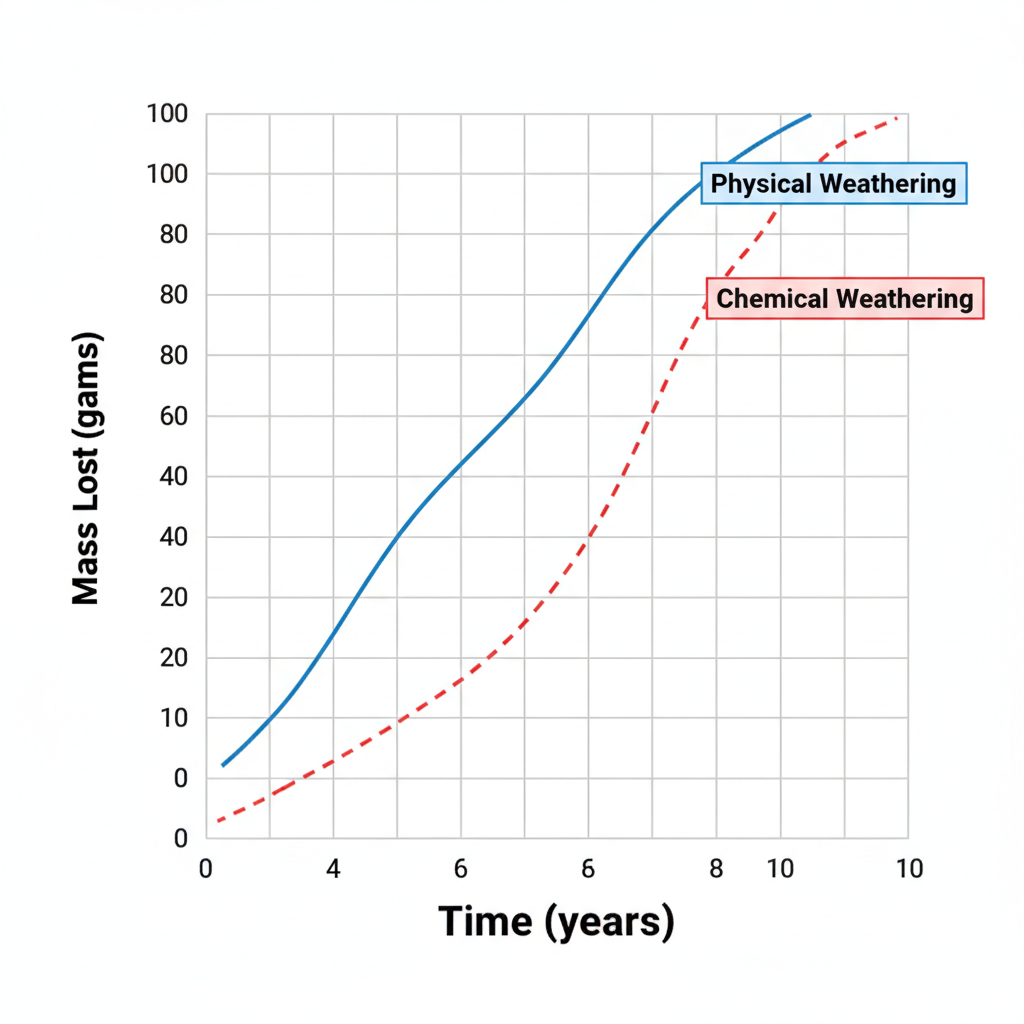
The graph below shows mass lost from a rock sample over time under two conditions: physical weathering (breaking rocks into smaller pieces without changing their minerals) and chemical weathering (dissolving minerals through chemical reactions).
a
Identify which type of weathering causes the greater mass loss over time. [1]
b
Explain why chemical weathering causes mass to be lost more quickly. [1]
c
Compare the pattern of mass loss shown by physical weathering with that shown by chemical weathering. [1]
Solutions
4QuestionPrevention and Control of ErosionAssessment Practice
8 marks~12 minCriterion B
A student uses a rainfall simulator to test how ground cover affects soil erosion. Water falls at a constant rate for 10 minutes onto trays of the same soil. She measures soil lost (in grams) at three slope angles.
| Slope angle (°) | 5 | 15 | 25 |
|---|---|---|---|
| Bare soil (g) | 12 | 38 | 82 |
| Grass strips (g) | 5 | 14 | 30 |
| Mulch (g) | 2 | 6 | 14 |
a
Identify the pattern in soil loss as slope angle increases for each ground cover type. [2]
b
Estimate the soil loss for mulch at a slope angle of 30°. Show your reasoning using the data. [2]
c
Compare how bare soil and mulch respond differently to increasing slope steepness, and explain why mulch loses less soil. [4]

Solutions
That's every free question here — 4 of 84.
+80 more questions, plus Mock Papers & Worksheets, are waiting in Premium.