You're viewing free preview questions — 4 questions previewing here — subscribe to unlock 80 more, plus the Full Question Bank, Mock Papers & Worksheets.Upgrade
Ecosystems and Biomes — Free MYP2 Sciences Practice Questions

1QuestionDefinition and Components of an EcosystemConcept Practice
2 marks~3 minCriterion A
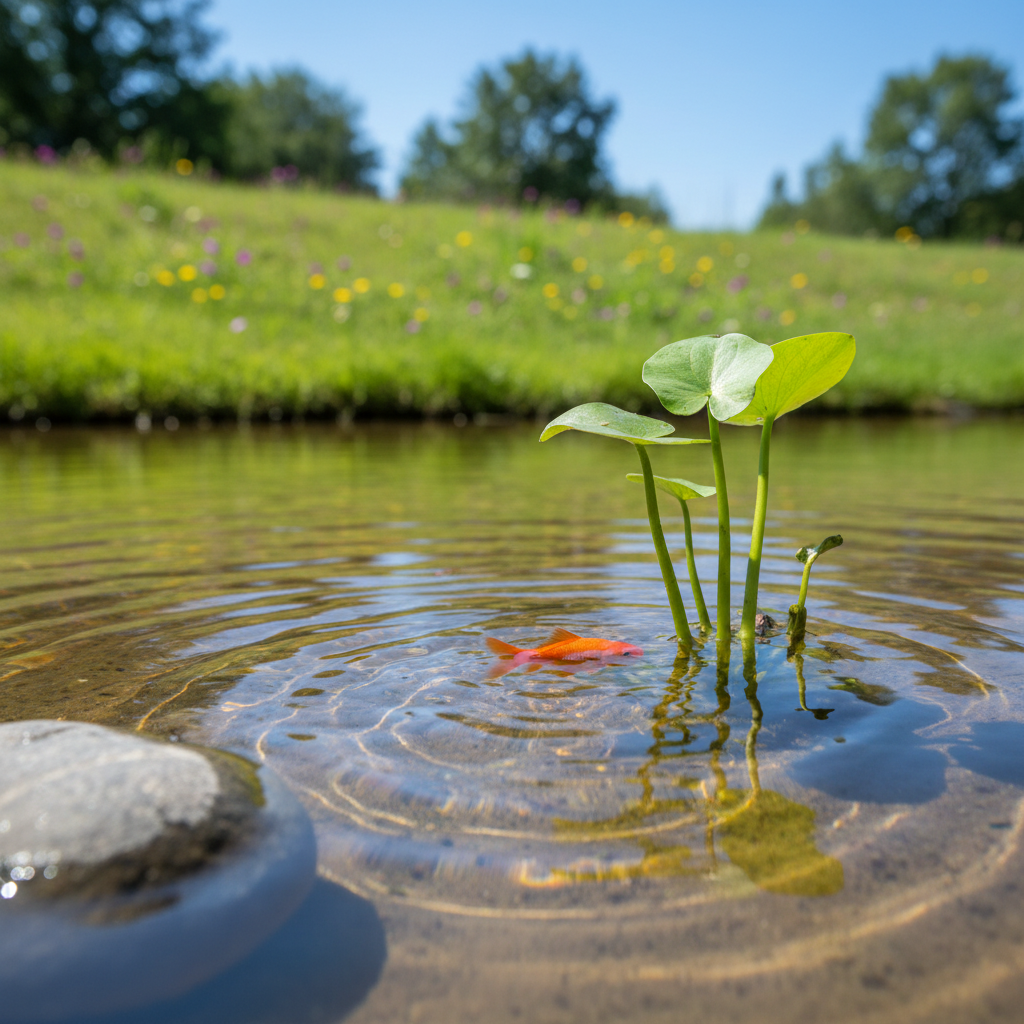
The diagram below shows a pond ecosystem containing a fish, a plant, a rock, and water.
a
Identify one biotic component (a living thing) from the diagram. [1]
b
Identify one abiotic component (a non-living thing) from the diagram. [1]

Solutions
2QuestionDefinition and Components of an EcosystemAssessment Practice
3 marks~5 minCriterion B
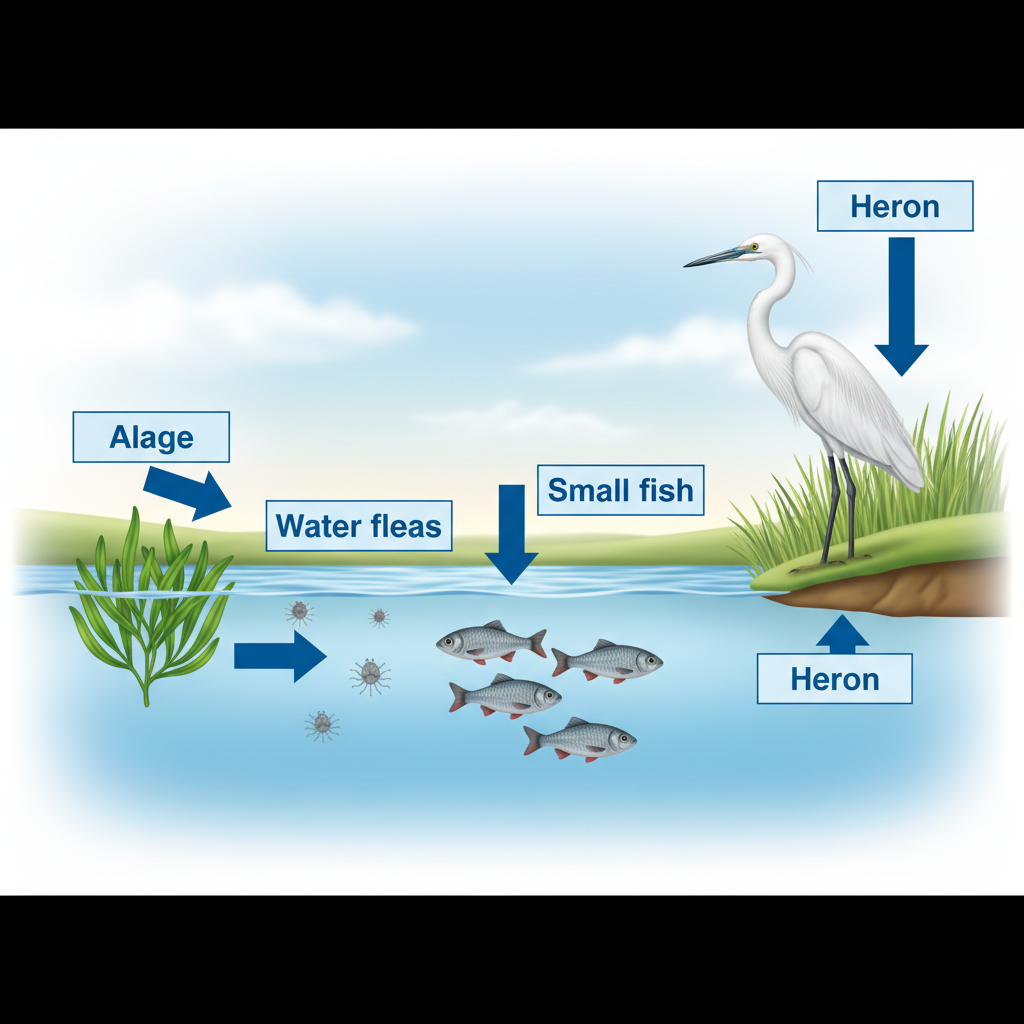
The diagram shows a pond food chain: algae → water fleas → small fish → herons.
a
Identify the role of small fish in relation to water fleas. [1]
b
Describe what happens to the water flea population when all small fish are removed from the pond. [1]
c
Explain how removing small fish could also affect the algae population. [1]
Solutions
3QuestionDefinition and Components of an EcosystemAssessment Practice
6 marks~9 minCriterion C
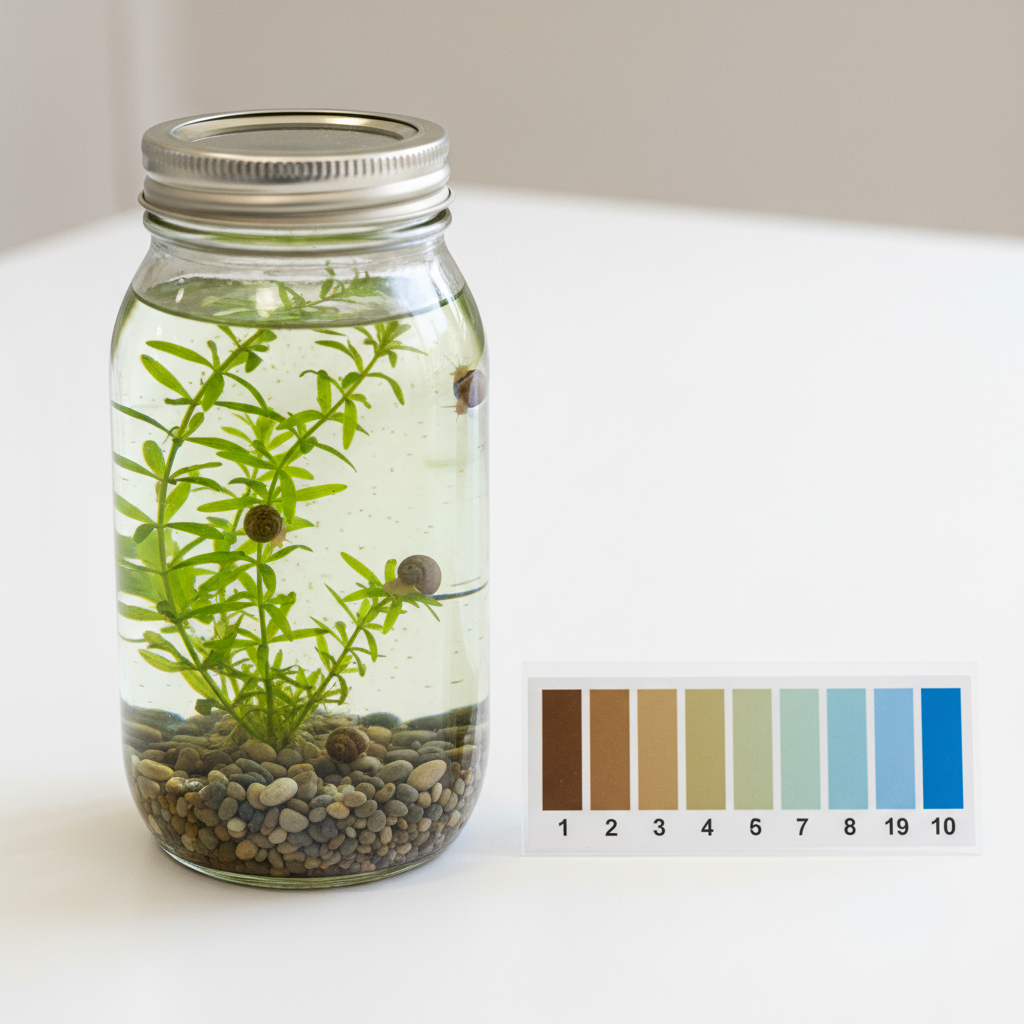
A student seals water, one small plant, and three snails in a glass jar. She rates water clarity on a scale of 1 (very cloudy) to 10 (perfectly clear) each day for 10 days.
| Day | 1 | 2 | 3 | 4 | 5 | 6 | 7 | 8 | 9 | 10 |
|---|---|---|---|---|---|---|---|---|---|---|
| Water clarity | 10 | 9 | 8 | 7 | 7 | 6 | 6 | 5 | 5 | 5 |
a
Identify the overall trend in water clarity over the 10 days. [1]
b
Explain how the snails and the plant together could cause this trend. [2]
c
A second student claims the plant alone — not the snails — is causing the water to become cloudy. Compare what you would expect to see in a jar with only a plant versus a jar with only three snails, and explain which result would support the original hypothesis that snails cause the cloudiness. [3]
Solutions
4QuestionDefinition and Components of an EcosystemAssessment Practice
6 marks~9 minCriterion D
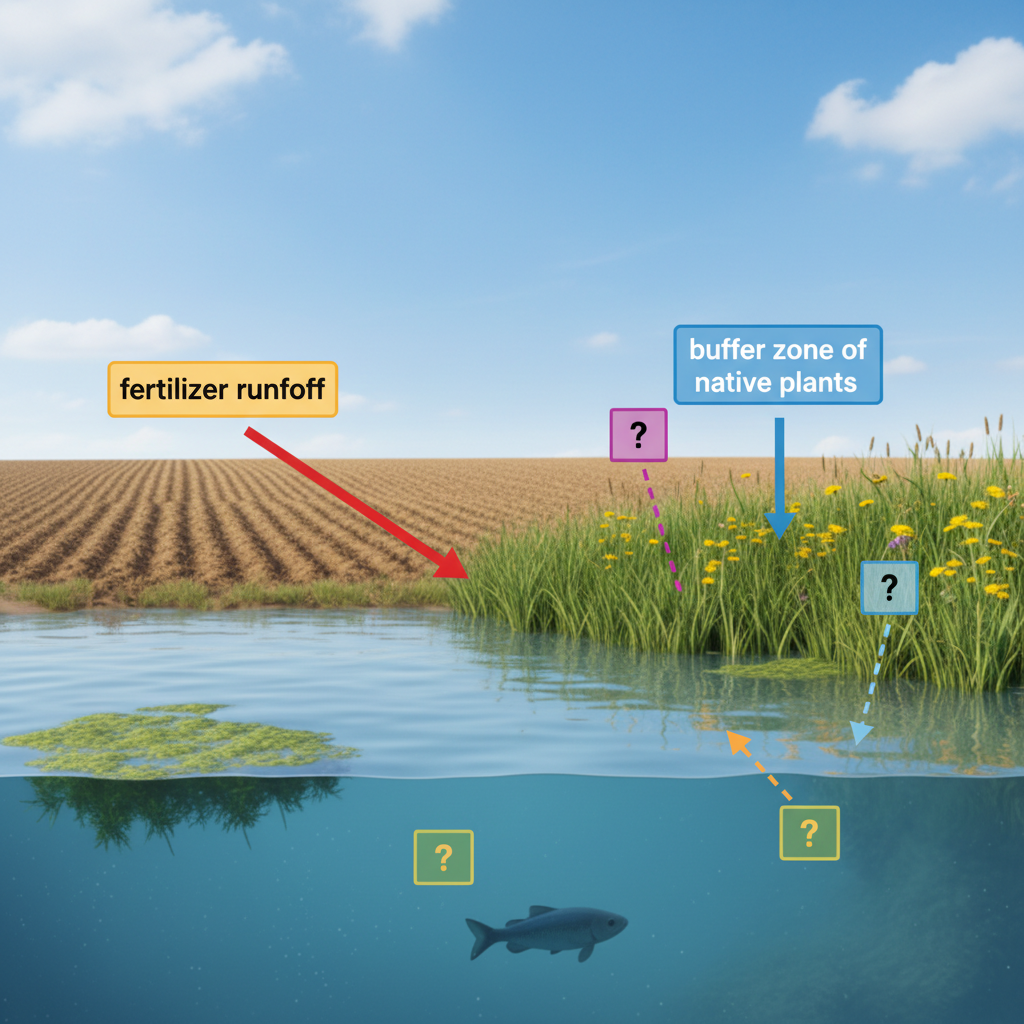
Fertilizer runoff from nearby farms has caused excessive algae growth in a local pond, reducing the dissolved oxygen available for fish. One proposed solution is to plant buffer zones — strips of native plants along the pond's edge that absorb fertilizer before it enters the water.
a
Identify one component of the pond ecosystem that is directly affected by the fertilizer runoff. [1]
b
Explain how a buffer zone of native plants reduces the impact of fertilizer runoff on the pond. [2]
c
Compare two limitations of using buffer zones as a solution to the runoff problem. [3]
Solutions
That's every free question here — 4 of 84.
+80 more questions, plus Mock Papers & Worksheets, are waiting in Premium.