You're viewing free preview questions — 4 questions previewing here — subscribe to unlock 65 more, plus the Full Question Bank, Mock Papers & Worksheets.Upgrade
Energy Flow and Pyramids — Free MYP2 Sciences Practice Questions

1QuestionEfficiency of Energy TransferConcept Practice
2 marks~3 minCriterion A
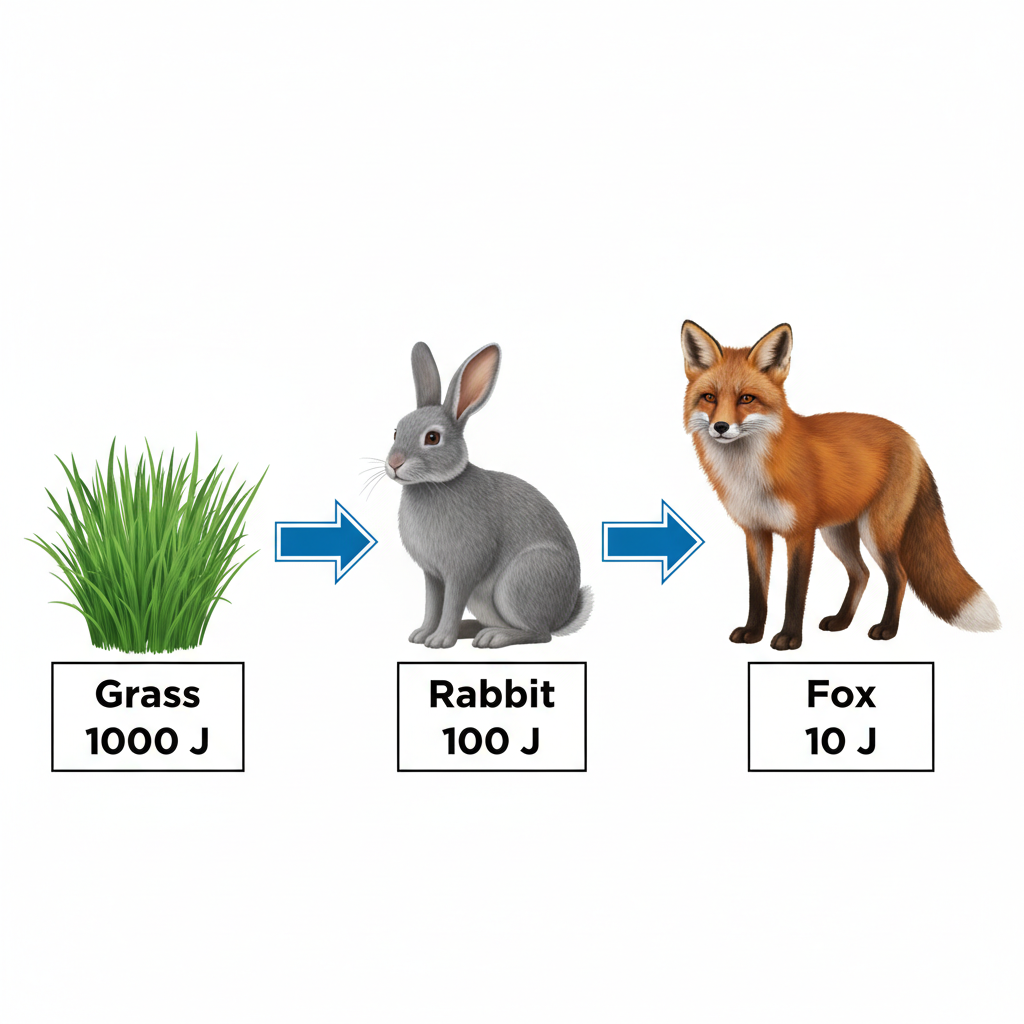
The diagram shows a food chain with the following energy values:
Grass (1000 J) → Rabbit (100 J) → Fox (10 J)
Grass (1000 J) → Rabbit (100 J) → Fox (10 J)
a
Identify the term used to describe the percentage of energy passed from one feeding level (trophic level) to the next. [1]
b
Using the values above, calculate the percentage of energy transferred from the rabbit to the fox. [1]

Solutions
2QuestionLimitations of Pyramids in Real EcosystemsAssessment Practice
3 marks~5 minCriterion C
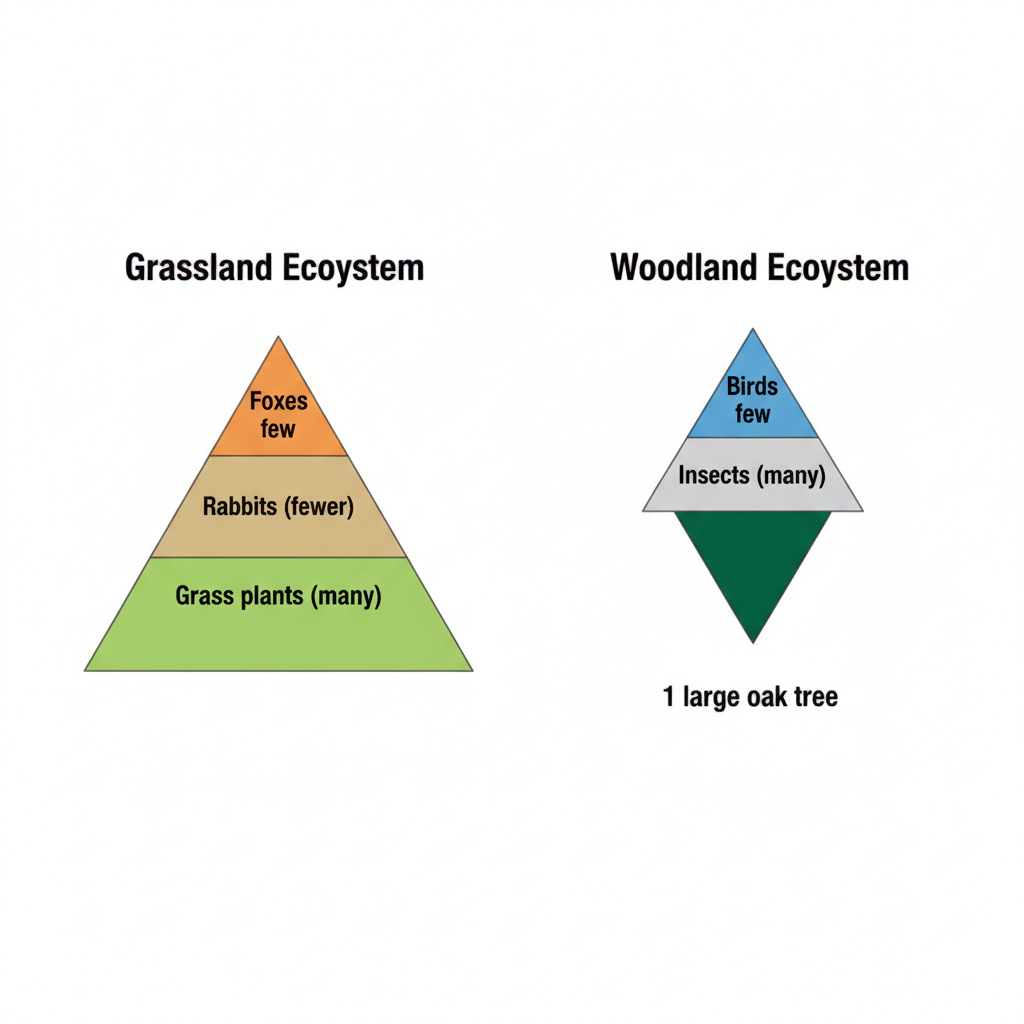
A woodland ecosystem has one large oak tree, many insects living on it, and a few birds that eat the insects.
a
Identify which trophic level (feeding level) makes the woodland pyramid of numbers appear inverted. [1]
b
Explain why counting individual organisms, rather than their size, causes this inverted shape. [1]
c
Compare the pyramid of numbers with a pyramid of biomass (total living material) for this woodland ecosystem, and state which gives a more accurate picture of energy distribution. [1]
Solutions
3QuestionEnergy Loss at Each Trophic LevelConcept Practice
2 marks~3 minCriterion B
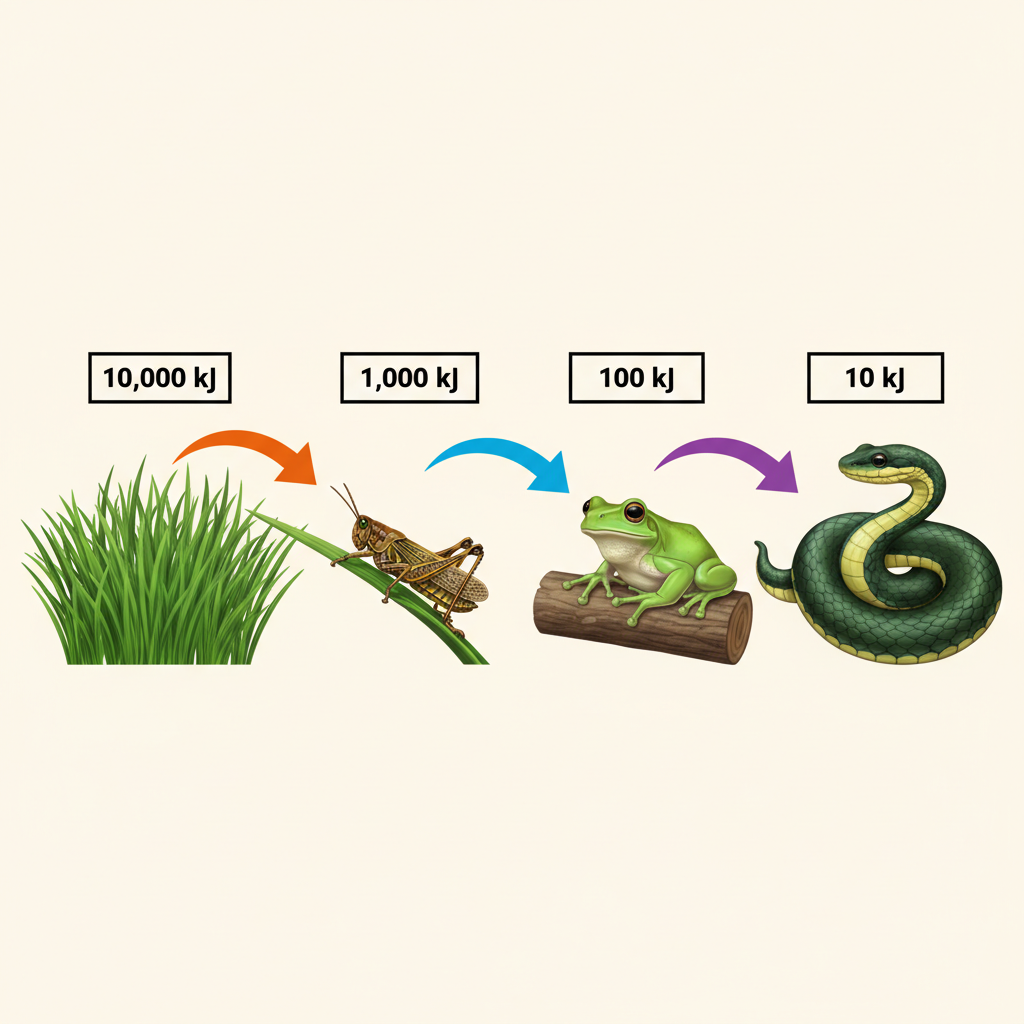
The diagram shows energy values at each trophic level (feeding level) in a food chain:
Grass: 10,000 kJ → Grasshopper: 1,000 kJ → Frog: 100 kJ → Snake: 10 kJ
Grass: 10,000 kJ → Grasshopper: 1,000 kJ → Frog: 100 kJ → Snake: 10 kJ
a
Identify the pattern in energy values as you move from grass to snake. [1]
b
Explain why energy decreases at each trophic level. [1]
Solutions
4QuestionEnergy Loss at Each Trophic LevelAssessment Practice
6 marks~9 minCriterion D
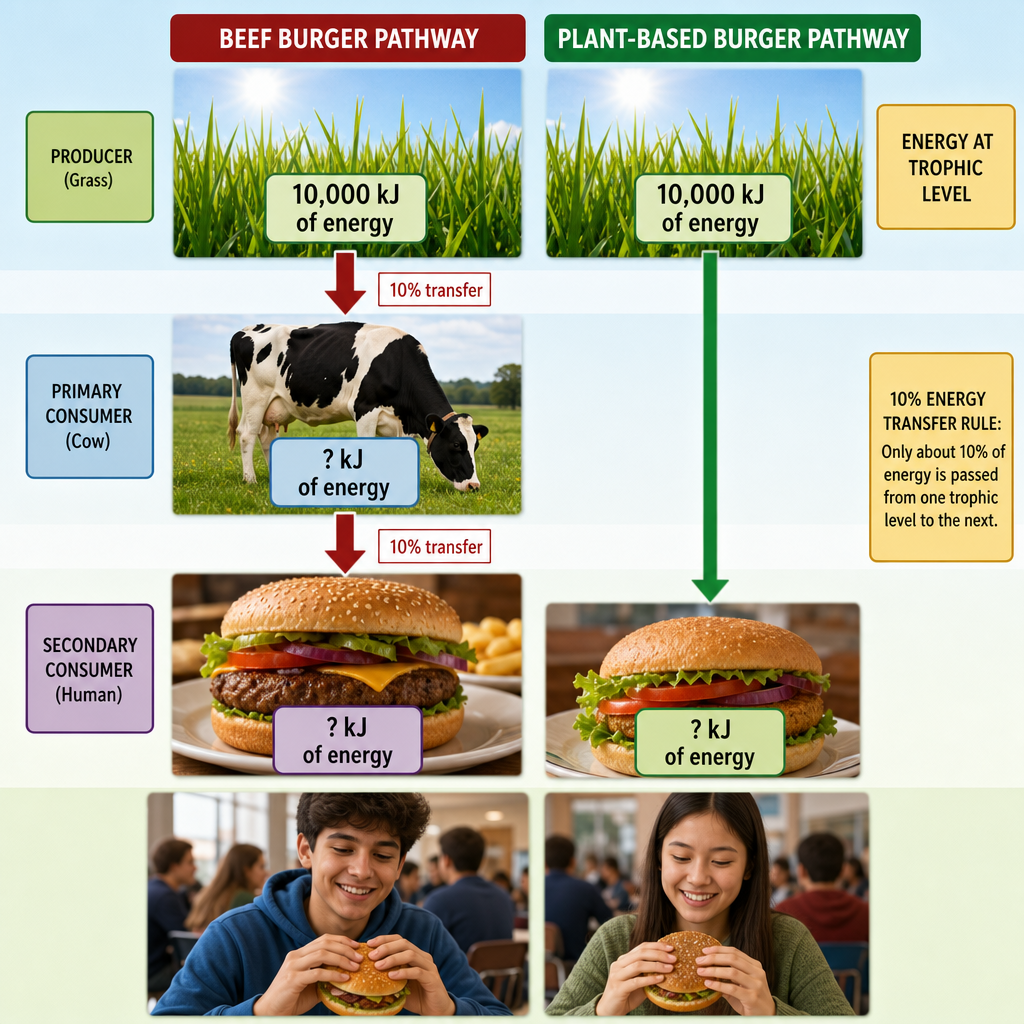
A school wants to reduce its environmental impact by changing its lunch menu. Grass contains kJ of energy. Using the 10% energy transfer rule (only 10% of energy passes from one feeding level to the next):
a
Calculate the energy available to a student who eats a beef burger from a cow fed on that grass. [1]
b
The school considers replacing beef burgers with plant-based burgers made directly from the same grass. Calculate the energy available to the student from the plant-based burger, and compare this with your answer to part (a). [2]
c
Explain one benefit of eating food lower on the food chain for feeding a growing human population, and identify one limitation of using only the energy argument to make food choices. [3]
Solutions
That's every free question here — 4 of 69.
+65 more questions, plus Mock Papers & Worksheets, are waiting in Premium.