You're viewing free preview questions — 4 questions previewing here — subscribe to unlock 83 more, plus the Full Question Bank, Mock Papers & Worksheets.Upgrade
Habitats and Adaptations — Free MYP2 Sciences Practice Questions

1QuestionAdaptations for Survival in Extreme EnvironmentsConcept Practice
3 marks~5 minCriterion A
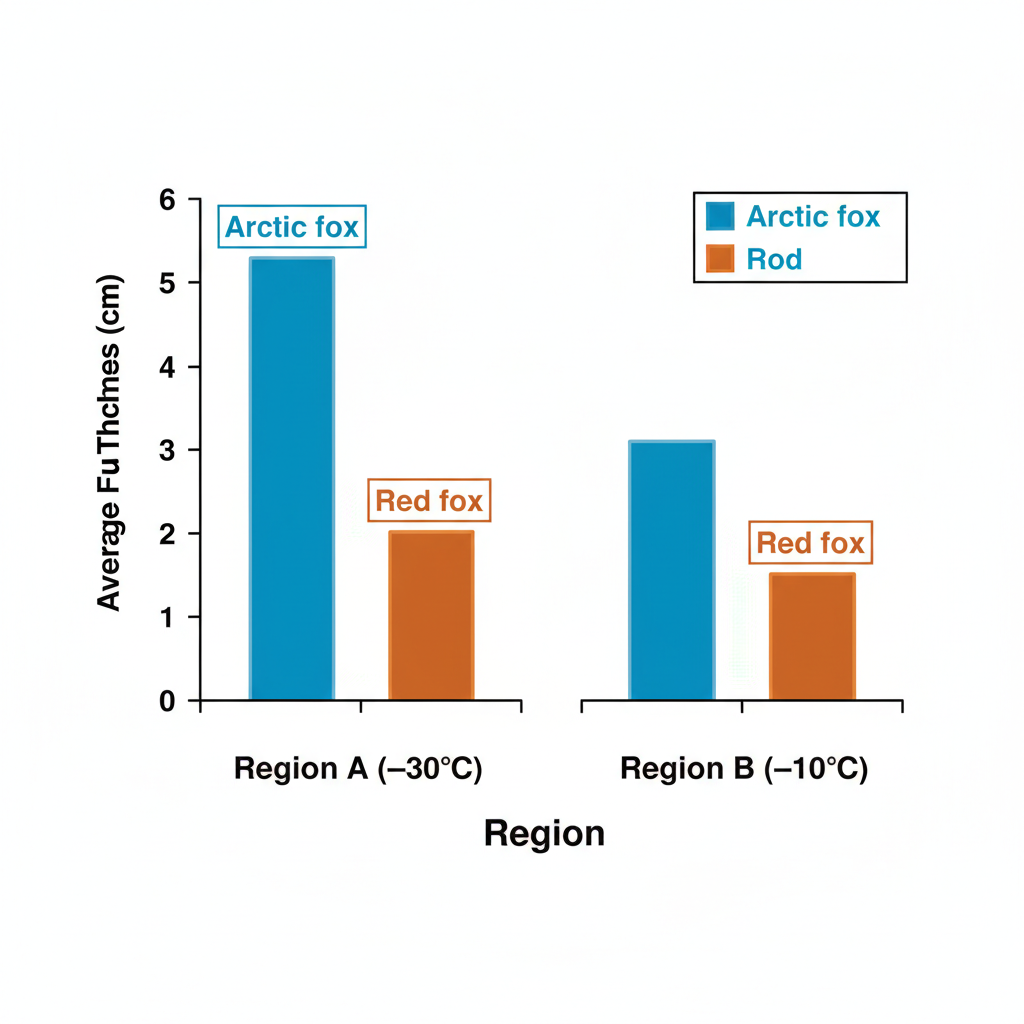
The table below shows the average fur thickness of two fox species measured in winter.
| Region A (−30 °C) | Arctic fox 5.2 cm | red fox 2.8 cm |
|---|---|---|
| Region B (−10 °C) | Arctic fox 3.9 cm | red fox 2.1 cm |
a
Identify which species has thicker fur in both regions. [1]
b
Explain why thicker fur helps a fox survive in a cold environment. [1]
c
Compare the fur thickness of the two species and explain what this suggests about the environments each species has adapted to. [1]

Solutions
2QuestionStructural and Behavioral AdaptationsAssessment Practice
5 marks~8 minCriterion C
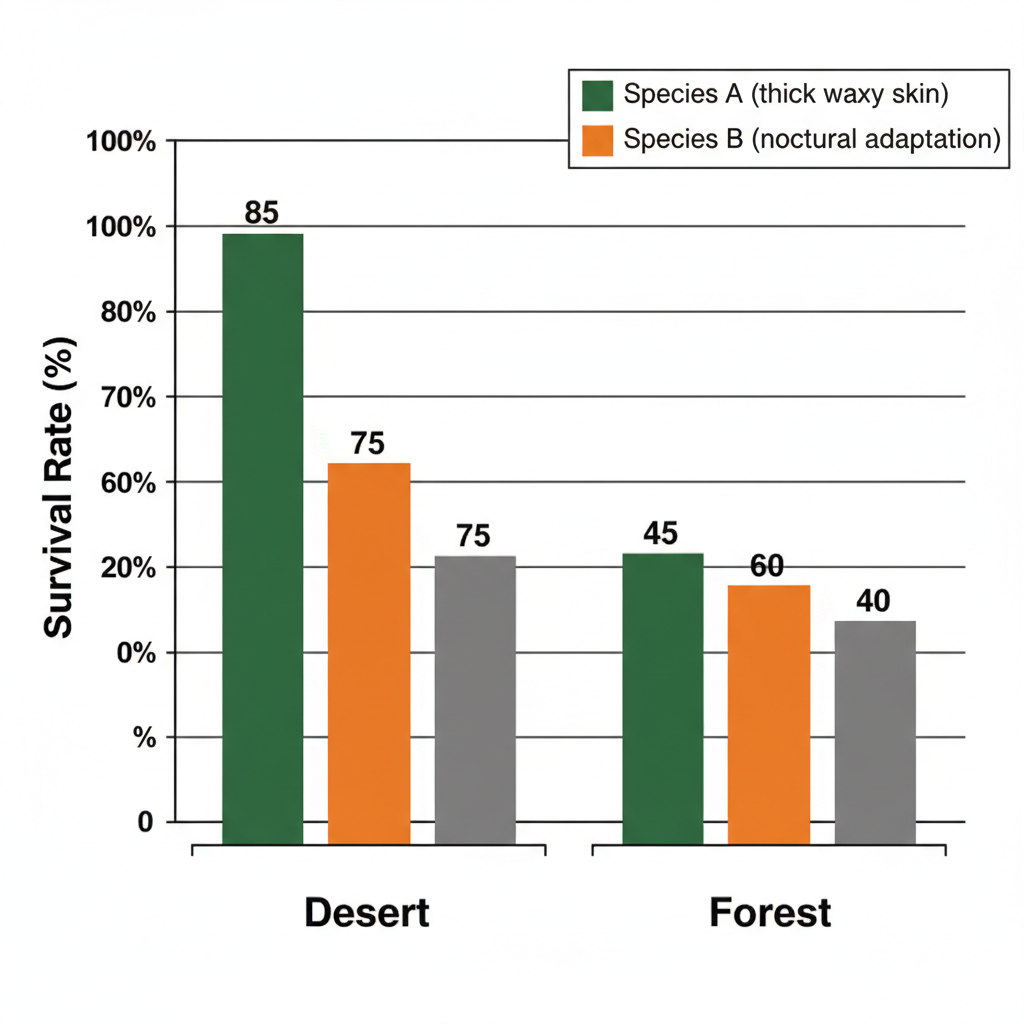
The bar graph below shows the survival rates of three animal species in a desert and a forest habitat.
Species A has thick waxy skin (a structural adaptation — a physical body feature).
Species B is nocturnal (a behavioural adaptation — an activity pattern).
Species C has no adaptation.
Species A has thick waxy skin (a structural adaptation — a physical body feature).
Species B is nocturnal (a behavioural adaptation — an activity pattern).
Species C has no adaptation.
a
Identify the species with the highest survival rate in the desert. [1]
b
Explain why Species A survives better than Species B in the desert. [2]
c
Compare the effectiveness of structural and behavioural adaptations across both habitats, using data from the graph. [2]
Solutions
3QuestionDefinition of Habitat and ExamplesConcept Practice
5 marks~8 minCriterion B
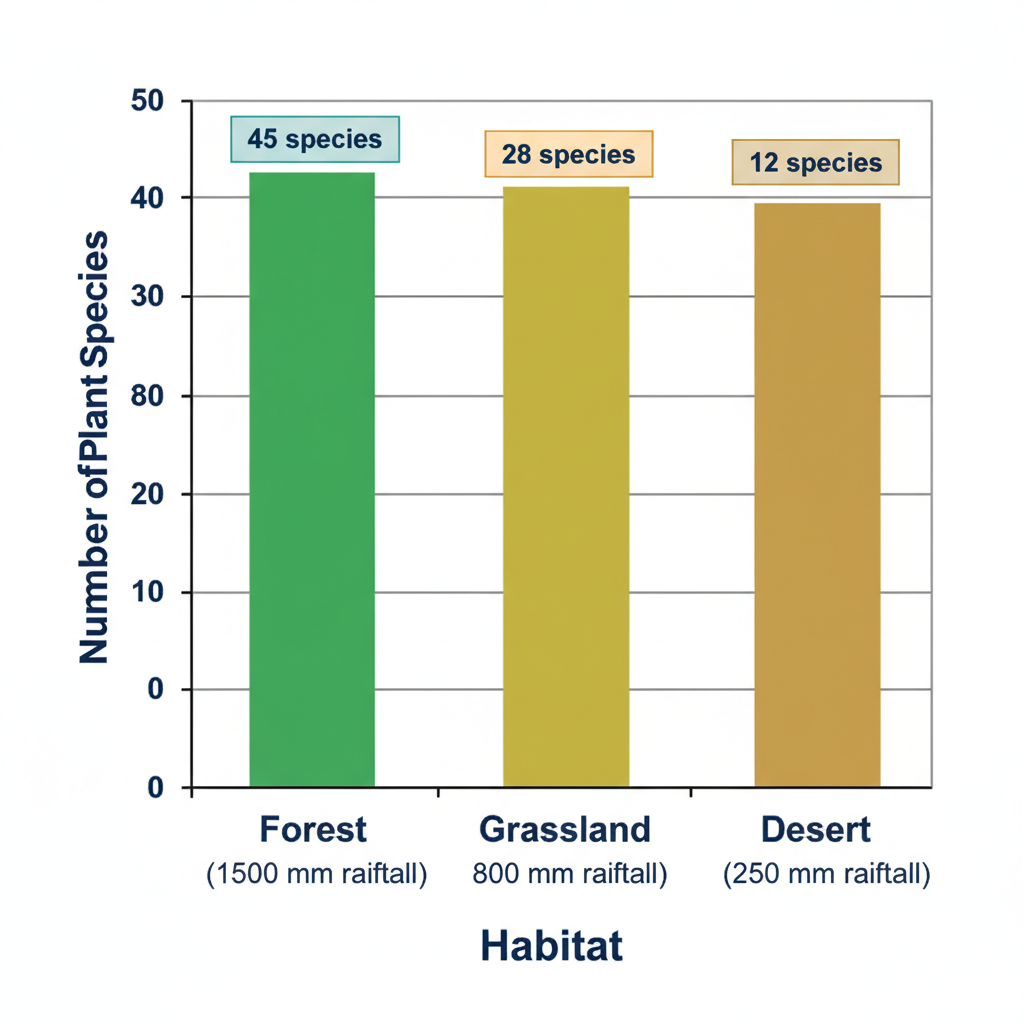
The bar graph below shows the number of plant species found in three habitats with different rainfall levels.
Forest (1500 mm): 45 species
Grassland (800 mm): 28 species
Desert (250 mm): 12 species
Forest (1500 mm): 45 species
Grassland (800 mm): 28 species
Desert (250 mm): 12 species
a
Identify the habitat with the greatest number of plant species. [1]
b
Describe the relationship between rainfall and the number of plant species shown in the graph. [2]
c
A habitat is a place that provides food, water, and shelter. Compare the forest and the desert as habitats for plants, using data from the graph to support your answer. [2]
Solutions
4QuestionAdaptations for Survival in Extreme EnvironmentsAssessment Practice
6 marks~9 minCriterion D
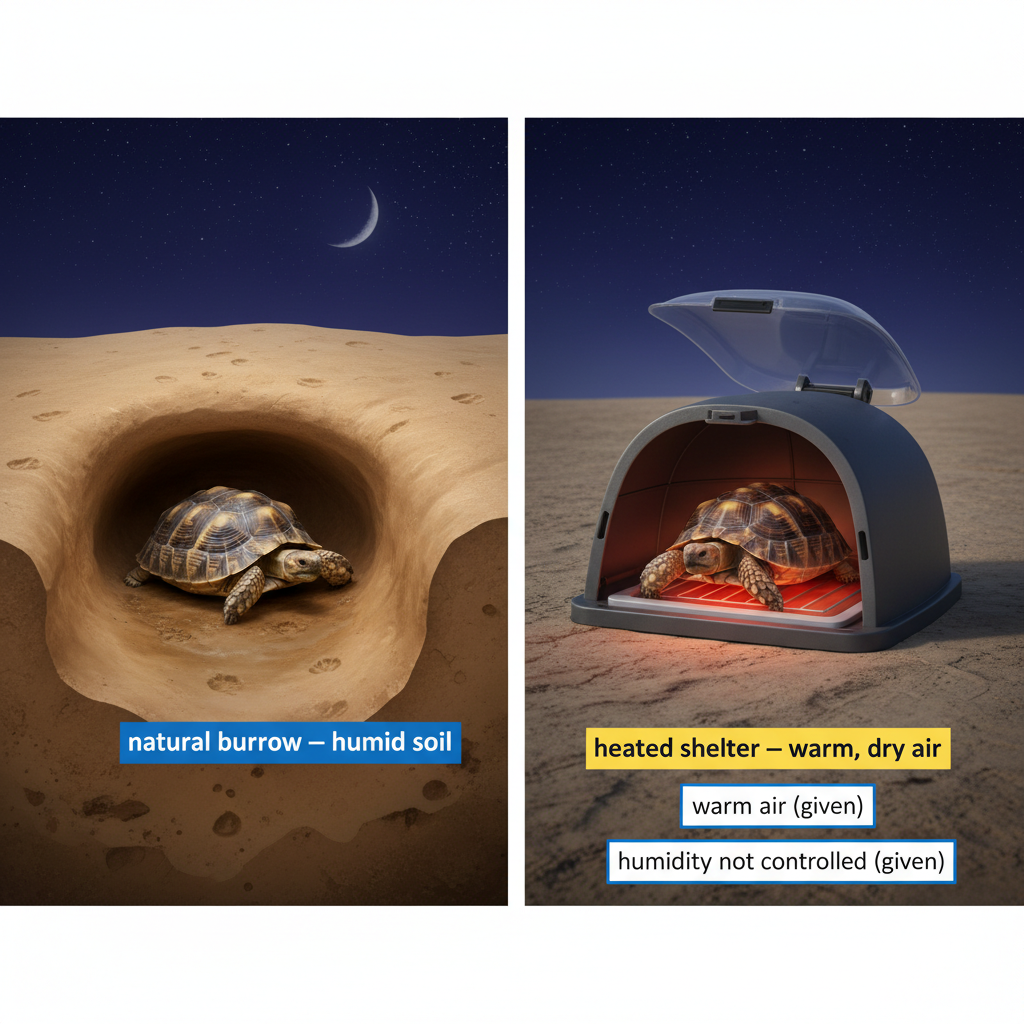
A conservation team builds heated shelters to help desert tortoises survive cold nights. Unlike natural burrows, the shelters do not control humidity (the amount of water vapour in the air), causing some tortoises to become dehydrated.
a
Identify one way a natural burrow helps a desert tortoise keep water in its body. [1]
b
Explain why the heated shelter causes tortoises to lose more water than a natural burrow does. [2]
c
Compare the heated shelter with a natural burrow, and suggest one design change that would improve the tortoise's chances of survival. [3]
Solutions
That's every free question here — 4 of 87.
+83 more questions, plus Mock Papers & Worksheets, are waiting in Premium.