You're viewing free preview questions — 4 questions previewing here — subscribe to unlock 79 more, plus the Full Question Bank, Mock Papers & Worksheets.Upgrade
Human Digestive System — Free MYP2 Sciences Practice Questions

1QuestionAbsorption of Nutrients in the Small IntestineConcept Practice
2 marks~3 minCriterion A
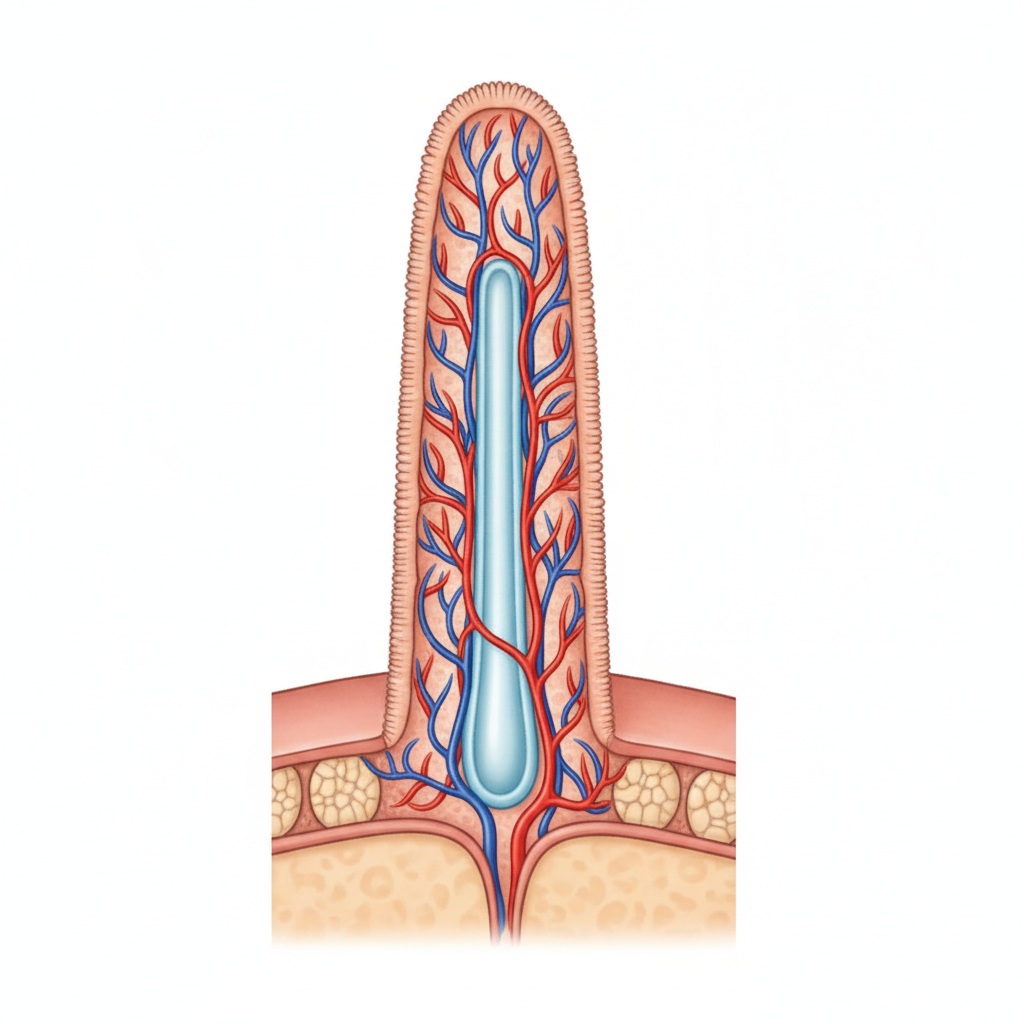
The inner wall of the small intestine is lined with tiny finger-like projections that increase the surface area for absorbing nutrients into the blood.
a
Identify the name of these finger-like projections. [1]
b
Explain one way these projections help the small intestine absorb nutrients more efficiently. [1]

Solutions
2QuestionAbsorption of Nutrients in the Small IntestineAssessment Practice
2 marks~3 minCriterion D
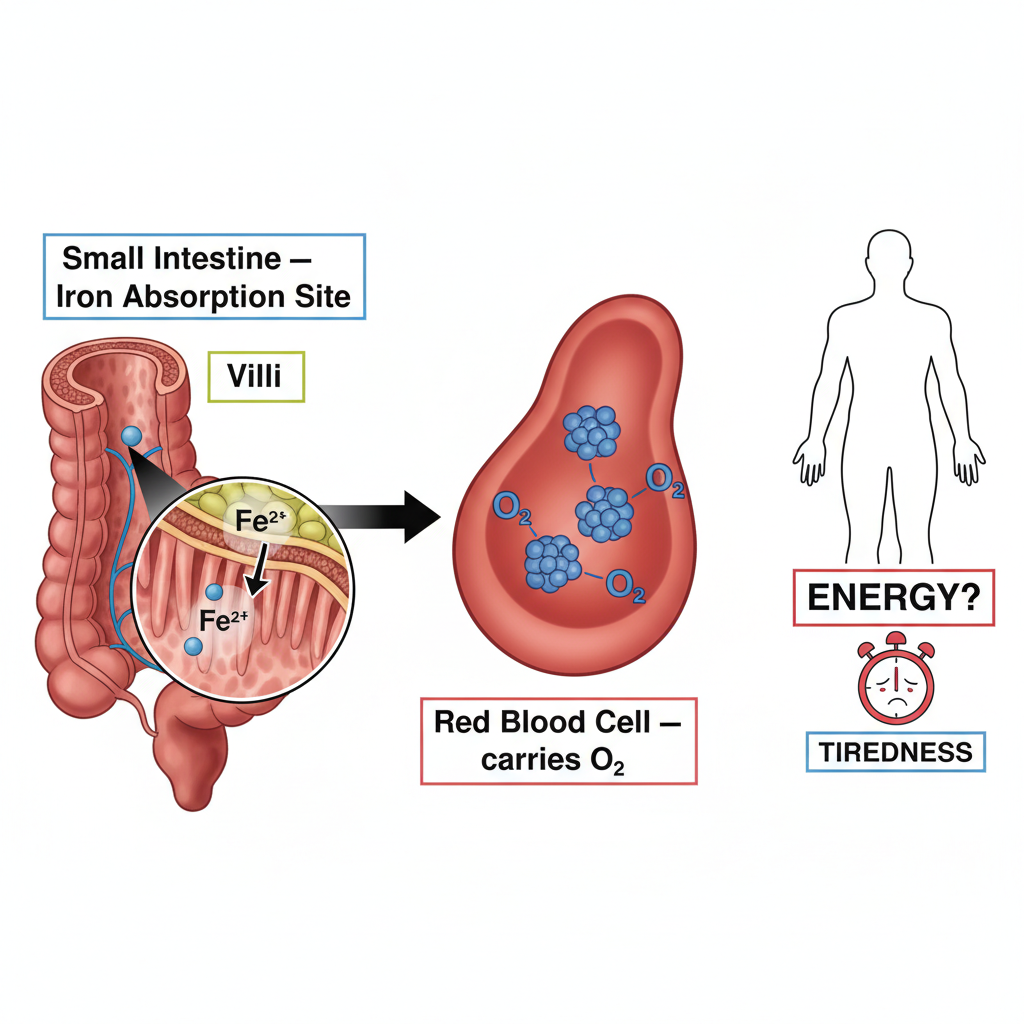
The small intestine absorbs iron from food. Iron is used to make haemoglobin (the protein in red blood cells that carries oxygen). When iron levels are low, less oxygen reaches the body's muscles and organs, causing fatigue (tiredness).
a
Explain why a doctor might recommend iron-rich foods, such as spinach or red meat, to a patient who feels constantly tired. [1]
b
Identify one limitation of this recommendation. [1]
Solutions
3QuestionOrgans of the Digestive System and Their FunctionsAssessment Practice
5 marks~8 minCriterion C
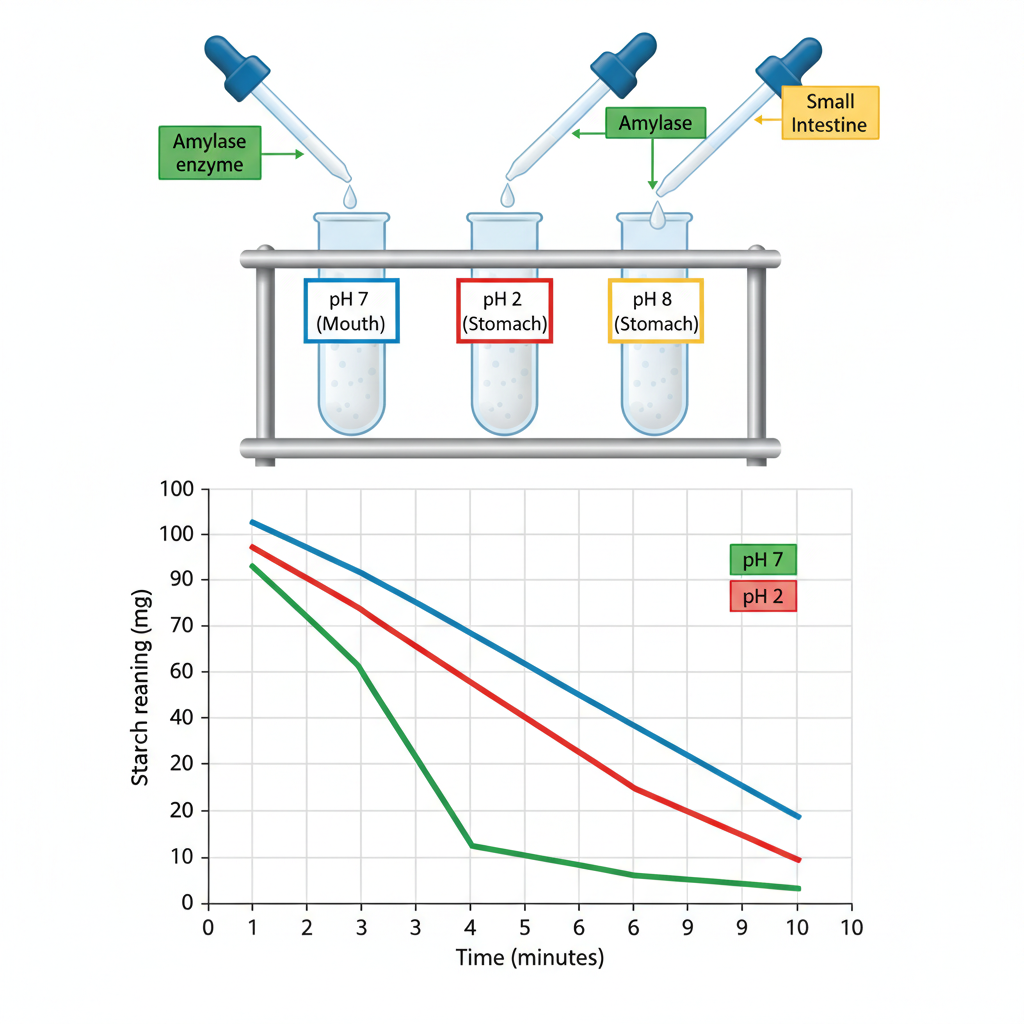
A student added amylase (an enzyme that breaks down starch) to three test tubes of starch solution. Each tube was kept at a different pH to mimic a digestive organ: pH 7 (mouth), pH 2 (stomach), or pH 8 (small intestine). The graph shows how much starch remained over 10 minutes.
a
Identify which organ showed the fastest starch digestion. [1]
b
Explain why very little starch was broken down in the tube mimicking the stomach. [2]
c
A classmate claims: "Digestion only occurs in the stomach." Compare the results from all three tubes and state whether the data support this claim. [2]
Solutions
4QuestionOrgans of the Digestive System and Their FunctionsAssessment Practice
6 marks~9 minCriterion B
A student places 5 g of starch-based food in beakers of stomach acid (dilute HCl) at . The food is prepared in three forms: whole (one cube), crushed (small chunks), and ground (powder). Mass remaining is recorded every 2 minutes.
| Time (min) | 0 | 2 | 4 | 6 | 8 | 10 |
|---|---|---|---|---|---|---|
| Whole (g) | 5.0 | 4.8 | 4.6 | 4.5 | 4.4 | 4.3 |
| Crushed (g) | 5.0 | 4.5 | 4.0 | 3.6 | 3.3 | 3.0 |
| Ground (g) | 5.0 | 4.0 | 3.0 | 2.0 | 1.0 | 0.0 |
a
Identify which form of food digested fastest and which digested slowest. Support your answer with one value from the data. [2]
b
Explain why the ground food digested faster than the crushed food. Use the idea of surface area (the total area of food exposed to the acid) in your answer. [2]
c
Compare the digestion rates of all three forms of food and describe the general relationship between particle size and digestion rate. [2]
Solutions
That's every free question here — 4 of 83.
+79 more questions, plus Mock Papers & Worksheets, are waiting in Premium.