You're viewing free preview questions — 4 questions previewing here — subscribe to unlock 81 more, plus the Full Question Bank, Mock Papers & Worksheets.Upgrade
Interdependence in Organisms — Free MYP2 Sciences Practice Questions

1QuestionCase Studies of System Interactions in Daily LifeConcept Practice
2 marks~3 minCriterion A
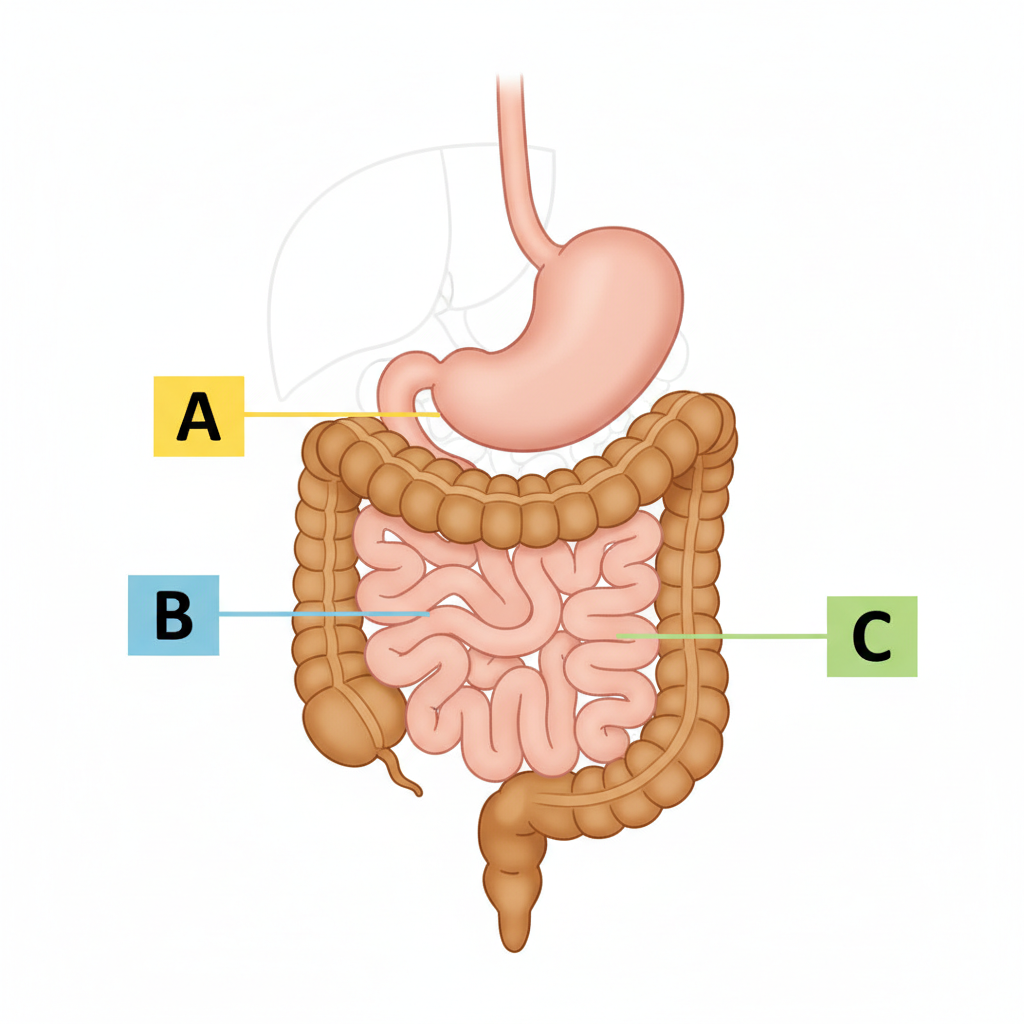
The diagram shows the human digestive system with three labeled parts: A (stomach), B (small intestine), and C (large intestine).
a
Identify which labeled part is the main site of nutrient absorption into the bloodstream. [1]
b
Explain one reason why that part is so effective at absorbing nutrients. [1]

Solutions
2QuestionConsequences of System FailureAssessment Practice
5 marks~8 minCriterion D
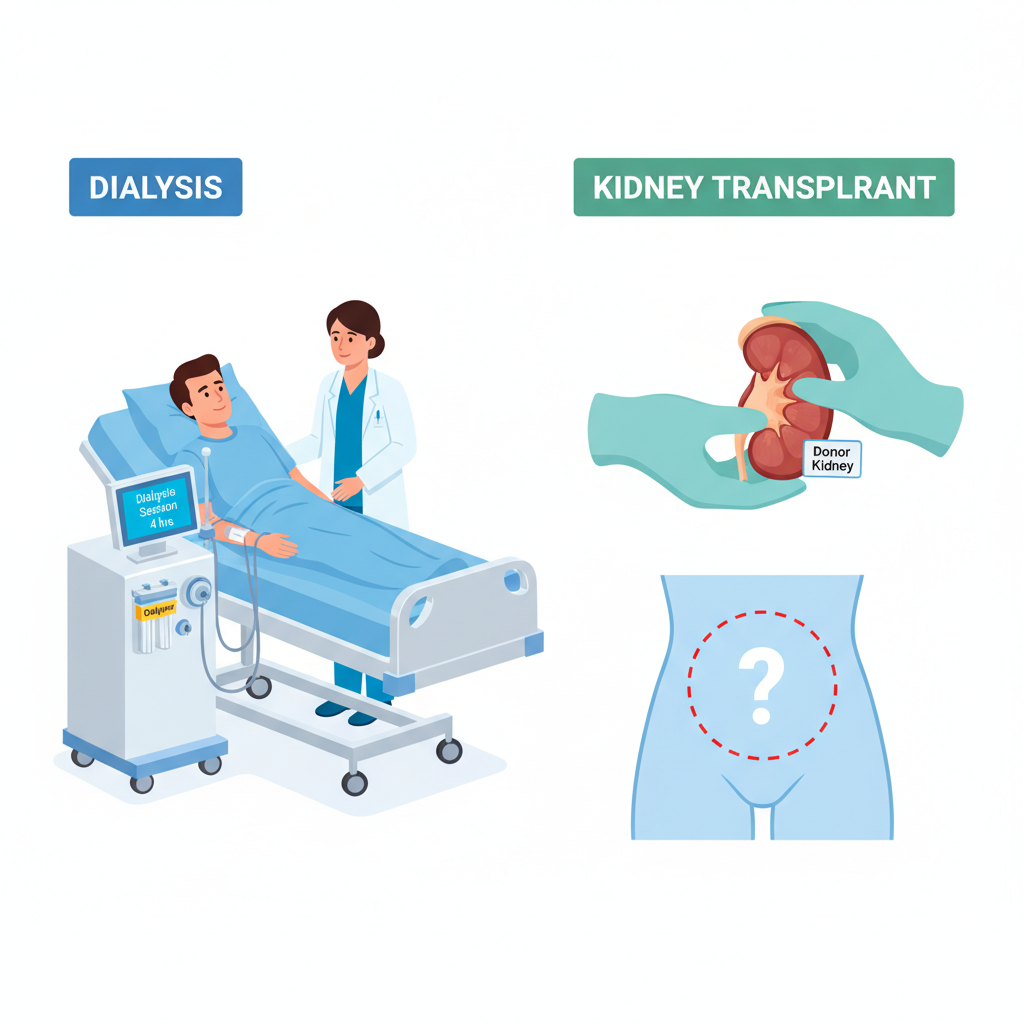
A patient with kidney failure needs treatment to remove waste from their blood. Two options exist: dialysis, where a machine filters the blood several times a week, or a kidney transplant, where a healthy kidney from a donor is surgically placed into the patient.
a
Identify one benefit of choosing dialysis over a kidney transplant. [1]
b
Explain two limitations of kidney transplants as a treatment for kidney failure. [2]
c
Compare two viewpoints on whether a donated kidney should be given to a younger patient before an older patient. [2]
Solutions
3QuestionTransport of Nutrients and Oxygen to CellsAssessment Practice
8 marks~12 minCriterion C
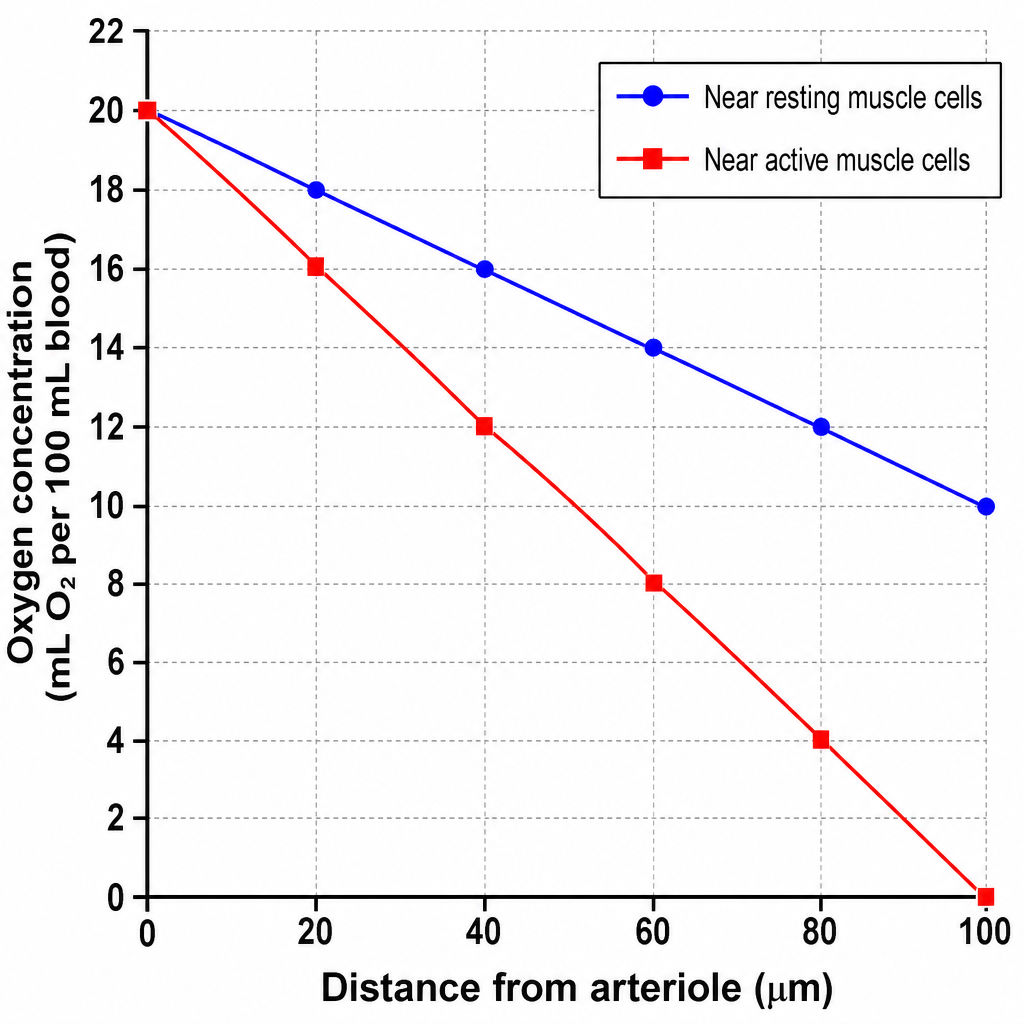
The table shows oxygen concentration (mL of O2 per 100 mL of blood) at different distances along a capillary (100 µm long).
| Distance from arteriole (µm) | 0 | 20 | 40 | 60 | 80 | 100 |
|---|---|---|---|---|---|---|
| Near resting muscle cells | 20 | 18 | 16 | 14 | 12 | 10 |
| Near active muscle cells | 20 | 16 | 12 | 8 | 4 | 0 |
a
Identify the pattern of oxygen concentration along the capillary for each condition. [2]
b
Estimate the oxygen concentration at 50 µm near active muscle cells. Show your working. [2]
c
Compare the rate of oxygen decrease near resting and active muscle cells, and explain why the difference occurs. [4]
Solutions
4QuestionCase Studies of System Interactions in Daily LifeAssessment Practice
5 marks~8 minCriterion B
When you drink water after exercise, three organ systems work together to restore the body's water balance.
Scenario 1 – Eating a meal: the digestive, circulatory, and nervous systems coordinate so blood flow increases to the stomach and intestines.
Scenario 2 – Running upstairs: the muscular, respiratory, and circulatory systems coordinate so breathing rate and heart rate increase.
Scenario 3 – Shivering in cold weather: the nervous, muscular, and circulatory systems coordinate so muscles contract rapidly to generate heat and skin blood vessels narrow.
Scenario 1 – Eating a meal: the digestive, circulatory, and nervous systems coordinate so blood flow increases to the stomach and intestines.
Scenario 2 – Running upstairs: the muscular, respiratory, and circulatory systems coordinate so breathing rate and heart rate increase.
Scenario 3 – Shivering in cold weather: the nervous, muscular, and circulatory systems coordinate so muscles contract rapidly to generate heat and skin blood vessels narrow.
a
Identify one pattern shown by all three scenarios above. [1]
b
Describe what happens in the digestive system and the circulatory system when you drink water after exercise. [2]
c
After exercise, the excretory system (the organs that filter blood and remove waste) also responds when you drink water. Compare what the excretory system does when you drink a large amount of water with what it does when you drink only a small amount. [2]
Solutions
That's every free question here — 4 of 85.
+81 more questions, plus Mock Papers & Worksheets, are waiting in Premium.