You're viewing free preview questions — 4 questions previewing here — subscribe to unlock 76 more, plus the Full Question Bank, Mock Papers & Worksheets.Upgrade
Respiratory and Circulatory Systems — Free MYP2 Sciences Practice Questions

1QuestionStructure and Function of the HeartAssessment Practice
4 marks~6 minCriterion D
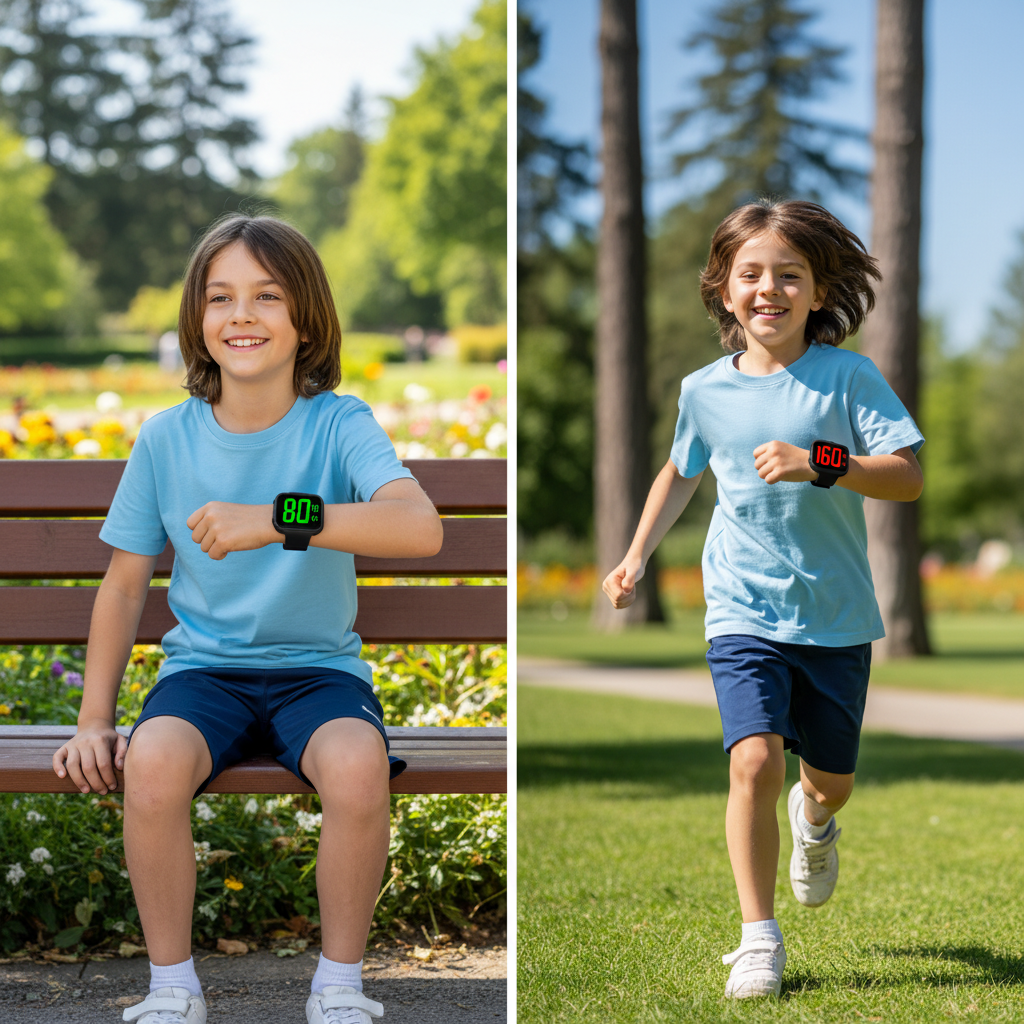
A fitness tracker records a 12-year-old's heart rate as 80 beats per minute (bpm) at rest and 160 bpm after running.
a
Identify one benefit of using a fitness tracker to monitor heart health in young people aged 12–13. [1]
b
Explain how this benefit supports heart health monitoring for this age group. [1]
c
Compare the usefulness of a fitness tracker with that of medical-grade heart monitoring equipment for a young person your age. [2]

Solutions
2QuestionGas Exchange in the AlveoliAssessment Practice
5 marks~8 minCriterion C
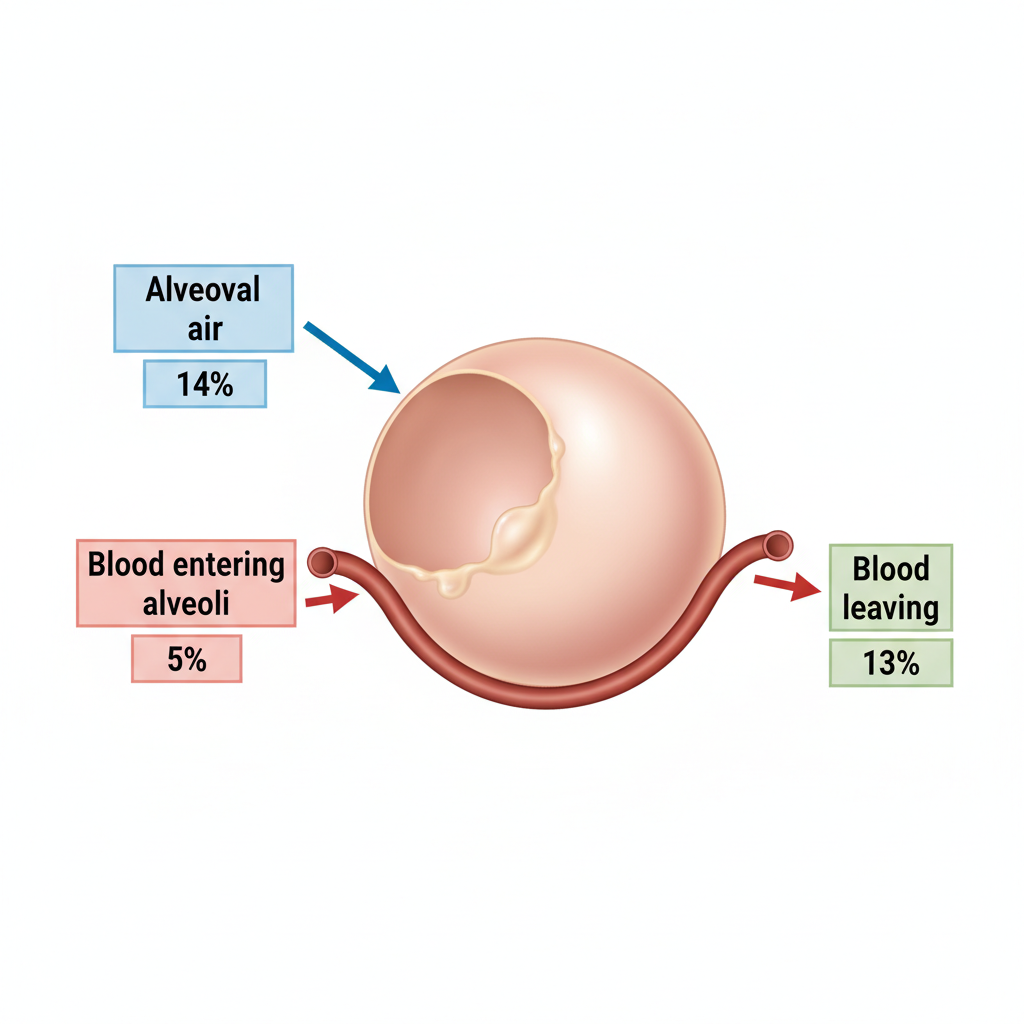
A student claims that oxygen moves from the alveoli (tiny air sacs in the lungs) into the blood because the oxygen concentration is higher in the alveoli than in the blood.
Oxygen concentration (\%) at each location:
Alveolar air: 14
Blood entering alveoli: 5
Blood leaving alveoli: 13
Oxygen concentration (\%) at each location:
Alveolar air: 14
Blood entering alveoli: 5
Blood leaving alveoli: 13
a
Calculate the difference in oxygen concentration between the alveolar air and the blood entering the alveoli. Show your working. [1]
b
Explain how this difference in concentration causes oxygen to move from the alveoli into the blood. [2]
c
Compare the oxygen concentration of blood entering and blood leaving the alveoli, and state whether this supports or contradicts the student's claim. [2]
Solutions
3QuestionGas Exchange in the AlveoliAssessment Practice
7 marks~11 minCriterion A
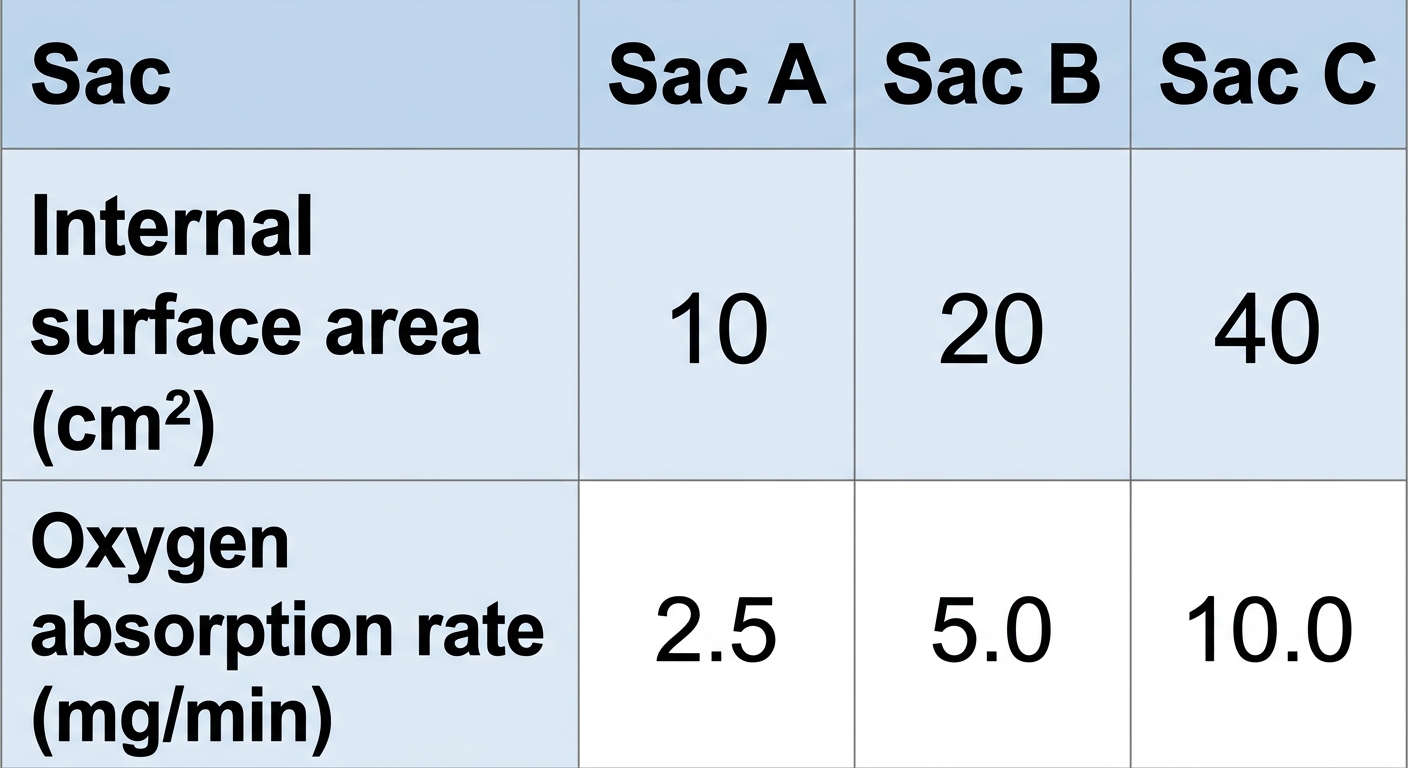
A student builds three model alveolus sacs with the same volume but different internal surface areas. Each sac is filled with a solution that absorbs oxygen.
| Internal surface area (cm²) | 10 | 20 | 40 |
|---|---|---|---|
| Oxygen absorption rate (mg/min) | 2.5 | 5.0 | 10.0 |
a
Identify the relationship between internal surface area and oxygen absorption rate shown in the data. [2]
b
Calculate the oxygen absorption rate for a fourth sac, D, with an internal surface area of 30 cm². Show your working. [2]
c
Compare how the surface area of a real alveolus helps gas exchange with how surface area affected absorption in the model. [3]
Solutions
4QuestionGas Exchange in the AlveoliAssessment Practice
5 marks~8 minCriterion B
The table below shows breathing rate and the number of active alveoli (tiny air sacs in the lungs where oxygen and carbon dioxide are exchanged) during three activities.
| Activity | Resting | Walking | Running |
|---|---|---|---|
| Breaths per minute | 12 | 20 | 40 |
| Active alveoli (millions) | 150 | 250 | 500 |
a
Identify the relationship between breaths per minute and active alveoli. [1]
b
Estimate the number of active alveoli for a person jogging at 30 breaths per minute. Show your working. [2]
c
A student claims that measuring breathing rate alone is enough to predict the number of active alveoli during any activity. Using the data in the table, describe one piece of evidence that supports this claim and one limitation of relying only on breathing rate. [2]
Solutions
That's every free question here — 4 of 80.
+76 more questions, plus Mock Papers & Worksheets, are waiting in Premium.